
Fighting fire with humanity
Syrian Arab Red Crescent responds as wildfires ravage villages in northwest Syria

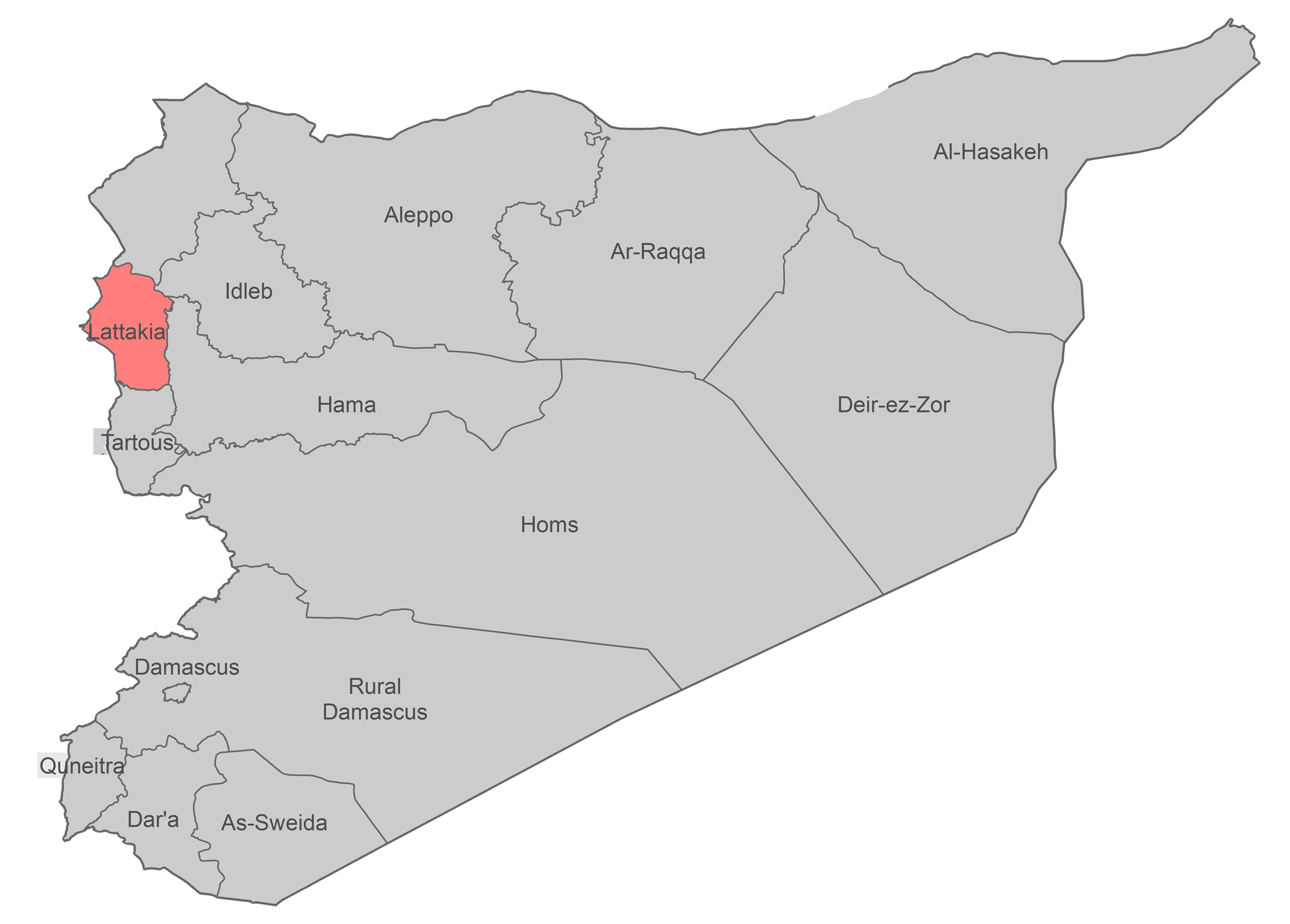
When wildfires erupted in Syria’s Latakia province on 3 July, few could have imagined the devastation that would follow. For villagers already battered by more than a decade of conflict, this was not just a fire — it was the final blow to what little remained.

From conflict to wildfires

Amina Suleiman, a mother of four from the village of Tamimah, recalled how the wildfires followed years of hardship brought on by war.
"We went through harsh war conditions, purely survival conditions, and then came the wildfires. If anything was left from the war, it was lost in the fires."


What started as a flicker quickly escalated into an uncontrollable inferno. Amina described how villagers tried to stop the flames by cutting trees and forming barriers. But nothing worked against the wind-driven blaze.
“We thought they could be controlled… But the fire kept growing. The wind would blow and the fire would grow with it.”
In just fifteen minutes, the entire village was reduced to ashes — homes, orchards, water and irrigation infrastructure — all gone. By 14 July, fires across the province had consumed more than 15,000 hectares, leaving over 26,000 people affected.
Grief for the green

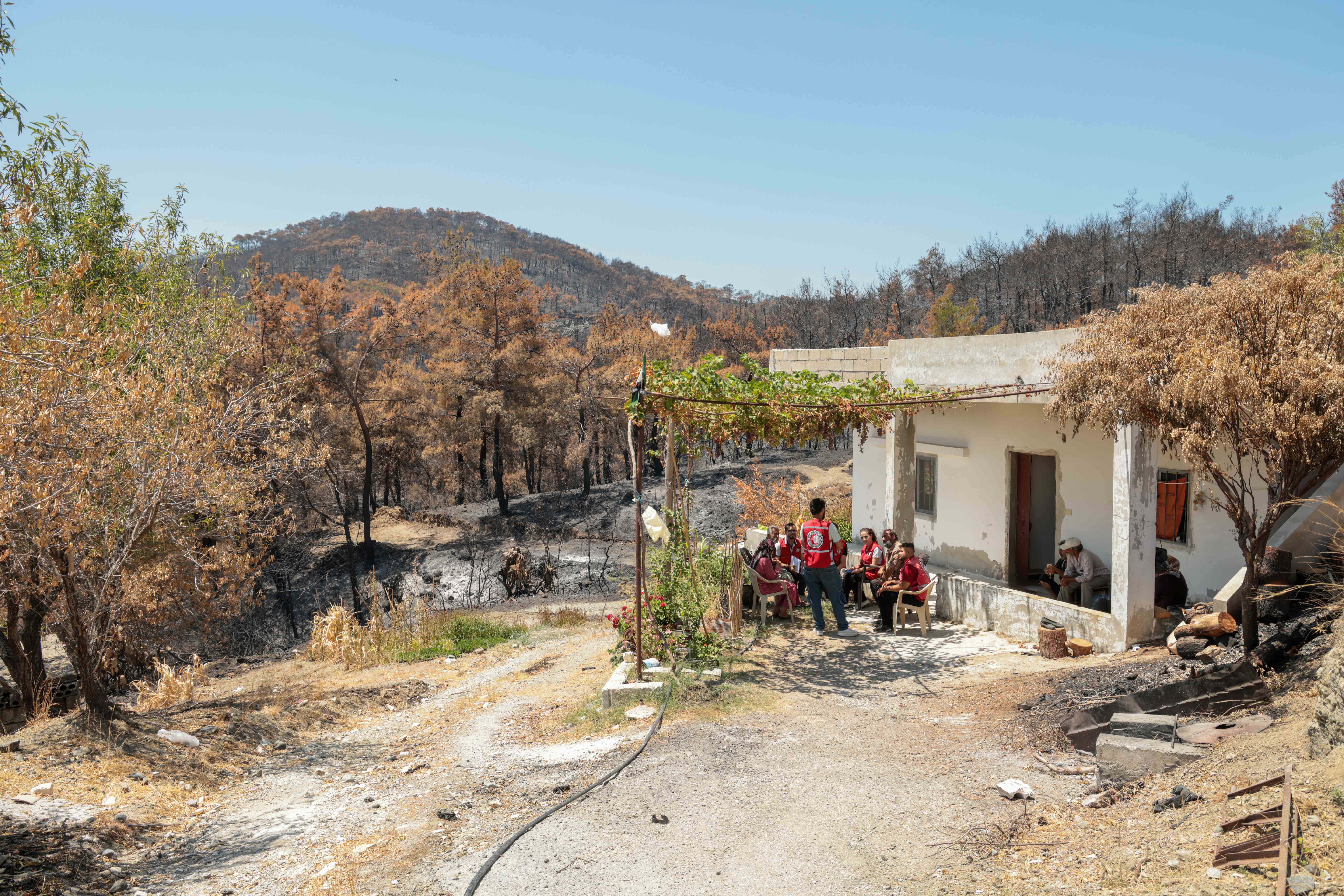
For many in Latakia’s countryside, the emotional toll of the wildfires went far beyond property loss. Trees that had stood for generations were turned to ash, taking with them livelihoods, memories, and a sense of rootedness.
Ameera Ali Khalaf, a 59-year-old mother of three, spoke of the heartbreak that came not from losing things, but from losing the land itself.
“We weren’t sad about losing material things, we were heartbroken over the loss of the ancient trees.”
The fires consumed everything: olive groves, pomegranate and almond trees, even the very spots where villagers once sat to rest and enjoy the shade.
“Everything is gone. Even the trees I used to sit under every morning… they’re gone too.”


For many in Latakia’s countryside, the emotional toll of the wildfires went far beyond property loss. Trees that had stood for generations were turned to ash, taking with them livelihoods, memories, and a sense of rootedness.
Ameera Ali Khalaf, a 59-year-old mother of three, spoke of the heartbreak that came not from losing things, but from losing the land itself.
“We weren’t sad about losing material things, we were heartbroken over the loss of the ancient trees.”
The fires consumed everything: olive groves, pomegranate and almond trees, even the very spots where villagers once sat to rest and enjoy the shade.
“Everything is gone. Even the trees I used to sit under every morning… they’re gone too.”
Red Crescent on the front lines

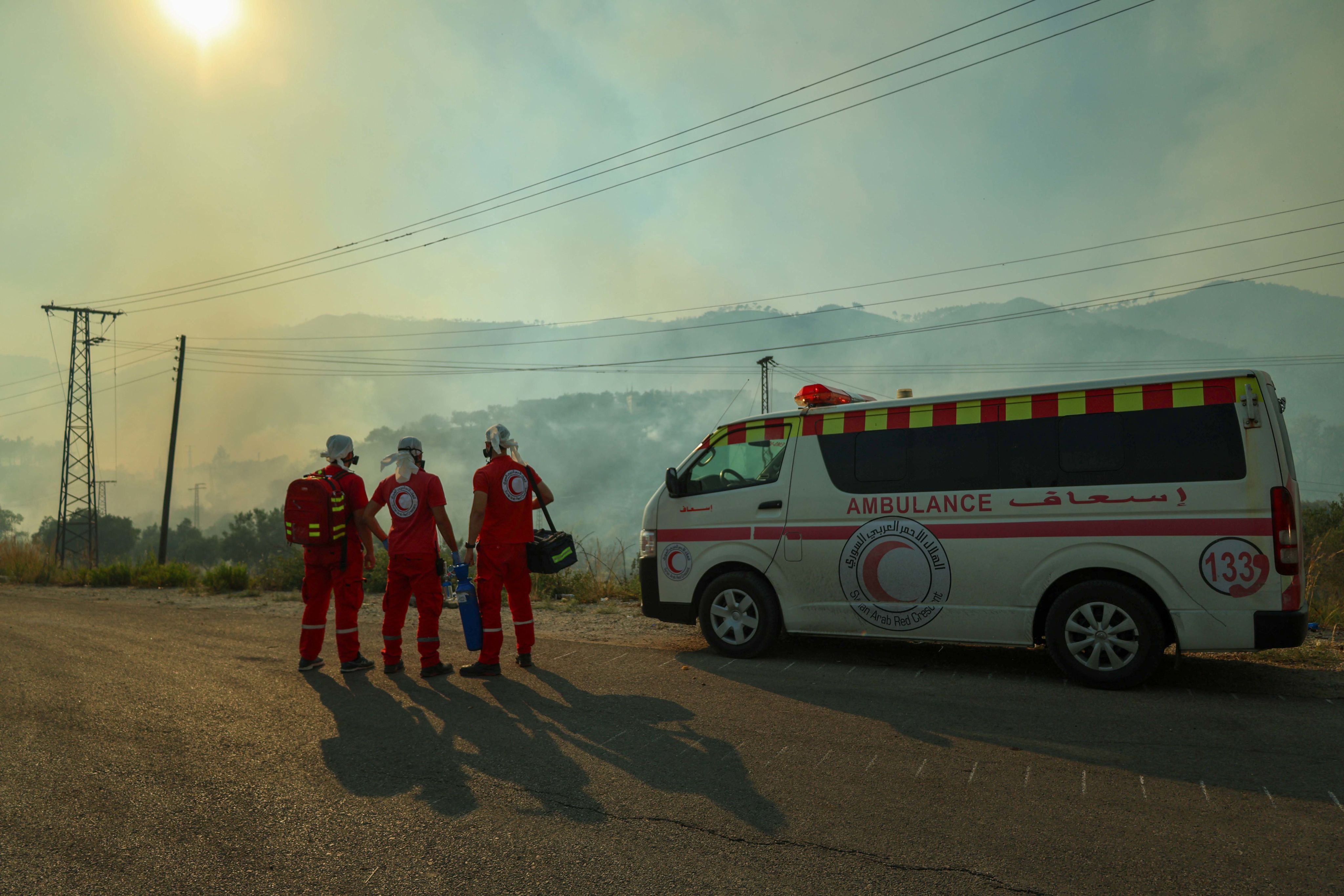
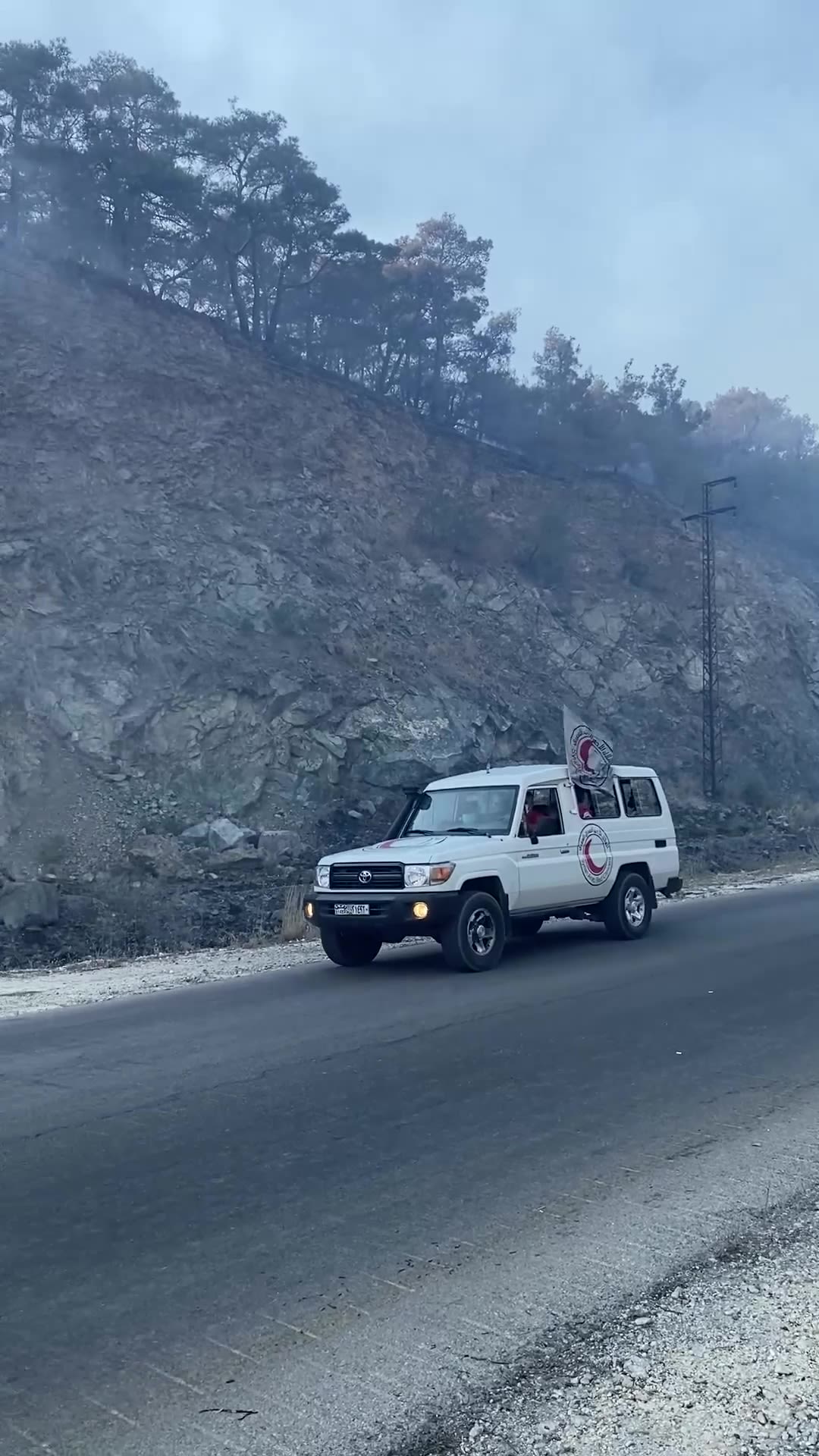
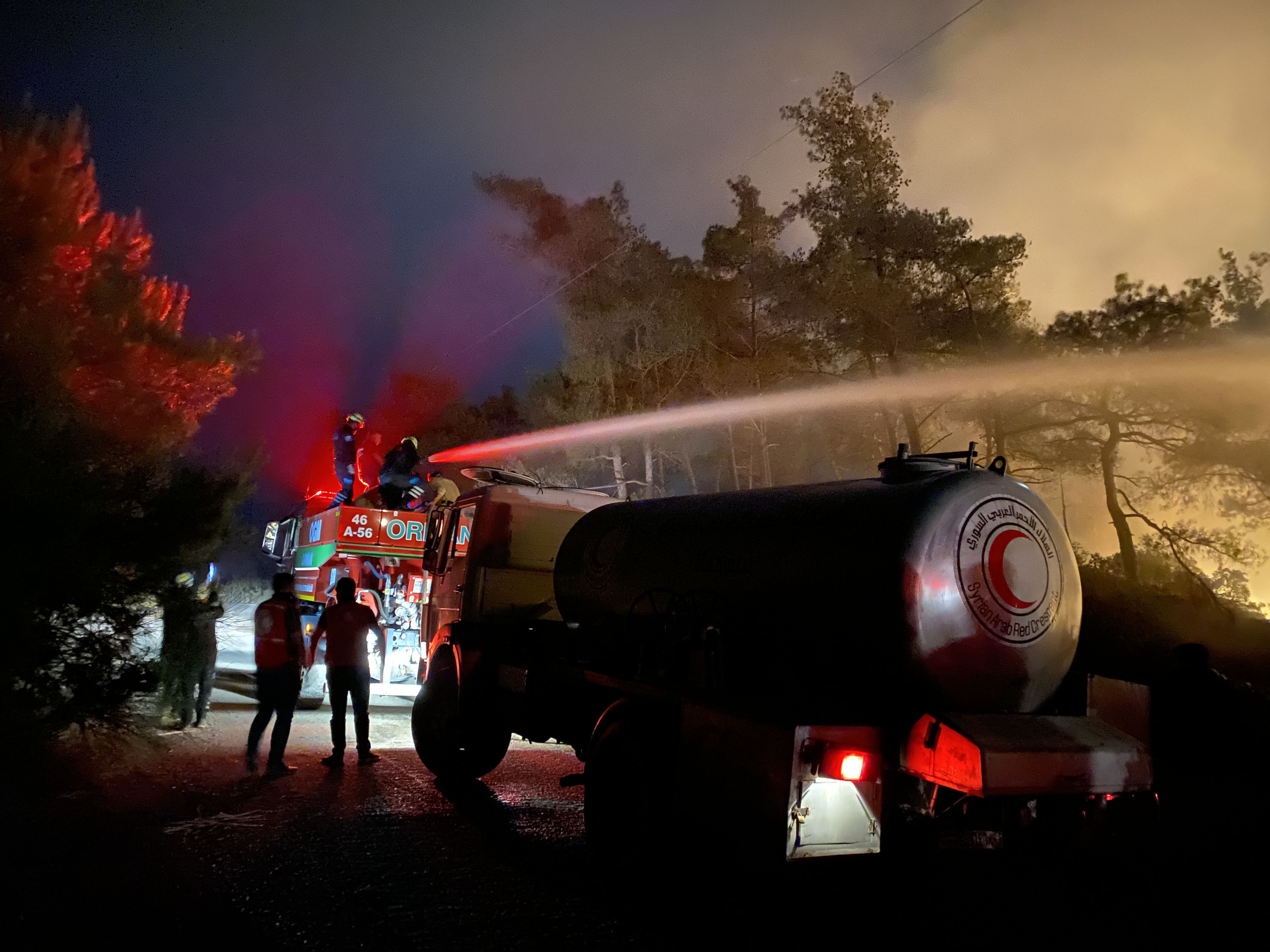
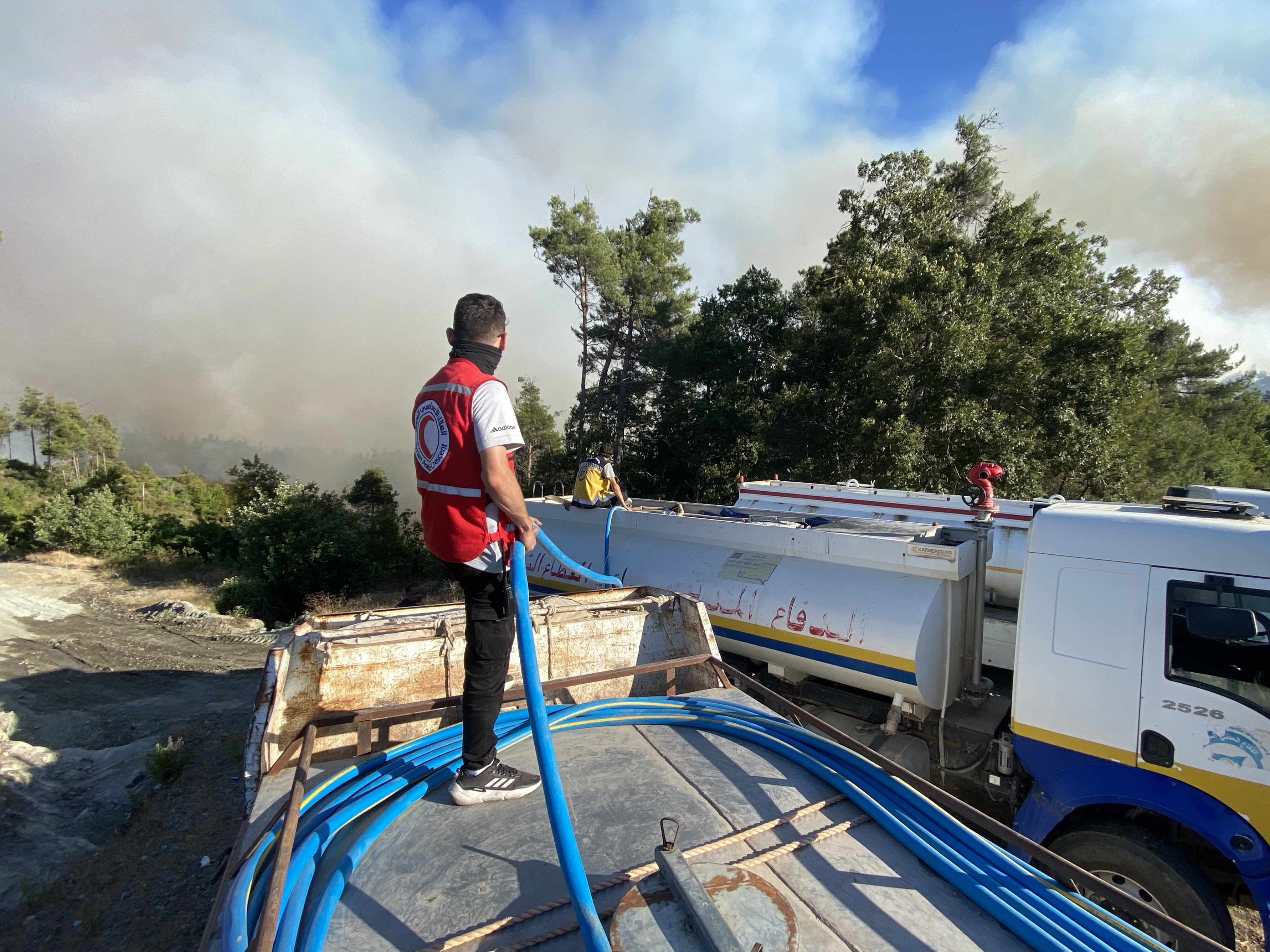
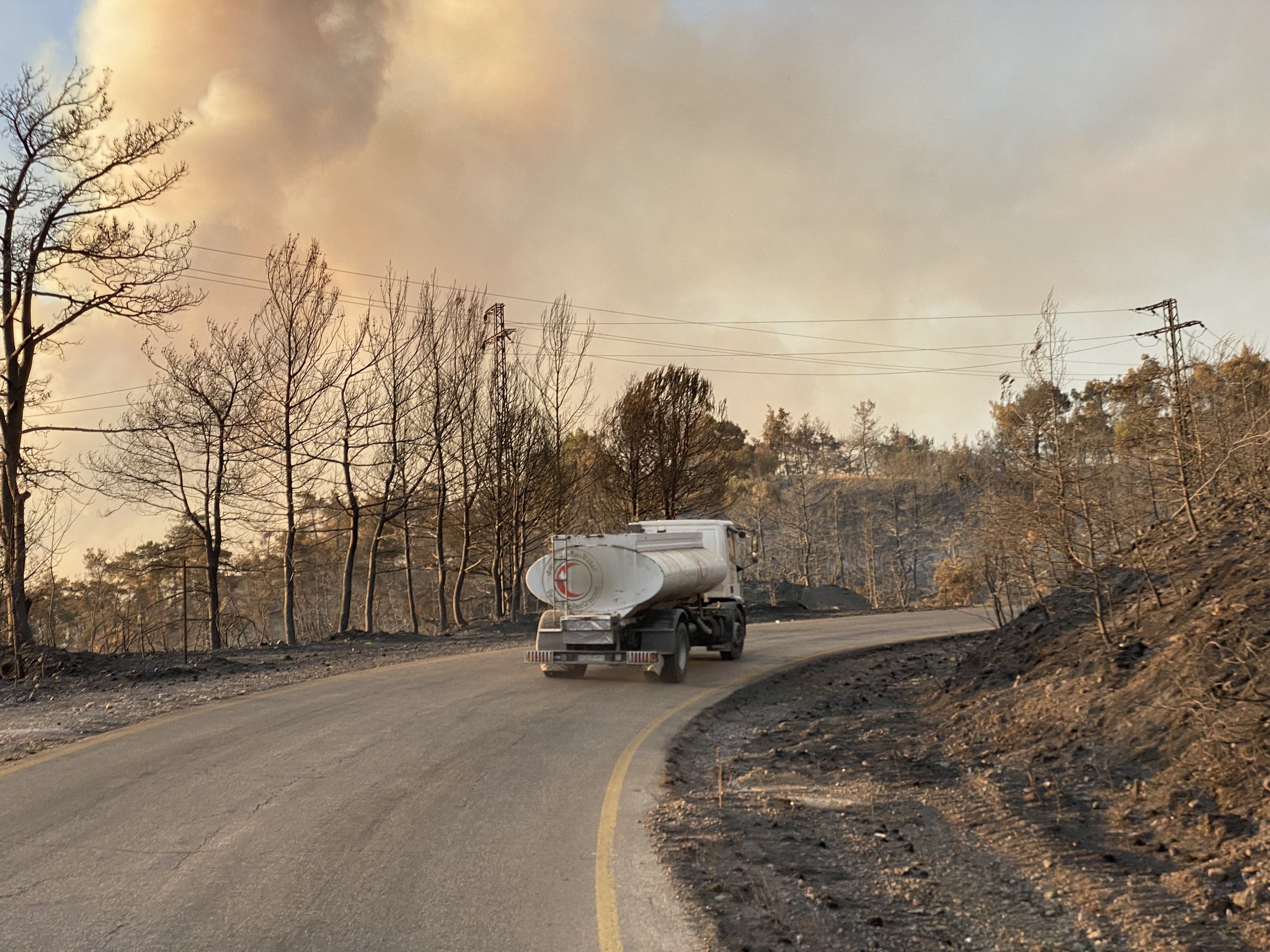
As the fires spread across forests and villages, Syrian Arab Red Crescent (SARC) teams mobilized quickly — supporting the Syrian Civil Defense with evacuations, conducting emergency assessments, and providing medical care under dangerous conditions.
Ahmad Hakim, who works as an assessment coordinator at the Syrian Arab Red Crescent, described the early days of the response:
“The assessment team was present on the ground and began the emergency assessment process. At times, the team was in areas close to the forests and burning lands.”

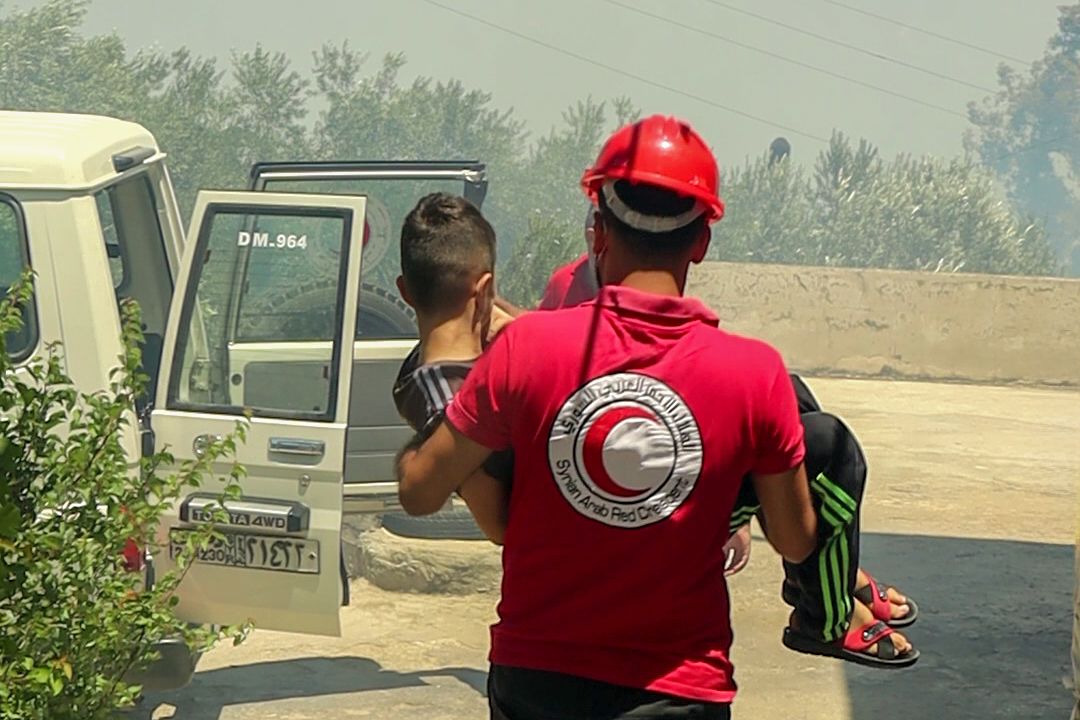

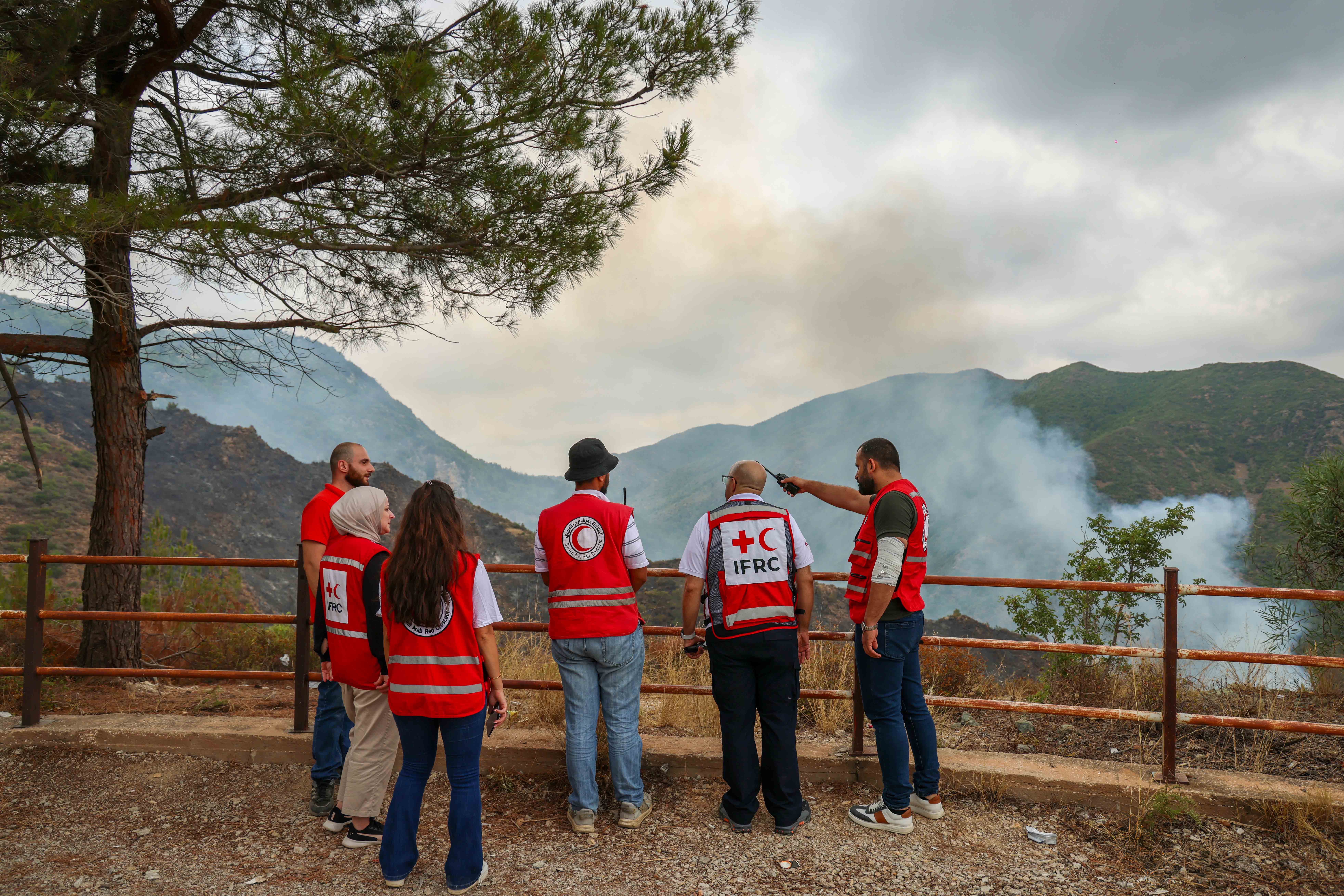


For five straight days, teams assessed the damage, often working near active fires and under heavy smoke. Despite limited logistics and the risks of suffocation, they stayed in the field.
“Some volunteers experienced cases of suffocation…We managed the situation thanks to the presence of medical teams.”
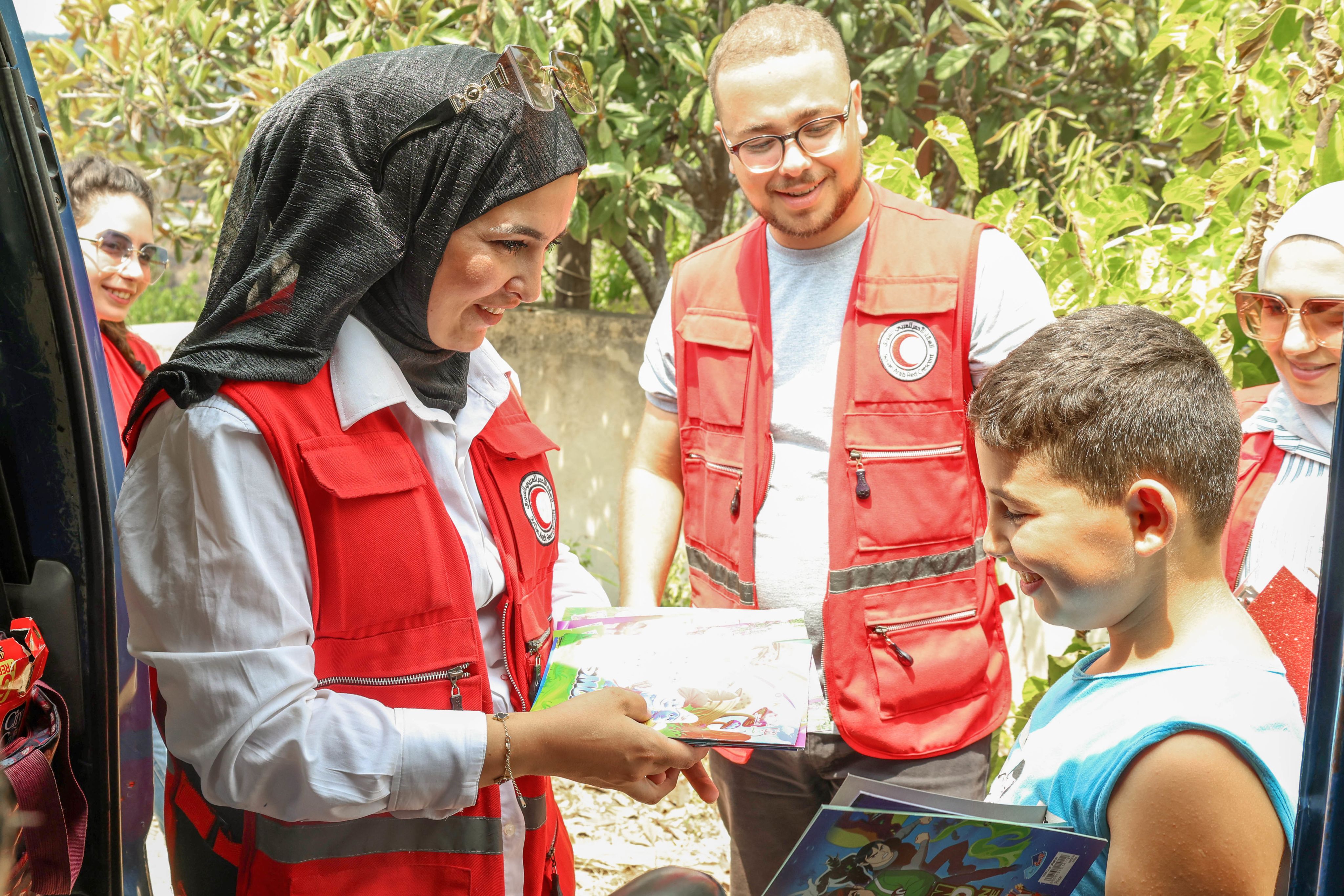
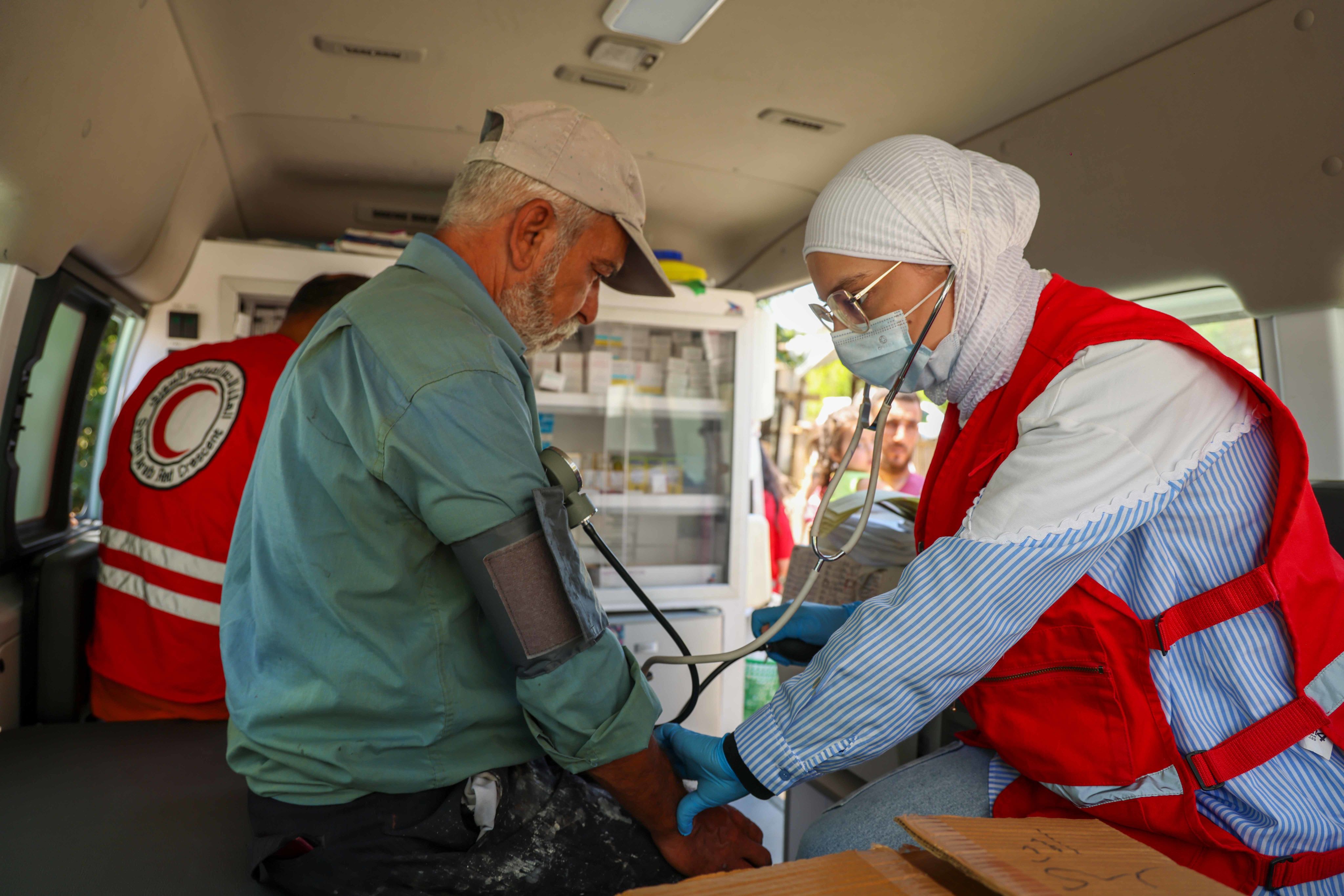
Medical units treated volunteers on-site while continuing their support to the community. In total, the needs of over 6,000 families were documented across the affected area.
For five straight days, teams assessed the damage, often working near active fires and under heavy smoke. Despite limited logistics and the risks of suffocation, they stayed in the field.
“Some volunteers experienced cases of suffocation…We managed the situation thanks to the presence of medical teams.”
Medical units treated volunteers on-site while continuing their support to the community. In total, the needs of over 6,000 families were documented across the affected area.
Relief in the aftermath
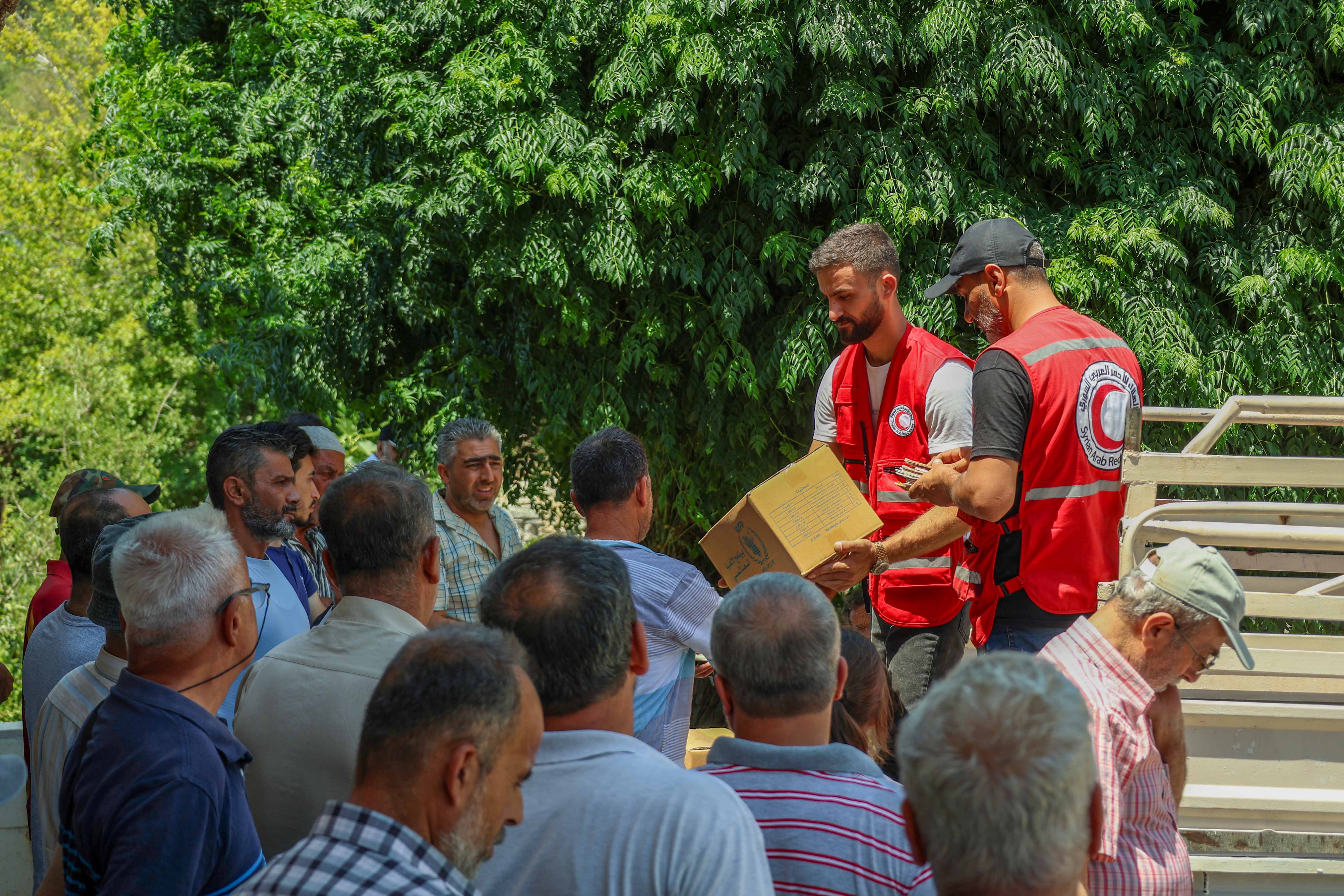
Even while the fires were still raging, SARC teams began providing life-saving assistance, with support from a CHF 519,810 allocation by the IFRC’s Disaster Response Emergency Fund (IFRC-DREF). Once the flames were contained, the response scaled up, with more than 14,600 people receiving emergency aid supplies across 57 villages in Rabia, Qastal Maaf, and Kansaba.
Among the first priorities was restoring access to water and essential medicine. Amina recalled what it was like when SARC teams reached her village.
“They (SARC) gave us water — the water supply was cut, even drinking water, so they brought us bottled water and medicines. The medical team came here and gave us ointments for the children, anti-inflammatory medicine and painkillers. The elderly asked about their chronic medications and SARC provided those too.”
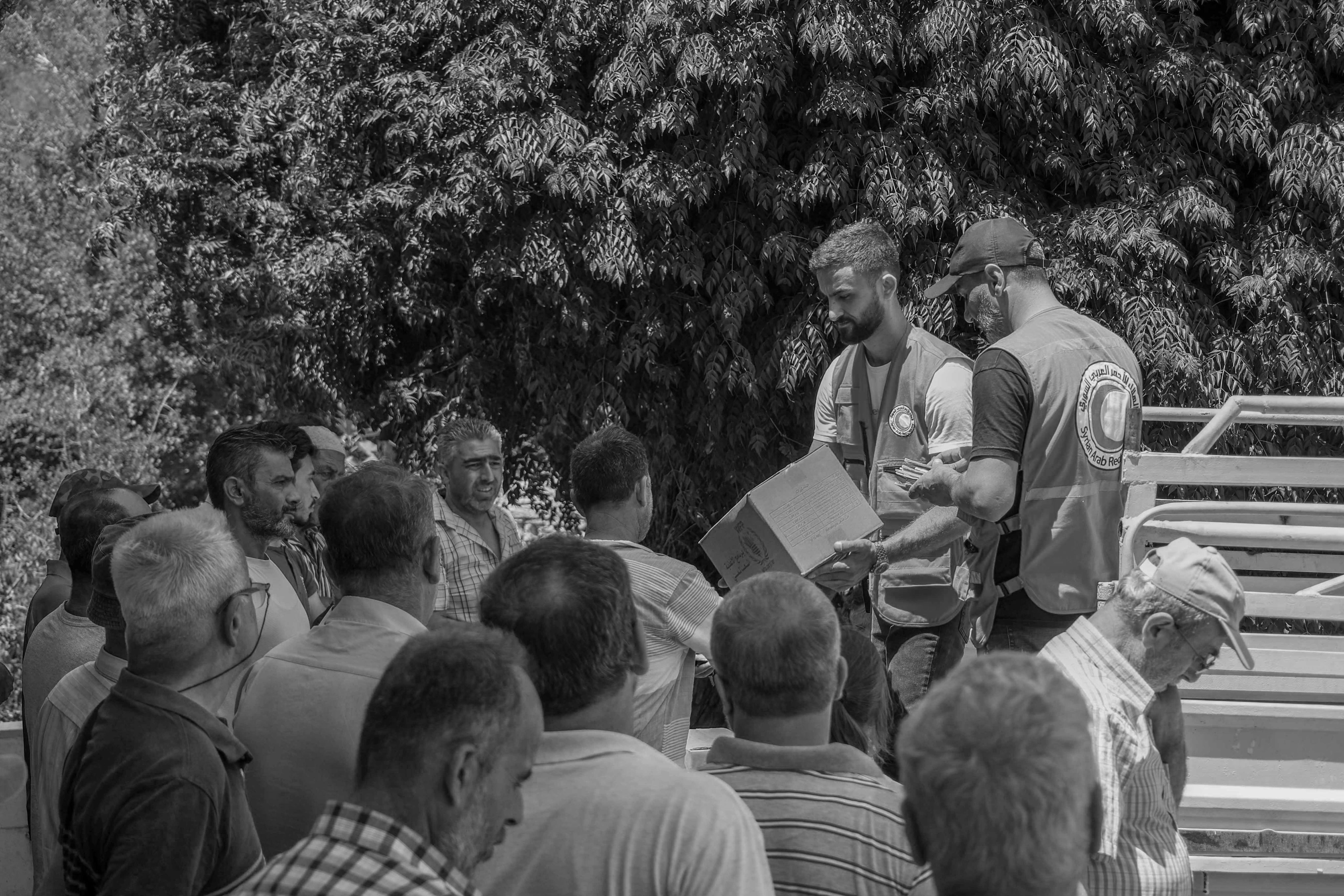
Distributions included canned food parcels, jerry cans of clean water, solar chargers, hygiene kits, sleeping mats, and kitchen sets. SARC also provided firefighting hoses, pumps, and water tankers to help the Syrian Civil Defense stop the spread of flames and restore local infrastructure.
“Seeing SARC volunteers on the frontlines of the wildfires in Syria was humbling, I listened to their stories and saw their determination as they worked in exhausting conditions to support affected communities. I was glad that IFRC DREF allocation was quickly released, and field actions and support were agile with the activation of IFRC Immediate Response Protocol.”



The long road to recovery
In the aftermath, replanting and rebuilding are top of mind for many families, but the journey ahead won’t be easy.
Amina expressed the longing felt by many in her community, not just to survive, but to bring life back to their land.
“My hope is that we can stand on our feet again… to make [our lands] green again like before.”
To support this goal, SARC is now working on restoring agricultural systems, repairing irrigation, and helping communities begin to rebuild what was lost.
When crisis strikes, local communities rise.
The long road to recovery
In the aftermath, replanting and rebuilding are top of mind for many families, but the journey ahead won’t be easy.
Amina expressed the longing felt by many in her community, not just to survive, but to bring life back to their land.
“My hope is that we can stand on our feet again… to make [our lands] green again like before.”
To support this goal, SARC is now working on restoring agricultural systems, repairing irrigation, and helping communities begin to rebuild what was lost.
When crisis strikes, local communities rise.
More resources about wildfires:
Learn more about wildfires and how to protect your community
 Built with Shorthand