Local, Everywhere
Rooted in communities, present in 191 countries, and backed by global coordination and influence. These are the essential elements that define the IFRC Network of Red Cross and Red Crescent Societies and its 16 million community based volunteers. Trusted, local faces delivering life-saving support before, during and after crisis, in every corner of the globe. At a time when the humanitarian sector is under scrutiny, we are proving every day that our local, everywhere presence is having a life-saving and life-changing impact.

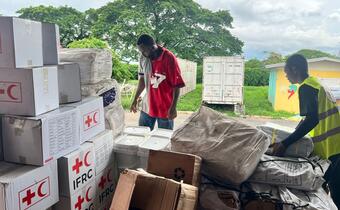
Volunteers for the Red Cross of the Democratic Republic of the Congo unload emergency supplies to contain the 2025 Ebola outbreak.
Photo: IFRC
Whether its helping to halt the spread of Ebola, helping communities recover from a deadly cyclone, or helping families get back on their feet after fleeing confict, our local presence means we are there for the duration, ensuring people get they help they most need to rebuild and be ready for whatever the future brings.
This rootedness in local communities has never been more critical. Global humanitarian needs are higher than ever, while aid funding is diminishing. Despite efforts to localize the humanitarian aid delivery system, only 4.5 percent of international aid reaches local actors directly. With IFRC pooled funds, however, more than 76 percent of allocations flow directly to locally based National Societies — putting money straight into frontline response and toward developing sustainable local capacity and resilience.
Our impact is more than a one-time stopgap, it’s an investment that begins reducing costs as soon as the next disaster strikes.
Watch: What the Local, Everywhere campaign is all about
A local volunteer for the Afghan Red Crescent, Sharifa's rootedness in the local culture allowed her to reach out to all people in need and learn more about their real needs and concerns following the devastating earthquake in September 2025.
A global amplifer for local voices

Speaking at a high-level COP29 meeting focused on Early Warnings For All, IFRC Secretary General Jagan Chapagain says the world must not only increase funding for early warning, but also ensure investment reaches those who need it most — the communities most impacted by the climate crises.
Photo: IFRC
As the world’s largest locally based volunteer network, the IFRC is also able to amplify local needs on the global stage. Whether it’s at the COP30 summit or at the United Nation’s General Assembly, where the IFRC has observer status, the IFRC is well placed to convene the global actors, partners, donors and governments to leverage real change and impact on behalf of communities in need.
Our global network also means we are able to coordinate complex emergency responses, raise awareness and resources at a global level, implement multi-year global partnerships that further key health and social goals and create innovative ways to ensure resources flow to people in need quickly through our Disaster Response Emergency Fund (IFRC-DREF).
Local, Everywhere means we act early, even before disaster strikes
More funds for anticipatory action
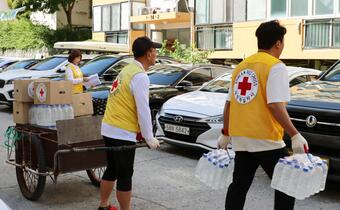
25 per cent of all DREF allocations are now dedicated to anticipatory action. This means funding is triggered in advance of a pending emergency, allowing local responders to position supplies, food and equipment, while mobilising personnel to raise community awareness and ensure damage and loss of life is minimized.
Helping communities prepare
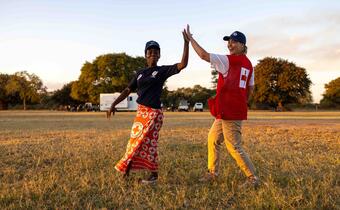
The IFRC Global Climate Resilience Platform, launched in 2022, has already channeled CHF 300 million to help communities prepare for the increased frequency and severity of climate related events. We do this in more than 100 countries — many in fragile or conflict settings.
Innovative tools
We use innovative tools like the Montandon Databank, the world's largest open source database of hazards and disasters to inform better, faster, and more efficient humanitarian action.
Diverse, sustainable, innovative
Local, Everywhere is also about streamlining and stengthening a humanitarian system that is both principled, sustainable and innovative. By diversifying funding and reducing reliance on traditional funding models and donors, we provide consistency needed to protect communities from the volatility of global crises. Here are a few examples:
•IFRC pioneered an innovative insurance model for our IFRC Disaster Response Emergency Fund (IFRC-DREF) to ensure we will always have enough funds to meet the growing demands. This has never been done in our sector.
• We are also exploring carbon credits, endowment funds, loan facilities, and have launched an Islamic Social Financing platform to channel Zakat donations.
• Our Donor Advisory Group now includes 15 members and 4 observers, such as Saudi Arabia and South Korea, as well as a growing private-sector partnerships through the Humanitarian Innovative Financing Hub.
We don’t work alone: Collaboration from local to global
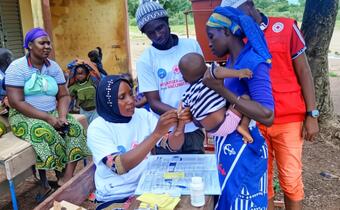
Community health
Through the REACH programme, the IFRC works in close partnership with Africa CDC and UNICEF to scale up community health systems across 54 African countries. This life-saving work is supported by USD 200 million from the Mastercard Foundation.
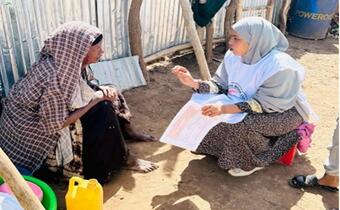
Pandemic preparedness
Along with WHO and the Intergovernmental Authority on Development in Eastern Africa, IFRC is channeling USD 30 million from the World Bank Pandemic Fund to strengthen preparedness in 15 African countries.
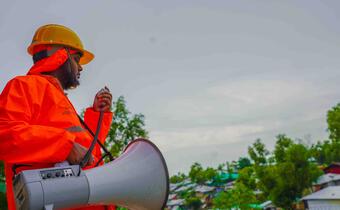
Early warning and anticipatory action
Along with UNDRR, the World Meteorological Organizatoin and International Telecommunications Union, we are part of the Early Warnings for All initiative, channeling USD 114.6 million over five years from the Green Climate Fund to strengthen early warning systems.