
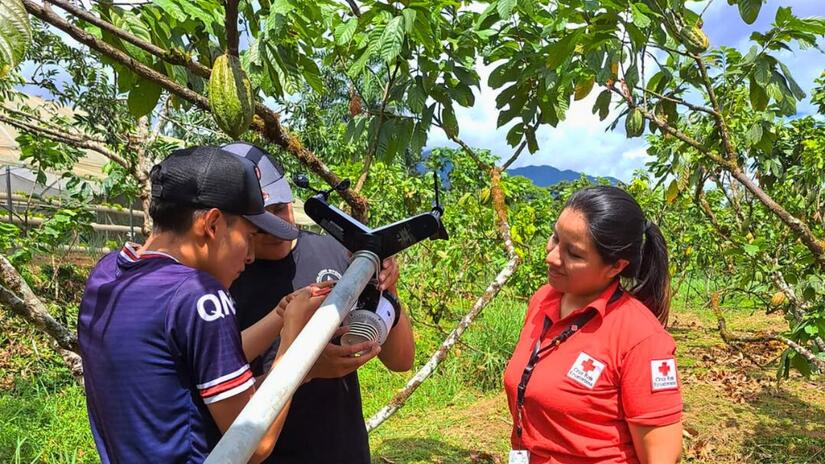
In the Ecuadorian Amazon, where the rainforest is integrated into every aspect of life and culture, cacao is more than just a crop; it is a source of sustenance and a tradition.
Ecuador is the world's third-largest exporter of fine aroma cocoa, a product that sweetens our palates, drives the local economy, and supports thousands of families in the Zamora Chinchipe region of the Amazon, near the border with Peru.
However, cocoa crops are under threat from climate change and phenomena such as El Niño. In major cocoa-exporting countries such as Ghana and Côte d'Ivoire, extreme rainfall and prolonged droughts have led to the emergence of pests that have wiped out entire plantations.
When plantations are lost, chocolate production declines, poverty increases, and food security is compromised. In this multi-threat scenario, timely information and anticipation can mean the difference between losing or saving a crop.
To protect cocoa in the Amazon rainforest, two young volunteers from the Ecuadorian Red Cross branch in Zamora Chinchipe have combined science, innovation and local knowledge to design an Early Warning System to help cocoa-growing families anticipate risks and plan preventive actions.
One of the two young women who promoted this initiative is Josselyn Balcázar. She is very clear about the problems facing cocoa-producing communities:
‘The problem we identified is the vulnerability of cocoa producers due to the empirical management of their plantations, which does not take into account meteorological measurements in the context of climate change impacts,’ she explains.
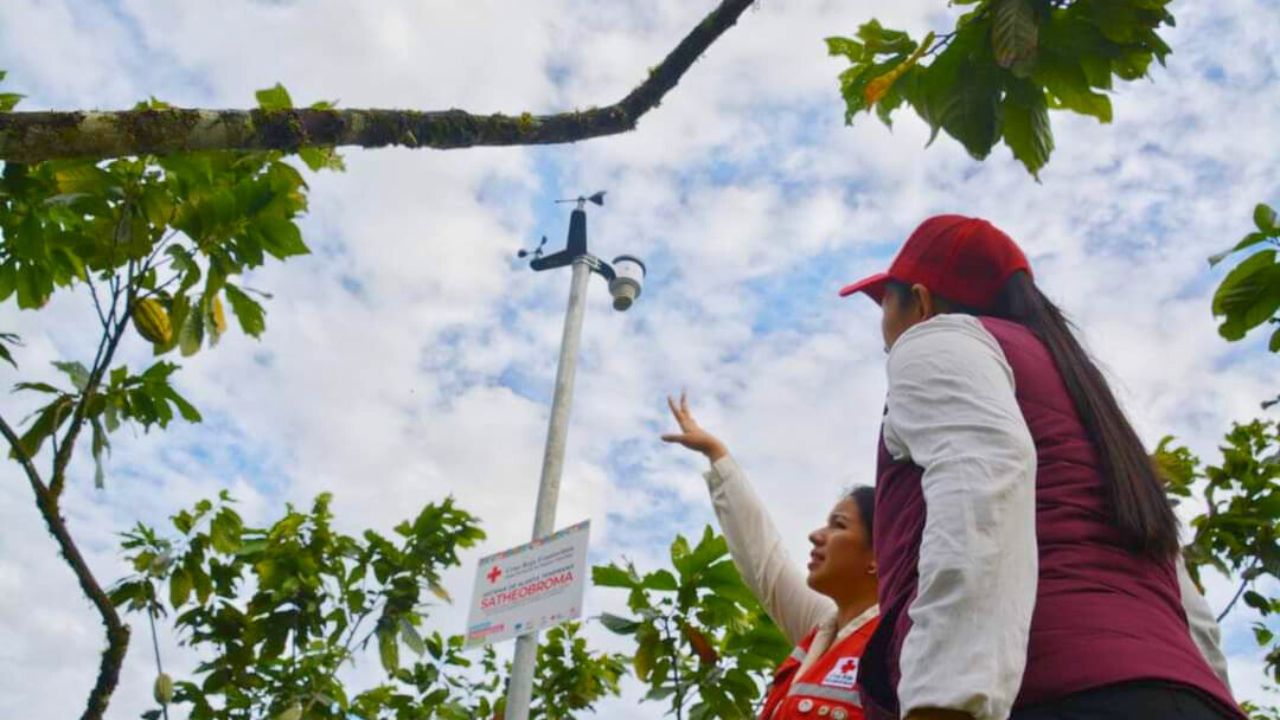
Josselyn Balcázar explains to the Prefect of Zamora Chinchipe, Karla Reátegui, how the SATHEOBROMA Early Warning System works.
Photo: Ecuadorian Red Cross
Technology to the rescue of cocoa
This Early Warning System is called SATHEOBROMA, which refers to theobroma, the scientific name for the cocoa plant. The project was launched in 2023 thanks to the Limitless programme of the Solferino Academy.
‘It is a mini weather station that records precipitation, temperature, humidity and other variables daily. This information helps producers to understand when pests are likely to appear, enabling them to take appropriate measures and avoid losing their crops,’ explains Verónica Andrade, national climate change adaptation technician at the Ecuadorian Red Cross.
The information is analysed to detect conditions that favour the proliferation of pests such as the well-known monilia, which can destroy entire plantations.
While the initiative cannot stop the rains or prevent droughts, it does enable action to be taken before the problem escalates into a disaster. Producers receive alerts so they can act quickly and prevent losses from spreading.
‘It's crucial to bring this technology to the field because without local information, we can't prevent problems,’ says Oswaldo Castillo, a Shuar cocoa technician.
‘This is a very important initiative so that we can take timely action and avoid low yields,’ says Bolívar Flores, a local producer.
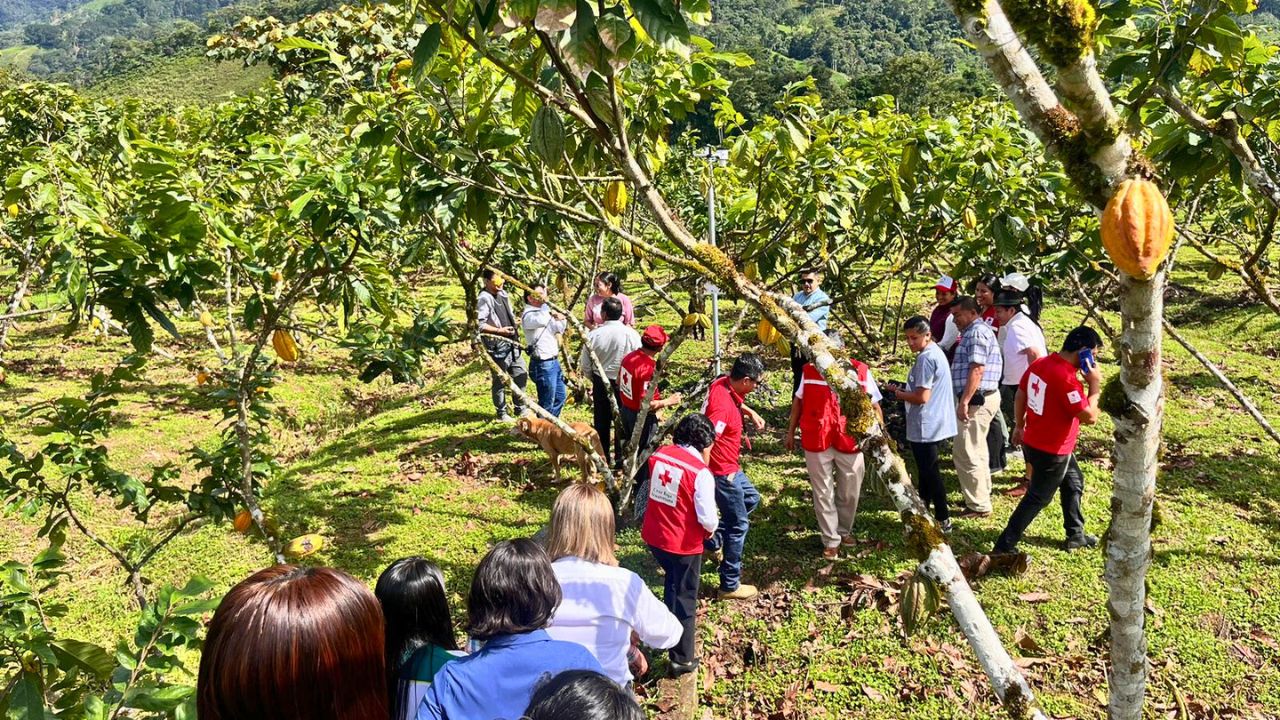
The Ecuadorian Red Cross conducted a demonstration of the SATHEOBROMA Early Warning System on a cocoa farm. Cocoa farmers, cocoa associations, and provincial authorities took part in the event.
Photo: Ecuadorian Red Cross
A pilot version of the system was installed on one farm to demonstrate its functionality, before being expanded to two more farms. The Ecuadorian Red Cross plans to roll it out more widely in future to benefit additional cocoa-producing communities in the area.
The initiative has even caught the interest of local institutions.
'With the support of technology and technical assistance, we must prepare so that, when effects occur, we can mitigate and counteract them,' said Karla Reátegui, Prefect of Zamora Chinchipe.
'From the prefecture, we also reaffirm our willingness to coordinate actions that will allow us to continue expanding the benefits to more farms and producers,' she concluded.
Climate change will continue to present challenges, but with tools such as SATHEOBROMA, agricultural families are not alone.
In a world where weather events are increasingly unpredictable, early warning systems are essential for ensuring food security and enabling communities to adapt.
This initiative demonstrates that involving communities in decision-making allows us to identify and plan preventive measures, prepare for and respond effectively to multiple crises and disasters, and ensure that resources are directed to those who need them most.