
Herat/Kuala Lumpur/Geneva, 30 June 2025 - The Islam Qala border crossing in western Afghanistan has seen more than 800,000 people from Afghanistan returning from Iran since January 2025. In June alone, over 137,000 people came through Islam Qala, often arriving exhausted and without adequate food, water, or shelter.
With rising temperatures, limited resources, and host communities struggling to cope, the International Federation of Red Cross and Red Crescent Societies (IFRC) is calling for urgent support to meet the needs of those arriving.
Afghanistan is already facing many difficulties after decades of conflict, economic problems, and disasters such as earthquakes and floods. Alongside the returnees from Iran, more than 1 million people have also come back from Pakistan since late 2023, putting additional pressure on basic services and humanitarian organizations.
"This issue hasn’t received the attention it deserves," highlights Alexander Matheou, the Regional Director for Asia Pacific at the IFRC, who visited the border this weekend. "These individuals are not just statistics; they are mothers, fathers, children, and families returning to a country that is already facing significant trials. It’s crucial that we treat them with the dignity they deserve and support them as they work to rebuild their lives."
A significant number of returnees are individuals who have spent extended periods—some for decades—in Iran or Pakistan. Their decision to return is influenced by the evolving legal landscape affecting them, challenging economic circumstances and heightened regional tensions impacting those countries.
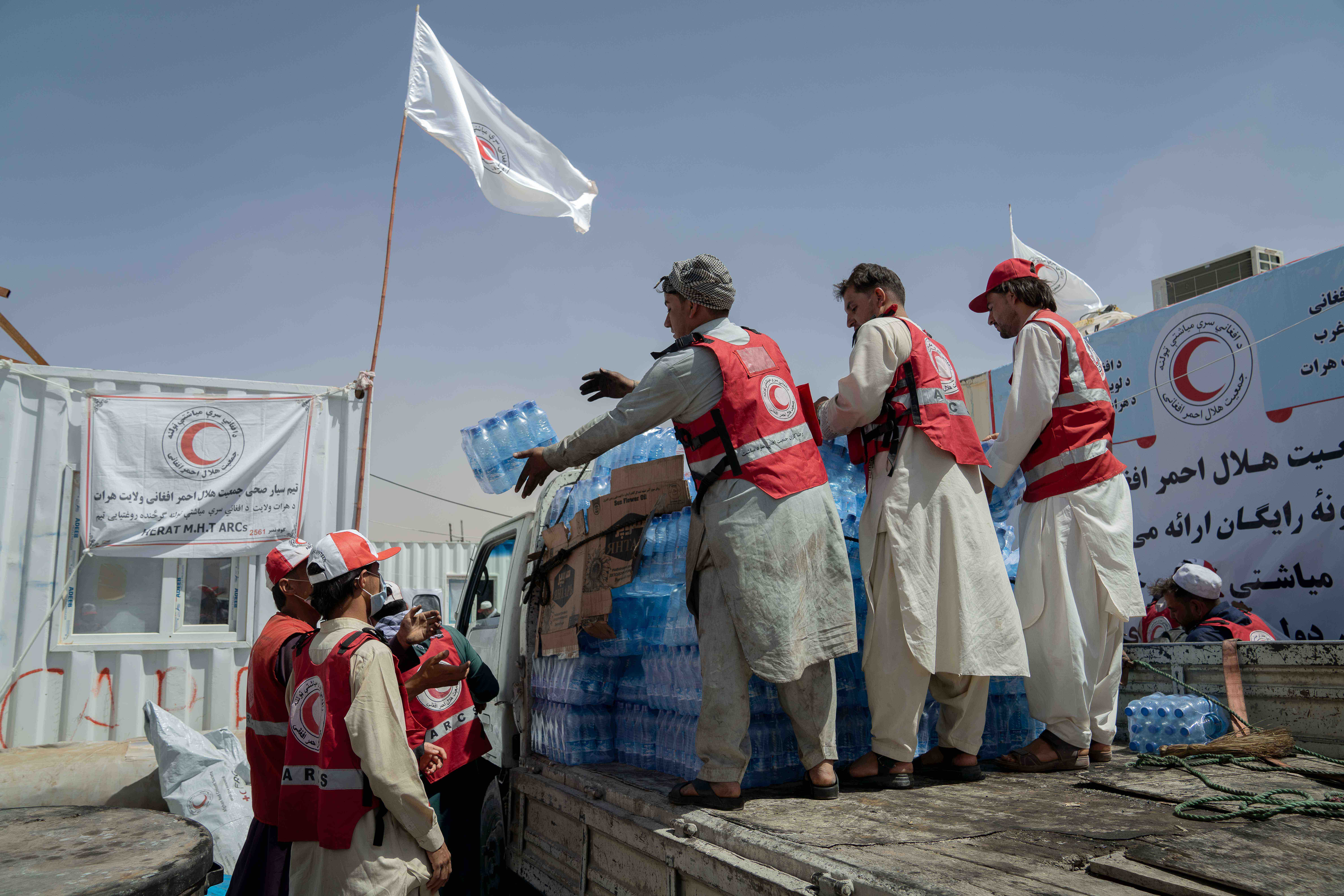
Afghan Red Crescent volunteers unload water bottles for people arriving at the Islam Qala border crossing in western Afghanistan, where families often endure sweltering temperatures often topping 40°C.
Photo: Meer Abdullah/IFRC
At the border, families endure sweltering temperatures often topping 40°C, armed with the few belongings they could manage to pack. They find shade under blankets, while signs of malnutrition are evident in children, and many mothers appear worn down and anxious.
The Afghan Red Crescent Society (ARCS), is on-site providing vital assistance. They are offering medical care, clean drinking water, and food to those in need. Their mobile clinics are treating at least 500 patients daily, including pregnant women, children, and the elderly. While serious cases are referred to nearby hospitals, the demand for medical supplies is outpacing availability.
"Many mothers we talk to are incredibly fatigued, with their primary focus on the well-being of their children”, shares an ARCS nurse.
Once registered, families are transported to Herat City. Yet, uncertainty looms over their future. Young individuals who are returning to a homeland they barely know, while their families grapple with finding housing, establishing livelihoods, and educational opportunities.
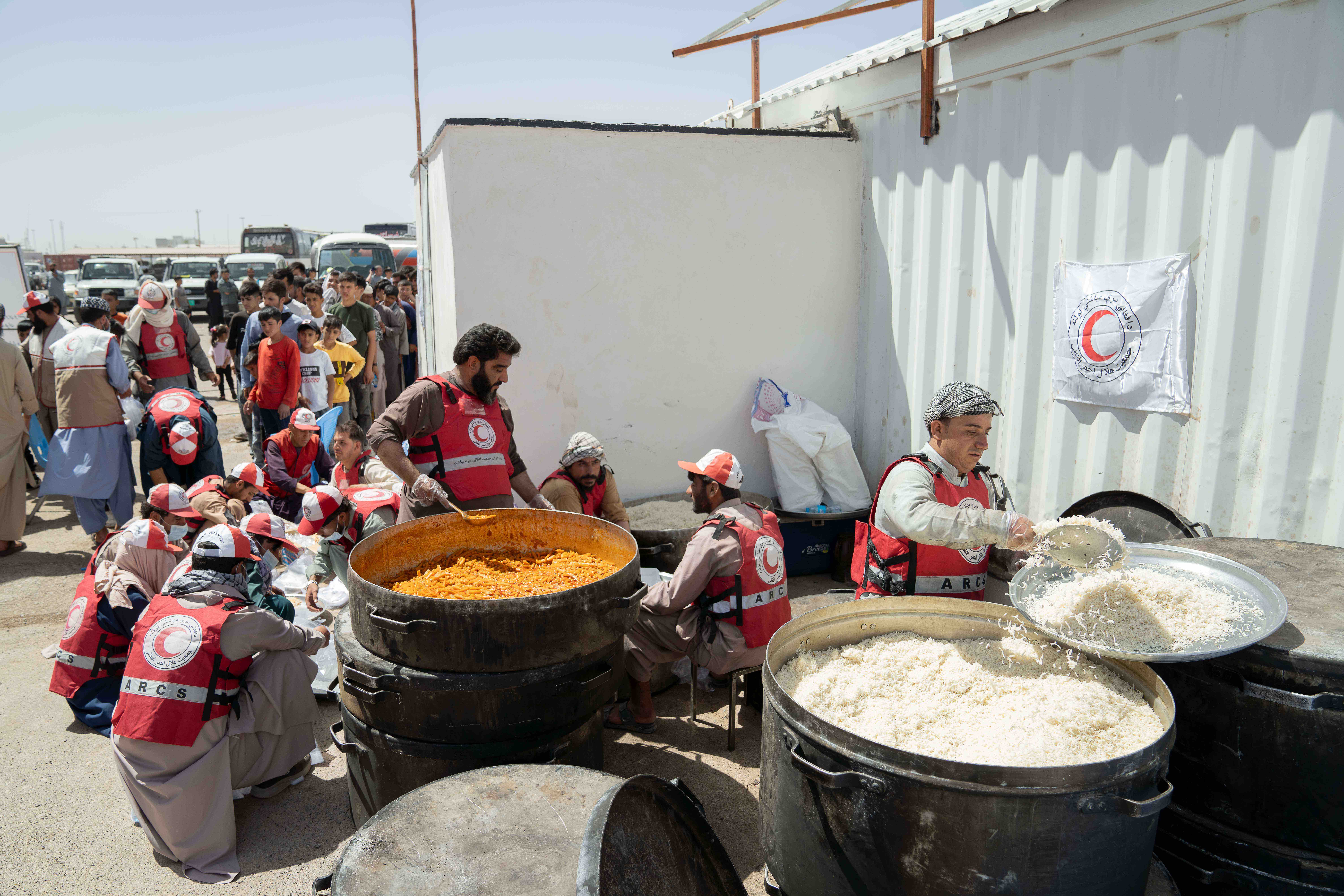
Afghan Red Crescent volunteers prepare meals for people at the Islam Qala border crossing in western Afghanistan, which has seen more than 800,000 people from Afghanistan returning from Iran since January 2025.
Photo: Meer Abdullah/IFRC
Women and girls face heightened vulnerabilities as they return to a country where their rights are significantly restricted. Access to healthcare, education, and safety remains tenuous.
"As hundreds of thousands return with almost nothing—lacking homes, jobs, and support—it's essential for governments, donors, and aid organizations to step up and provide greater assistance," Matheou emphasizes.
"Afghanistan is already under considerable strain. With the numbers of returning individuals increasing daily—and even more anticipated in the near future—this is a crucial time for the global community to unite in support of these families.
“The Afghan Red Crescent Society and its partners are doing everything within their power, but the needs are immense. There is an urgent requirement for increased funding, supplies, and long-term support to help these families rebuild their lives with dignity and hope. Together, we can make a difference in their journey towards a more secure and prosperous future.”
Spokespeople in Afghanistan and audiovisual material in addition to the below are available upon request.
Media professionals can find a collection of audio-visual material through this link.
For more information or to request an interview, please contact: [email protected]
In Kabul:
Nicole van Batenburg, +31 6 38217459
In Kuala Lumpur:
Afrhill Rances, +60 19 271 3641
In Geneva:
Tommaso Della Longa, +41 79 708 4367
Hannah Copeland, +41 76 236 9109