
Forced to flee, compelled to help
They were living normal lives as students, volunteers and neighbours until conflict in Sudan forced them to leave all behind. Now, three years after the conflict erupted, they live far and wide, in extremely difficult conditions. But these dedicated volunteers continue to help others.

Three paths, three stories of humanity
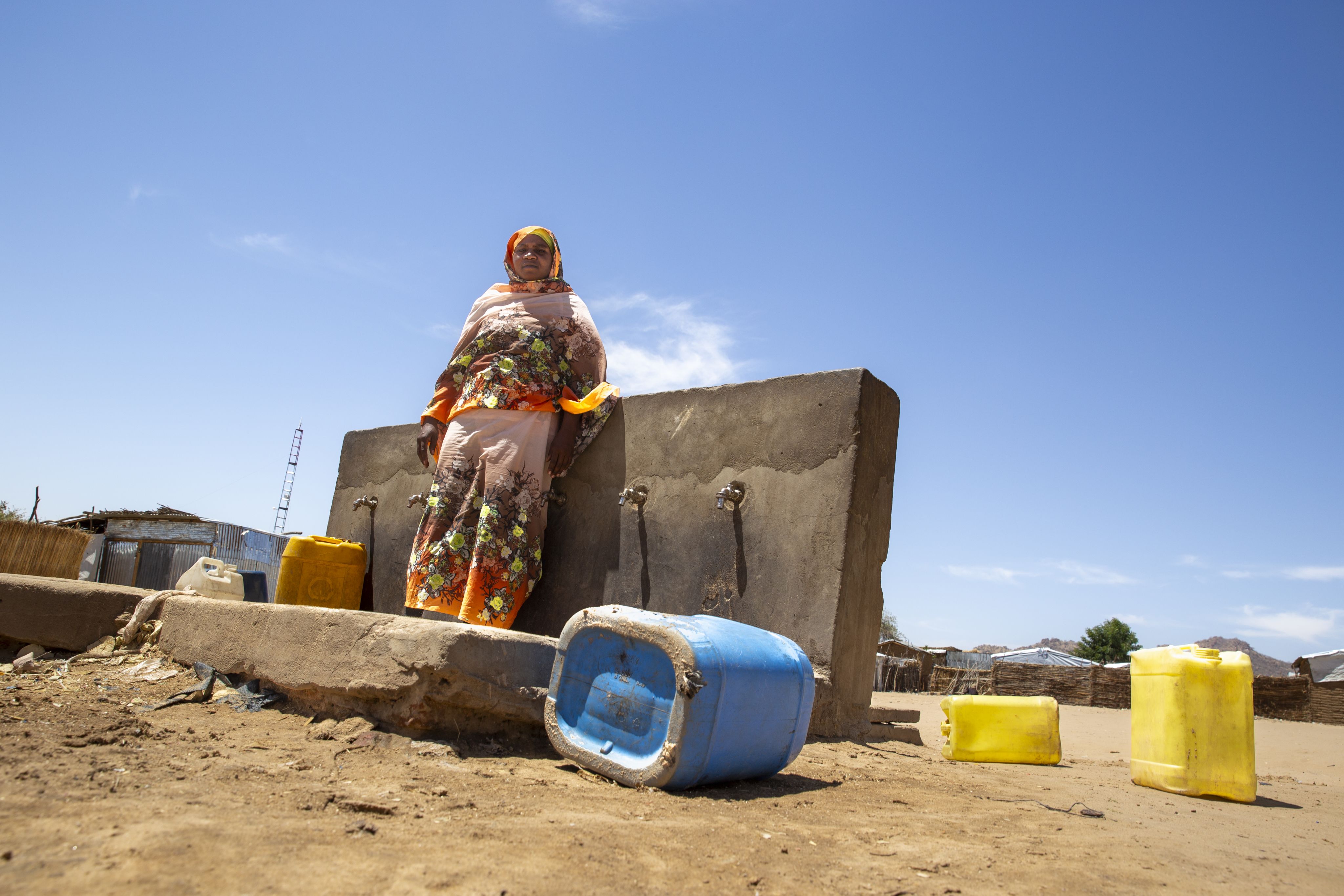
Their paths have diverged geographically but they followed a similar trajectory: whether continuing in roles they held before the conflict, or stepping into new ones, these volunteers are still committed to helping others. They are living examples of people at the heart of the Red Cross and Red Crescent response to the Sudan crisis, now entering its fourth year.
#LocalEverywhere #InternationalYearofVolunteers #Sudancrisis

Scarcity: the theme of everyday life
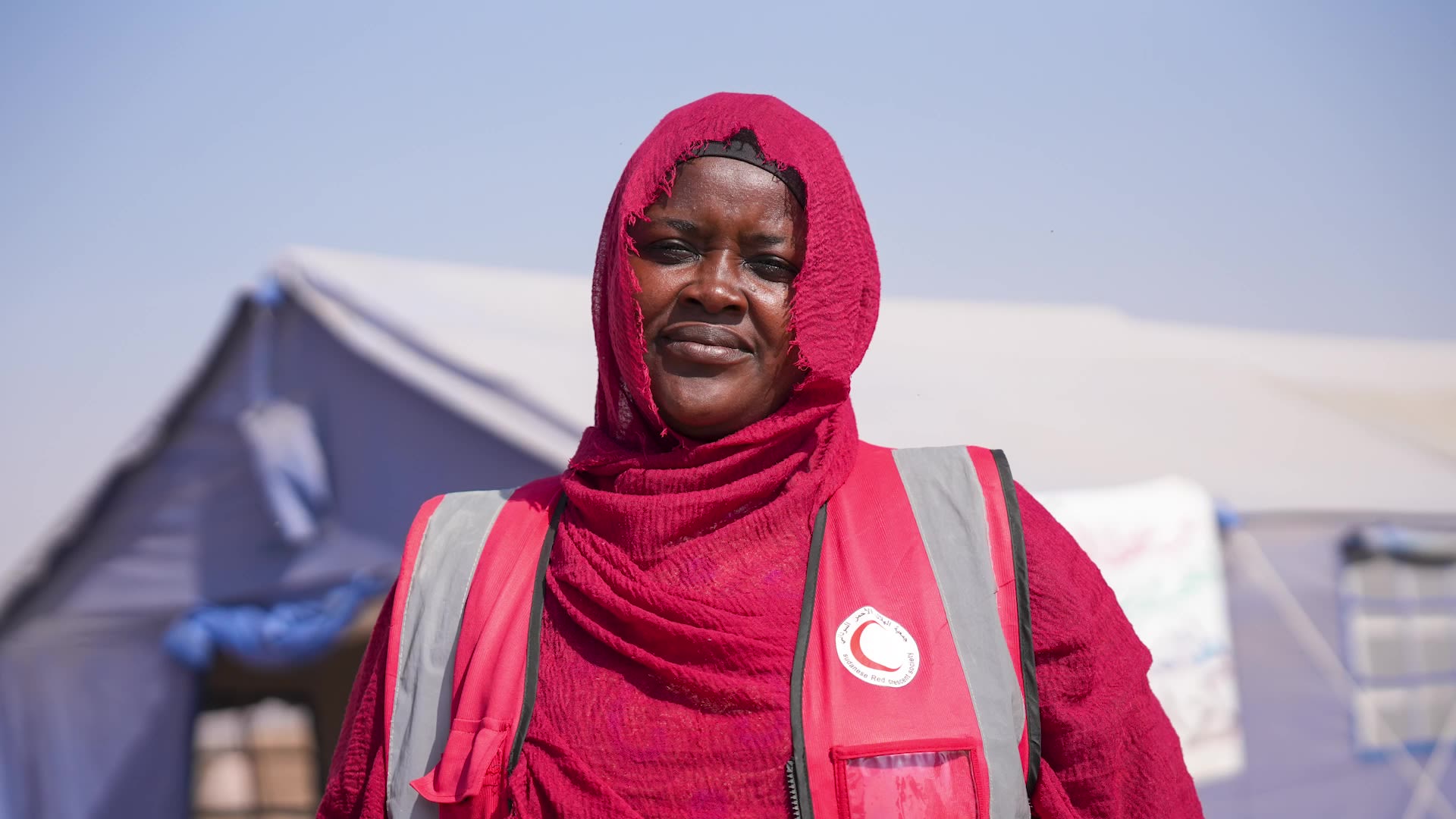
In the Arkoum camp in eastern Chad, Teibo Abdraman Ataher describes another phase of displacement: how scarcity of almost all resources shapes daily life.
Access to healthcare, food and firewood is also extremely limited. As the camps have grown, already scarce resources are shared among more and more people, creating tensions within households.
Water is a primary example. It can be found but it is often found far away, sometimes in valleys, and must be carried back by hand under the heat.
“Water is the basis of life,” she explains. “When there is no water, we cannot eat, drink, or do the household work. And it is mostly the women who carry this responsibility, as they take care of the family.”
As a volunteer with the Chad Red Cross, Teibo works within this same reality. She lives with these same constraints as a camp resident while helping to ease these pressures, particularly through awareness sessions on safe water use and hygiene.
This is a particularly critical life-saving service that helps people prevent infectious diseases in an environment where none of the normal services people are used to (ample clean water, vibrant markets, secure homes) are available..

'A noble cause'
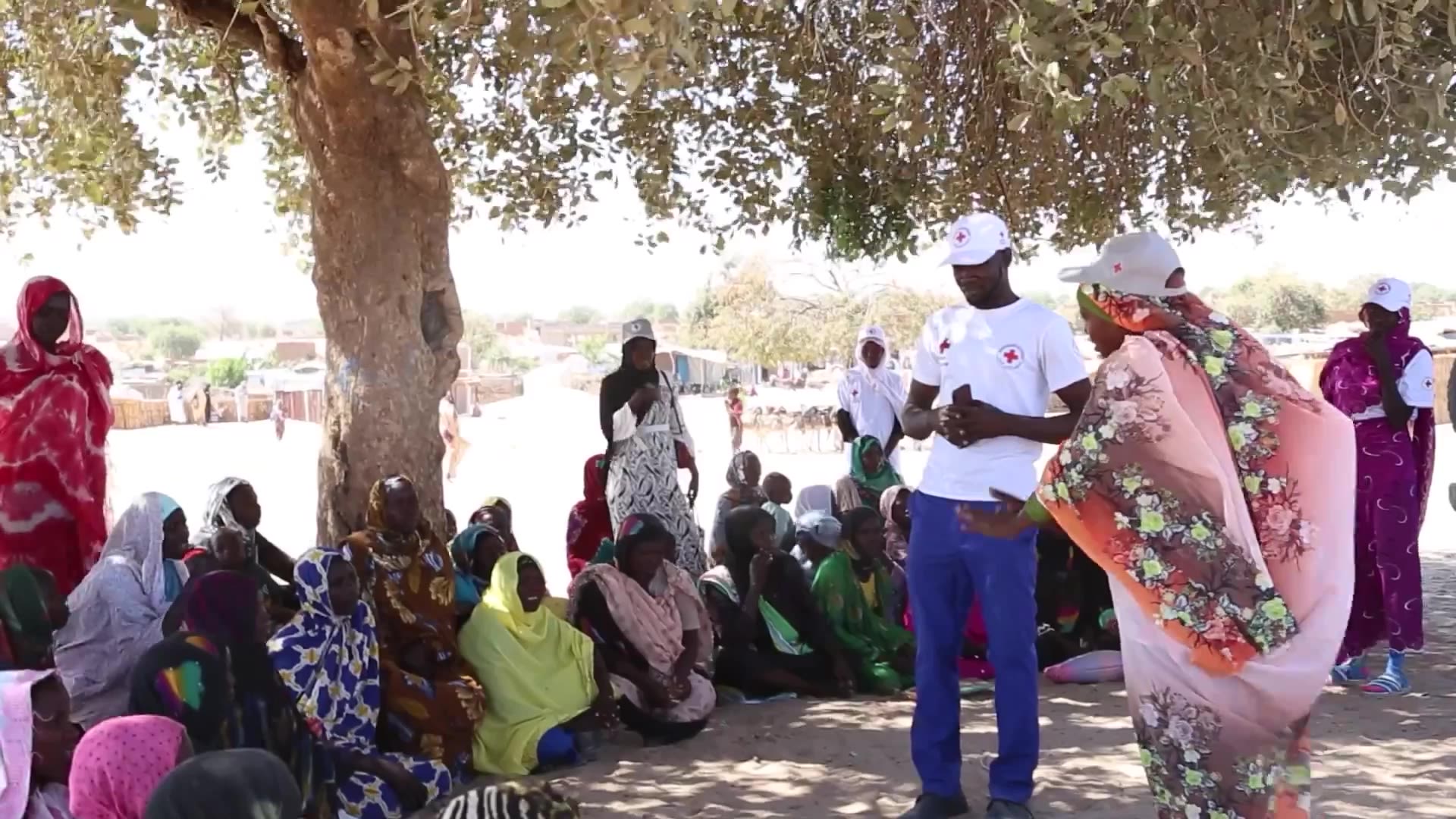
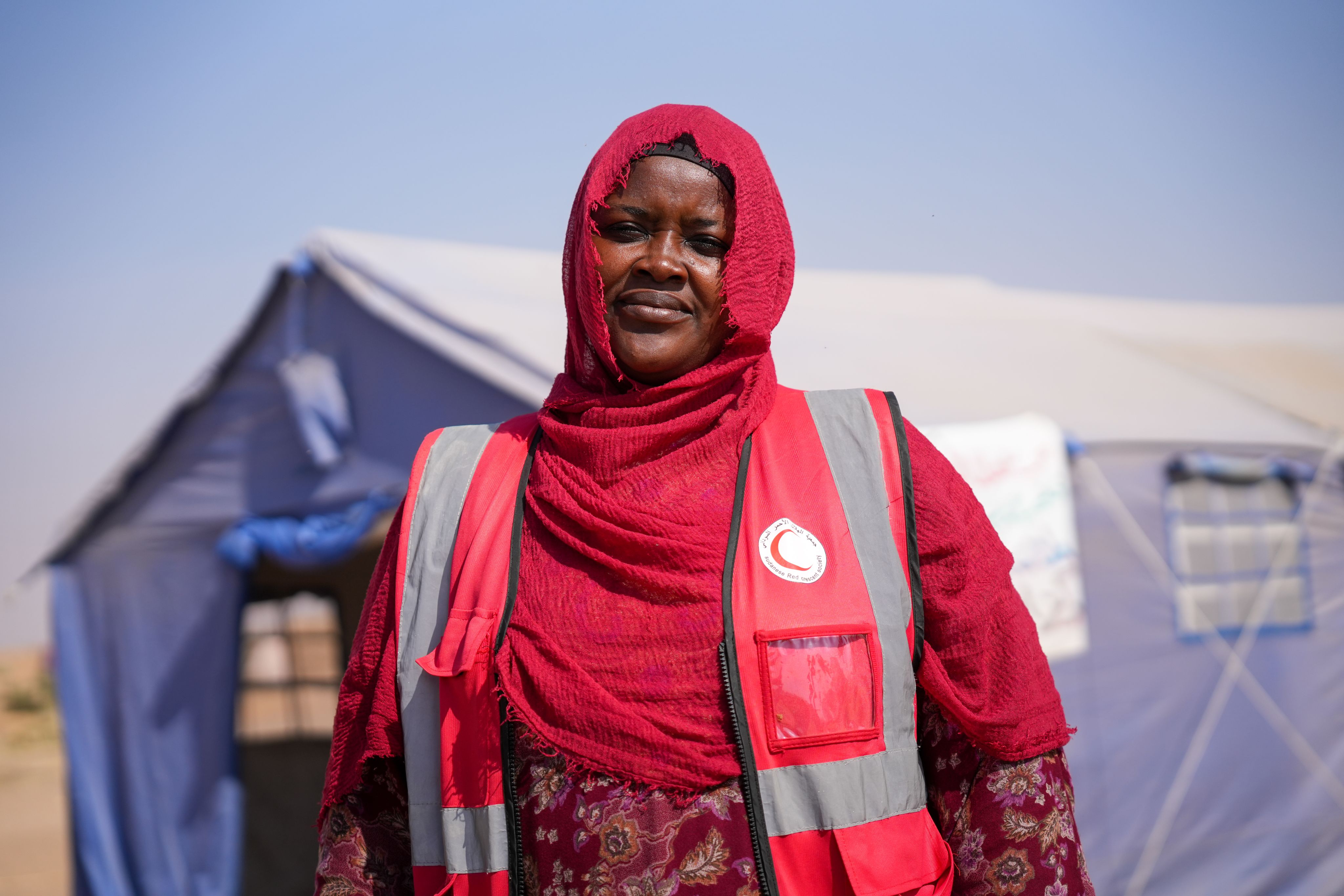
In northern Sudan, meanwhile, Iman Mohammed Saleh followed a different path. Originally from El Fasher, in western Sudan, she was already volunteering with the Sudanese Red Crescent Society in the Al Fasher branch before the escalation of violence forced her to flee.
After a 14-day journey, she reached Ad-Dabbah, where she continues her work with the Sudanese Red Crescent at the local branch.
Like many others, she arrived exhausted, marked by displacement and loss. But her role did not stop with her displacement.
Guided by her conviction that “giving is a noble human endeavor,” she continued her work, supporting others with a wide range of support while navigating her own situation as an internally displaced person..

A question of survival
Now living in Ethiopia, Bashir Mohamed remembers when the conflict first came to Khartoum and life turned upside down.
Everything narrowed down to survival:
“When the war started in April 2023, I was in Khartoum, in a student accommodation. The situation was terrible. My roommates and I were confined inside. At one point, we spent five days without food, without water. We simply couldn’t go out. The fighting was everywhere.”
When he finally fled, the journey out of the city exposed him to violence that is difficult to describe. By the time he reached Ethiopia, he had lost contact with his family and had nothing left.
For months, he lived in uncertainty. When he was finally able to reach his family through a Red Cross phone service, the relief was immediate, but so was the pain.
Some relatives had been killed, others were still missing, while part of his family had found refuge in Chad after fleeing Darfur.

'I know what it means'
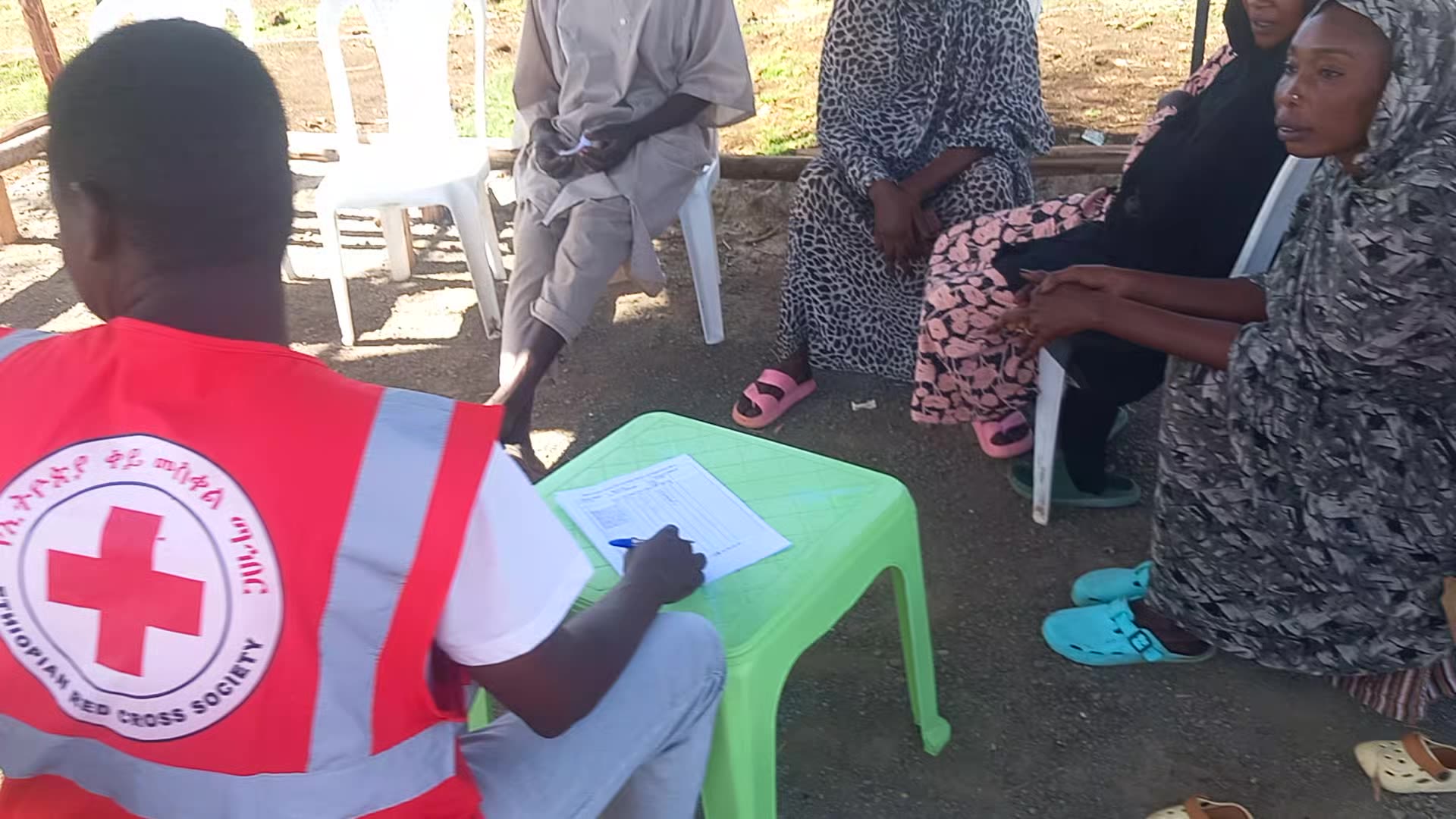
Today, Bashir works at a Red Cross humanitarian service point in Aw-barre camp, in eastern Ethiopia, helping people get back in touch with missing relatives.
Each call he facilitates carries a weight he knows well: hearing the voice of a loved one again.
Through this quiet but essential work, he has developed communication skills, learned to work with people from different communities, and, above all, to listen to stories that are sometimes difficult, often essential. It is also a way for him to process what he has been through, by supporting others facing the same uncertainty.
“I am very close to my community. I feel satisfied and happy to help others, because I know what it means to lose contact with your family.”

A human connection
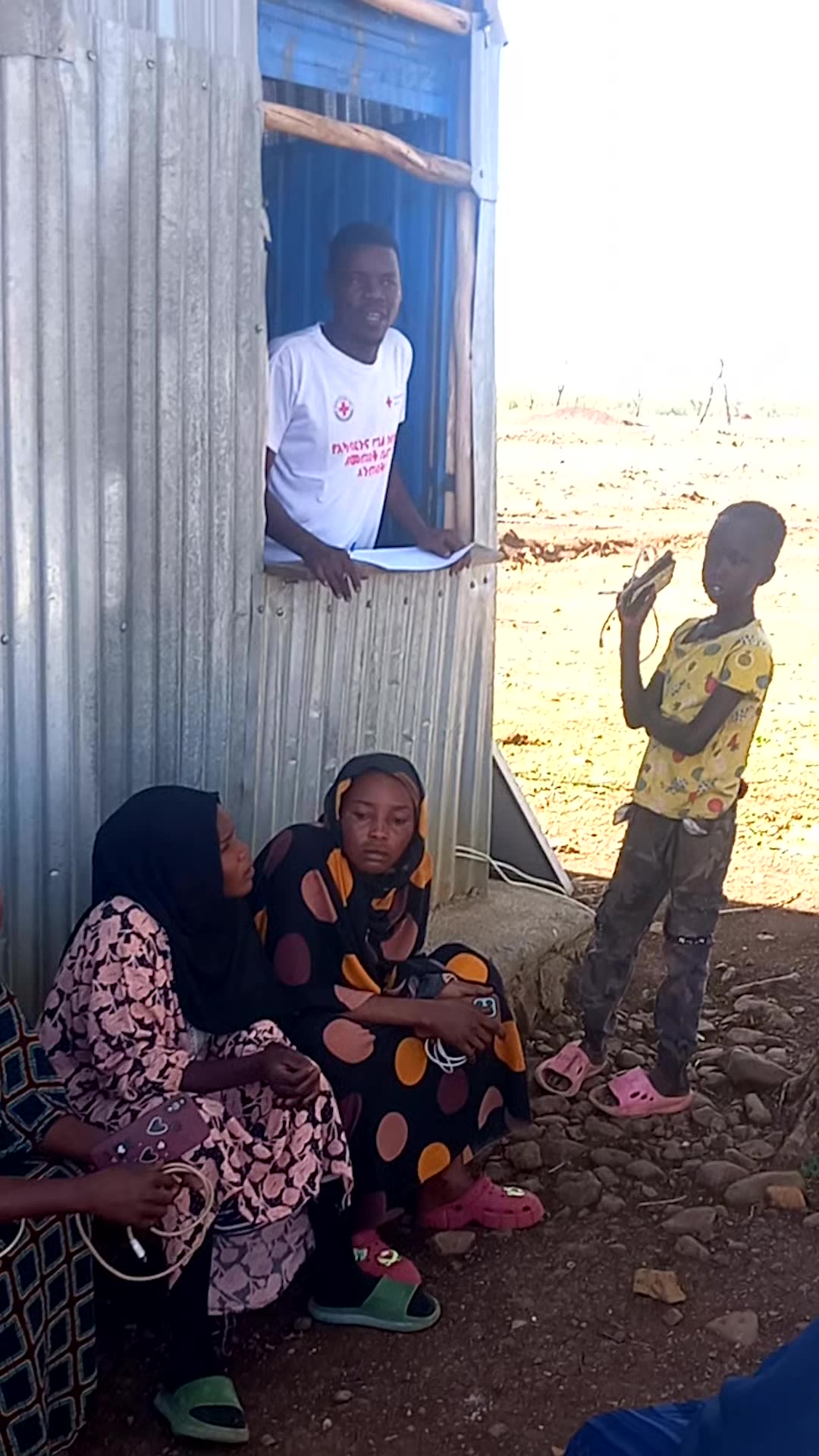
What connects Bashir, Teibo, and Iman is not only that they fled the same conflict. It is the fact that they know exactly what people displaced by the Sudan crisis are going through.
They understand the endless waiting, the feeling of living in a sort of limbo, not being able to go forward, or to go back.
They understand people's hesitation to ask for help, and the importance of small, concrete actions—a phone call, access to water, a conversation.
Supported by the International Federation of Red Cross and Red Crescent Societies, through its Sudan Complex Emergency appeal, these volunteers are highly trained, deeply committed and, just as importantly, based within the communities they serve.
An unfinished story
They all share another common trait. All three still speak of Sudan in the same way—not as a closed chapter, but as an unfinished story.
Bashir hopes for a day when families will no longer need intermediaries to reconnect. Teibo points to immediate needs, but with an eye toward stability. Iman continues to help, while holding on to the idea of return.
There is no clear timeline but they move forward – living everyday between what they've lost and what they rebuild for others.
Story by Alexis Aubin, IFRC communications officer for the Sudan Complex Emergency
Photos and video provided by Alexis Aubin/IFRC, Mahmoud Omar/Sudanese Red Crescent and Bashir Mohamed/Ethiopian Red Cross, in order of appearance in this story..
 Built with Shorthand

