
In Kena, Lesotho, families set out before dawn and walk for hours - over mountains, through rivers - to reach clinics many kilometers away. But in August, I stood in a small, airless room where the pharmacy shelves were bare just a week before.
No medicine, no doctors. Just the weight of frustration, exhaustion and quiet despair of those who had come so far - only to return home with nothing. The IFRC has just managed to get some medicines which will last for about 4 months. Then what?
I’ve been on a few missions this year to see how the international funding cuts are impacting communities. And the more countries I visit, the more I am left with a terrible realization. What I saw in Lesotho isn’t the exception. It’s becoming the norm.
Our IFRC network needs a Renewal to respond.
In Somalia earlier in the year, the Somali Red Crescent Society (SRCS) felt as though it was the only organization on the ground. Everyone I met in June was asking for our support. ‘It’s simple’ one woman said to me, only half joking, ‘Just make us the priority!’. The trouble, of course, is that so many deserve priority.
Health is where resilience begins. If people are not healthy, they cannot build their lives or their communities. But health is also where the cracks show first. In the village of Laalays in Somalia, I watched infants receive life-saving vaccines with the help of our volunteers backed, financially, by the IFRC’s Disaster Response Emergency Fund, our ‘IFRC-DREF.’
The relief for their parents was real. But these programmes have money only for six months. What happens then to those still waiting their turn? Today, more than 359,000 children in Somalia remain “zero-dose” - never having received even a single vaccine.
In Lesotho, where one small clinic is responsible for 7,000 people, I met Nkopane Maema. Orphaned as a child, Nkopane grew up with support of a Red Cross programme for vulnerable children. Today, he is a certified pharmacist - and he volunteers at the very same clinic that once gave him care. There, the need for medical supplies and guidance continues to grow - yet most humanitarian agencies have pulled out, or are pulling out.
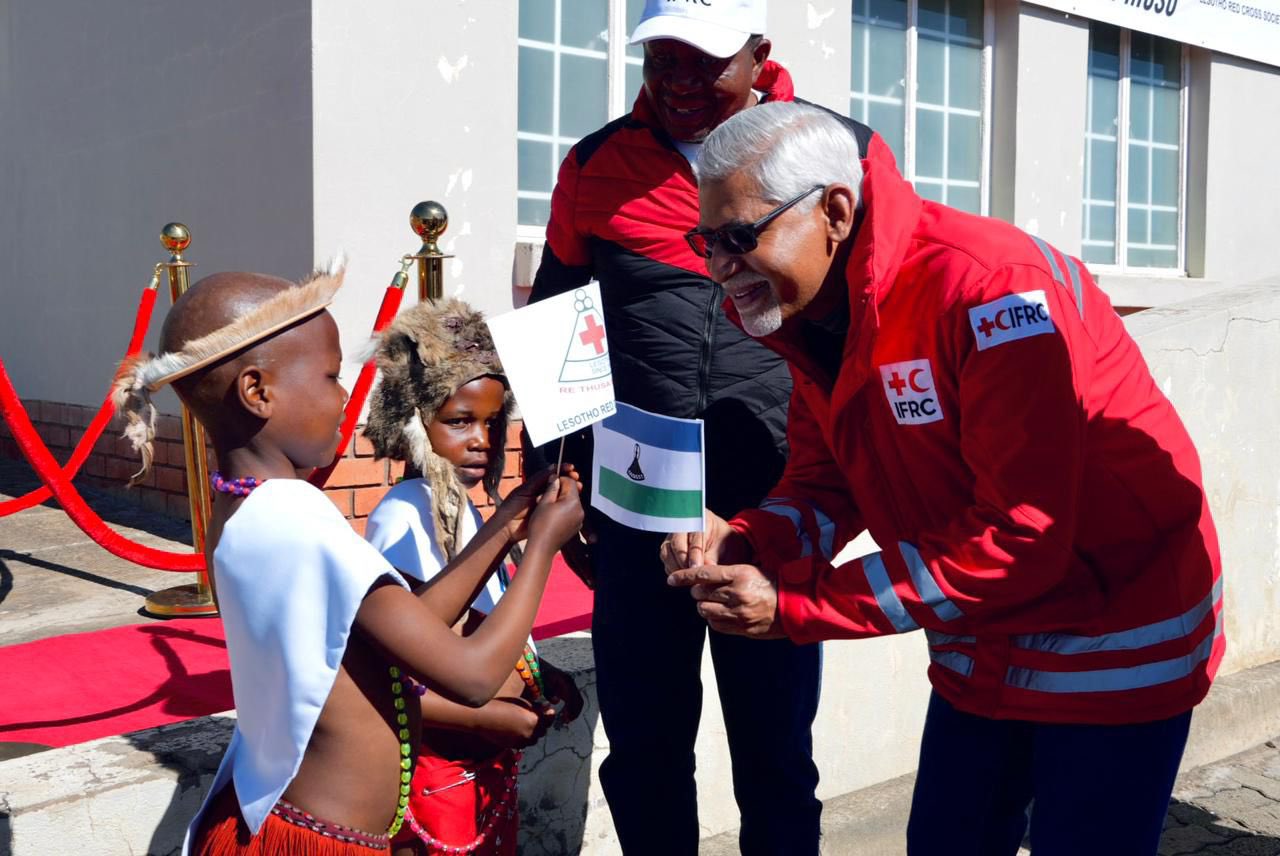
A young boy greets IFRC Secretary General Jagan Chapagain during a welcoming ceremony in Lesotho.
Photo: Sindisiwe Mkhize/IFRC
This strain is just as vivid in social systems.
In South Africa, where I travelled after Lesotho, gender-based violence (GBV) has reached terrible levels. Statistics from the Africa Health Organization suggest that 51 percent of women have experienced GBV, while 76 percent of men admit to perpetrating it at some point in their lives.
In Botswana, the picture is equally stark. Between July and September 2024, 10,191 rapes were reported - an average of 111 per day. Across both countries, youth unemployment remains alarmingly high, fueling cycles of poverty, violence and vulnerability. Budget cuts mean fewer and fewer organizations are able to help.
In Johannesburg, at an afterschool care centre run by the South African Red Cross Society (SARCS), I watched children from underprivileged neighborhoods receive a hot meal - for some, it was the only one they would eat all day.
Everywhere, needs are growing, budgets are shrinking, and humanitarian agencies are pulling out.
And yet, one constant remains: the Red Cross and Red Crescent.
National authorities are recognizing this. In Lesotho, we signed a legal status agreement to scale operations rapidly during emergencies. In South Africa, we supported the Red Cross on governance reform and private sector partnerships. In Botswana, we have been asked to help tackle GBV, positioning the National Society as a trusted partner.
Excellent. But my feelings are bittersweet. Yes, pride in the dedication of colleagues in our network. But that’s mixed with aggravation at the inability of others because of funding cuts.
We want to help. We can. But to do so best, we must change too - to maximize the impact of our limited resources. We must respond to a new, leaner humanitarian world in which, very often, the ‘always there’ local nature of our network gives us a huge opportunity. How to best seize it?
To meet an all-too-common threat we must be the common thread that remains. And the IFRC’s ‘Renewal’ is how we will achieve that.
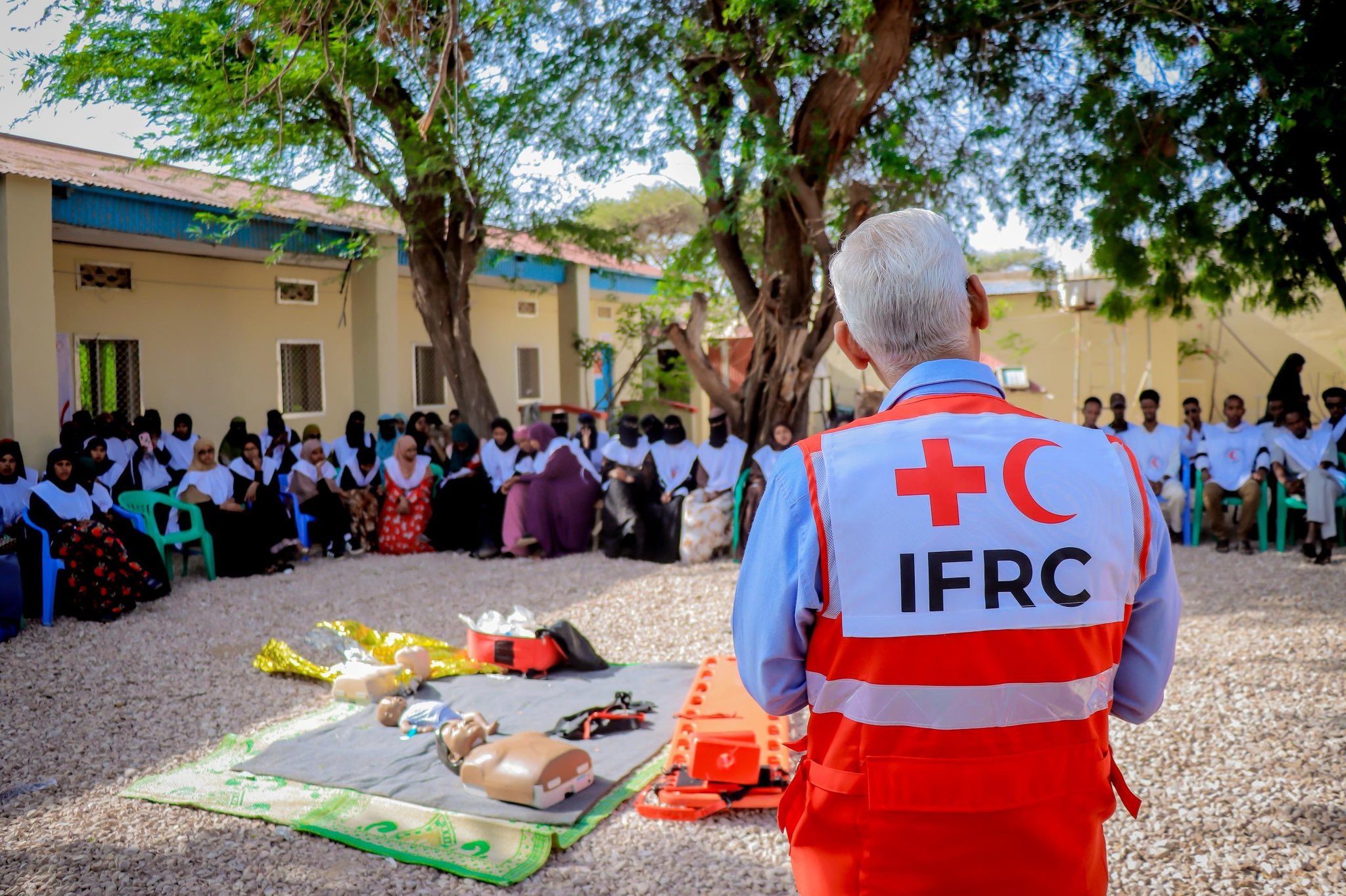
IFRC Secretary General Jagan Chapagain speaks to a group of Somali Red Crescent volunteers and staff at Burco Branch.
Photo: Somali Red Crescent Society
After extensive consultation, I've broken down my vision for Renewal into five areas where we must focus:
To position ourselves for resources, as a network always working at the most local level, we must deepen localization and prove it through accountability.
To strengthen our humanitarian impact, we must sharpen our focus and foster deeper collaboration across the network.
To influence the causes that matter most, we must redouble our humanitarian diplomacy efforts and speak with a totally unified voice.
To embrace change and do more with sometimes less, we must accelerate digital transformation and embrace ethical adoption of Artificial Intelligence (AI).
To become an organization that delivers more effectively and efficiently, we must build a more agile and responsive secretariat with a culture of transformation; a secretariat closer to the communities we serve.
To truly help people in a world where needs are growing and resources are shrinking, we need focus, structure and adaptability. If our Renewal gets this right, we’ll not just remain relevant, we’ll reach further than ever. Renewal will mean we’ll be the global local network that continues to deliver, in Somalia, Lesotho and all around the world.