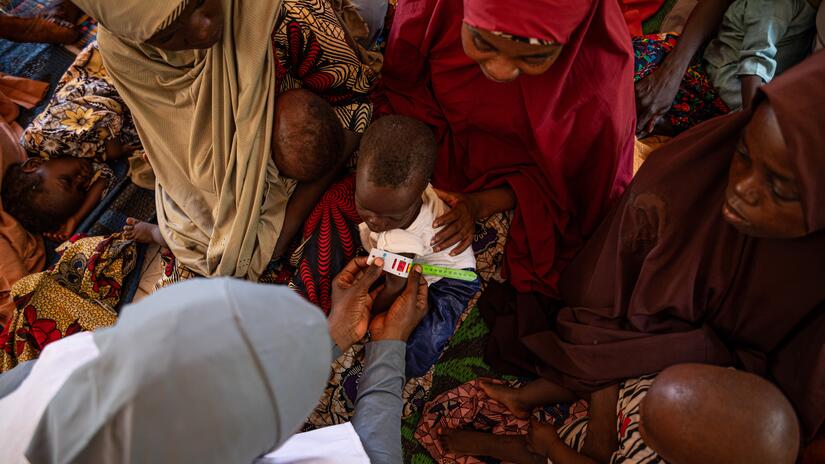
An estimated two million children suffer from severe acute malnutrition (SAM) in Nigeria, yet only 20% are receiving treatment.
New primary data collected in July 2025 by the Nigerian Red Cross (NRCS) shows 47% - 47.8% of children assessed are suffering from SAM in three local government areas (Zango and Kankara in Katsina state and Wamako in Sokoto state).
The data also shows, in Zamfara, Katsina and Sokoto states, of those assessed, more children are malnourished (moderately and severely) than not malnourished.
The International Federation of Red Cross and Red Crescent Societies (IFRC) has launched an emergency appeal, to support the Nigerian Red Cross (NRCS) in scaling up their response to malnutrition, aiming to reach one million people.
Abuja, Nigeria, 19 August 2025 - The malnutrition crisis in Nigeria is escalating and urgent action is needed to save lives. Without immediate intervention, 1.8 million children could die from Severe Acute Malnutrition (SAM). According to new data collected by Nigeria Red Cross Society (NRCS), 84% of healthcare facilities in six northern states reported insufficient stocks of lifesaving ready-to-use therapeutic food (RUTF). At the same time, many key partners are having to withdraw or halt their programming due to funding cuts.
The UN are closing half of their health clinics in northeast Nigeria, while states like Katsina, Sokoto and Zamfara in the northwest, have been facing a silent emergency for years. MSF conducted a survey at the end of 2024 which showed some local government areas in Katsina had SAM rates of 6.8% - 14.4%, a far cry from the 47% - 47.8% we have seen in neighbouring areas, July this year.
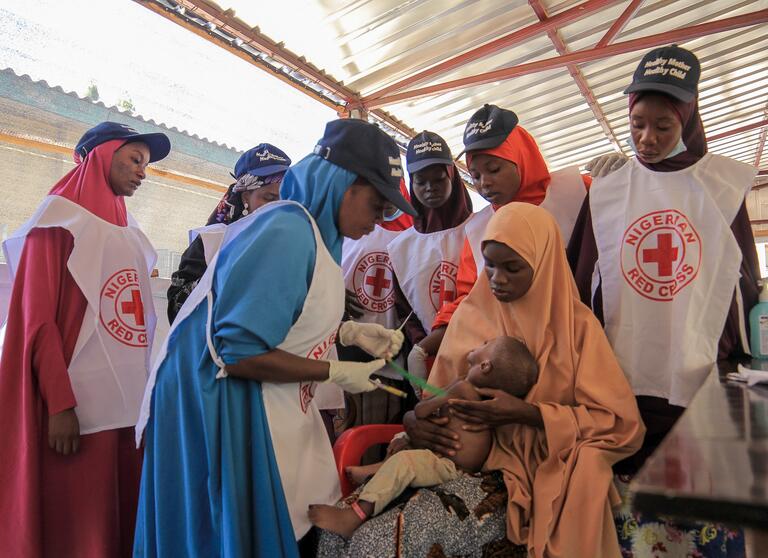
The Red Cross are providing funding for ready-to-use therapeutic food and are channelling community volunteers into healthcare facilities to support the treatment of SAM.
Alongside alarming SAM statistics reported in Katsina and Sokoto, are concerning moderate acute malnutrition (MAM) figures. In Maradun, Zamfara, 48.5% of children are suffering with MAM. Without improved community-level surveillance and monitoring of MAM cases, the burden placed on local healthcare services, with the appropriate facilities to treat SAM, will be insurmountable.
Red Cross volunteers are embedded within their communities and are therefore well placed to conduct this monitoring. In addition, volunteers are teaching women to make a supplementary food called Tom Brown (a locally produced flour mix of grains, soy and peanuts), which can prevent MAM evolving into SAM.
Francis Salako, Head of the Abuja Delegation for IFRC says, “Without additional support hundreds, if not thousands, of children will needlessly die of malnutrition in coming months. The fact that, in some LGAs, around 50% of children are suffering from severe acute malnutrition and may need to be hospitalised to survive, is alarming. We need to raise the alarm immediately. Things are going to get worse.”
The IFRC recently launched the Africa Zero Hunger Campaign starting with six countries, including Nigeria, Kenya, Ethiopia, DRC, Mali, and Zimbabwe. This bold step focuses on addressing hunger in Africa through lasting, community-driven initiatives. You can learn more about the campaign here.
Note to editors:
Visuals are available for download
For more information or to request an interview, please contact: [email protected]
In Abuja: Aduratomi Bolade +234 803 389 6862; Lauren Sabin +234 813 121 3919
In Nairobi: Susan Mbalu +254 733 827 654
In Geneva: Hannah Copeland +41 76 236 9109