Caracas/Panama City/Geneva, 25 June 2026 — Two powerful earthquakes struck north-central Venezuela on the evening of 24 June, less than a minute apart: a 7.2 magnitude foreshock at around 6:04 p.m. local time, followed 39 seconds later by a 7.5 magnitude mainshock, with epicentres in the Yaracuy region, according to the United States Geological Survey (USGS).
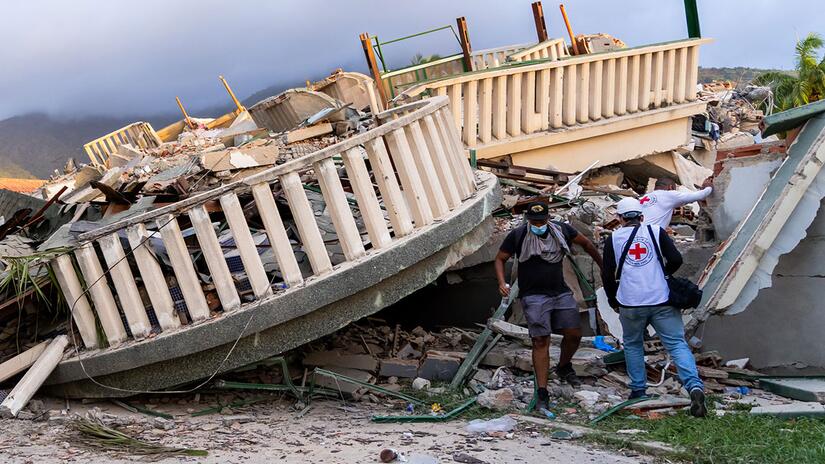
The earthquakes caused structural collapses and damage to homes and businesses in Caracas and across several states, with particularly serious impact reported in La Guaira and Greater Caracas. National authorities have declared a state of emergency, suspended classes and non-essential activities, ordered preventive evacuations, activated search-and-rescue operations and set up reception centres for people affected, while hospitals receive the injured.
Power, telecommunications and transport have been disrupted, and critical damage has been reported to essential health and transport infrastructure, leaving public services intermittent or interrupted in some areas. Damage assessments remain preliminary, and the full human impact is not yet known while strong aftershocks are posing additional risks to affected communities and to the teams responding.
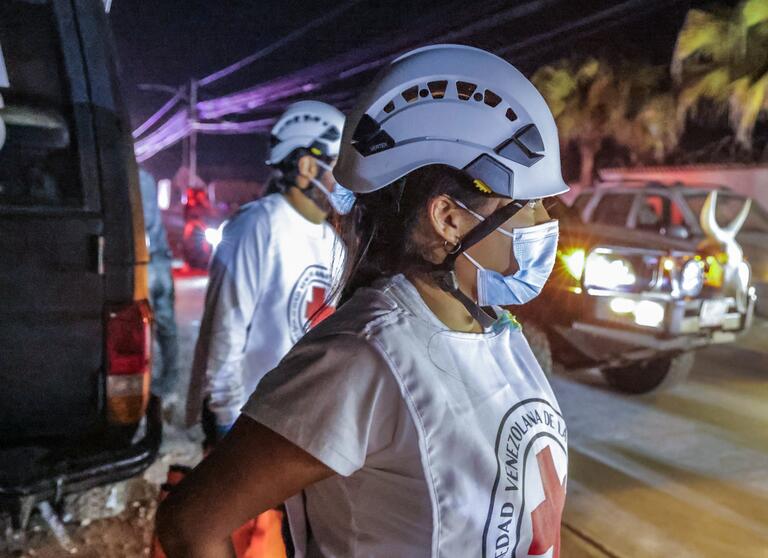
The Venezuelan Red Cross is operational and responding. Its nationwide network of hospitals and polyclinics remains active and continues to deliver care. The National Society has activated rescue teams to support evacuation and search efforts and deployed four assessment teams overnight to carry out rapid evaluations in the worst-affected areas, while mobilising prepositioned relief supplies.
Although it has reported critical damage to its own National Headquarters, the Venezuelan Red Cross is accounting for the safety of its staff and volunteers, activating security protocols and sharing earthquake safety guidance with communities — even as many of its volunteers respond while facing this emergency in their own neighbourhoods.
While assessments continue, the most urgent anticipated needs are search and rescue, emergency shelter for families whose homes have been damaged or destroyed, and emergency health care, including trauma care and psychosocial support. Safe water and sanitation and essential household items are also expected to be priorities in the hours and days ahead.
With communications disrupted and many families separated, Red Cross Societies in Ecuador, Colombia, Mexico, Costa Rica, Honduras and Argentina — countries home to large Venezuelan communities — have already activated their restoring family links services, helping people search for news of their loved ones.
The International Federation of the Red Cross and the Red Crescent Societies is activating its response mechanisms, including its Disaster Response Emergency Fund (IFRC-DREF), as more information becomes available.
For more information and to arrange interviews, contact: [email protected]
In Panama
Susana Arroyo +507 69993199
In Geneva
Tommaso Della Longa +41 79 708 4367 | Paolo Cravero +41 79 894 83 96