
Fatimah sits quietly, her hands trembling as she speaks.
"We had to leave Pakistan, which was our home for the past 40 years, and now we have no land, no shelter, and no sense of stability,” shares Fatimah (not her real name), a single mother of five children.
“I just want my children to have a safe place to grow—somewhere they can call home. We pray for a better future, for support from the government and the international community."
Fatimah’s story is not just hers; it resonates with the stories of countless others who are crossing into Afghanistan from Pakistan, following a March 2025 decision by Pakistan’s government to resume implementation of a law that requires non-citizens to leave the country.
The decision has impacted Afghans disproportionately due to the large population of Afghan citizenship card holders living there with varying levels of legal status in the country.
Many of the returning Afghans, however, have lived outside of Afghanistan for a long time, some for their whole lives. Many have never set foot in Afghanistan and now have absolutely no idea about where they will live, how they will feed themselves and their families, or educate their children.
Much worse, single female heads of households like Fatimah face even greater hardships, as they need to take care of both their children and manage their household responsibilities.
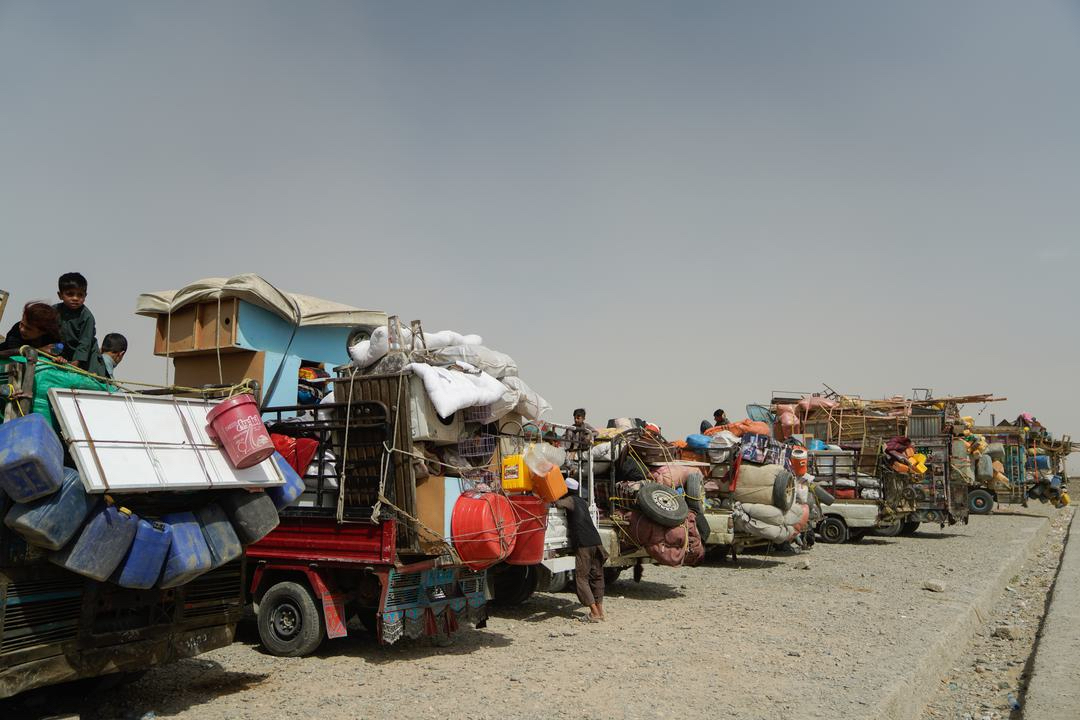
Heavily loaded trucks carrying Afghan returnees line up along the road after arriving in Kandahar from various parts of Pakistan.
Photo: Meer Abdullah Rasikh/IFRC
A growing crisis
The number of people sharing Fatima’s experience is overwhelming and it’s growing by the day.
Since the deportation plan was first implemented in 2023, almost a million Afghan people (972,400 people as of 23 April 2025) have already crossed via the four official crossing points along the border with Pakistan.
In April 2025 alone, more than 118,400 Afghans crossed from Pakistan, 25,600 of whom were deported. On average, 4,000 to 6,000 people cross daily, with women and children constituting a sizable female-headed households.
As the returnee situation escalated, the IFRC quickly allocated funds from its Disaster Response Emergency Funds (IFRC-DREF) to help with the initial operations. This was followed by the launch of an Emergency Appeal that aimes to raise 25 million Swiss francs for delivery of lifesaving support over the next two years. This covers recovery and reintegration efforts, training aimed at building professional skills, and cash-for-work initiatives—laying foundations for rebuilding lives and restoring dignity.
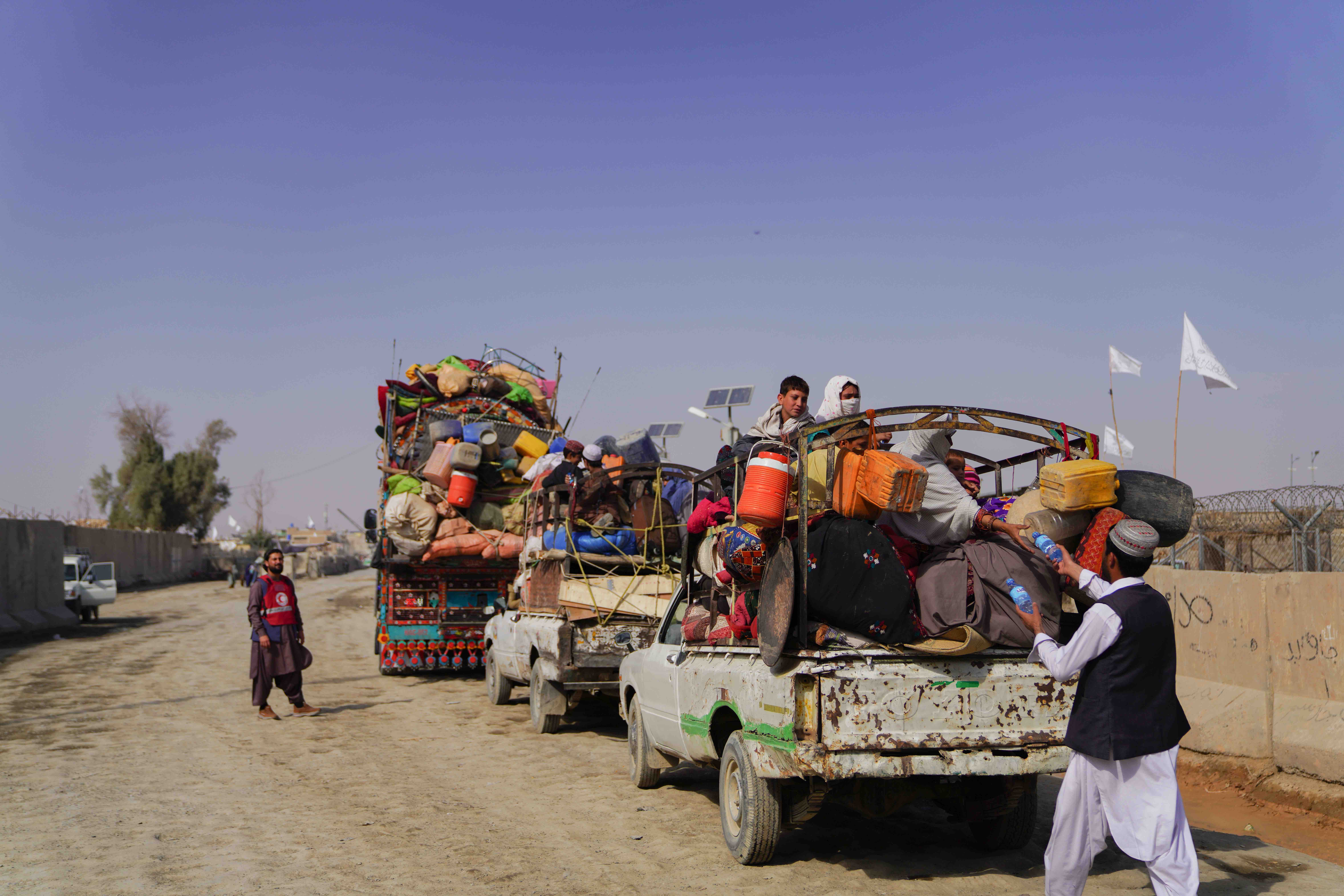
Small trucks carrying sometimes several families and their belongings arrive in the Afghan town of Nangarhar.
Photo: Eshaq Muqbel/IFRC
The appeals have helped the Afghan Red Crescent Society provide critical support to thousands of returnees. However, more support is needed to ensure people arriving at camps in Afghanistan can survive day to day in the short term and make a full recovery in the longer term.
The first step is simple to find a safe place to stay.
Upon arriving at the Afghan border crossing points, they are guided to two temporary camps set up by Afghan Red Crescent Society (ARCS), United Nations agencies and other organizations. The Omari camp is located 6 kilometers from the Torkham border, Nangarhar, and the other is 60 kilometers away in Kandahar (Takht-e Pol).
Returnees have to travel to these camps by themselves and so they mainly use local trucks and drivers available at the borders. There are also trucks that provide transportation from Pakistan itself onto Afghanistan.
At the temporary camps set up by ARCS, doctors and healthcare volunteers receive returnees and provide them with check-ups, consultations, consultation, food and more.
At the border crossing points, ARCS also helps with food distribution, shelter support with tents, healthcare services, information about all other help readily available at the camps by other aid agencies and help with any other pressing needs.
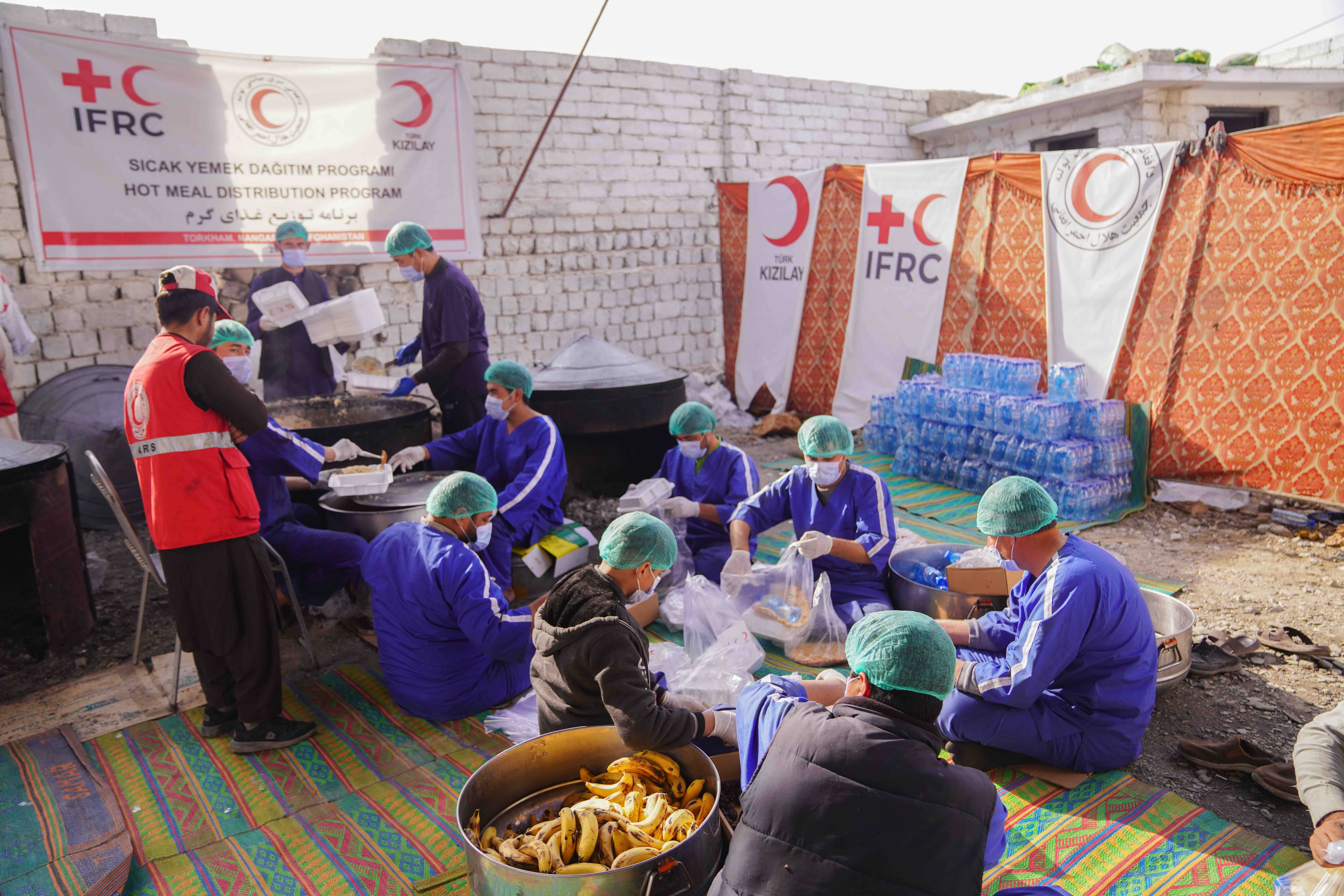
A team of Afghan Red Crescent volunteers distribute hot meals they’ve prepared to people who have had to return from Pakistan.
Photo: Afghan Red Crescent Society
Access to basic needs
One of the people who recently arrived is Sadullah, a father of five.
“I used to be a shopkeeper in Karachi, where my store was the heart of my family’s livelihood,” he says. “Now, we are forced to return to a land that feels both familiar and foreign. I stand here, lost and afraid, unsure of how to rebuild what we’ve lost.”
His words reflect the struggles of many returnees as they grapple with the reality of lost livelihoods and the basic necessities of life—food, shelter, and the means to support their families. Healthcare, for many, feels like a distant dream.
Another returnee, Rahimullah, also shares a heart-wrenching story: "I have stomach problems and am now ill. We left everything behind out of fear of detention. My wife died when my baby was only 10 days old and I was left caring for my three daughters and two young sons.”
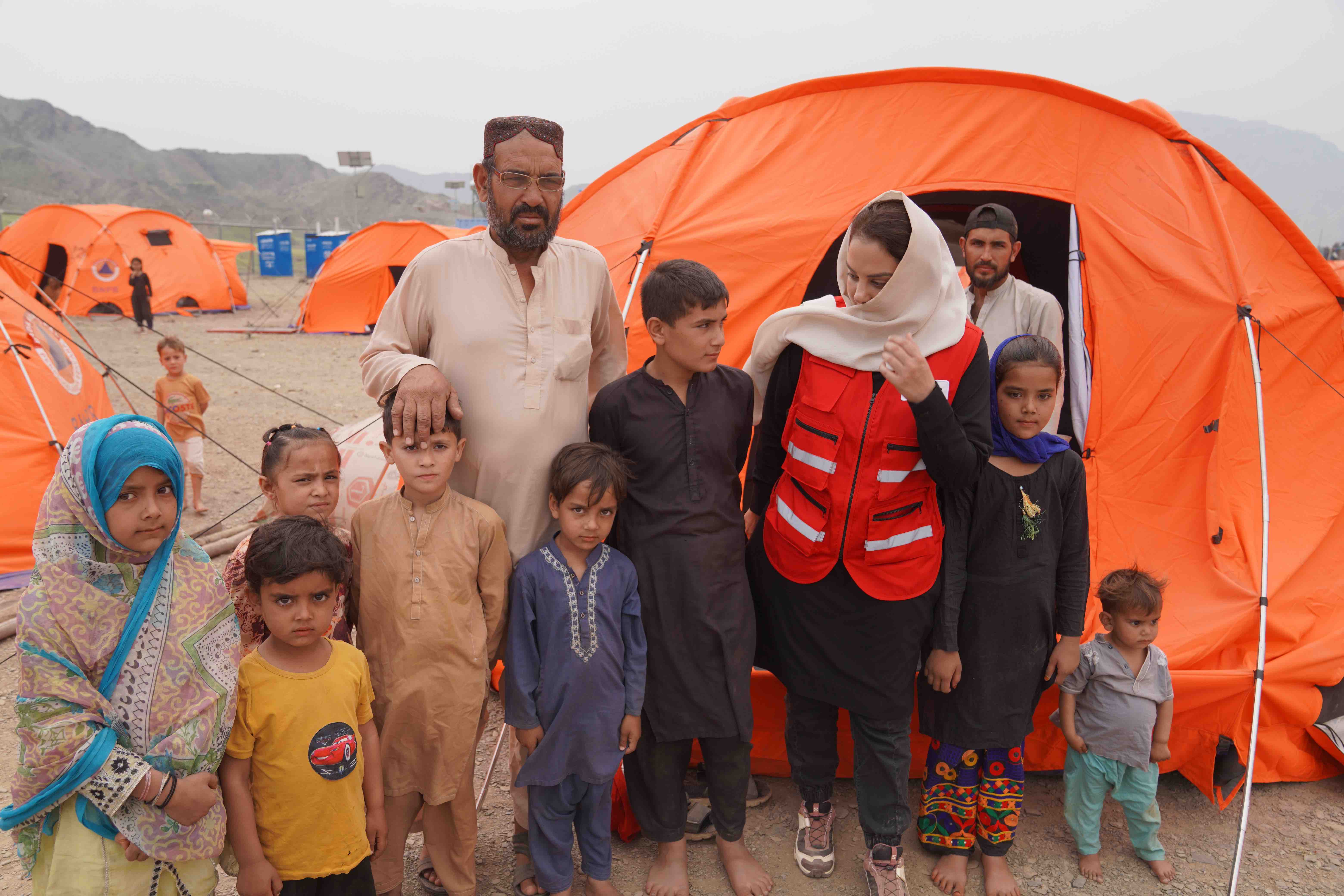
A former shopkeeper who had a small business in Karachi, Pakistan, Sadullah stands outside the tent where he has been staying with his five children at the Omari Camp for returnees in Nangarhar.
Photo: Eshaq Muqbel/IFRC
Getting primary health care in the camps
At Omari camp, ARCS (with support from IFRC) treats approximately 700 people with primary healthcare daily, and this includes those who need maternal and child health services such as medical counseling, medicines and injections, and prenatal care.
It was here that doctors and midwives of ARCS helped deliver three newborns, whose mothers crossed the border while heavily pregnant.
“The midwives are volunteers with Afghan Red Crescent, and they provided lifesaving critical care to the three newborn deliveries in the tent,” one of the ARCS doctor at the camp explains.
“They also play a vital role in providing healthcare services to pregnant mothers who perilously cross the border. In addition to this, there are three female nutrition officers in our nutrition section. As of now, we have treated approximately 40-50 women”.
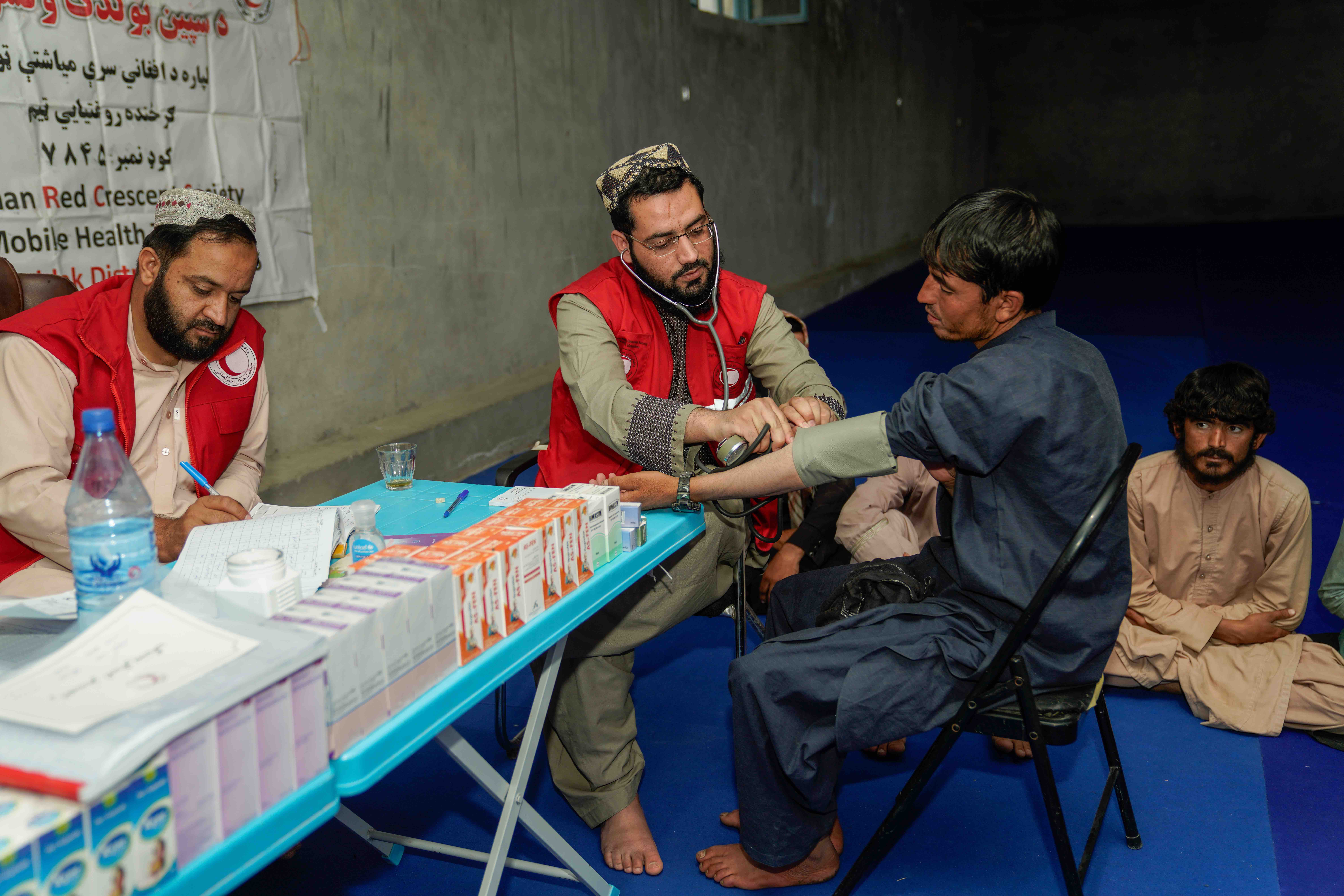
A team from the Afghan Red Crescent Society providing healthcare services to returnees at the Spin Boldak border crossing point in Kandahar.
Photo: Meer Abdullah Rasikh/IFRC
Referral and transport to a local hospital is hard as the nearest one is over 100km away.
As such, the ARCS medical teams that are present at the camps comprise of both male and female doctors and there are five other Mobile Health Teams of ARCS at the two borders. Aside from healthcare, hundreds of ARCS volunteers are also working to dispense water, set up tents, and provide medical services.
"It's incredibly heartening to see how even the smallest of our efforts bring relief to families in such difficult times,” says one volunteer at the camp. "Every action helps rebuild hope."


