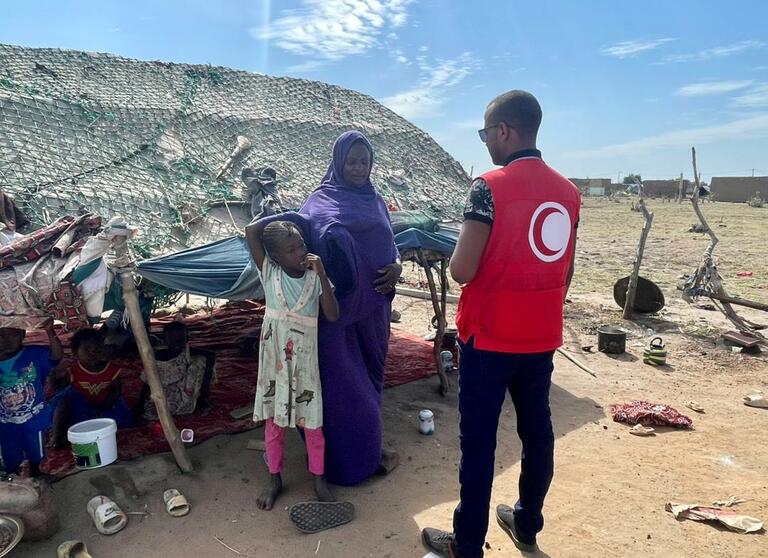

In Dweinkara, eastern Mauritania, the sun is at its zenith. In this village in the Hodh El Chargui region, located just a few kilometres from the Malian border, the heat is relentless, with temperatures soaring above 40°C. In the shade of the humanitarian service point (HSP) established by the Mauritanian Red Crescent, Bintou Mint Hamdi rests alongside her nine daughters.
This moment of respite is invaluable. Bintou has just completed a long journey from Mali, an exhausting journey undertaken to escape insecurity and conflict.
A life upended by conflict
Bintou’s story is marked by cruel irony. Originally from Léré, in Mali’s Tombouctou region, she was already familiar with Dweinkara. For several years, she regularly crossed the border to work there as a laundress. After spending a few weeks or months earning an income, she would return home with enough savings to support her family.
But over the years, the deteriorating security situation in Mali made these journeys increasingly dangerous. Violence, growing insecurity, hunger and isolation eventually became too much to bear.
“I could no longer continue like this. Travelling had become too risky, and it was getting harder and harder to feed my children,” she says.
Faced with a lack of prospects and determined to protect her nine daughters — for whom she is the sole caretaker — Bintou made the difficult decision to leave her country and seek refuge in Mauritania.
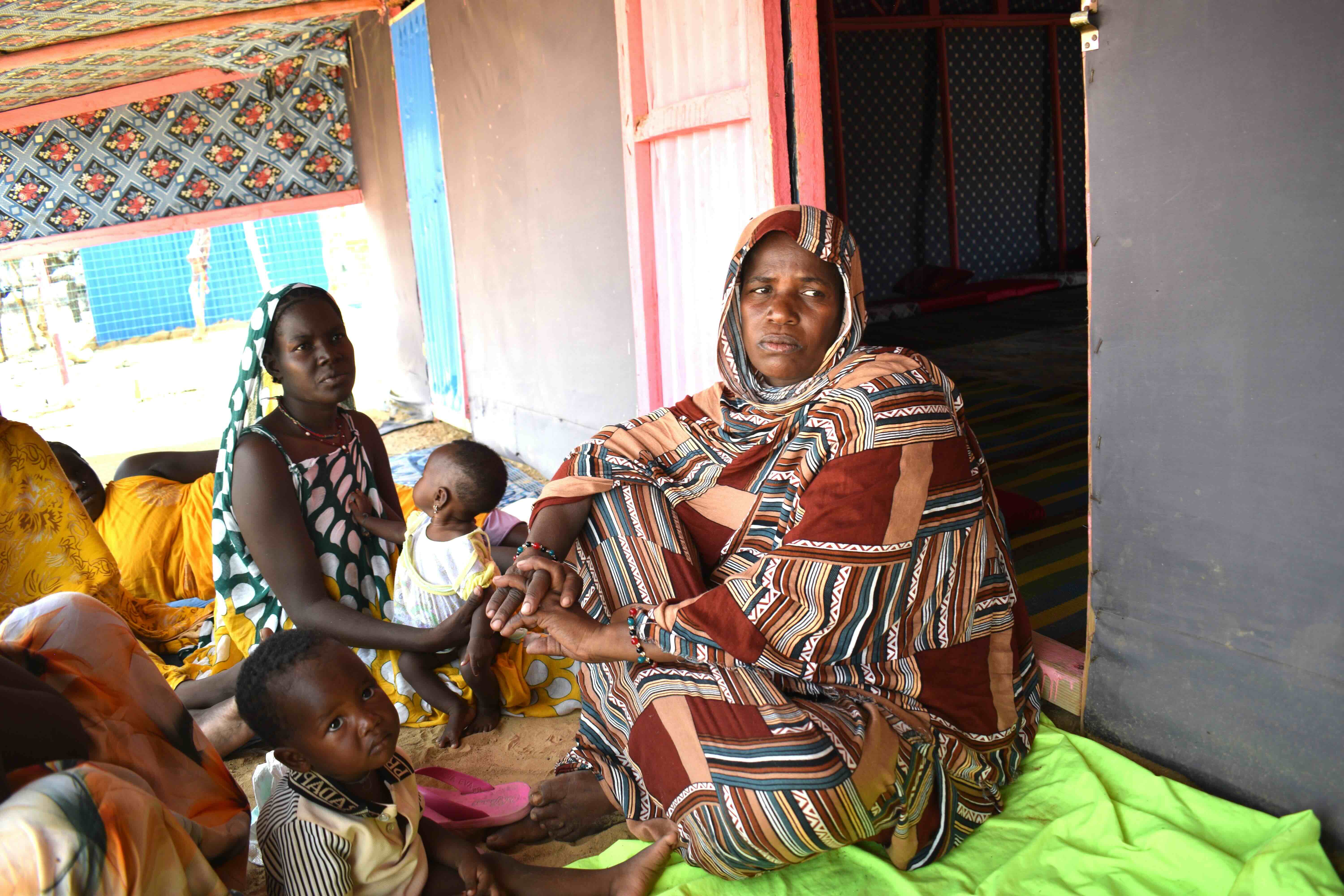
After a journey of several days from Mali to Mauritania under extreme heat, Bintou Mint Hamdi and family members gather at the rest area at the Mauritanian Red Crescent humanitarian service point in the Hodh El Chargui region in eastern Mauritania.
Photo: Moustapha Diallo/IFRC
A protracted crisis
Like Bintou, thousands of Malians have been forced to flee their homes due to persistent insecurity and conflict affecting several regions of the country. Some first sought refuge in Mauritania in 2012, when conflict erupted in northern Mali. Since then, successive waves of violence have continued to drive families onto the road to exile.
Between January 2023 and April 2024, more than 95,000 new Malian refugees arrived in Mauritania, joining the approximately 105,000 refugees already living in the country. By June 2026, the refugee population had surpassed 300,000 people, according to UNHCR.
Most refugees live in the Hodh El Chargui region. Around 172,000 reside outside official camps, often in precarious conditions, with limited access to clean water, healthcare, education and livelihood opportunities. This large influx has also placed significant pressure on local resources and host communities, which are themselves facing numerous challenges.
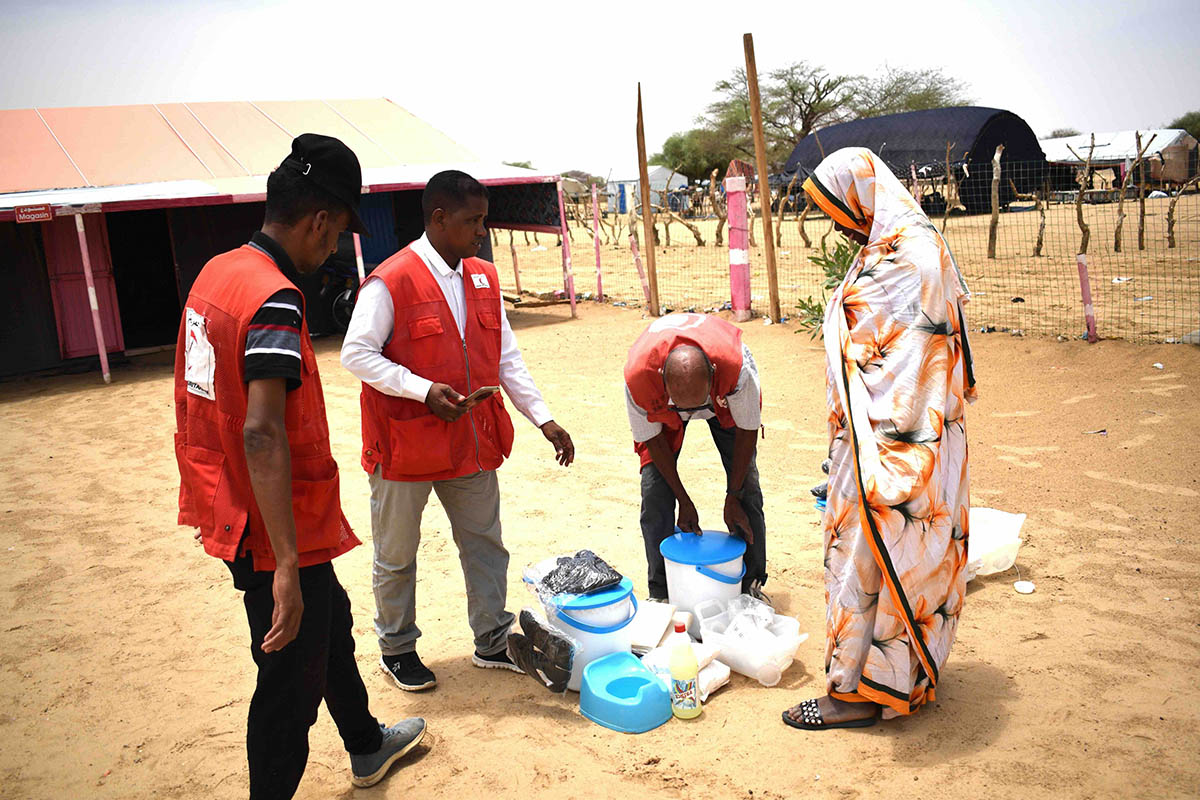
Mauritanian Red Crescent volunteers and staff distribute household items to newly arrived refugees at the Mauritanian Red Crescent’s humanitarian service point in Dweinkara, a village near the country’s eastern border with Mali.
Photo: Moustapha Diallo/IFRC
A first refuge upon arrival
In response, the Mauritanian Red Crescent, with support from the IFRC, has established two humanitarian service points in Dweinkara and Adel Bagrou to provide immediate assistance to newly arrived refugees.
The Dweinkara humanitarian service point has become an essential stop for families crossing the border.
“This Humanitarian Service Point receives newly arrived Malian refugees fleeing insecurity and conflict,” explains Mohamed Ould Seydina Aly, Regional Operations Coordinator for the Mauritanian Red Crescent in Hodh El Chargui.
There, staff and volunteers provide emergency assistance tailored to immediate needs, including physical and psychological first aid, health consultations, referrals to healthcare facilities, hot meals, water and the distribution of essential household items.
Since opening on 10 October 2025, the centre has assisted more than 2,000 refugees.
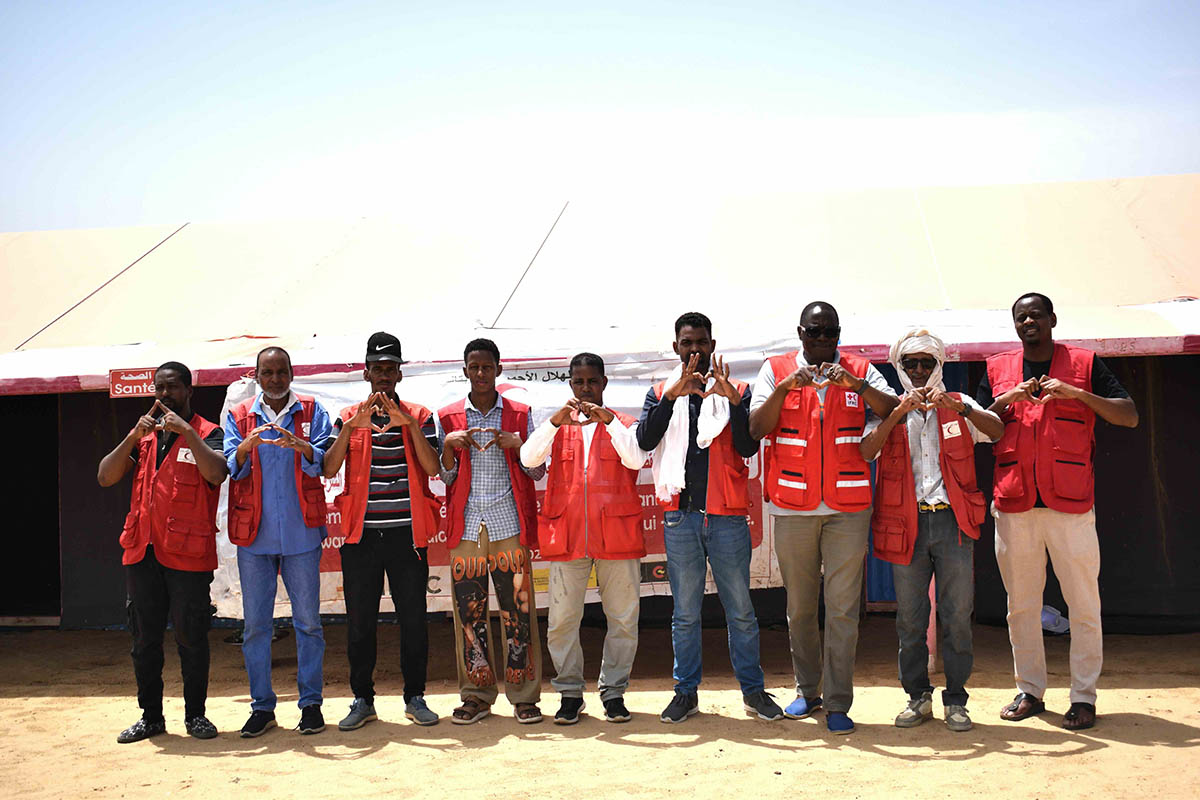
Volunteers from the Mauritanian Red Crescent and IFRC staff gather for a photo after a day of providing assistance at the humanitarian service point in Dweinkara, Hodh El Chargui region.
Photo: Moustapha Diallo/IFRC
Restoring dignity and hope
Beyond material assistance, the humanitarian service point offers something more difficult to measure: a space where people can regain their dignity.
After days, and sometimes weeks, of travel, families can rest, recover their strength and receive essential information before continuing their journey to the Mbera refugee camp, settling in host communities, or reuniting with relatives.
For Bintou and her daughters, the centre marks the end of a difficult journey and the beginning of a new chapter.
A call for solidarity
Since May 2024, the IFRC has been supporting the Mauritanian Red Crescent’s humanitarian response for Malian refugees. To address growing needs, a CHF 4 million Emergency Appeal was launched in October 2024 to strengthen interventions in health, water access, cash assistance and the distribution of essential relief items.
For Hubert Dedegbe, IFRC Head of Operations in Mauritania, sustained support remains critical.
“With the continued arrival of Malian refugees, we call on partners and donors to remain engaged and strengthen their support so that the most vulnerable people can continue receiving the assistance they need.”
Under the scorching heat of Dweinkara, Bintou’s story is a reminder that behind the statistics are faces, families and lives profoundly disrupted by conflict. It also highlights how access to safe drinking water, a hot meal or simply a place to rest can represent the first step towards rebuilding a life.