
Produced in partnership with Gavi, the Vaccine Alliance's VaccinesWork platform. Written by Sara Matar.
On a sun-scorched, treeless hilltop in Hermel, northeastern Lebanon, more than twenty tarpaulin tents cluster together on dry, cracked earth. This makeshift settlement — one of several recently established camps — is now home to around 280 refugees from Syria.
There is no running water or electricity. Open sewage threatens to contaminate drinking and cooking water, and disease spreads rapidly, as it often does in overcrowded, displaced communities. Life here is difficult for everyone, but especially so for children.
Eight-year-old Batoul Jardo, who fled Homs, Syria, with her family a few months ago, has tears in her eyes as she asks, "How are we supposed to live in the midst of this hell?"
Seven-year-old Baneel Kazem Hammoud, also from Syria, scratches her arms in discomfort, the result of a painful skin infection. Thankfully, her illness is not life-threatening. But even small gaps in healthcare access can spark deadly outbreaks. In high-risk environments like this, vaccination is more than healthcare, it’s protection.
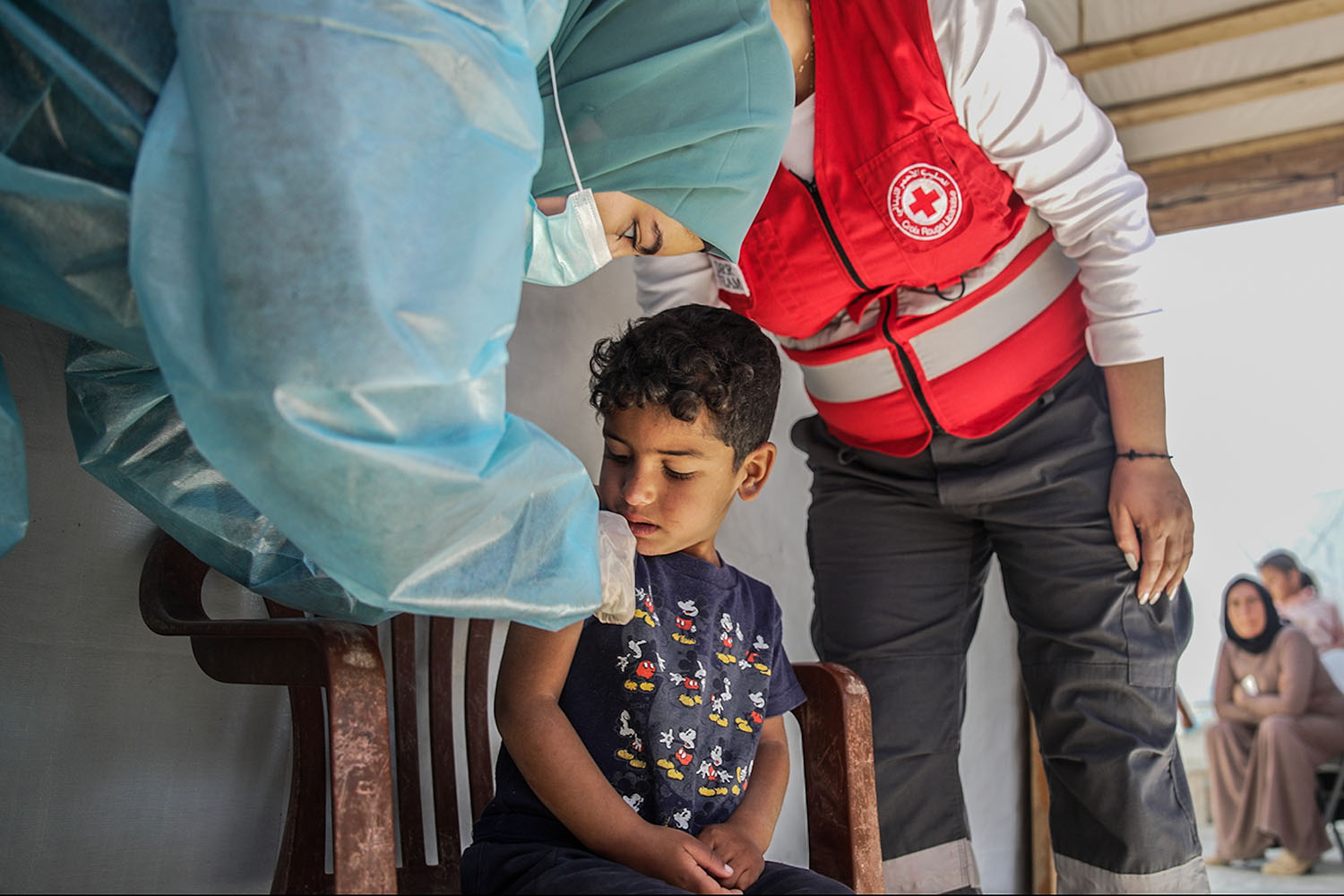
A child gets vaccinated as part of a nationwide immunization campaign led by the Lebanese Red Cross, in collaboration with IFRC, and funded by Gavi.
Photo: IFRC / Lama Chidiac
A protective shield
Between December 2024 and April 2025, a vaccination campaign led by the Lebanese Red Cross (LRC), in coordination with the IFRC and the Lebanese Ministry of Public Health, immunized 19,000 children — Lebanese, Syrian, and Palestinian — living in the country’s most vulnerable and underserved communities.
The campaign, funded by Gavi, targeted children in four of Lebanon’s most affected governorates: Mount Lebanon, Baalbek-Hermel, Bekaa, and Akkar.
"Given the displacement, poor access to primary healthcare, and Lebanon’s ongoing crises, this programme helped us reach the most at-risk children and reconnect them with the routine immunization system,” said Tasneem Obeid, Senior Immunization Officer at IFRC. “Raising awareness and delivering vaccines in underserved communities remains critical."
Lebanon’s recent history has been shaped by a series of overlapping crises: a financial collapse, a global pandemic, the catastrophic Beirut port explosion in 2020, and multiple regional conflicts spilling into the country. These events have compounded public health challenges.
The Lebanese Red Cross, supported by over 12,000 trained volunteers and equipped with robust data systems, is playing a vital role in bridging gaps in healthcare access, and is working to rebuild trust in vaccines and restoring routine services disrupted by COVID-19.
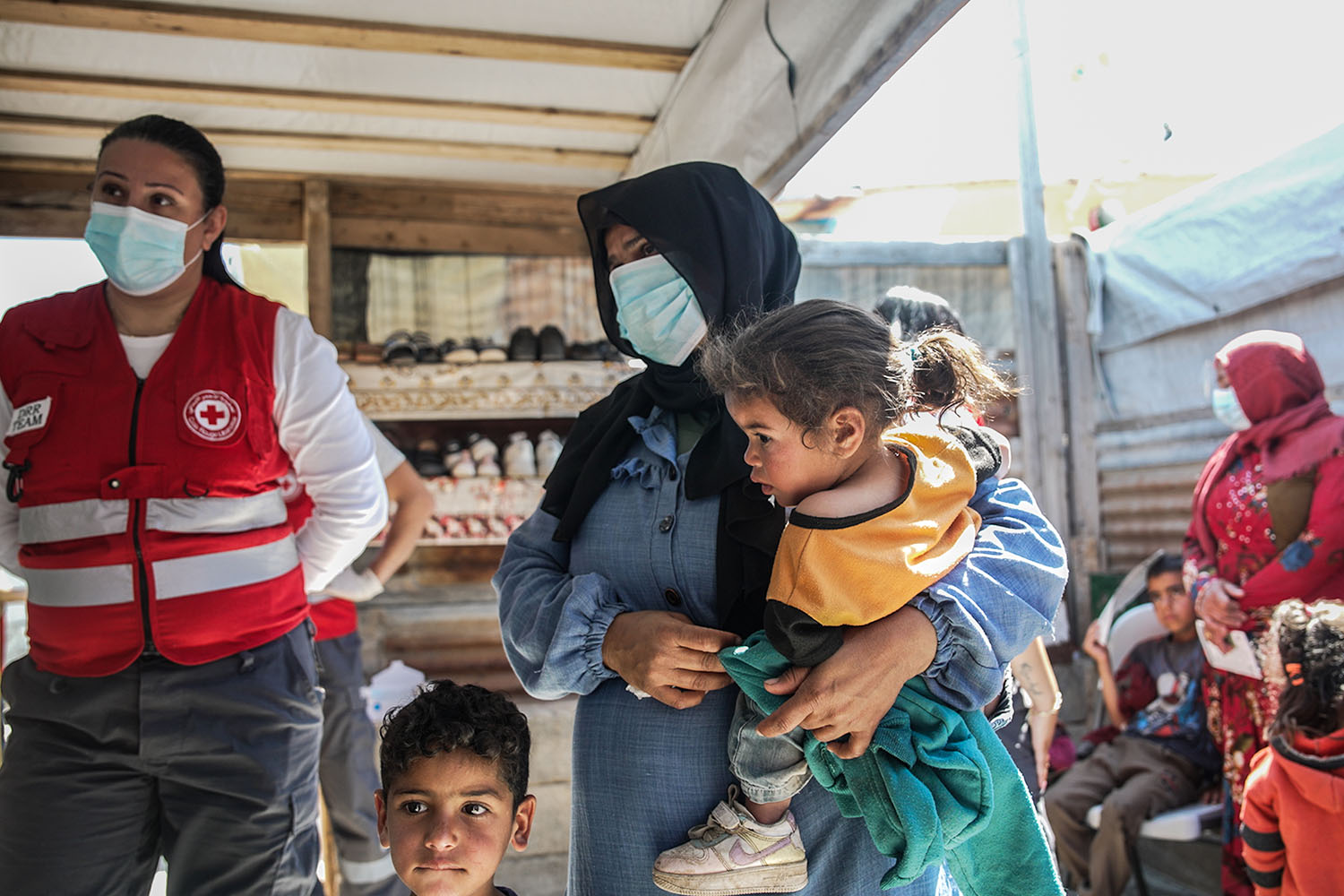
Families wait their turn at a vaccination point established by the Lebanese Red Cross. The campaign focused on reaching children in hard-to-reach and crisis-affected communities.
Photo: IFRC / Lama Chidiac
Closing the gap after COVID
The pandemic not only disrupted health services, but it also eroded public confidence in vaccines. Misinformation surged in 2021, prompting the Lebanese Red Cross to launch a nationwide campaign. In October and November of that year, the National Society deployed 33 mobile clinics to remote and underserved areas, delivering life-saving vaccines and reliable health information.
Kassem Shaalan, Director of the LRC’s Disaster Risk Reduction Unit, says the recent Gavi-funded project significantly expanded their reach:
"From October 2021 to April 2025, LRC vaccinated over 700,000 children,” he said. “Thanks to Gavi’s latest support, we reached 19,000 children in just five months, a vital response to the growing needs of displaced families following the recent escalation of hostilities."
He added: "With this new funding, we increased the number of mobile vaccination teams from seven to twelve. These teams were deployed based on need, especially in overcrowded areas like Akkar, Bekaa, and Baalbek-Hermel."
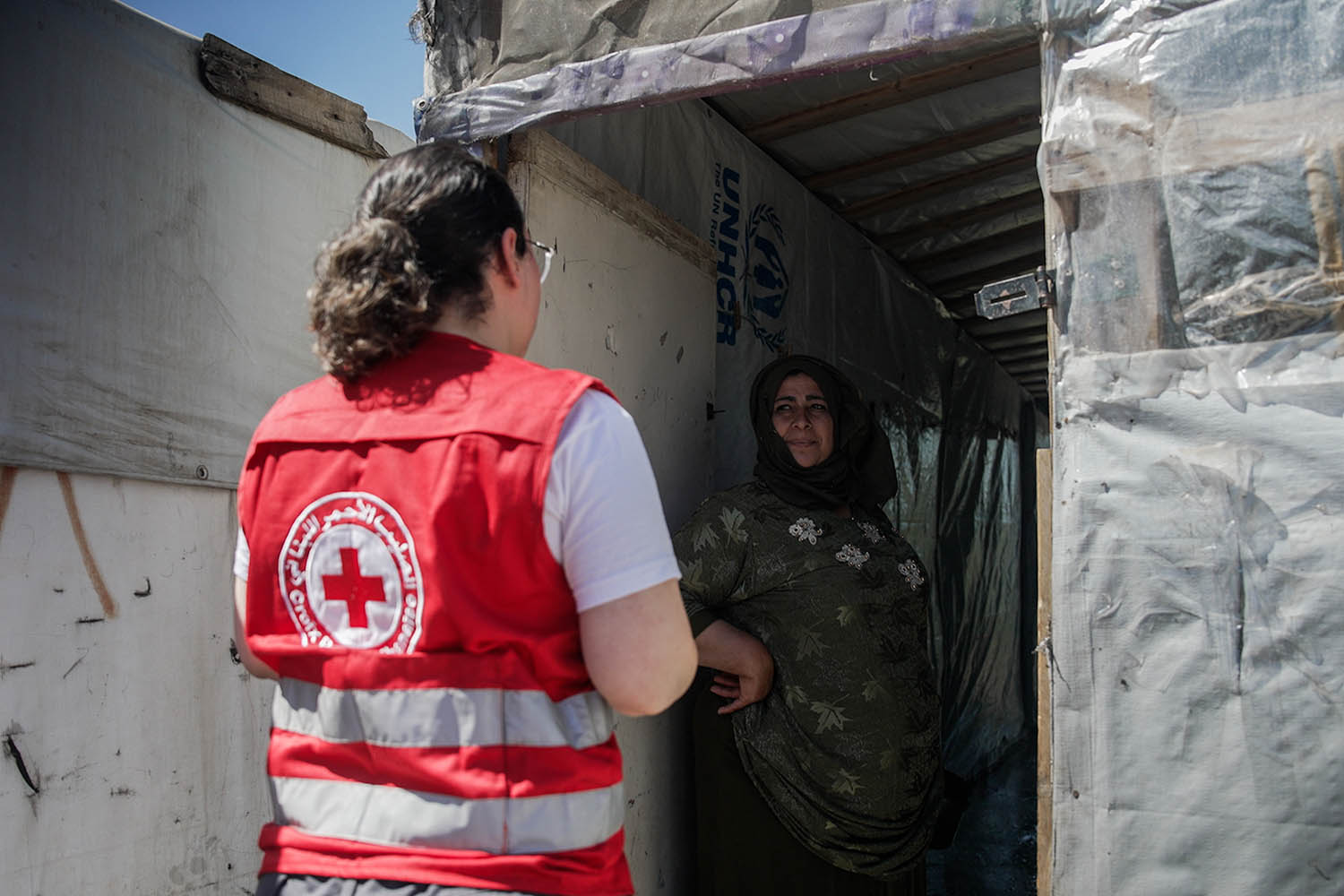
A mother receives information from a Lebanese Red Cross health worker about how vaccines protect children from preventable diseases. The campaign combined vaccination services with community education.
Photo: IFRC / Lama Chidiac
Building trust, one mother at a time
In a refugee camp in Zahle, Bekaa Governorate — home to around 200 Syrian children — an LRC mobile team is working to prevent outbreaks. The team includes a medical supervisor, a lead nurse, a data officer, a team leader, and two volunteers.
One of their strongest allies is Rabea’a Al-Hussein, a mother of five who has been living in the camp since 2014. Her youngest children were vaccinated by LRC teams, and now she volunteers to help. She moves between tents to notify other parents of upcoming visits and comforts nervous children during the vaccination process.
For her, the trust-building aspect is just as important as the medical care. "It’s not only the vaccines that matter," she says, "It’s how they calm our fears."
In Fakeha, Baalbek, 34 kilometres north of Zahle, Nermine Waleed Hussein — a displaced Lebanese mother of two — agrees:
"Awareness sessions helped mothers like me understand how crucial vaccines are. I always check my phone for updates to make sure my children are safe. I’m truly grateful for all the support we’ve received."
Hope amid hardship
Baalbek-Hermel Governorate alone hosts 150 shelters, ranging from small hilltop clusters like the one Batoul and Baneel live in, to much larger settlements. These shelters are home to nearly 90,000 displaced people. Health staff report recent outbreaks of measles and hepatitis — both vaccine-preventable diseases. But in these conditions, controlling fast-moving infections is a constant challenge.
Still, the lines of children queuing for vaccinations offer a sign of hope. Nurses say the turnout is always strong, and communities are increasingly engaged.
For Hala Hassan Jardo, Batoul’s mother, the presence of Lebanese Red Cross health workers is a rare comfort.
"We fled Homs five months ago," she said. “No one helped us except the Red Cross, they brought vaccines, medicine, awareness — real healthcare.”