

By Kate Forbes, President of the IFRC
On this day, 5 May, we mark the founding of the International Federation of Red Cross and Red Crescent Societies (IFRC). It is a day that calls us to pause, not only to celebrate our global network’s achievements, but to reflect on the vision of the man whose determination gave it life: Henry P. Davison.
A fellow American, Davison was not only a banker and philanthropist but a man who profoundly understood the weight of human suffering and the power of unity. In the aftermath of World War I, as the world grappled with scars that spanned continents, he recognized the urgent need to bring together National Red Cross Societies to work in cooperation. It was this vision that gave birth to the League of Red Cross Societies - what we now know as the IFRC network.
Davison’s genius was not just in his foresight but in his belief in our shared humanity. He understood that suffering knows no borders, and neither should our compassion. He believed that National Societies, no matter how big or small, could and should unite in solidarity to address humanitarian needs - whether in war or peace, at times of disaster or amid public health emergencies. His leadership carved a path toward modern humanitarian action, where principles guide our work, but courage and cooperation make it possible.
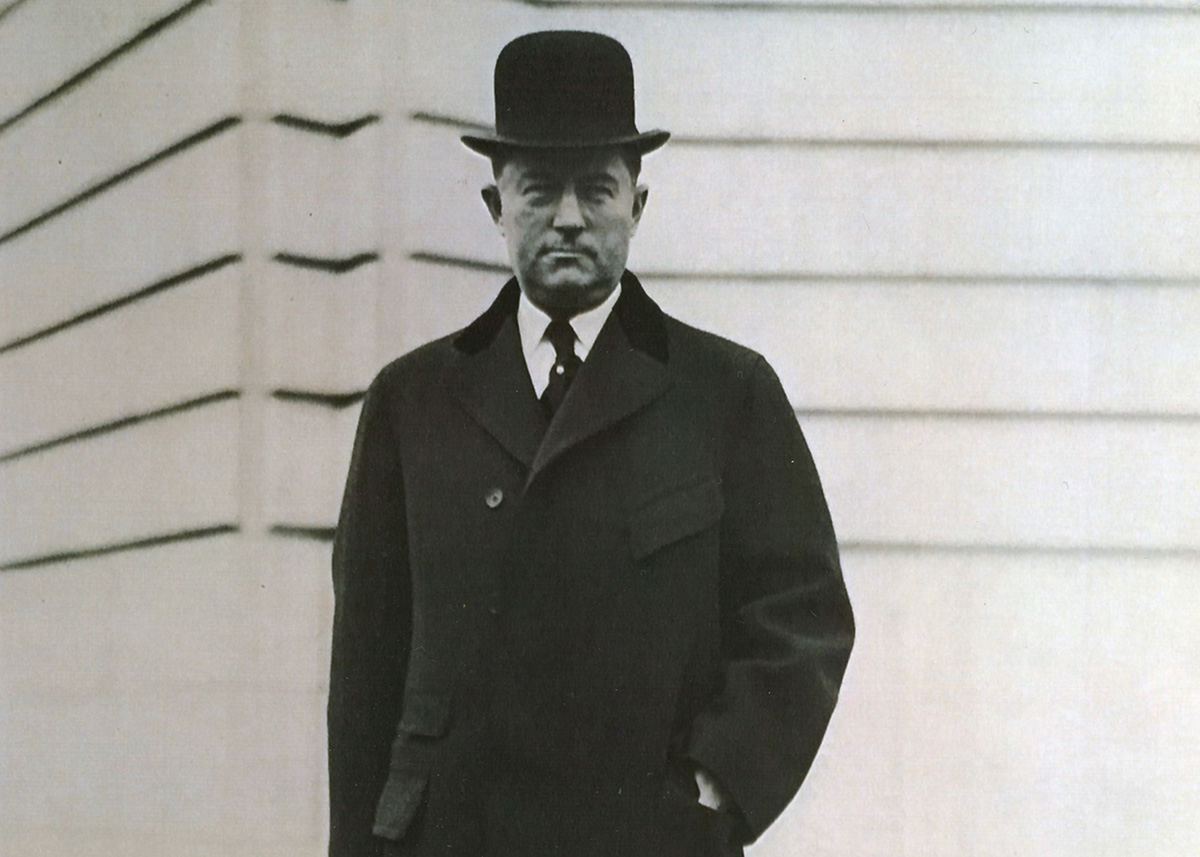
Henry P. Davison, founder of the League of Red Cross Societies, in front of J.P. Morgan & Co offices, on the corner of Wall Street and Broad Street, New York City.
More than a century later, his legacy endures in every corner of the globe where Red Cross and Red Crescent volunteers are present. From the deserts of the Sahel to the mountains of Nepal, from urban centres to remote islands, the IFRC network continues to live out Davison’s founding vision: a network of equals, acting locally and united globally.
As President of the IFRC, and as an American, I feel a particular sense of pride and responsibility in honouring Davison’s legacy. He was a man of action, of moral clarity, and of relentless purpose. And while the world has changed dramatically since 1919, the spirit that moved Davison to act—the belief in the dignity of every human life—remains unchanged.
And today, as we face new and increasingly complex challenges, I often remind myself of the vision of Henry Davison and strive to ensure that our global network becomes stronger, more resilient and more united, despite the polarization and division of our times. His vision is not simply a historic artifact; it is a living mandate that must shape how we lead, how we collaborate, and how we care.
Let us never forget that we stand on the shoulders of those who came before us. It is our responsibility to recommit to the ideals Davison championed and to aim for a future where unity, not division, defines our response to the world’s most pressing problems.
May the legacy of Henry Davison continue to light our path, today and for generations to come.