Ukraine and impacted countries crisis
Over four years of conflict, 12.7 million people in Ukraine and beyond are struggling without reliable shelter, healthcare, clean water, or safety — while humanitarian funding is shrinking. The Red Cross is on the ground delivering life-saving aid, mental health support, and emergency relief to the most vulnerable, with plans to reach over 2 million more people through 2027.


Operational strategies
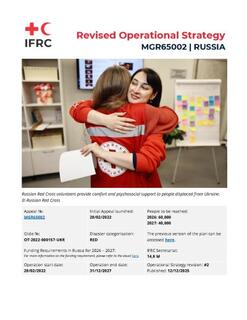
Ukraine and impacted countries crisis (MGR65002)
Read more
Ukraine and impacted countries crisis (MGR65002)
Read more
Ukraine and impacted countries crisis (MGR65002)
Read more
Ukraine and impacted countries crisis (MGR65002)
Read more
Operations updates
Ukraine and impacted countries crisis (MGR65002)
Read more
Ukraine and impacted countries crisis (MGR65002)
Read more
Ukraine and impacted countries crisis (MGR65002)
Read more
Ukraine and impacted countries crisis (MGR65002)
Read more

Four years of IFRC humanitarian response
Healing the invisible wounds of conflict and upheaval
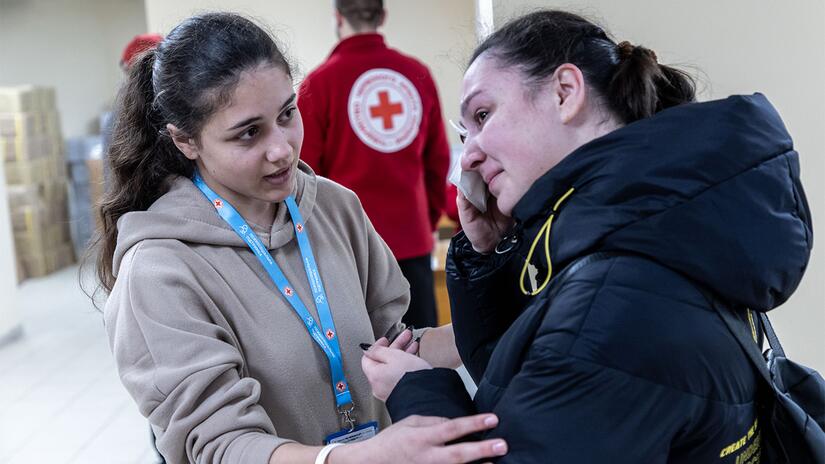
A Ukrainian Red Cross Society volunteer comforts a woman from Ukraine affected by the ongoing international armed conflict in February 2023.
Photo: Ukrainian Red Cross Society
More than four years of ongoing conflict is taking a toll on both body and mind. Millions are struggling not only to cope with the consequences of the past winter, but also to hold on to their health, strength, and hope in the face of relentless hardship.
Mental health needs are surging, as more than half of the population (56 per cent) report needing psychosocial support, while only 19 per cent are able to access it. Many people report having experienced traumatic events, yet access to specialised mental health and psychosocial support remains limited.
Red Cross and Red Crescent staff and volunteers, therefore, not only provide essential material support but also mental health and psychosocial support that is critical to helping people cope and recover.
Sometimes it’s just a listening ear: helping people to heal invisible wounds and breaking down the stigmas that often make people wary of seeking out mental health services. At times it means providing a safe place or phone hotlines where people can turn to when they need to talk.
This is why National Red Cross Societies in Ukraine and 24 other European countries have united with the IFRC and the IFRC Psychosocial Support Centre to provide vital mental health and psychosocial support services. Funded by the European Union’s EU4Health initiative, these services include special hotlines staffed by trained specialists who speak Ukrainian. Some of those who offer or who coordinate these services are themselves refugees.
Latest
As conflict enters fifth year, humanitarian needs in Ukraine intensify amid deepening energy crisis and funding shortfall
As conflict enters fifth year, humanitarian needs in Ukraine intensify amid deepening energy crisis and funding shortfall
Life beyond blackouts
Life beyond blackouts
Large-scale power disruptions in and around Kyiv leave 200,000 people without heating
Large-scale power disruptions in and around Kyiv leave 200,000 people without heating
Beyond the blackouts: Ukraine facing its hardest winter yet, IFRC warns
Beyond the blackouts: Ukraine facing its hardest winter yet, IFRC warns
Watch: Videos from our Ukraine response
Our response strategies by sector
Ukraine response: Shelter strategy
Read more
Ukraine response: Protection gender and inclusion (PGI) strategy
Read more
Ukraine response: Migration and displacement strategy
Read more
Ukraine response: Mental health and psychosocial support (MHPSS) strategy
Read more
Ukraine response: Information management strategy
Read more
Ukraine response: Health and care strategy
Read more
Ukraine response: Cash and Voucher Assistance (CVA) strategy
Read more
Ukraine response: Community Engagement and Accountability (CEA) strategy
Read more
Ukraine response: National Society Development (NSD) strategy
Read more

Download assets from shaRED - IFRC’s online multimedia library
Useful links