Budapest/Geneva, 24 June 2026 – As an intense heatwave sweeps across Europe, the International Federation of Red Cross and Red Crescent Societies (IFRC) is warning that extreme heat, without action, can quickly become a matter of life and death — and is urging everyone to take this threat seriously and check in with those most at risk.
Health authorities across the continent have issued heat alerts as the coming days pose serious health risks with temperatures reaching 40°C across Western and Central Europe. For millions living in cities, there is little relief even overnight - a dangerous reality for many.
"We are urging people to stay connected to heat alerts and act on guidance from their local authority," says Birgitte Ebbesen, IFRC Regional Director for Europe. "Take a moment to check in on a neighbour, a family member, or anyone you know who could be more vulnerable. That simple act can save a life."
Who is most at risk?
While prolonged heat can affect us all, the IFRC warns that the most extreme impacts fall on older people, children, pregnant women, people living with chronic illnesses, outdoor workers, people experiencing homelessness, migrants, people in housing prone to overheating, without access to cool spaces. Indoor heat is a hidden but deadly threat — especially for people with limited mobility who cannot easily seek cooler environments.
Early heat action saves lives
Across Europe, the IFRC Network has mobilised staff and volunteers to help communities beat the heat. This includes distributing water and setting up cooling spaces in cities and conducting door-to-door visits and safe and well calls to people staying at home. Volunteers are also providing first aid and sharing practical, life-saving advice to help people protect themselves and those around them.
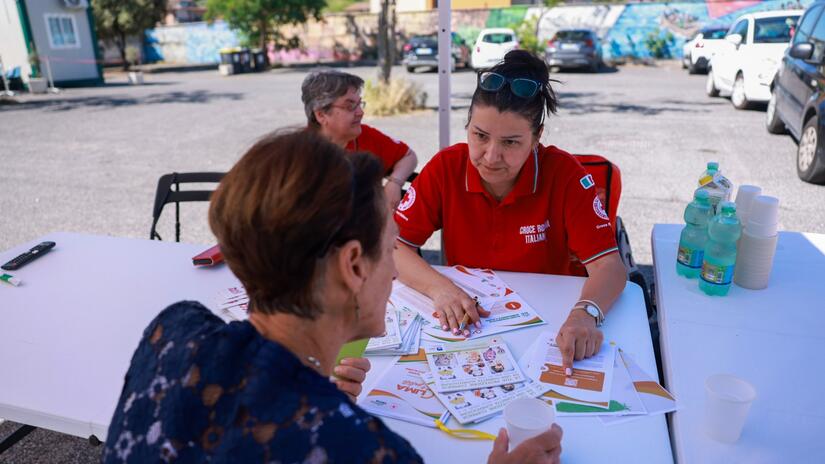
In Italy, the Italian Red Cross is running a public awareness campaign and mobilizing volunteers to prioritize house visits with housebound older people and those in migration or informal settlements.
In Spain, the Spanish Red Cross is sharing simple actions that save lives, supporting cooling centres, and providing welfare calls. Last year alone, it reached over 62,000 people — primarily those over 65 — through welfare calls and home visits during extreme heat.
In France, the French Red Cross has opened cooling centres in local branches, increasing door-to-door visits, and working with local health services to coordinate efforts. It has also launched a nationwide campaign sharing simple advice on staying safe during heat.
In Switzerland, the Swiss Red Cross is partnering with cantonal municipalities to focus support on people over 75, through safe and well calls and home visits.
In the UK, British Red Cross volunteers are providing water, fans and other supplies to 10 local community hubs in London that are opening as 'cool spaces'. Emergency response teams are on standby to support people across the affected areas in the coming days.
A defining challenge
“Extreme heat is now one of the defining humanitarian challenges of our time, a major public health risk that demands action from people, institutions, and governments alike,” adds Mary Friel, IFRC Climate Policy Senior Officer.
Making cities and homes more resilient to rising temperatures requires sustained investment and genuine partnership. The IFRC Network stands ready to support governments and communities before, during, and after extreme heat events. Red Cross and Red Crescent volunteers are trusted members of the communities they serve, reaching people who might otherwise remain isolated and unseen.
Notes to editors:
The IFRC has published a Heat Waves guidance that outlines how to prepare for a heat wave and how to respond to it.
For more information or to request an interview, please contact: [email protected]
In Budapest: Nora Peter, +36 70 953 7709
In Geneva: Paolo Cravero, +41 79 894 83 96