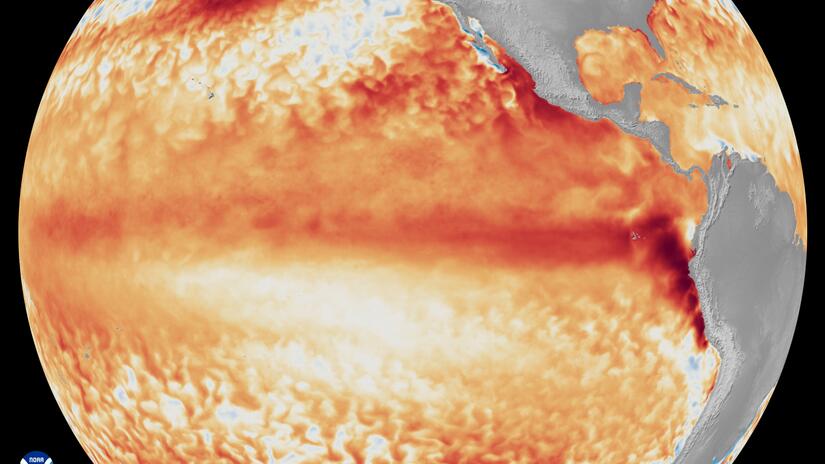
Panama City, 11 June 2026 — The Red Cross Societies of El Salvador, Guatemala and Colombia have activated their Early Action Protocols to protect more than 22,000 people at the first signs of drought. In all three countries, the lack of rainfall could worsen as a result of the El Niño phenomenon, which, according to the United States National Oceanic and Atmospheric Administration (NOAA), entered its active phase on 11 June.
Early Action Protocols are instruments that bring together measures agreed in advance among communities, public authorities and the Red Cross, and are triggered when certain risk thresholds are reached, so that aid can be mobilized before damage occurs.
"Drought is a slow-motion disaster: it does not arrive in a single night and it rarely makes the headlines, which is why aid runs the risk of arriving too late," explained Loyce Pace, IFRC Regional Director for the Americas. "The difference between a hazard and a humanitarian crisis is almost always decided before the impact. This time, thanks to weather forecasts, pre-agreed joint action and anticipatory financing, we know that the moment to protect people is now."
In Colombia, El Salvador and Guatemala, the activation of the drought Early Action Protocols is based on data gathered by the three countries' meteorological services, which point to the same forecast: rainfall well below normal for the June-to-August quarter, just as the agricultural cycle begins.
In El Salvador, the General Directorate of the Environmental Observatory warned of a rainfall deficit between May and July. In Guatemala, the National Institute of Seismology, Volcanology, Meteorology and Hydrology (INSIVUMEH) forecasts El Niño-related conditions with a 70 per cent probability, along with below-normal rainfall. In Colombia, a cartographic analysis by the Institute of Hydrology, Meteorology and Environmental Studies (IDEAM) estimates a more than 50 per cent probability of below-normal rainfall and a moderate drought index by August.
National Red Cross teams had been waiting for this scientific data to launch the readiness activities funded by the IFRC's Disaster Response Emergency Fund (IFRC-DREF). In total, this fund has 1.2 million Swiss francs (CHF) — around 1.5 million US dollars — available for early action against drought in the three countries. This funding is not allocated all at once: it is released in stages, as forecasts reach the risk thresholds agreed in advance among communities, public authorities and the Red Cross, so that each tranche of aid is mobilized just before the impact, not after.
IFRC-DREF resources will make it possible to assist 10,000 people in the departments of Morazán and La Unión, in El Salvador; another 10,000 in municipalities of Guatemala's Dry Corridor, such as Chiquimula, Jalapa and Quetzaltenango; and 2,400 in the Colombian departments of Tolima and Cesar.
Although each context is different, the measures follow the same logic: to act before the disaster strikes and to protect, at the same time, the food security, livelihoods, health and water access of affected communities — areas that droughts tend to hit simultaneously.
The Red Cross will support families in the most vulnerable situations through cash transfers to safeguard food, obtain fuel and cover basic needs without depleting their assets. Teams will also provide safe drinking water as sources begin to run low, supplies to protect crops and livestock, and training in adaptive farming practices, hygiene and the prevention of heat-related illnesses.
Worldwide, only one in every 10 dollars allocated to humanitarian action is invested in reducing or mitigating disaster risk. "It is critical that governments, cooperation agencies, financial institutions and international organizations invest in anticipatory action, early warning systems and forecast-based humanitarian action as essential mechanisms to protect lives, reduce economic losses and strengthen resilience," said Pace.
For more information, contact: [email protected].
In Panama:
Susana Arroyo Barrantes +50769993199