
In the quiet, sunbaked landscape of Mtakuja Village in Taita Taveta County, Kenya, farming has always posed significant challenges. The heat is often extreme, the soil dry, and the rains delayed for months. Yet, amid these challenges, a spirit of resilience is flourishing.
At the heart of this transformation are women such as Margaret, a farmer and mother whose calm, steady voice carries the weight of years of hard work. Not long ago, each day was filled with worry. Buying food often meant borrowing money she could not repay, and repeated crop failures left her efforts feeling futile.
The turning point came when she and a local Friends Women Group she is part of received support through the Integrated Food Security Project established by the Kenya Red Cross Society.
The project works with over 1,000 farmers, who receive training and support in a variety of agricultural specialisations — including gala goats, poultry, apiculture, horticulture, sunflower, and vegetables.
In the case of Margaret’s group, the programme gave each of the eight women members a female goat, while the group shared a he-goat for breeding. What seemed like a modest gift became the foundation for a more resilient livelihood.
“Being part of the Friends Women Group has really helped me. It has given me a sense of belonging and support,” she says. “I am able to share ideas with my fellow members, and I always feel encouraged to keep pushing forward even when challenges come.”
By breeding their goats, Margaret soon became the proud owner of eight healthy animals. From this herd, she now provides fresh milk for her family and occasionally sells some to buy sugar or soap. “I enjoy my goat milk with each cup of tea I sip,” she says with a smile, her pride unmistakable.
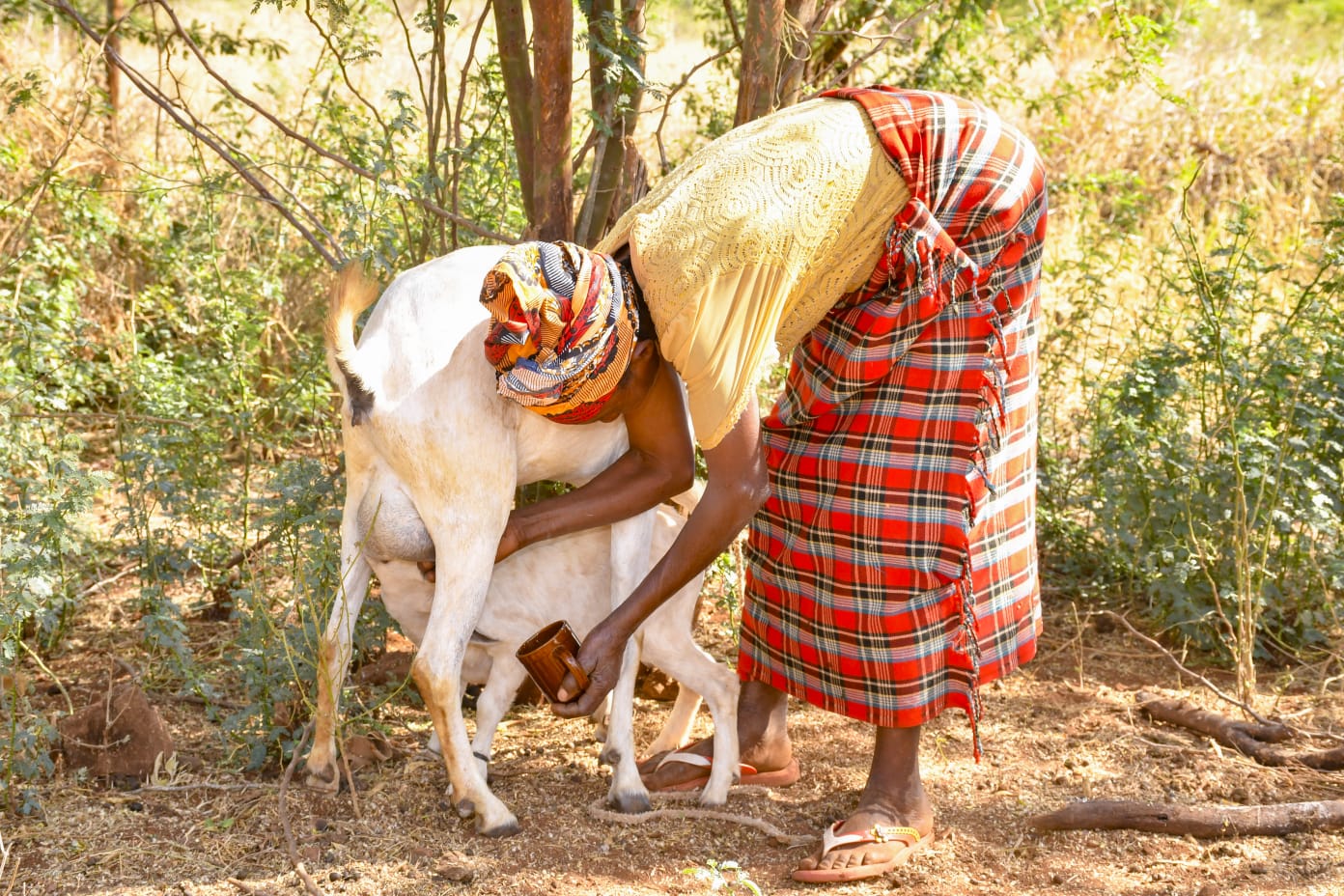
Margaret bends down to draw milk from one of her eight healthy goats. From her small herd, she provides fresh milk for her family and occasionally sells some to buy sugar or soap. “I enjoy my goat milk with each cup of tea I sip,” she says with a smile.
Photo: Linus Muuo/Kenya Red Cross Society
From struggles to smart savings
The Integrated Food Security Project is one of many initiatives supported by the Africa Zero Hunger campaign, recently launched by the International Federation of Red Cross and Red Crescent Societies (IFRC).
This campaign champions community-led durable solutions and calls for urgent investment in sustainable programmes that harness local resilience to tackle the root causes of food insecurity across the continent.
In this case, donations to the Africa Zero Hunger campaign would help the Kenya Red Cross expand the project to reach more farmers and extend its impact into other drought-affected areas, turning a proven solution into a wider movement for food security.
Projects like this work best alongside other community-based microeconomic initiatives that empower local farmers. In Margaret’s case, for example, she joined a Village Savings and Loan Association (VSLA), where she learned how to save, borrow small loans, and invest wisely. With her earnings, she began farming kale in her compound. Thanks to water conservation techniques she learned through the programme, her small garden remains green even when water is scarce.
“Through using improved kale seeds, together with the training I went through, I have gained the knowledge and skills to take better care of my crops. These practices have made my farming more productive,” she explains.
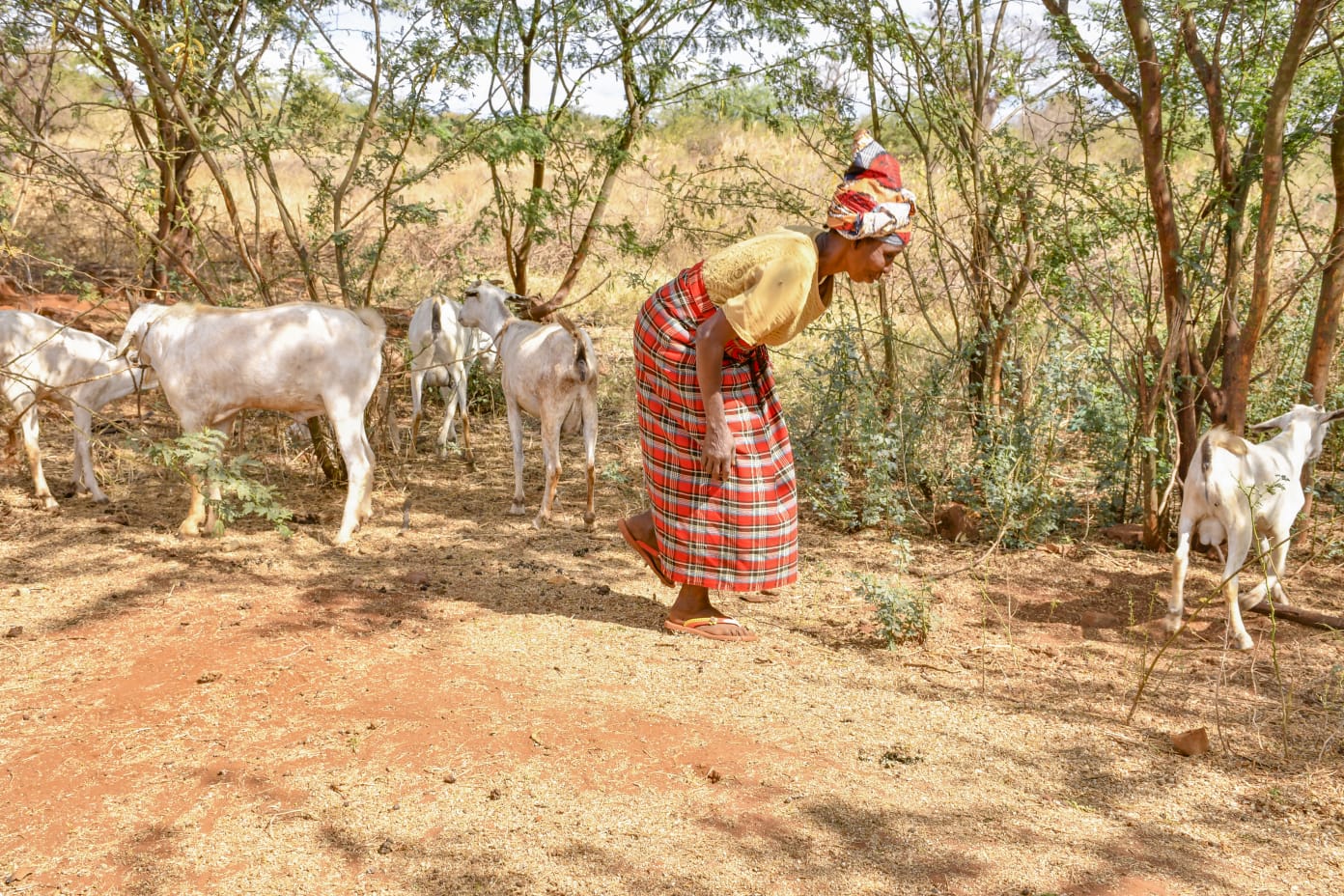
“My dream for the future is to expand my goat rearing so that I can have many goats,” adds Margaret, who so far has bred eight goats with support from the Kenya Red Cross’s Integrated Food Security Project.
Photo: Linus Muuo/Kenya Red Cross Society
Resilience through every challenge
Earlier this year, Margaret faced a painful setback when elephants invaded Mtakuja and destroyed her entire kale garden in a single night. The loss was a harsh reminder of the ongoing human-wildlife conflict in the region. Yet, she refused to be defeated. Determined, she set her sights on replanting and rebuilding with even greater resolve.
Today, Margaret’s home is alive with hope. Rows of kale once again line her compound, while the gentle sound of goats fills the air. A small bucket of milk often sits beside freshly harvested vegetables. Every scene tells a story of effort, perseverance, and renewal.
This spirit of change is spreading across Mtakuja. Through the VSLA model and the solidarity within the Friends Women Group, more women are saving, investing, and securing a better future for their families.
Now, the Integrated Food Security Project has reached around 1,500 farmers in total. Among them, about 350 farmers are keeping goats, while poultry farmers have been trained to use solarized incubators to scale up egg production and to produce sustainable poultry feeds for both consumption and sale.
Those who grow sunflowers, many from rain-fed areas, are preparing to benefit from a new sunflower oil processing plant, which will add value to their harvests and boost their incomes.
Margaret no longer lives under the shadow of food insecurity. Her children, now grown, have joined her in farming, caring for goats and crops, turning agriculture into a shared family strength. The women here are no longer only farmers. They are pillars of resilience and progress in their community.
Story and photos by Gidraph Mbugua Gitema
Get involved and make a difference:
Join the Zero Hunger Campaign and help vulnerable communities on a path to resilience.