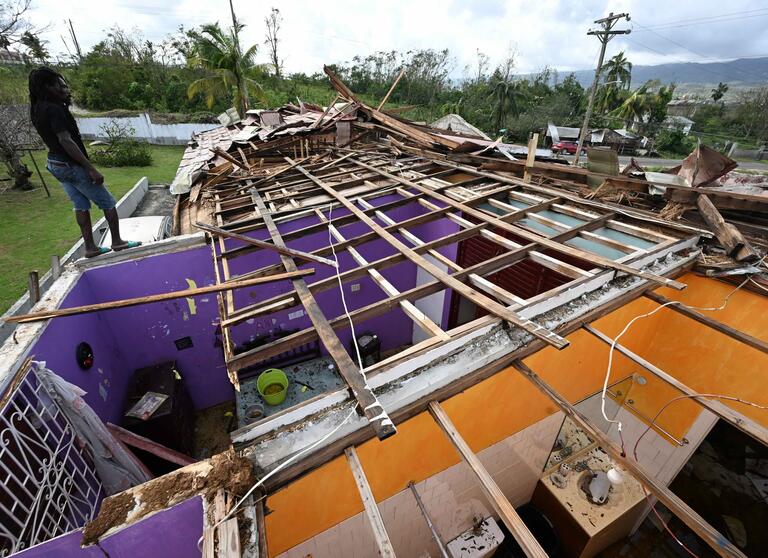

When Hurricane Melissa tore across Jamaica as a historic Category 5 storm, it left a trail of unprecedented regional devastation. In the immediate aftermath of what became the economically costliest disaster in the country, the challenges for humanitarian teams increased.
In this kind of context, needs are overwhelmingly high, resources are inherently limited, and incoming field information takes time, often arriving incomplete due to blocked roads and downed communications. Humanitarian organizations risk defaulting to larger, highly visible, or easily accessible communities along the storm's direct path.
To break this cycle and ensure an inclusive disaster response, the Jamaica Red Cross and the IFRC turned to data innovation, by building a Vulnerability Index Tool. Built on the ground during the response by local Red Cross teams led by Ahmad Khan, IFRC Information Management Coordinator deployed specifically to support the operation in Jamaica, this decision-making support tool completely shifted how early emergency operations were targeted, revealing hidden and unseen realities that might have otherwise gone unnoticed.
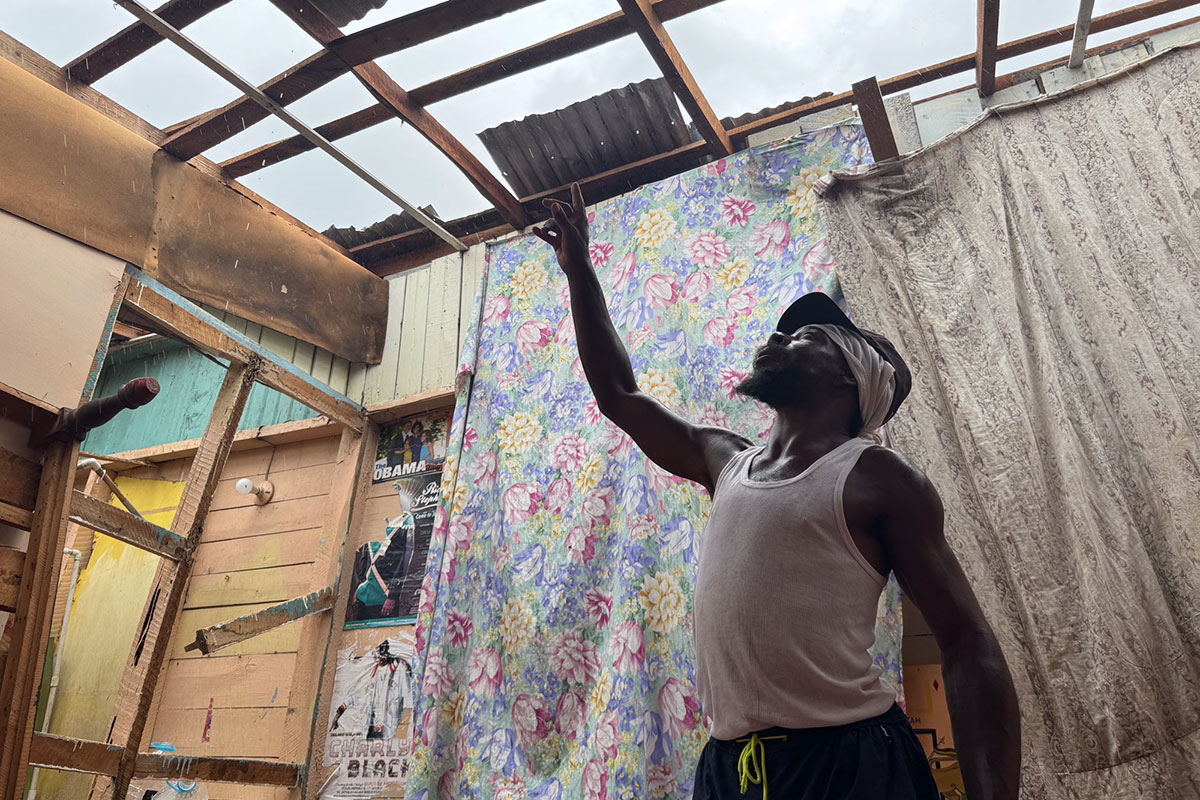
Hurricane Melissa survivor Dwayne Francis recounts how he and his neighbour fought together for survival as Category 5 winds tore through their community and homes in Jamaica in November 2025.
Photo: Lauren Sabin/IFRC
What is the Vulnerability Index Tool?
At its core, the Vulnerability Index is a dynamic decision-support mechanism designed for rapid prioritization. It works by layering two vital datasets into a single, practical map that clearly visualizes where severe vulnerability intersects with an absence of humanitarian aid.
Rather than relying on guesswork, Khan integrated data from two distinct streams. Pulling primarily from physical, house-to-house assessments — specifically the Jamaica Household Impact Disaster Assessment — volunteer teams visited affected areas to document structural damage alongside critical household demographics. This involved identifying families who were coping with elderly relatives, infants, pregnancies or members living with chronic diseases or other vulnerable conditions.
Through operational networks, working groups, and humanitarian clusters, the teams were also able to track exactly which partner organizations were already serving which communities and through what specific sectors, such as shelter or health.
By combining these two factors, the tool stops asking merely who is vulnerable? and starts answering a much more critical emergency question: "Who is highly vulnerable and still completely underserved?" This allows response operations to move entirely beyond media visibility or easy road access, directing early support straight to the places where local capacities are under the greatest strain.
"What was particularly encouraging was that the communities our branches instinctively prioritized for support were the same communities identified by the index as having the highest levels of vulnerability and the greatest impact from the hurricane," said Leiska Powell, Emergency Services Manager at Jamaica Red Cross. "This gave us confidence that the tool was accurately reflecting realities on the ground and validating critical response decisions, even before the full assessment process was completed."
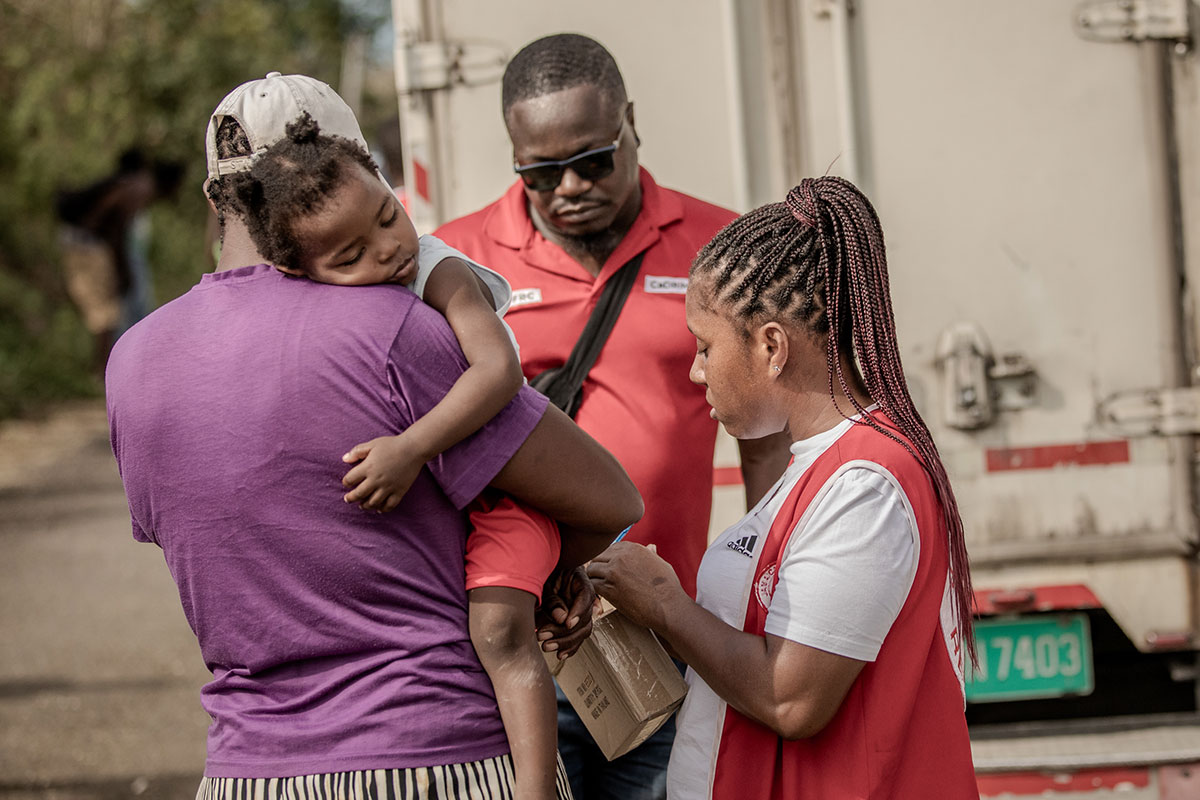
Jamaica Red Cross volunteers distribute shelter kits, food, water, blankets, and tarpaulins to families in Forest and Golden Grove communities in Jamaica in November 2025, providing essential emergency supplies in the aftermath of Hurricane Melissa.
Photo: Damien Naylor/IFRC
Overcoming duplication in Cash Assistance
One of the most immediate breakthroughs of this data-driven approach was seen in the implementation of Multi-Purpose Cash (MPC) and Cash and Voucher Assistance (CVA) programs. In major disasters, a critical bottleneck for cash assistance is the time-consuming process of cross-checking beneficiary lists across multiple organizations to prevent "double-paying" families.
By using the Vulnerability Index to map out "zero-coverage zones" — spots of the island where no other partners had stepped foot and no cash programs existed — the Jamaica Red Cross completely bypassed this administrative hurdle.
"Because the tool showed us that no other partners were serving those specific communities, there was no need to run months of verification checks across beneficiary lists," Khan explained. "It removed a major, time-consuming step in our distribution process and allowed us to safely speed up the implementation of cash delivery when people needed it most."
Furthermore, the data allowed for precise geofencing and area-based targeting conversations. Instead of covering broad geographic assumptions based on the pathway of the hurricane, the Jamaica Red Cross focused its outreach, registration, and cash distribution heavily on underserved communities within affected parishes.
Human-verified accuracy
While the data tool provided the maps, the ultimate validation came from humans on the ground. During the initial weeks of testing, field teams found a staggering 97% correlation between what the tool flagged as a high-need, low-support area and the reality verified by volunteers on site.
In one unforgettable instance, the tool highlighted an isolated community completely bypassed by public attention, government officials, and international actors alike. When Red Cross teams arrived to verify the data, they discovered a man whose entire house had collapsed during the hurricane. The only thing that remained was a single broken wall, laying precariously over a refrigerator, and he slept underneath it.
He had received no aid and had seen no media teams; his story and his community were entirely invisible until data and local volunteer insights brought him into focus.
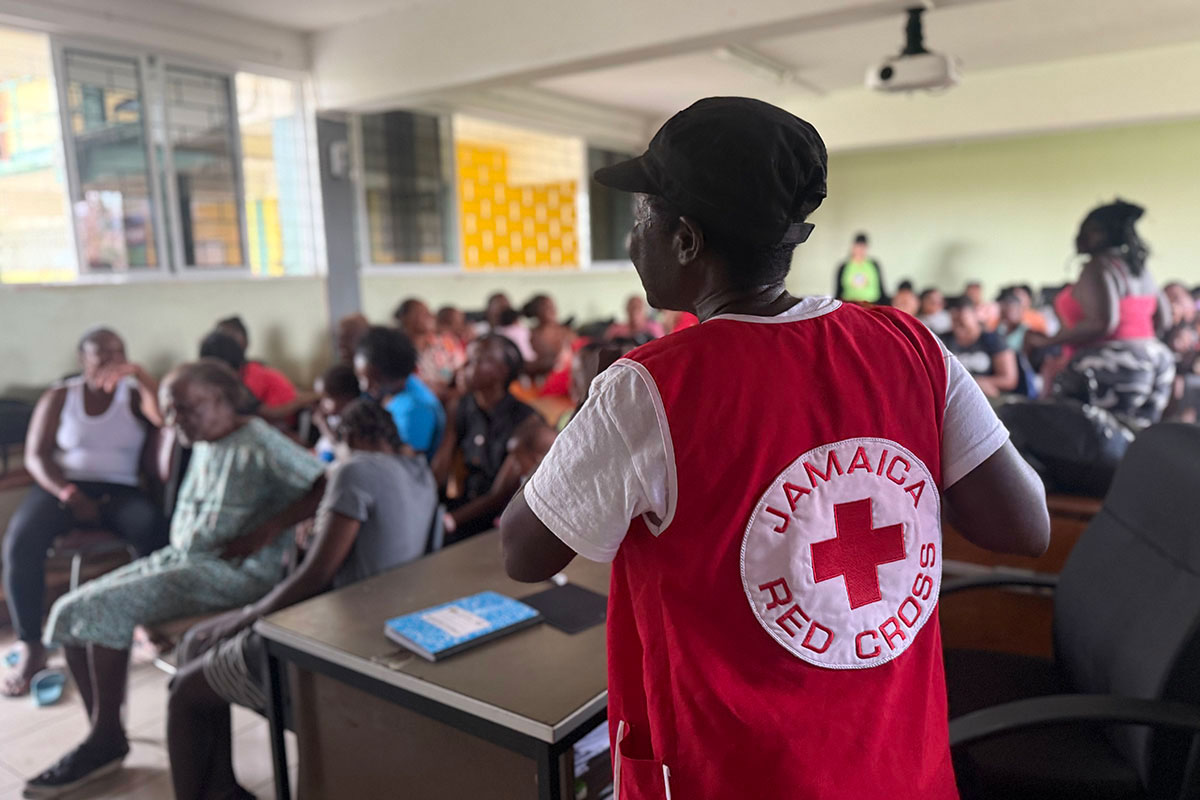
Jamaica Red Cross teams conduct Mental Health and Psychosocial Support (MHPSS) activities at Petersfield School, Westmoreland, Jamaica, in the aftermath of Hurricane Melissa in November 2025.
Photo: Noemi Monu/IFRC
Future-proofing Disaster Risk Management in the Caribbean
The success of the Vulnerability Index Tool has fundamentally reshaped the operational strategy for the Jamaica Red Cross. Virtually every major programmatic distribution and cash initiative implemented by the National Society since late November has been guided directly by the tool's findings.
Moreover, as the operation transitions from early crisis response into the recovery phase, the framework is adapting seamlessly. By updating the indicators from immediate storm damage to markers like housing repair progress, livelihood disruptions, access to local services, and school re-openings, the Red Cross can periodically track which communities are bouncing back and which are falling behind. This ensures that longer-term recovery efforts remain equitable and evidence-based, rather than assuming that everyone rebounds at the same pace.
"Looking ahead, I see tremendous potential for expanding the use of this tool beyond a single emergency operation," added Powell.
"A unified tool of this nature would be transformative for the humanitarian sector," she continued. "If government agencies, humanitarian organizations and NGOs are all working from the same evidence base, we can improve coordination, increase coverage and impact, enhance efficiency, and significantly reduce duplication of effort during emergencies. The benefits would extend far beyond the Jamaica Red Cross and strengthen disaster response across the country."
The methodology is already being peer-reviewed through a scientific paper submitted by Khan through popular universities, proving its viability for the wider global humanitarian network. Because the underlying principles are highly adaptable, the tool can be updated with any functional indicators to fit anything from a localized flood to a nationwide crisis.
By putting data in service of equity, the Jamaica Red Cross and the IFRC have proven that technology can also restore dignity, ensure fairness, and reach those who are usually unnoticed.