
From patients in clinics without latrines to market vendors without public toilets, the lack of adequate sanitary facilities in some parts of Togo has had far reaching effects.
But today, through partnerships and a commitment to community well-being, that reality is changing as the Togolese Red Cross leads a transformation in local water, sanitation and hygiene (WASH) services.
"Before, we suffered a lot," said one community member, Toukou Afiyo. "Women have suffered a lot too. When people used the toilets, the smell spread to the hospital. Some patients or their family members preferred to go into the bushes. With the new toilets, people will be happy to use them.”
Centered in the west-African nation’s prefectures of Bas Mono, Kpélé, Akebou and Mô, the project is now serving thousands of people who once faced daily hardship due to poor sanitary conditions.
The improvements are made possible thanks to financing from the Islamic Development Bank to the Government of Togo. The installation of drinking water infrastructure is managed by the Ministry of Water, while the Togolese Red Cross implements the hygiene and sanitation component.
Also supported by the IFRC, the project aims to raise awareness about the importance of drinking clean water and adopting good hygiene and sanitation practices. It also provides the physical infrastructure that communities need to make healthy choices.
In total, the project will build 57 latrines in health facilities and 100 public toilets in markets, bus stations and public squares in the four districts.
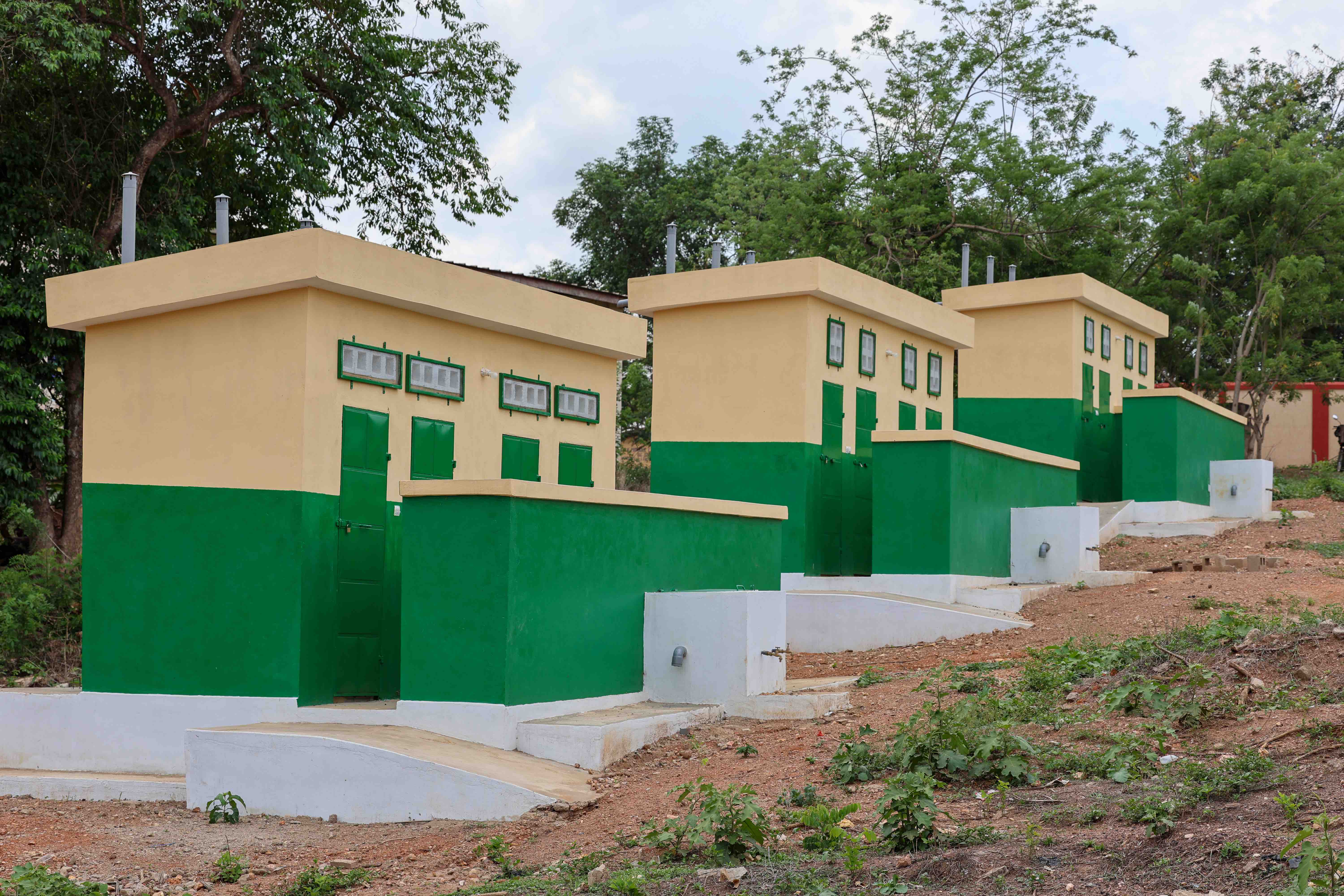
A series of three newly built latrine and water facilities, painted in bright green and beige colors, now serve a community where sanitation services had been lacking.
Photo: Aduratomi Bolade/IFRC
Building latrines and awareness through conversation
But the project is not just about building latrines and water stations. It's also about conversation. Community engagement, mobilization and hygiene awareness are critical components as Togolese Red Cross volunteers work to help people adopt sustainable behaviors that protect their health.
In Kpélé, the Goudévé health centre is already seeing the benefits. New latrines under construction are expected to significantly improve hygiene and privacy, especially for women and girls.
"These latrines will greatly help, first the health workers, and then the patients who come for consultations, especially our mothers and sisters who come to give birth," said Fulbert Anikanou, WASH coordinator for the Togolese Red Cross. "Hygiene and sanitation related diseases will be reduced."
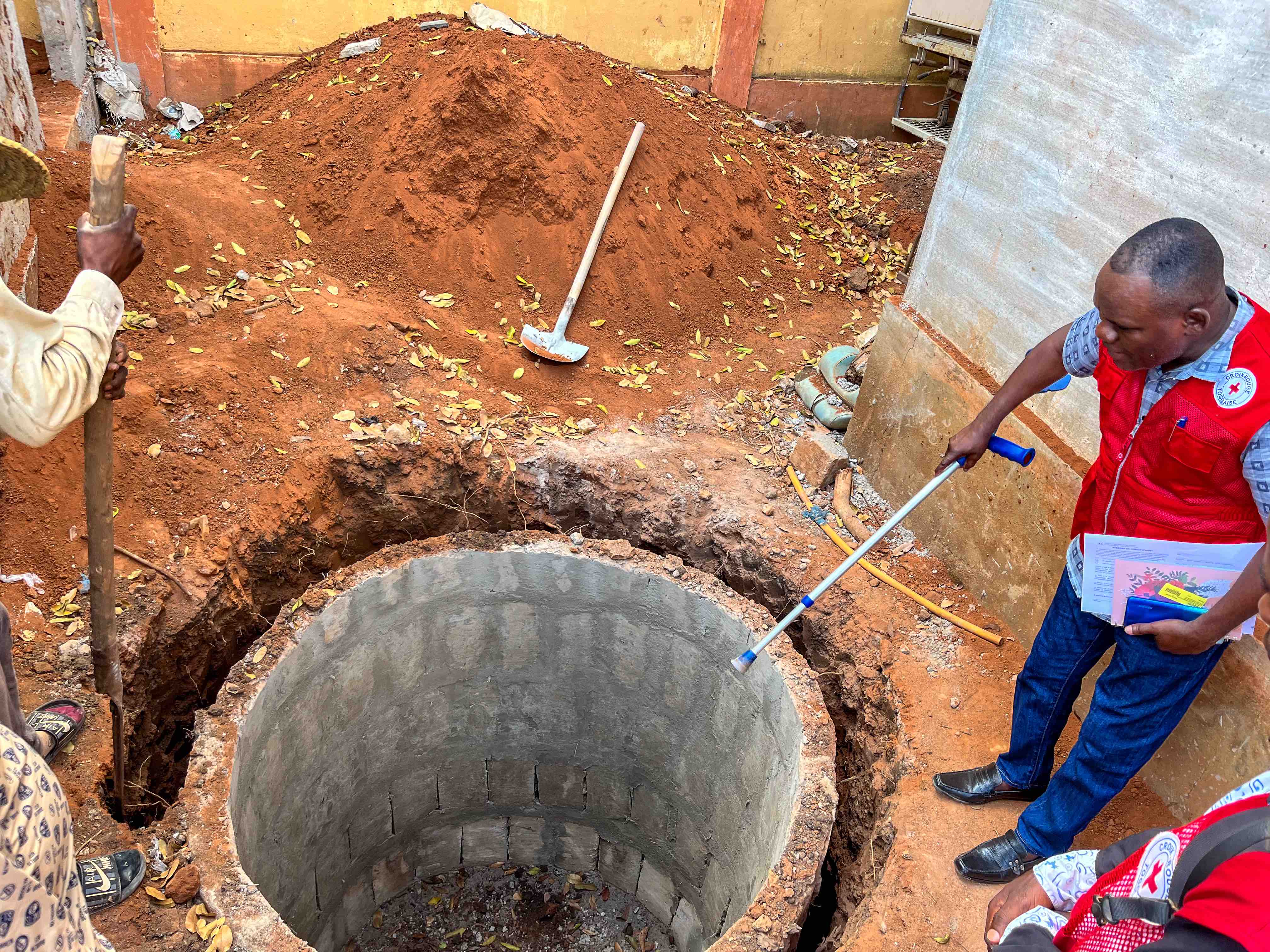
A Togolese Red Cross team inspects a newly constructed holding tank that will be used in a new water and sanitation facility built in a rural community in the western African nation of Togo.
Photo: Aduratomi Bolade/IFRC
Komi Koutse, director of the Goudévé health center, agrees.
"It's a feeling of joy and satisfaction," he said. "The problem of latrines has always been one of our main concerns. Especially since we are on the banks of a river... Our people were sometimes forced to go into the bush to relieve themselves.”
"This project, I assure you, is a sigh of relief," he continued. "We are very reassured that this will reduce the risks associated with open defecation, contamination and pollution. We thank the partners, especially the Red Cross and the Islamic Development Bank, who have made this possible.”
The Togolese Red Cross is also leading community efforts to highlight hygiene and sanitation conditions in affected communities. Its volunteers promote behaviour change through house-to-house visits, group discussions, hygiene promotion sessions and education on the risk of open defection and unsafe water consumption.