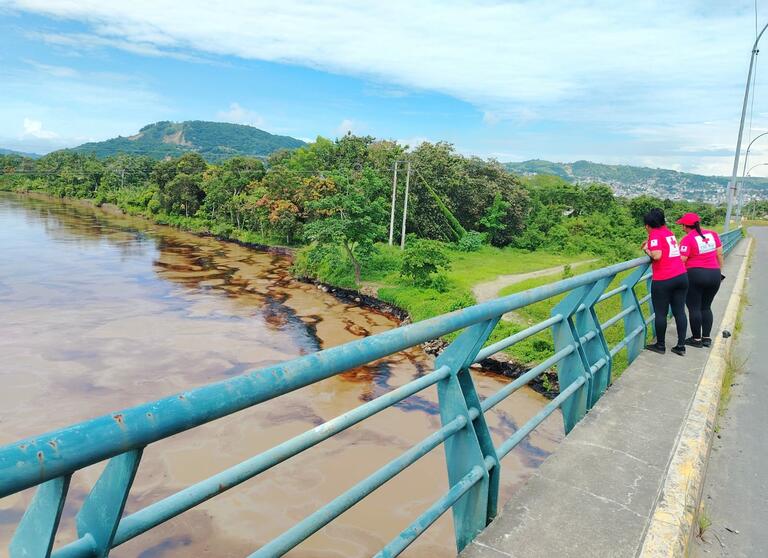

Angela and Narcisa have lived alongside the Esmeraldas River their entire lives. For them, the river was more than just water; it was a source of food, a place to bathe and cook. It was life.
Just under three months ago, their situation took a turn when an oil spill contaminated the Caple, Viche and Esmeraldas rivers, leaving thousands of homes without access to clean water.
‘Seeing my grandchildren without clean water hurt me the most,” says Narcisa from the Tabiazo community. “Before, we could boil or filter it, but with that smell, even that didn't work anymore. We couldn't bathe properly or cook in peace.”
The oil spill endangered the lives of thousands of people and their livelihoods.
“Some people can't go to work,” says Ángela Tenorio, a resident of the El Treinta community. “Some are cowboys and can't give water to the cows. We live off the land here, off agriculture, off the river and off fishing. Now the plants living in the water are dying, so you can't eat the fish because they're contaminated.”
However, the emergency was not only environmental; the disaster also caused an information crisis.
Information as aid
In order to address the uncertainty and numerous questions that can arise in the event of a disaster such as this one, the Ecuadorian Red Cross has incorporated community education on the safe use and protection of water, as well as risk and disease prevention into its response.
The participation of local volunteers, who know the area and its inhabitants, has been crucial in disseminating information. At the heart of the response were people like Evelyn Angulo, a Red Cross volunteer from Esmeraldas.
“Every time we deliver water, we also deliver a message,” Evelyn explains. “We teach people how to store it and how to avoid disease. There is a lot of fear because people don't know if the water is really clean. Our job is to give them confidence and support them.”
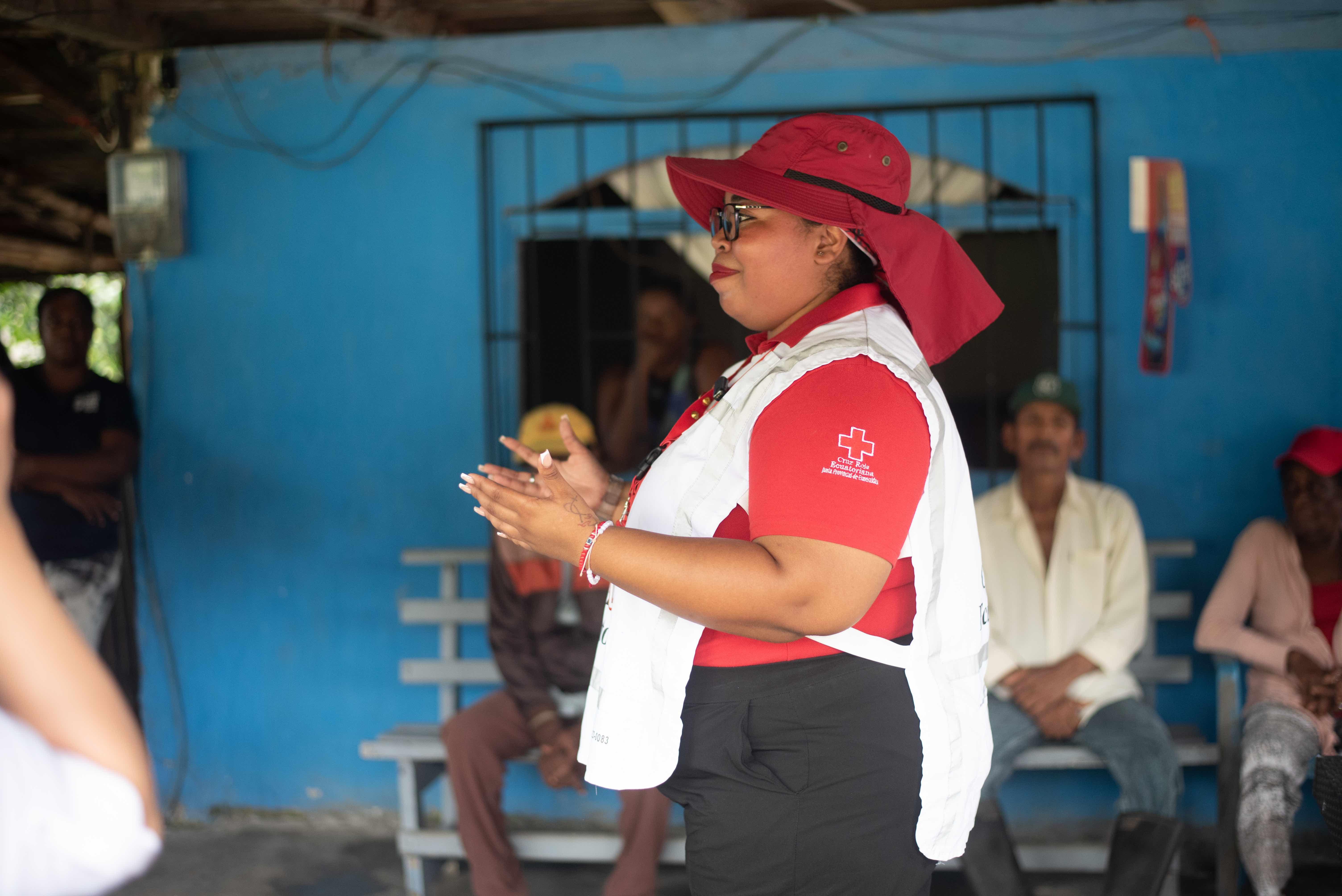
An Ecuadorian Red Cross volunteer from Esmereldas, Evelyn leads an informative session for the community: sessions include psychosocial support, kit distribution, water safety and more.
Photo: María Victoria Langman/IFRC
Communication: a form of caring
The work of volunteers such as Evelyn means that residents such as Narcisa and her family not only received drinking water, they also received something much more valuable: knowledge. They learned how to conserve and purify water, something they could no longer take for granted.
“Before, we didn't know how to conserve or purify water properly,” Narcissa adds. “Now, thanks to what they've taught us, I know how to protect my family. This information is just as important as the water itself. Because without knowing how to use it properly, we could still get sick.”
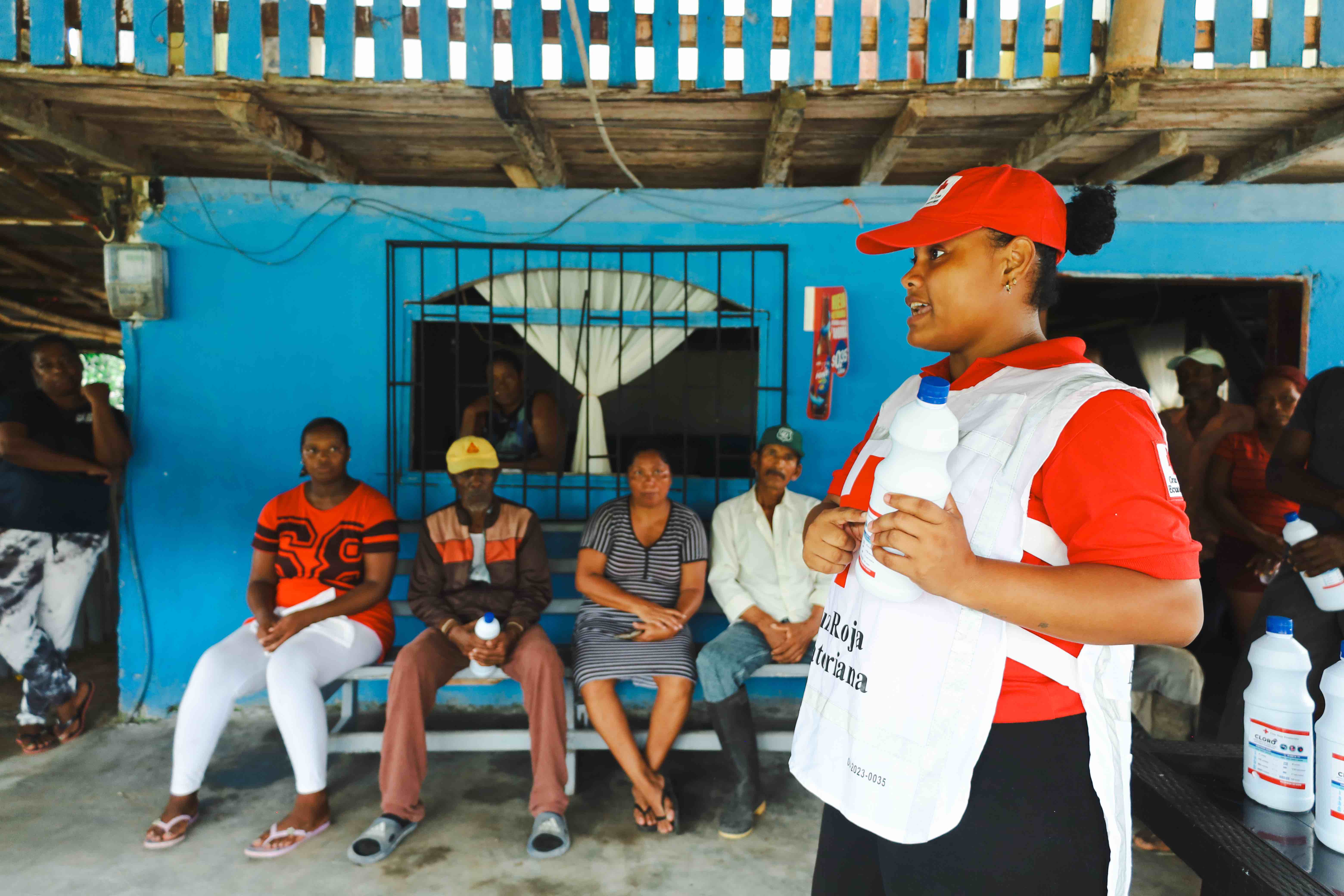
A local volunteer from the Esmeraldas branch of the Ecuadorian Red Cross explains how the home chlorination process works.
Photo: María Victoria Langman/IFRC
Clean water and empowering messages
From the outset of the emergency, the Ecuadorian Red Cross mobilised its local teams in Esmeraldas to deliver a rapid and coordinated response tailored to the needs of those affected.
To support their efforts, the IFRC launched an international Emergency Appeal, seeking to raise 4 million Swiss francs to support the Ecuadorian Red Cross in expanding its response and protect the health and livelihoods of 176,200 people affected by the oil spill and flooding in the provinces of Esmeraldas, El Oro, Guayas and Manabí over the next 12 months.
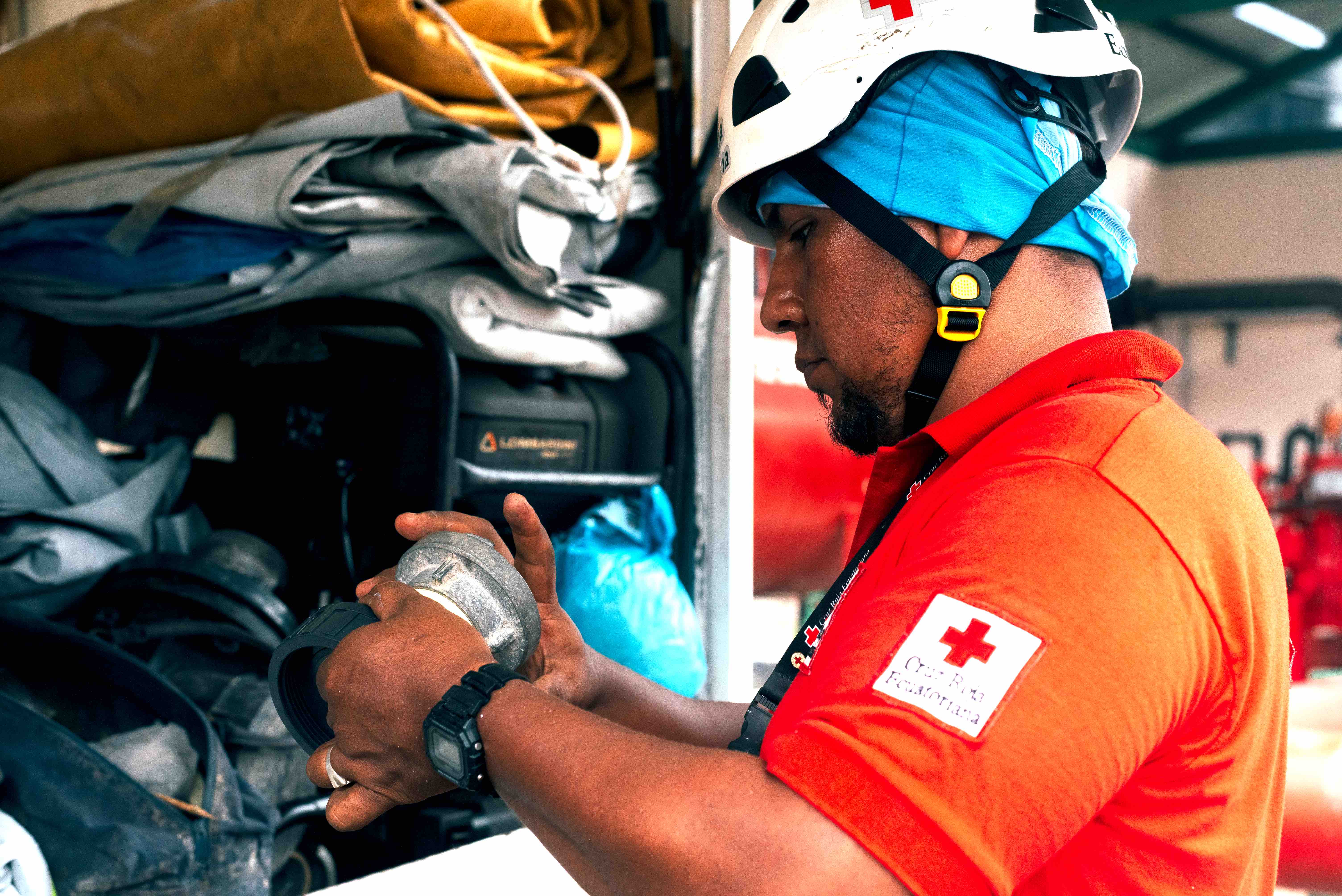
A technician from the Ecuadorian Red Cross works at the water treatment plant to supply the communities affected by the oil spill in Esmeraldas.
Photo: María Victoria Langman/IFRC
The main focus has been on ensuring access to clean water, providing psychosocial support and promoting hygiene in affected communities.
In addition, the Red Cross has distributed millions of litres of water and provided information on how to use a filter, how to detect whetherr water is safe and how to protect oneself from disease.
In the province of Esmeraldas, the response to the spill cannot be measured only in litres of water, however. It is measured in trust, learning and humanity – in lives saved and suffering prevented through the power of timely, accurate and useful information.