Programmatic Partnership / IFRC
The Pilot Programmatic Partnership was an innovative and ambitious three-year partnership (2022-2025) between the IFRC, 37 National Societies, and the European Union. Together, we supported 17 million people in communities worldwide to reduce their risks and be better prepared for disasters and health emergencies, while strengthening local humanitarian capacity across 25 countries.
About the partnership
This partnership between the IFRC network and the European Commission's Directorate-General for European Civil Protection and Humanitarian Aid Operations (DG ECHO) demonstrated a transformative model for humanitarian action.
Over three years, this EUR 205 million partnership addressed a fundamental challenge: how to meet the growing needs of populations affected by intersecting, recurring, and protracted crises.
Red Cross and Red Crescent Societies around the world play an essential role in supporting local communities to prepare for, respond to, and recover from disasters. The PPP provided them with strategic, flexible, longer-term and predictable funding, enabling more efficient and effective humanitarian support.
This approach proved vital as COVID-19, climate-related disasters and conflict left vulnerable people at greater risk. The partnership demonstrated that responding to crises alone is not enough — rather, investing in local preparedness and supporting communities before emergencies happen contributes greatly to enhanced resilience.
Global solidarity, local impact
In the last three years, the Programmatic Partnership has reached more than 16.9 million people with tools to help protect them from disasters and outbreaks. And it's improved the wellbeing of millions more with cash and voucher support, water, sanitation and hygiene, among many other things.
Beyond the 17 million people reached, the PPP generated transformative gains for National Societies, volunteers, and communities. Sustained investment strengthened capacities across 25 countries with 37 National Societies, enhanced coordination mechanisms, and positioned the IFRC Network as a more cohesive partner in crisis response and preparedness.
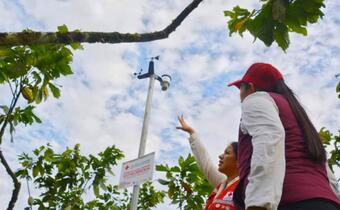
7.84 million
People covered by formal disaster preparedness and anticipatory action plans.
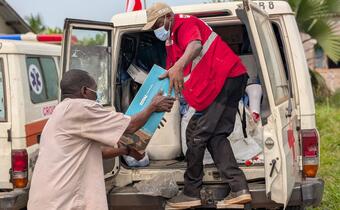
9.57 million
People reached by epidemic and pandemic preparedness and response activities.

5.02 million
People covered by a functional early warning system.
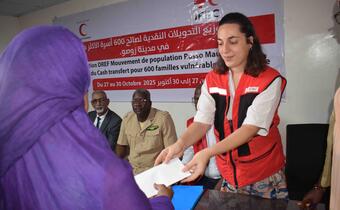
849,168
People reached through cash transfers and vouchers.
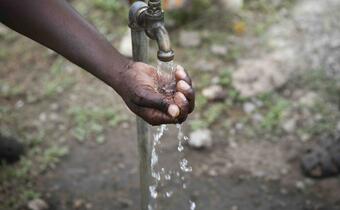
1.61 million
People reached with water, sanitation and hygiene services.
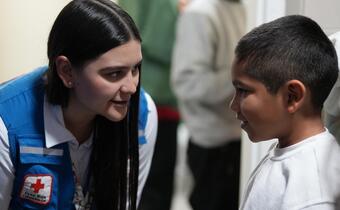
1.48 million
People on the move reached by Humanitarian Assistance and Protection.
Watch: IFRC and EU partnering for good
What was the partnership focused on?
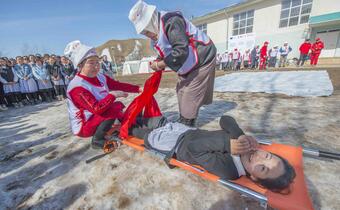
Disaster preparedness and response
Investing in preparedness, reducing people's risks and anticipatory action are crucial to help communities cope before an emergency happens.
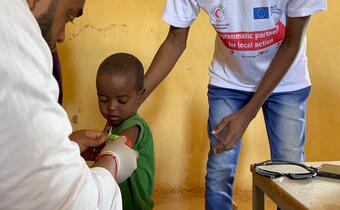
Epidemic and pandemic preparedness and response
The Programmatic Partnership supported community epidemic and pandemic preparedness efforts—because local volunteers and networks are best placed to prevent, detect, and respond to disease outbreaks and other health risks.
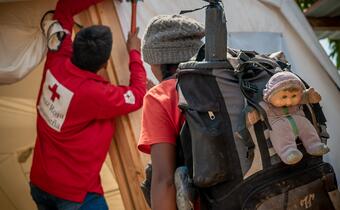
Supporting people on the move
The Programmatic Partnership worked to protect the safety, dignity and rights of people on the move and provide principled humanitarian assistance that met their complex needs.
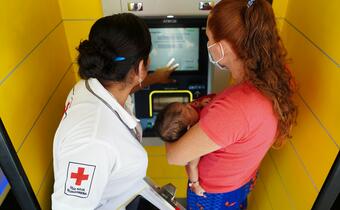
Cash and voucher assistance
People's dignity and choice were at the heart of this partnership. Cash and voucher assistance allowed people to choose how to best support themselves and their families as they rebound from crisis.
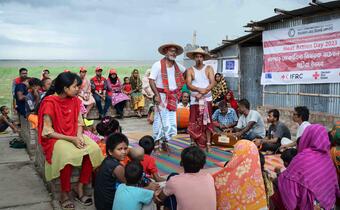
Risk communication, community engagement and accountability
The people we supported through the Programmatic Partnership were seen as partners in our work. We listened to them carefully and acted upon their needs and wishes every step of the way.
Related documents
Pilot Programmatic Partnership: Three years of achievements
Read more
Programmatic Partnership in the Americas: Case studies
Read more
Working climate-smart: protecting livelihoods against future climate risks
Read more
Epidemic preparedness and response success stories from the Programmatic Partnership
Read more
Which countries did the partnership support?
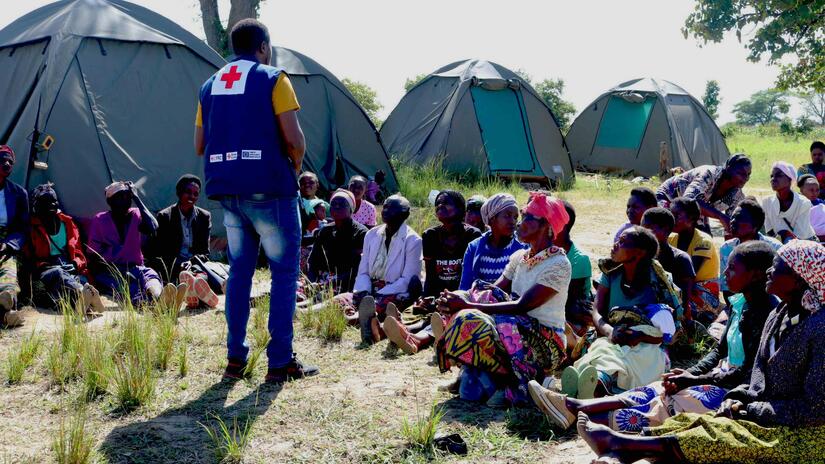
Zambian Red Cross volunteers register flood-affected families for support through the Programmatic Partnership following Zambia’s worst flooding in 50 years. Around 1,400 families were displaced and more than 25,000 households impacted nationwide due to climate change-induced flooding.
Photo: Zambian Red Cross
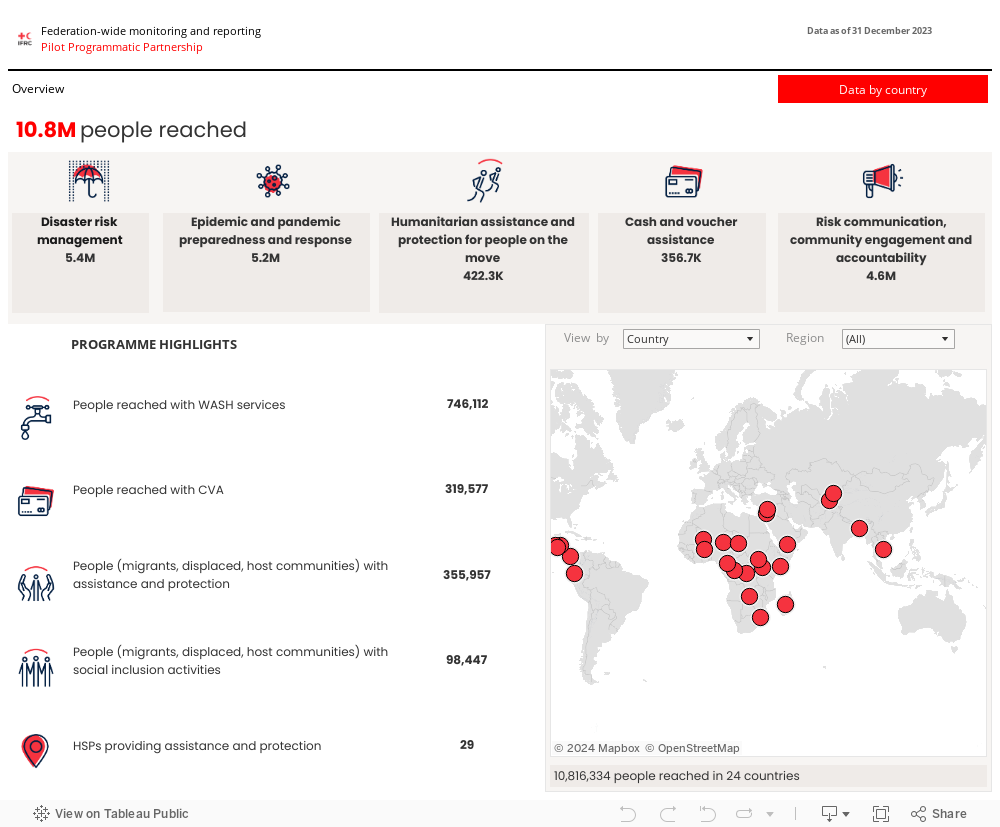
As part of the Programmatic Partnership, we supported humanitarian action in 24 countries across Africa, Asia, Europe and Latin America.
12 National Societies from the European Union also took part in the partnership: Austrian Red Cross, Belgian Red Cross, Danish Red Cross, French Red Cross, Finnish Red Cross, German Red Cross, Italian Red Cross, Luxembourg Red Cross, Netherlands Red Cross, Norwegian Red Cross, Spanish Red Cross and Swedish Red Cross.
Watch: Our partnership in action
Latest
Eight actions taken by the Red Cross network in the Americas to protect women and girls affected by crises and disasters
Eight actions taken by the Red Cross network in the Americas to protect women and girls affected by crises and disasters
Faster, closer, safer: Local action backed by global solidarity.
Faster, closer, safer: Local action backed by global solidarity.
From grain to gain: A story of women’s empowerment and food security in Cameroon
From grain to gain: A story of women’s empowerment and food security in Cameroon
Eswatini: How cash and voucher assistance is empowering women to rebuild after calamity
Eswatini: How cash and voucher assistance is empowering women to rebuild after calamity
Data dashboard
Related links

This web page covers humanitarian aid activities implemented with the financial assistance of the European Union. The views expressed herein should not be taken, in any way, to reflect the official opinion of the European Union, and the European Commission is not responsible for any use that may be made of the information it contains.