Caracas, Panama City, Geneva 23 July 2026 — One month after the two earthquakes that struck north-central Venezuela, the International Federation of Red Cross and Red Crescent Societies (IFRC) and the Venezuelan Red Cross (VRC) have identified three critical areas for humanitarian assistance in the short and medium term: primary health care, mental health care and access to safe drinking water.
The IFRC and the VRC are now focusing their efforts on distributing humanitarian aid, delivering health services and carrying out further needs assessments. Their findings show that many families still depend on bottled water to drink, wash and cook. Access to sanitation also remains limited, raising the risk of disease outbreaks in the areas where displaced people are staying. Thousands of people with chronic conditions have yet to fully regain continuity of treatment — an interruption that threatens their wellbeing and can add further strain to the health system. Survivors are also living with anxiety, fear, sadness and sleeplessness as they grieve the loss of loved ones, of their jobs and of their livelihoods.
"One month on from the devastating earthquakes that shook our country, we reaffirm our commitment to the Venezuelan people. We have activated every cooperation mechanism of the International Red Cross and Red Crescent Movement to strengthen and complement our response, and we will remain here for those who need it most," said Luis Manuel Farías Villanueva, President of the Venezuelan Red Cross. "We are planning a 24-month operation to keep standing with people; needs have been changing, and our response has adjusted to serve more people and to serve them better."
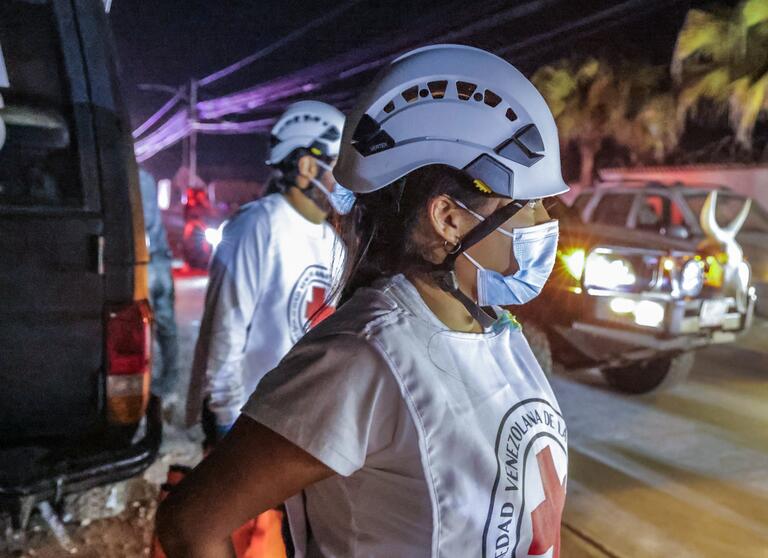
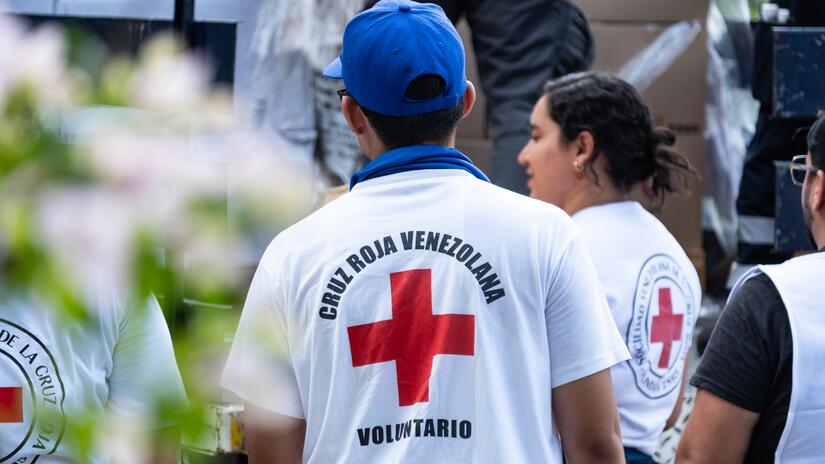
From the very first minute, local Red Cross teams have been alongside the people affected: first setting up a field hospital, supporting the rescue of survivors and reconnecting families who had lost track of their loved ones; and now, distributing humanitarian aid and strengthening primary health care through an emergency clinic in La Guaira.
The clinic, set up by the IFRC and managed by the Spanish Red Cross, reinforces the Venezuelan Red Cross field hospital. It will operate for four months and is already delivering health and psychosocial services that will benefit close to 30,000 people. One of them is Gabriel Cipriani, who lost close relatives when his building collapsed and lives with a neurological condition that requires constant medication. For him, the Red Cross remaining there is the difference between continuing his treatment and having it interrupted: "Knowing I can count on a Red Cross doctor made me feel that I am not alone, that there is a hand with me. That gives you security, it gives you confidence."
In the coming weeks and months, the priority for the IFRC and the VRC will be to sustain that health care and expand access to safe water while laying the foundations for recovery: strengthening epidemiological surveillance to prevent outbreaks, maintaining psychosocial support and treatment for chronic conditions, and beginning to accompany families as they rebuild their livelihoods. Assistance will be adjusted as needs change, with particular attention to those at greatest risk: children, older people, pregnant and breastfeeding women, and people with chronic illnesses or disabilities.
"This disaster is far from over. Continuing to distribute essential items and safeguarding people's wellbeing and public health is, and will remain, a priority in the medium term — but further ahead it will also mean making sure people recover their livelihoods and their income-generating activities," said Loyce Pace, IFRC Regional Director for the Americas. "A disaster like this one calls for assistance that is multisectoral, comprehensive and sustained over time. The IFRC is committed to the Venezuelan Red Cross and to the people of Venezuela in making that possible — and that is why we are calling for sustained, flexible funding, able to accompany families throughout their recovery."
That funding has a concrete figure. The IFRC launched an Emergency Appeal to raise 50 million Swiss francs to assist 300,000 people over two years. One month on from the disaster, it is 25.19 per cent funded. As people's needs evolve and grow more complex, the resources to meet them should grow at the same pace.
Note for editors:
Updated video collection
Updated photo collection
For more information or to request an interview, please contact: [email protected]
In Caracas
Johannes Chinchilla, +584 222 550278
In Panama
Susana Arroyo Barrantes, +507 6999-3199
In Geneva
Tommaso Della Longa +41 (0) 79 708 4367 | Scott Craig +41 (0) 79 76 370 3575