Suva, Kuala Lumpur, Geneva, September 15, 2025 - Nowhere are the impacts of climate change more tangible than in the Pacific — and hardly anywhere is the need for urgent, locally led action more critical. In Kiribati and Vanuatu, climate change is not a distant threat - you can see it everywhere.
Rising seas, saltwater intrusion, and extreme weather are already disrupting people’s lives, livelihoods, and ways of life. These island nations contribute just 0.02 per cent of global emissions — yet they face some of the most devastating consequences.
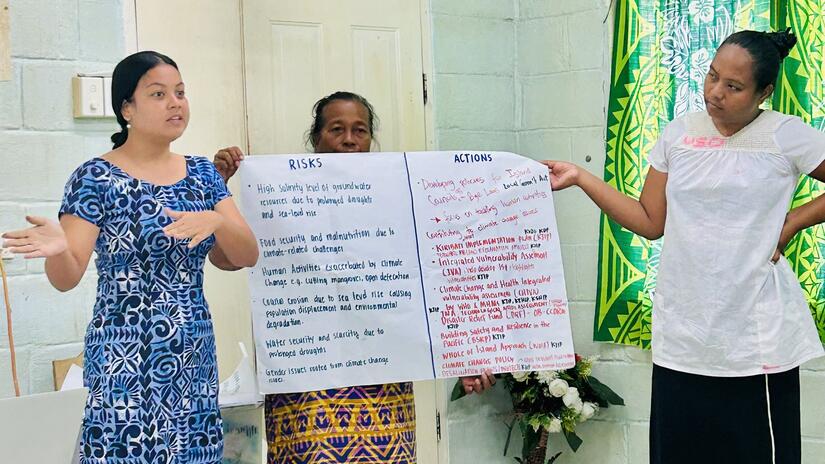
That’s why the Vanuatu Red Cross Society and Kiribati Red Cross Society, together with IFRC have launched a new climate resilience project, funded by DG Clima of the European Union, to strengthen locally led adaptation to the changing climate.
The project is risk-informed, to ensure any project interventions address identified challenges.
Vanuatu Red Cross Secretary General Dickinson Tevi said:
“The risk assessment process will guide us towards identifying risk-informed solutions to the challenges that we face. "
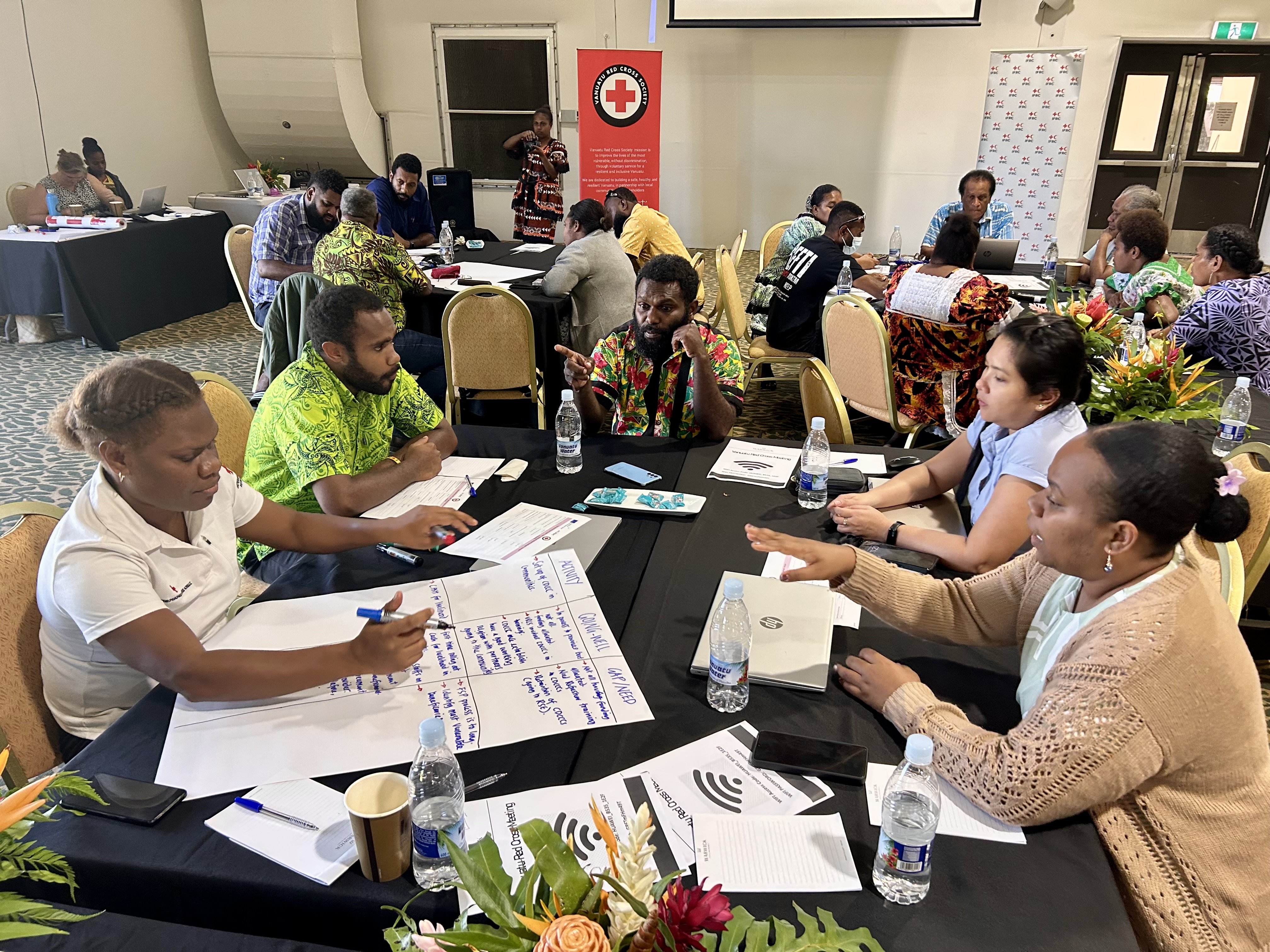
At the inception workshop for a European Union-funded climate-resilience programme in Vanuatu, people from various parts of the community joined the Vanuatu Red Cross and the IFRC to identify specific climate risks, gaps and challenges on which to take action.
Photo: Johanna Reiner/IFRC
Building on existing local expertise and capacity, the project supports locally led interventions to address those increasing risks faced by the most vulnerable — the people who have contributed the least to this crisis but are living its harshest reality every day.
"Including the traditional context and knowledge in locally driven programming will ensure Red Cross programmes focus on sustainability as well as respect for culture, people and place,” Mr Tevi said.
Programs to address climate change are vital in the Pacific.
"Such programs like this, which consider ecosystem-based adaptation and other measures to respond to the effects of climate change, are crucial to ensure the effects lessen and the safety of communities, their environment and its people are secured,” said Tiina Tetabea, Kiribati Government's Ministry of Environment, Lands and Agricultural Development, during the stakeholder engagement session at the inception workshop in Tarawa, Kiribati.
The project is also planned to expand to Belize and Guyana in the Caribbean, supporting climate-affected communities across multiple regions.
For more information or to request an interview, please contact: [email protected]
In Suva: Nete Logavatu Tamanitoakula, [email protected]
In Kuala Lumpur: Afrhill Rances, +60 19 271 3641
In Geneva: Scott Craig, +41 76 370 35 75