
Laws of nature
The laws of physics are universal. They dictate the way energy from the sun warms the oceans and creates clouds, rain and storms. They govern the way earth's tectonic plates shift, fracture and collide. They explain why weather patterns can cause extended periods of heat or dryness.
But the laws of nature do not care about national borders and the laws made by humans. When these phenomenon are viewed from space, this seems obvious.
But the laws made by towns, cities, states and countries between all those borders do matter.
In fact, they can make a big difference in the way people are impacted by phenomena like storms, earthquakes, wildfires and other emergencies.
Sometimes laws can help us respond quickly to calamity. But they can also get in the way — making it hard for people to help each other when disaster strikes.
This is why experts in disaster preparedness and emergency response say now is the time for an international treaty that would protect people during crisis. This treaty would enable much higher level of effective global, national and local cooperation and mutual support.
Disaster Law Treaty / #LocalEverywhere
Down to earth
When we zoom in from the global perspective, we can see exactly how these laws play out on the ground.
Take the case of Madagascar, an island nation in the Indian Ocean where climate change is making intense storms more frequent and more destructive, leaving communities with an uncertain future.
Could an international treaty help disaster-prone countries like Madagascar weather the storms of a changing climate? This article, based on a recent study from the IFRC (see below) examines how Madagascar is responding to successive severe storms and it explores how a global treaty could fortify the county's resilience to the cyclones still to come.
Laws of daily life
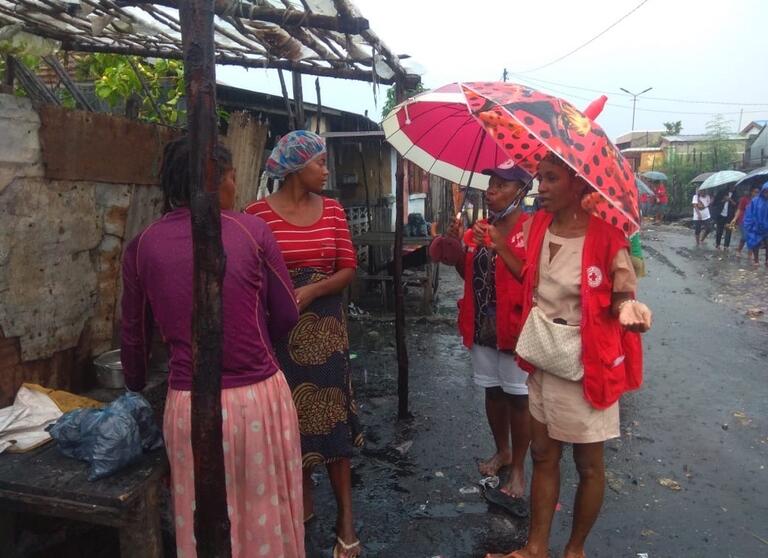
This is Antananrivo, Madagascar's capital city, where daily life goes on even as people recover from latest of a series of terrifying cyclones.
People run errands, go to work, attend school, even as many are struggling to rebuild homes and livelihoods severely damaged by the storms.
Like anywhere else, most aspects of life here are governed by laws — how much to pay in taxes, how to properly build a home, how fast to drive. Very often, the laws and regulations that govern disaster response do not match the real needs of communities, or they get in the way of effective disaster preparedness, swift response and full recovery.
In recent years, Madagascar has made significant progress in preparing for these storms and streamlining its rules, regulations and disaster response protocols.
Their hard work is paying off, but there is still work to do. The recent case study offers a model for what progress can look like, and it offers insights into what can be attained with greater synergy at the local, national and global levels.
First a little background
Located off the eastern coast of Africa, the Republic of Madagascar is one of the world’s most disaster-prone island states in the world.
Warmer ocean temperatures and changing weather patterns caused by climate change have made Madagascar extremely vulnerable to recurring cyclones, floods, droughts, and communicable diseases.
Increasing severity
In recent years, climate-related disasters worldwide have intensified in frequency and severity. In Madagascar, that trend is even more acute. Major cyclone have devastated the country almost every year.
The most recent was Cyclone Gezani (pictured below), which ravaged communities around the island nation in 2026. The year before, two tropical cyclones (Dikeledi and Jude) hit communities still recording from cyclones Cheneso and Freddy in 2023 and Batsirai and Emnati in 2022.
Progress and challenges
National authorities are working with key partners, including the Malagasy Red Cross Society, on a wide range of community-based initiatives to reduce disaster risks neighbourhood by neighbourhood.
Just as importantly, they are streamlining regulations and developing guidelines for how emergency relief from outside the country can be delivered smoothly, without delay, while still ensuring quality and safety.
For example, it has developed customs facilitation guidelines for relief goods, and strengthened its collaboration agreements with domestic and regional actors.
Regional and international relief organizations, including the IFRC, are also involved, ensuring there is close collaboration, as well as clear operating procedures in times of crisis.
Local impact and a global challenge
While these efforts are having a positive impact — thanks largely to locally based volunteers and staff — many challenges remain.
Legal roadblocks and operational challenges persist, along with a lack of adequate resources. This means that people and communities are still in dire need of emergency support yet do not get the full opportunity to recover, rebuild and reduce the risk of further tragedies.
Real lives, real stories
In the face of an oncoming storm, these legal and regulatory gaps at the local and global level have concrete impacts — particularly among those who can least afford any major setbacks.
One of those people is 54-year-old Razafinirina Angeline, shown here surveying the damage caused to her home after Cyclone Gezani in 2026.
"My wish is that when disasters like this happen, the government, the neighborhood leaders, and the commune would help us rebuild our home because we are already old, and we can no longer afford to build a house again."
The day of the story
Madame Angeline: in her own words
"We were all inside the house when it collapsed. The building crumbled, everything fell on the inside, so we all ran out. Fortunately, no lives were lost.
But almost all our belongings were damaged or destroyed. When ours collapsed, the only thing we managed to save was our lives.
The house was already weak it was made of old bricks, and the roof was made of clay tiles. We don’t know exactly what happened, but it suddenly collapsed. Still, we thank God that no lives were lost.
The commune, the local authorities, the government should pay attention to people like us who live in vulnerable areas. We cannot go anywhere else."
'Our house was shaking'
Rasoanantenaina Vololomboahangy, a 47 year old laundry worker, has a similar story to tell.
'And then the flooding started'
Rasoanantenaina Vololombohahangy lives with four family members in a small wooden house in the Beravina Andranonahoatra neighbourhood. During the most recent cyclone, their home and the surrounding areas were flooded, forcing the family to find safety at a nearby shelter.
"Our house was shaking strongly, and then the flooding started, so we left and went to the evacuation site. We stayed there until the water receded and only then did we return home. Part of our roof had already been torn open.
During the cyclone, we left the area and the Red Cross assisted us. They helped us relocate to Ambohimamory. So they took us there and after the water went down, we eventually came back here again.
The commune was the first to assist us, and then we received support from BNGRC (national disaster response authority). At first, the commune brought rice to the site. But there were so many of us that the rice was not enough for everyone."
Slippery paths, narrow alleys and a faster response
Even within the hardships many are facing following these storms, there are many signs of progress and hope. To Rasoarinirina Arimalala, the increasing collaboration between disaster response agencies, the Red Cross and other partners is making a difference.
By steamlining communications, improving coordination and working closely with community disaster risk management committees, the collective preparation and response to each storm is better much better.
Rasoarinirina is the chief of her fokontany (neighbourhood), which is known as Antandrokomby. She also volunteers with the Red Cross. During Cyclone Freddy, she played a crucial role in rescuing vulnerable neighbors when the Sisaony River overflowed.
"During Cyclone Freddy, things were really very difficult for our neighborhood, because the rain didn’t stop and the Sisaony River rose significantly. Since we live close to the river, many houses were flooded, and some were even completely destroyed.
There are many vulnerable people in the fokontany, so we rescued them and encouraged them to go to the accommodation sites to ensure their safety.
We thank God that no lives were lost everyone managed to reach the site. We had to run because the paths were slippery, the alleys were narrow. Cars couldn’t reach every house, so we had to walk everywhere, always rushing. "
"Things are starting to improve, and we hope to strengthen them even further. "
"There was no delay in the assistance here; all reports were sent on time to the authorities, to the BNGRC, and to all supporting partners. There was no delay at all everything arrived on time and in proper order, which helped people get through the situation safely.
"The collaboration with all entities, the authorities, and all partner NGOs was very satisfying in the end."
"Here in the commune of Anosizato Andrefana, especially in the Antandrokomby neighborhood, there is already a disaster risk management committee."
"Its members are spread throughout the neighborhood to support and report quickly to the commune, to the District, and to the BNGRC, and up to the national authorities."
Could a global treaty on disaster law help countries like Madagascar and communities in times of crisis?
Despite major progress, Madagascar’s experience shows that coordination challenges still hamper disaster response. During recent cyclones, communication gaps in some areas between people and groups at the community, district, national and international levels created confusion, slowing down the delivery of aid.
For this reason, the Malagasy Red Cross continues to work with government authorities to enact even stronger cooperation and response mechanisms.
“As the Malagasy Red Cross, we are closely involved in anticipatory action, with preparedness and response efforts across Madagascar," says Miyo Rabaritsimba, Disaster Manager, Malagasy Red Cross Society. "
And we have been formalizing our cooperation with the Government, including in the form of a Pre-Disaster Agreement,"
Because major storms often require support from international humanitarian organisations, a global treaty would both streamline processes for delivering aid, while also ensuring that support meets national standards, respects national laws and gives local communities a role in steering their own recovery.
"This treaty has the potential to define roles and responsibilities with respect to the protection of persons in disasters and promote greater cooperation between Governments and other stakeholders in disaster risk management, including with Red Cross Red Crescent National Societies," Rabaritsimba adds..
"By including obligations on protection, the treaty will also facilitate vulnerable populations to have a seat at the table and that no one is left behind in disaster risk management efforts.”
What would the global treaty do?
In our increasingly hazard-prone world, people in vulnerable. The proposed The Treaty on the Protection of Persons in the Event of Disasters presents an unprecedented opportunity to reinforce positive practices while addressing remaining challenges.
This is particularly critical at a time when disasters are on the rise. In 2024, for example, 150 large-scale disasters were recorded, affecting 146 million people. This is 11 per cent more than the average over the past five years. These disasters affected 185 million people and resulted in global economic losses of approximately US$ 310 billion.
In short, the treaty would help reduce the suffering and the costs of these crises by doing several important things:
- Enshrining disaster risk reduction obligations and the duty to protect persons in disasters in law.
- Ensuring that when disasters strike, humanitarian assistance arrives faster, in a coordinated-manner, and in the right form.
- Providing greater protection of the human dignity of people affected by disasters and to strengthen the protection of persons in vulnerable situations in disasters.
- Offers an opportunity for governments to fill a longstanding legal vacuum concerning the rights, duties and responsibilities of all actors involved in disaster risk reduction and management activities.
Removing roadblocks and bottlenecks
While there have been significant developments in international law related to external assistance over the past two decades, regulatory barriers remain a major challenge in international disaster response operations.
For example, the process of initiation and termination of emergency operations frequently remains fraught with difficulty; and perennial challenges are also faced with respect to the entry and operation of goods, equipment and personnel.
In addition, the treaty offers the potential to reduce unnecessary bottlenecks encountered in the facilitation of external disaster assistance.
A duty to reduce risk
Building on the Sendai Framework for Disaster Risk Reduction 2015-2030, the new treaty is expected to establish a ‘duty for disaster risk reduction. To this end, the treaty would provide a framework to strengthen cooperation in disaster risk management through a range of concrete steps:
- training
- strengthening legal and institutional frameworks
- capacity building
- information sharing, including notification of disasters;
- joint simulation exercises;
- dedicated financial support;
- assistance with evacuations;
- humanitarian assistance; and enhanced coordination of international relief actions and communications
Reducing vulnerabilities and inequalities during crisis
Disasters also have far-reaching impacts on human rights, deepening existing vulnerabilities and inequalities while also creating new ones. At the same time, violations of human rights can heighten vulnerability and exposure, thereby increasing disaster risk.
Moreover, disasters discriminate. Women and girls, children, older people, people with a disability or chronic illness, migrants, racial and ethnic minorities, indigenous groups, and sexual and gender minorities may be disproportionately impacted by disasters.
'More than a legal instrument'
To Colonel Aritiana Faly, General Operations Coordinator for Madagascar's national risk and disaster-management agency (BNGRC), the treaty offers a very concrete opportunity to make significant gains for countries with frequent climate related emergencies.
“This Treaty offers more than a legal instrument — it creates a structured platform for building situational awareness and fostering enhanced cooperation among all stakeholders," he says.
"Importantly, it provides an opportunity to better identify and articulate Madagascar’s operational, technical, and financial needs, as well as its capacity-building and infrastructure requirements, both within our national context and in our engagement with the international community."
"This clarity will allow us to set well-defined strategic priorities, strengthen our resilience, and prepare more effectively for the disasters of tomorrow.”
Resources articles and links:
Learn more about the Disaster Law Treaty
Disaster Law case study: Lebanon and the Beirut explosion
Credits
All photos and videos by iAko Randrianarivelo/FairPicture/IFRC
 Built with Shorthand