
'Now I've lost everything'
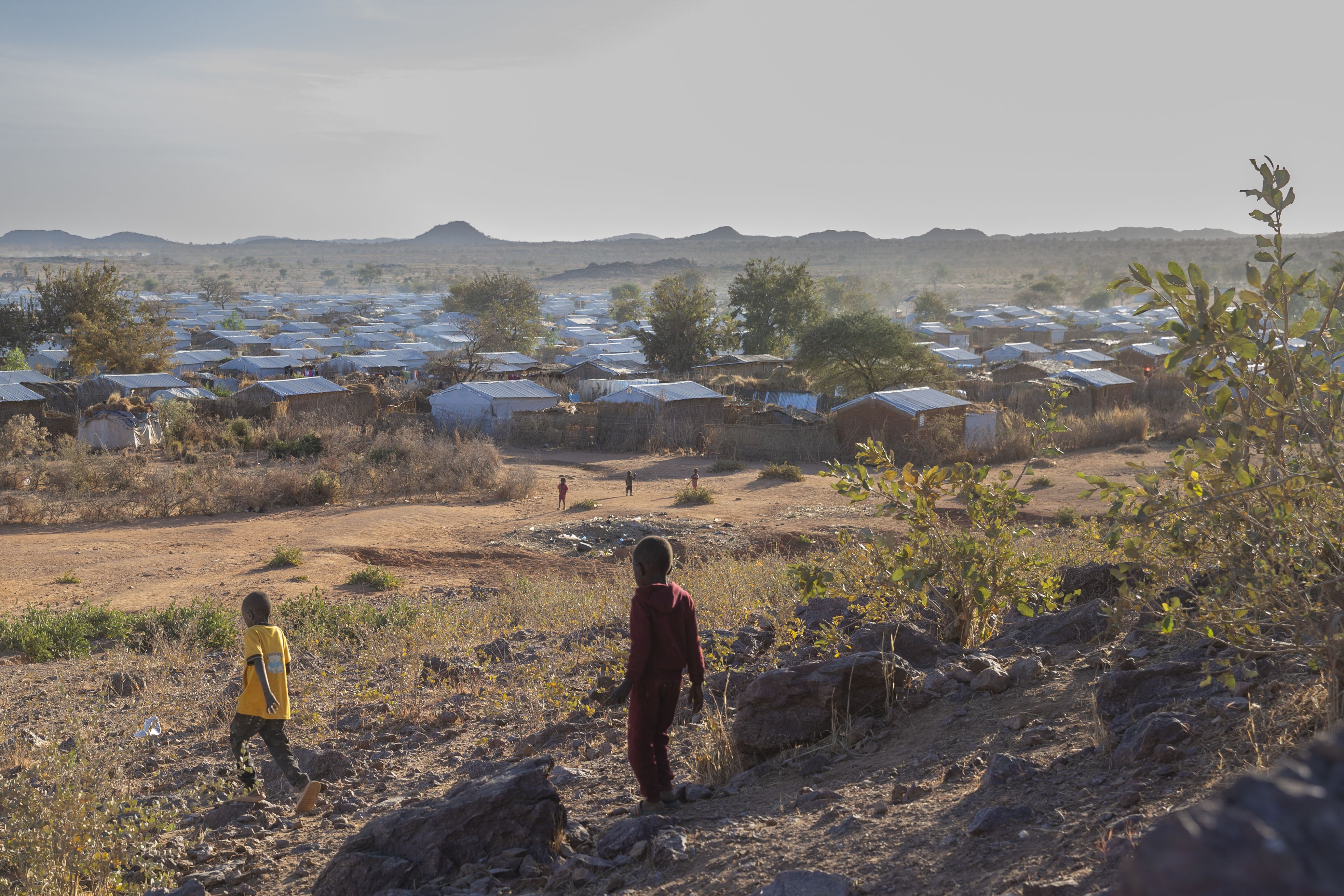
The conflict in Sudan has forced millions of people to flee their homes, seeking safety across borders in neighbouring countries. In refugee camps in Chad and South Sudan, local Red Cross volunteers work tirelessly to help people every day with support from IFRC. But for people who've lost everything, insecurity and lack of resources make for a very uncertain future.

Lives upended
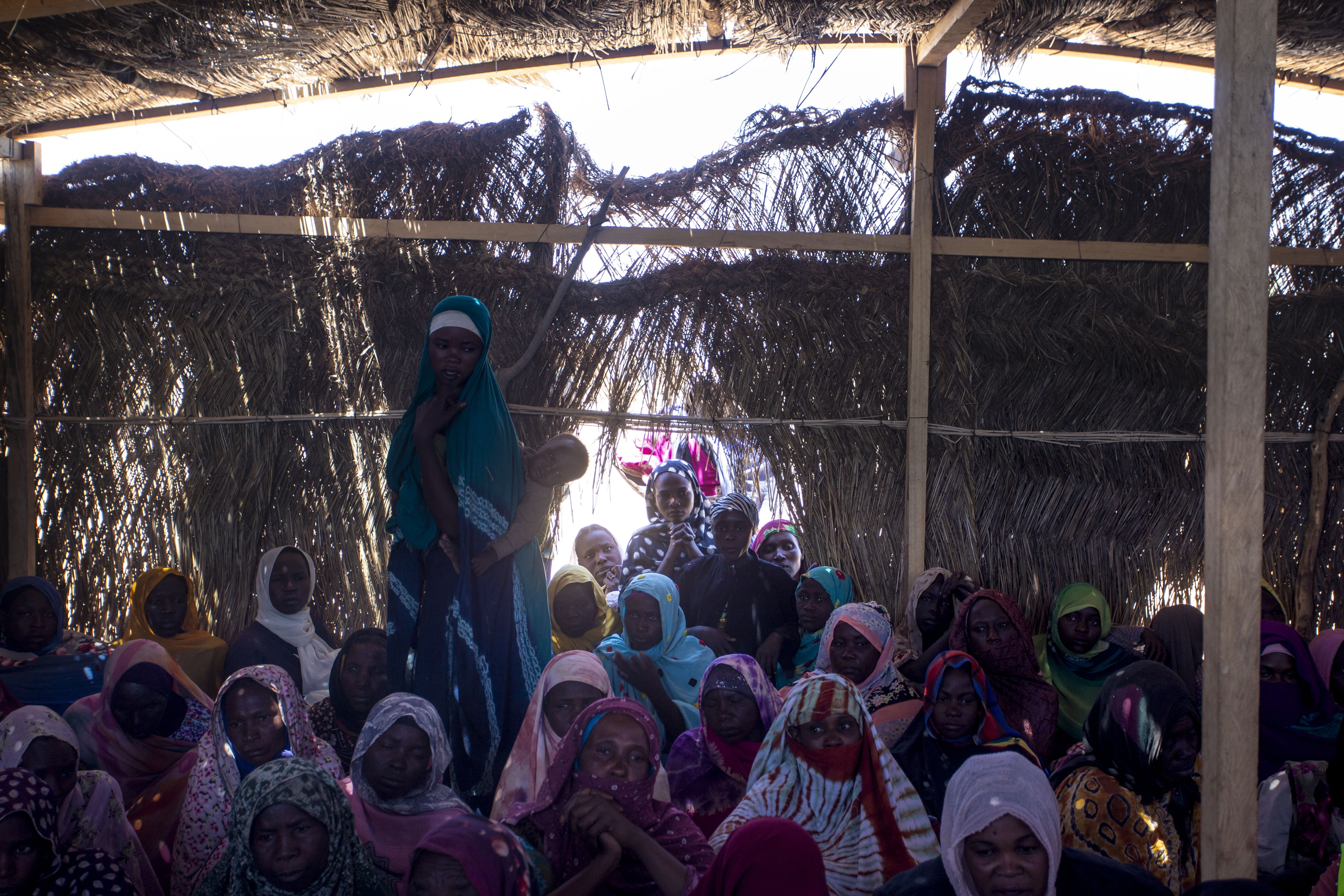
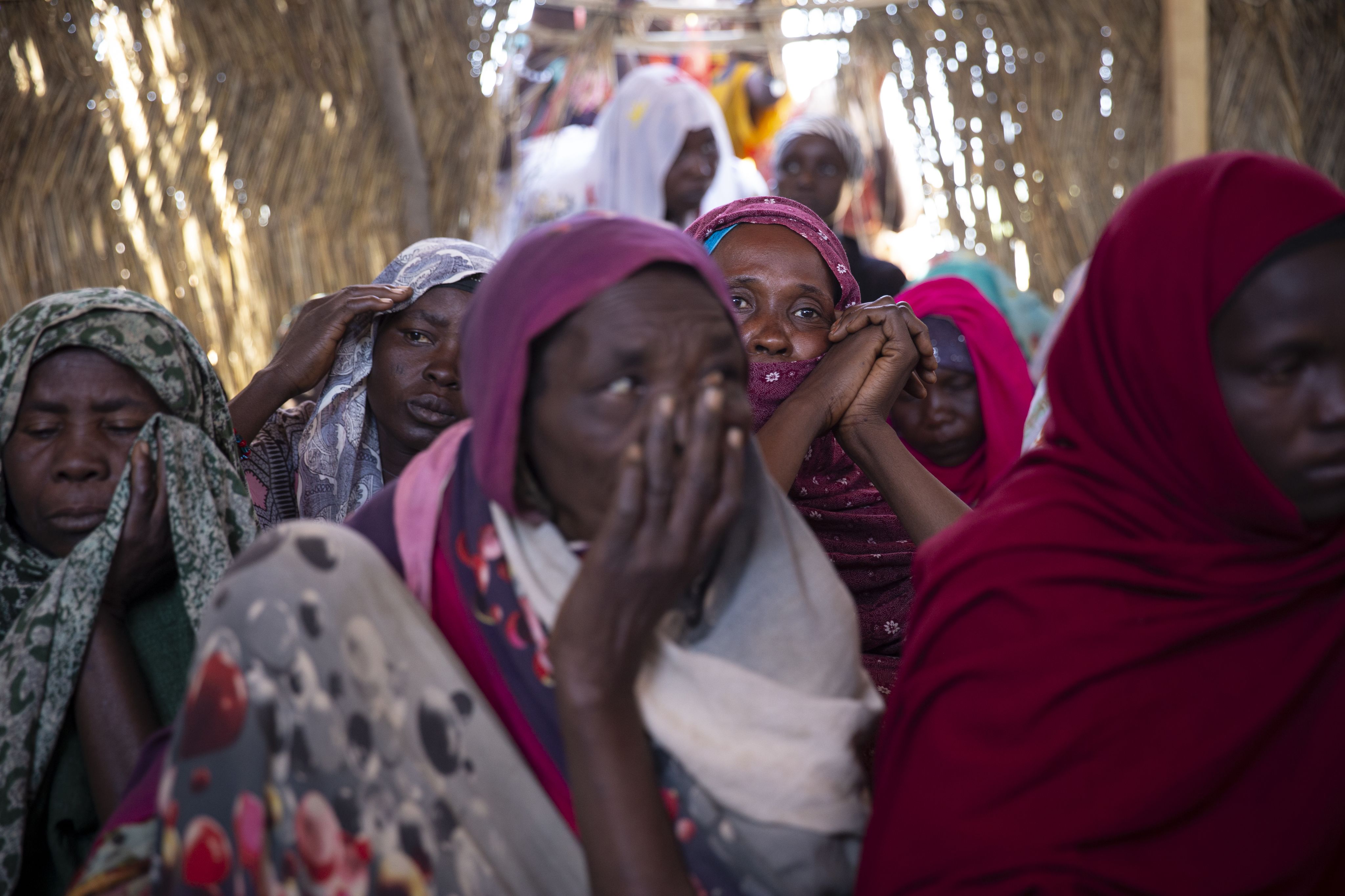
Under the harsh midday sun, we arrive at the community meeting space in Farchana refugee camp, in eastern Chad.
Beneath a shelter made of dried straw, about thirty women are waiting. Some speak quietly among themselves, while others sit silently.
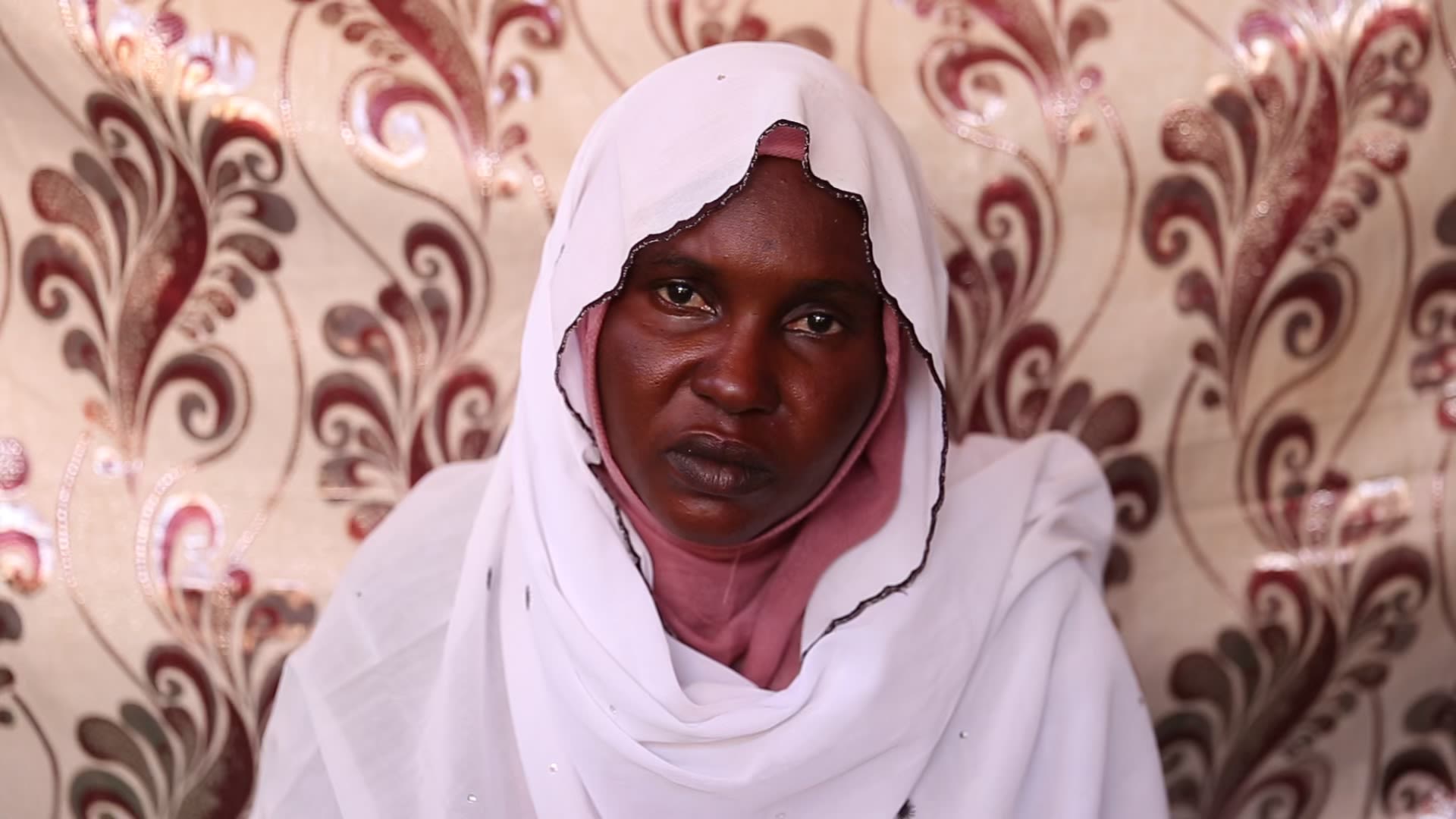
Among them is Nawal Atteib Mahammad, a mother of three living in the camp with her husband. She fled El Geneina, in West Darfur, when violence erupted in Sudan in 2023.
Before the conflict, Nawal’s life looked very different. With a degree in business administration, she worked at the Ministry of Finance and had just begun a master’s program.

'Now I've lost everything.'
“Now, I've lost everything: my home, my job, and my life.”
The journey to Chad was marked by violence, which she and her children witnessed. With a grave expression, she recalls:
“We saw bodies in the streets and families killed in their homes.”
But even after crossing the border into Chad and finding shelter, the challenges did not end.
“For three years here, we have faced many problems, especially violence against women,” she explains.

A dangerous reality
In the camp, even the simplest daily tasks can become dangerous. Women often have to walk long distances to collect water or firewood, moments when they are particularly exposed to attacks and harassment.
Access to safe water remains one of the most urgent needs in camps hosting people fleeing the conflict. Access to water and sanitation is also closely linked to safety.
Bringing water points closer to shelters helps reduce the distances women and children must travel, while lighting around latrines and the separation of facilities for men and women help reduce the risks of gender-based violence.
With support from the IFRC, the Chad Red Cross installs and maintains water points, improves sanitation facilities and promotes hygiene practices to help people with clean water and reduce the risk of the spread of diseases.
Much of this work is done thanks to contributions from donors to the IFRC's Disaster Response Emergency Fund and the many people and organizations who donated to the IFRC Sudan Complex Crisis Emergency Appeal in May 2023, when the IFRC first classified this crisis as a "red-level emergency."
Yet daily life in the camp remains difficult. Many families struggle to afford enough food, and young people without prospects for the future sometimes take dangerous routes in search of a better life.
Despite everything, Nawal still holds on to hope: that her children will receive an education and that she will one day rebuild her life.
“We have already lost one generation. We do not want to lose another. The conflict must stop.”

Many did not survive
Across the region, many mothers share the same fear and the same hope for their children.
More than a thousand kilometers away, in Renk, South Sudan, near the Sudanese border, another woman carries that same determination.
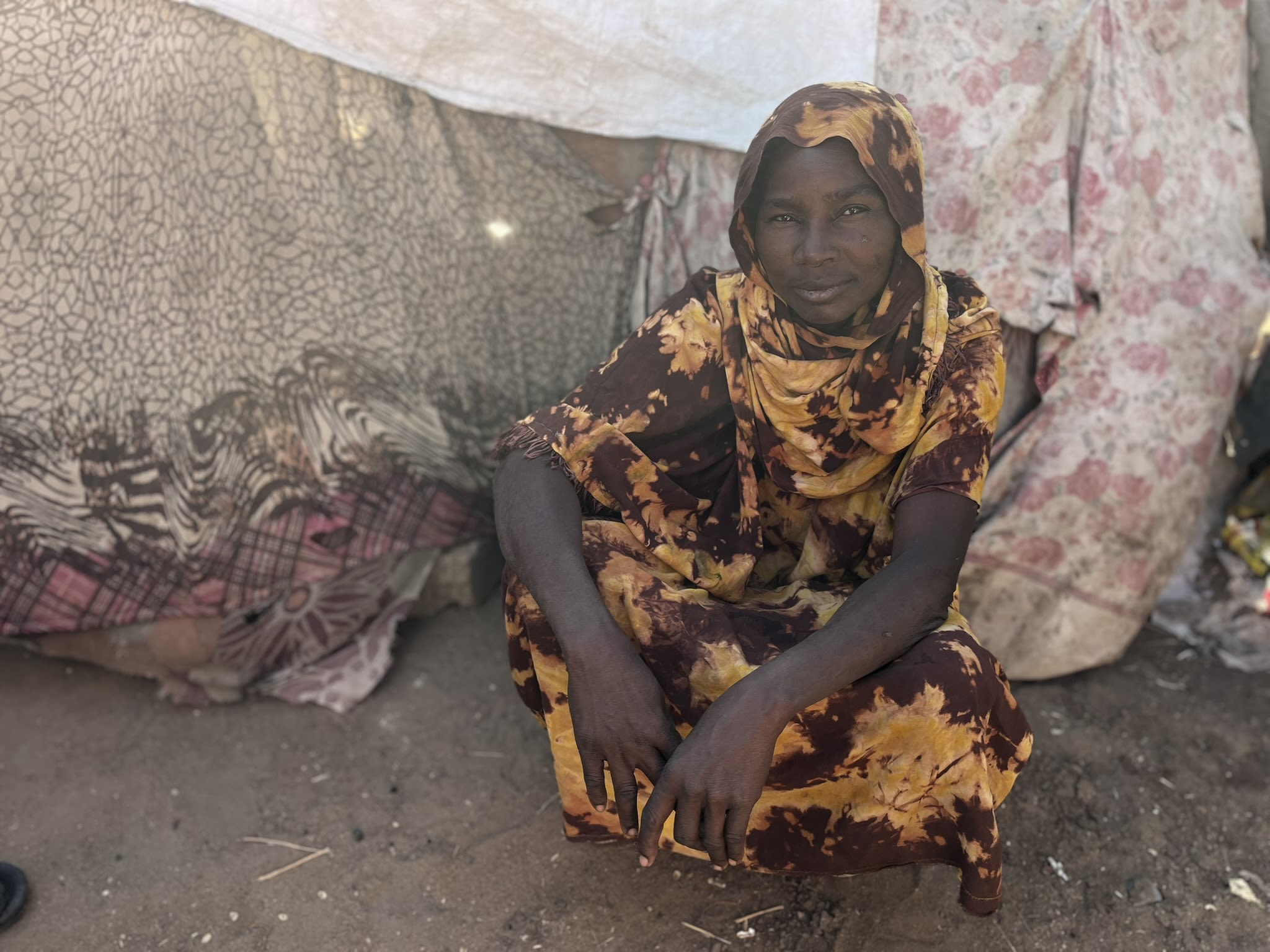
Esmiralda, 36, has been living for nine months with her two young daughters in a crowded transit centre. They fled Khartoum when violence erupted, walking for weeks toward South Sudan, through fear and hunger.
Like many refugees, she has lost contact with part of her family.
“I don’t know where my husband and my other children are or if they are safe. Many people did not survive.”

'Other days, there is nothing'
The transit centre around her has grown far beyond its original capacity. Built for around 1,000 to 2,000 families, it now shelters more than 8,000 people.
Tents, mostly made of bedsheets and clothes, stretch across the dusty ground, packed tightly together, while children play football or jump rope in the spaces between them.
To support her daughters, Esmiralda collects firewood which she sells to buy food.
“Some days I earn just enough to buy a little flour or tea. Other days, there is nothing,” she says.
A simple prayer
For many families in the camp, finding even small sources of income can make the difference between eating and going hungry.
To help families cope with these daily pressures, the South Sudan Red Cross provides cash assistance, with support from the IFRC. This support allows families to purchase food from the market or a tarpaulin to protect them from the harsh sunlight.
Yet for Esmiralda, the daily life remains a constant struggle. Each morning, she returns to the forest to gather firewood.
Between the rows of tents, children keep playing football and jumping rope in the dust. For mothers like Nawal and Esmiralda, these children are the reason to remain hopeful.
“My prayer is simple,” Esmeralda says quietly, “that Sudan will be at peace again and that my children will one day know a life that is more than just survival.”
For more information:
Sudan: Complex emergency emergency appeal
Sudan conflict: Two years on — a nation at the breaking point
Statement: 'We are outraged that humanitarian workers continue to be killed across conflicts.'
Statement - IFRC appalled by the killing of a Sudanese Red Crescent volunteer
Credits:
Photos and texts by Alexis Aubin in Chad
and Daniëlle Brouwer in South Sudan
Alexis Aubin is reporting from Chad as IFRC communications officers for Sudan and neighbouring countries and Daniëlle Brouwer reports from South Sudan while working as IFRC's communications coordinator for Sudan and neighbouring countries.
 Built with Shorthand

