
Under pressure
Just over the border in Chad, the conflict in Sudan is felt far beyond the front lines. In camps across eastern Chad, hundreds of thousands of refugees are trying to rebuild their lives in an environment marked by extreme heat, water scarcity, and rising food prices. Meanwhile, local communities share already limited resources.
Special World Water Day report / #LocalEverywhere
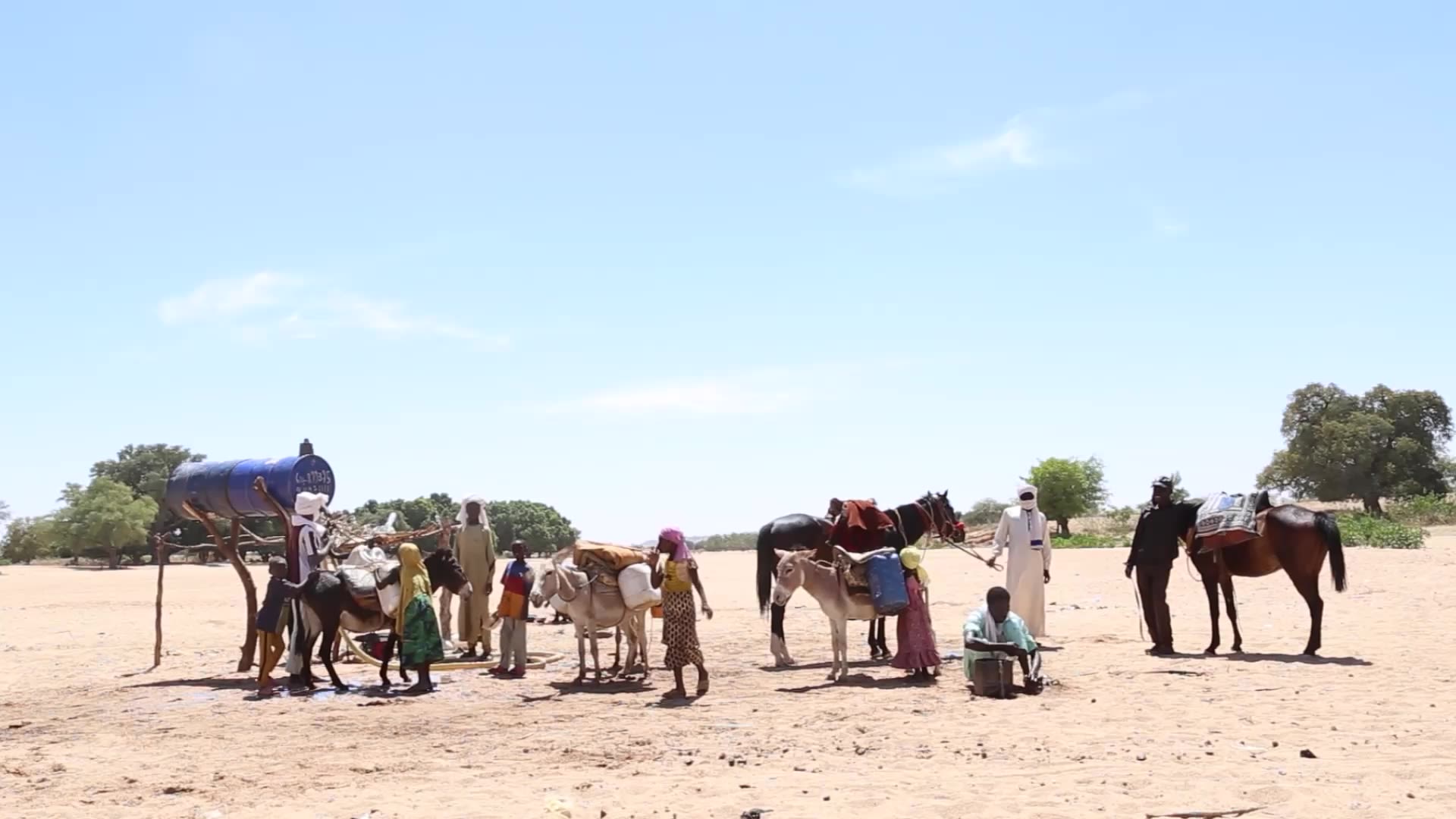

In the overcrowded camps near the border, another battle unfolds each day: the struggle for basic necessities.
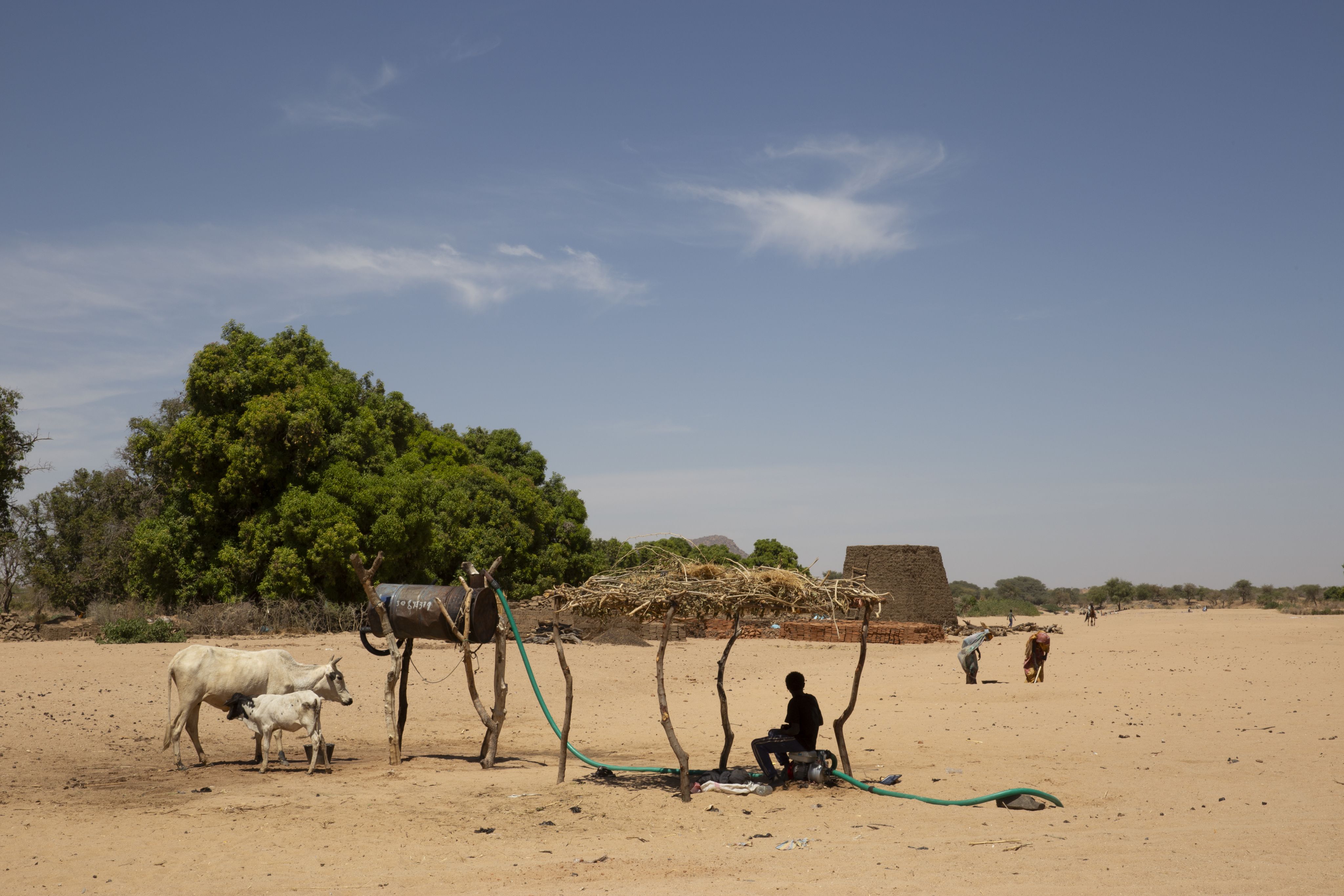
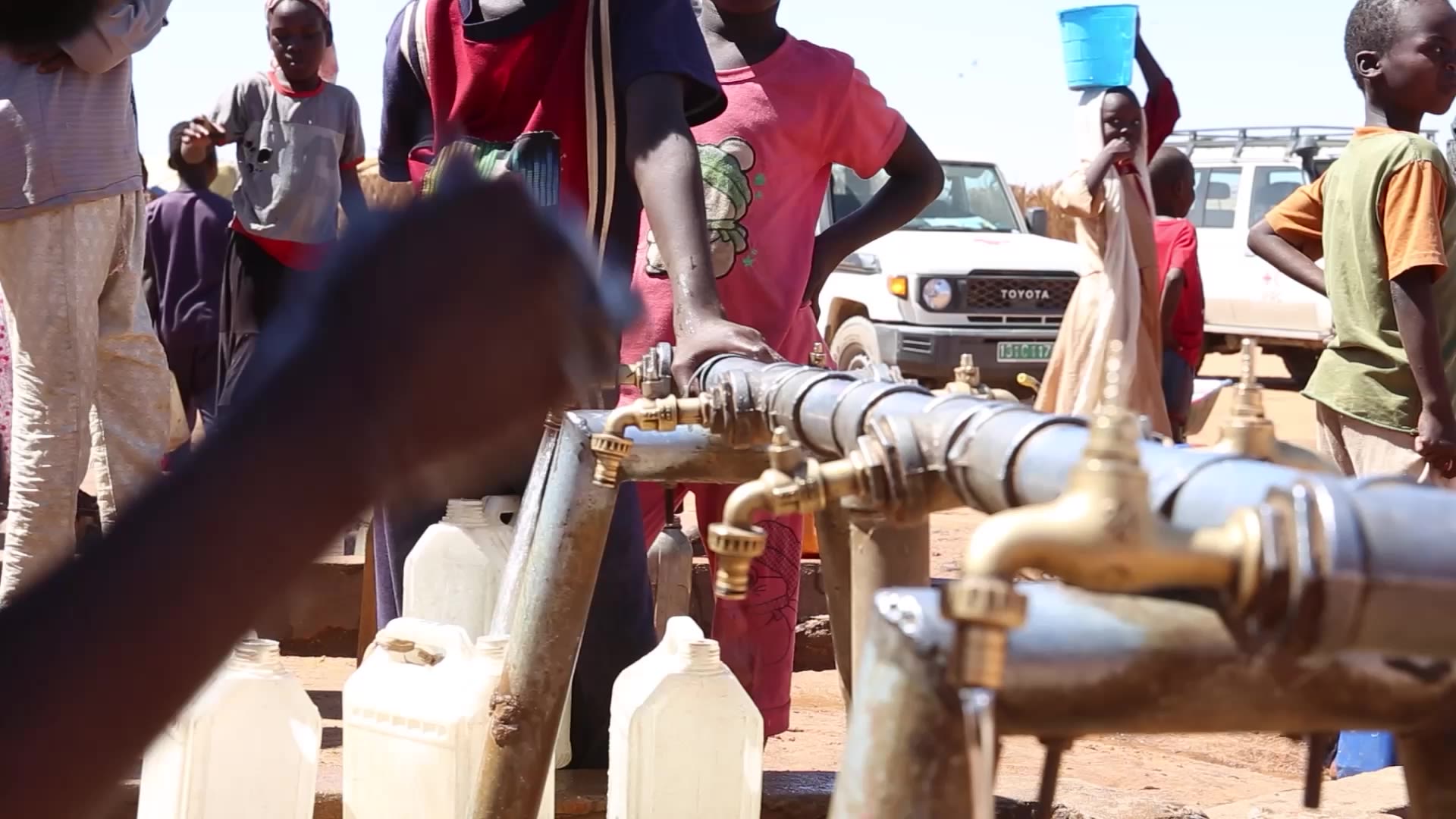
The ground is hard and the water table lies deep underground. Around water points and tanker trucks, long lines of plastic containers stretch under the heat.
Residents and refugees sometimes wait for hours to fill a few jerrycans that will be used for drinking, cooking, and washing.
In the Arkoum camp, people receive on average only 7.5 litres of water per person per day, barely half of the minimum humanitarian standard of 15 litres per day.
Water points do not meet the growing demand, and the situation is likely to worsen as 20,000 additional refugees are expected to be relocated to the camp in the coming months.


A hot and dusty wind
In Chad's eastern limits, near its border with Sudan, the Sahelian climate imposes a harsh daily reality.
The 'Harmattan' – a hot and dusty wind blowing from the northeast –, regularly sweeps across the region, drying out the land and covering villages and camps in a veil of dust.
In this arid landscape, rainfall is scarce and concentrated within a few weeks between July and September. When rain does fall, water briefly rushes across the hardened ground before disappearing into the sand.
Now, the massive influx of refugees fleeing conflict in Sudan comes as Chad is already facing recurring environmental crises. Drought, desertification, and increasingly irregular rainfall have long weakened the livelihoods of local communities.
As the population of the area's camps continues to grow, water needs will increase drastically even though existing infrastructure is insufficient to meet demand.


'The basis of life'
In the midst of these compounding challenges, the Chad Red Cross has mobilised to support both the people who've fled conflict in Sudan, as well as the communities dealing with a massive expansion in the local population.
Chad Red Cross teams have installed several boreholes (underground wells) that are now being used to pump water to people living in the Arkoum camp.
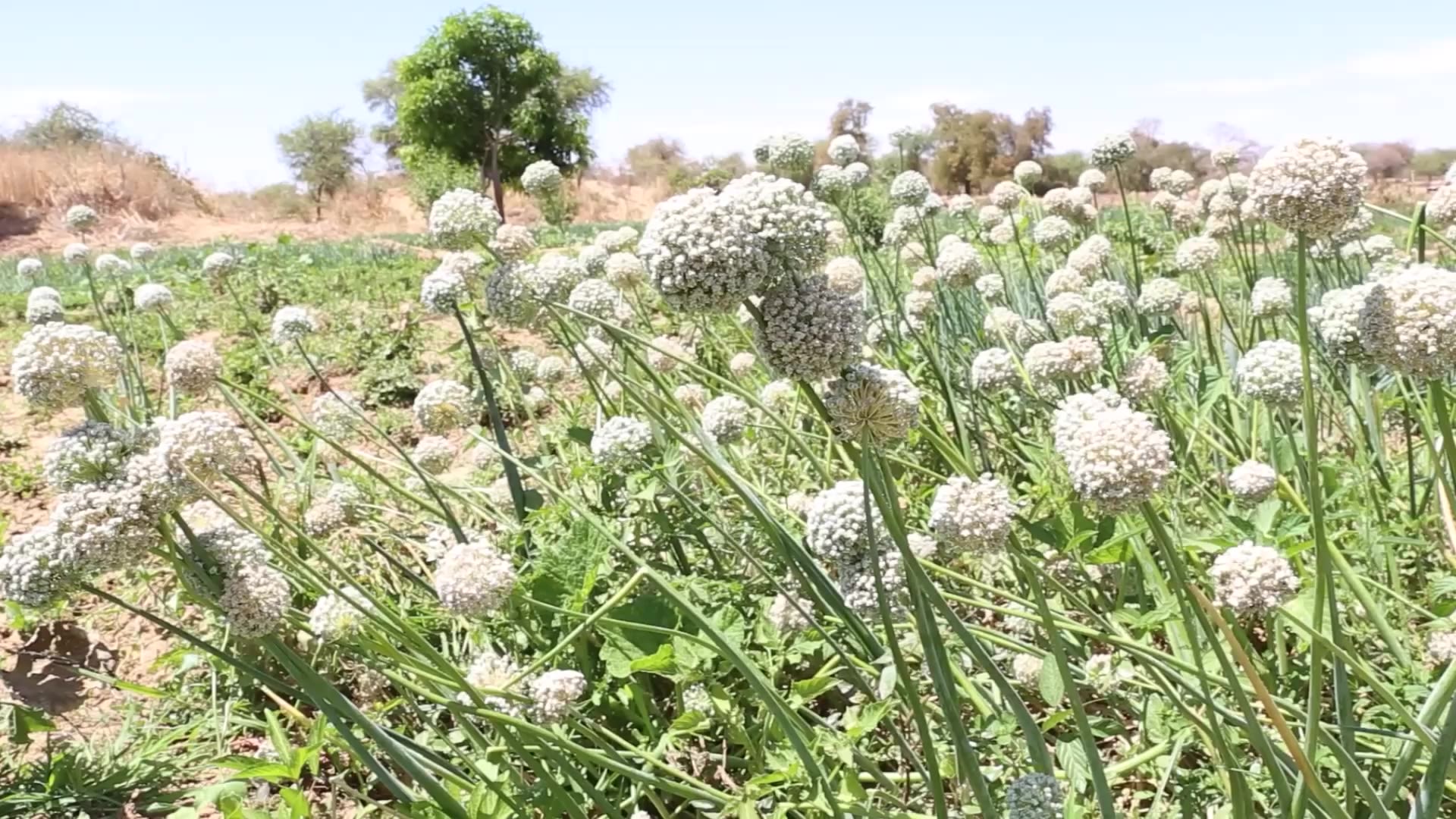
Some of those wells also nourish fields of produce and other crops to help reduce the stress on the local food supply system.
“Water is the basis of life. ," says Teibo Abdraman Ataher, a young Sudanese refugee and Red Cross volunteer in Arkoum. "When there is no water, we cannot eat, drink, or do household work.
"If people have access to water, it will prevent many problems," he adds.
"We have to walk carrying buckets to the valley to collect water. It is not easy. And it is mostly the women who carry this responsibility.”

The urgency of escape: How the crisis unfolded in Chad.
For nearly three years, the conflict in Sudan has forced millions of people to flee their homes, creating one of the largest displacement crises in the world.
In the urgency of escape, families have left behind their daily lives, carrying only a few personal belongings and memories that are often too heavy to bear.
Around 1.5 million displaced people have crossed the border into eastern Chad, where they now find themselves on the margins of a conflict whose scale remains largely underestimated on the international stage.
Chad, ranked 190th out of 193 countries on the Human Development Index, now hosts around one million Sudanese refugees, mainly along its eastern border.

Rising prices, mounting pressure
The recent closure of the border between Chad and Sudan has also disrupted the trade routes that traditionally supplied markets in eastern Chad. Prices for several basic goods have risen sharply.
In the markets of Adré and Abéché, the prices of millet and sorghum—staple grains of the local diet—have increased by 45 to 65 percent compared with the average of the past five years.
Sugar and cooking oil, once transported through Port Sudan, have seen their prices double. They must now be transported from N’Djamena or Cameroon, over long distances that significantly increase costs.
In this Sahelian border region, Sudanese refugees and Chadian communities now share the same limited resources. Between heat, water scarcity, and rising food prices, people on both sides are trying to adapt to an increasingly uncertain daily life.
From 40,000 to 280,000
In Ouaddaï province, which alone hosts nearly half a million refugees, the impact is particularly visible. The town of Adré, which had around 40,000 inhabitants before the conflict, now hosts more than 280,000 Sudanese refugees.
This massive arrival has placed considerable pressure on already limited resources and local markets. Despite the uncertainty and the harshness of living conditions, however, life begins to reorganize itself. Small businesses appear in the shade of tents and improvised shelters.
Stalls selling fruit, tea, or soap line the sandy roads. In these improvised markets, refugees and host communities attempt to recreate some form of economy and normality.
But economic tensions are growing. Nouh Bla, head of the Chad Red Cross branch office in Hadjer Hadid, expresses concern about the situation:
“Both in the camps and in the surrounding villages, things have changed significantly," he says. "There has been a sharp increase in prices. This is linked to the presence of refugees: consumption has increased while resources remain limited.”
The Chad Red Cross and the IFRC have mobilised to support the people in these communities. Together, they conduct regular needs assessments, have established a "humanitarian service point" at a camp for refugees and are providing critical support such as new wells and 'water points' where people can access clean, safe water.
But much more support is needed.

Read more World Water Day stories:
Learn more:
The IFRC approach to water, sanitation and hygiene
Credits:
Photos and texts by Alexis Aubin
IFRC communications officer for Sudan and neighbouring countries.
 Built with Shorthand