
One month after Venezuela's earthquakes, the Red Cross is still on the ground supporting those affected
On 24 June 2026, the lives of thousands of people in Venezuela changed forever.
It was a public holiday marking the feast day of Saint John, the Battle of Carabobo, and the official arrival of summer in the Northern Hemisphere. For many, it was a day meant for beach outings, music, and celebrations.
Then, at 6:04 p.m., in the late afternoon heat, the earth shook. A 7.2-magnitude earthquake took communities in La Guaira — a coastal port nestled beneath the mountains — completely by surprise.
Just 39 seconds later, as people were beginning to recover from the initial shock, a second, even stronger quake struck, measuring 7.5 in magnitude. Residential towers, hotels, community centres, and local businesses collapsed, trapping thousands beneath the debris.
Unbeknownst to many at the time, these were the strongest earthquakes recorded in Venezuela in over a century and the most catastrophic disaster in its recent history.
A month has passed since that tragic day. Nearly 5,000 people have lost their lives, more than 16,000 have been injured, and thousands remain missing. Almost 23,000 people are still living in temporary shelters.
This disaster will leave a lasting mark on the economic, social, and emotional fabric of these communities, and addressing their needs has been at the very heart of the IFRC's response from the outset.
Search and rescue teams working to find survivors and return bodies to waiting families
In the immediate aftermath, every second counted to pull survivors from the rubble.
The first on the scene were neighbours clearing debris with their bare hands to reach family members, friends, or pets.
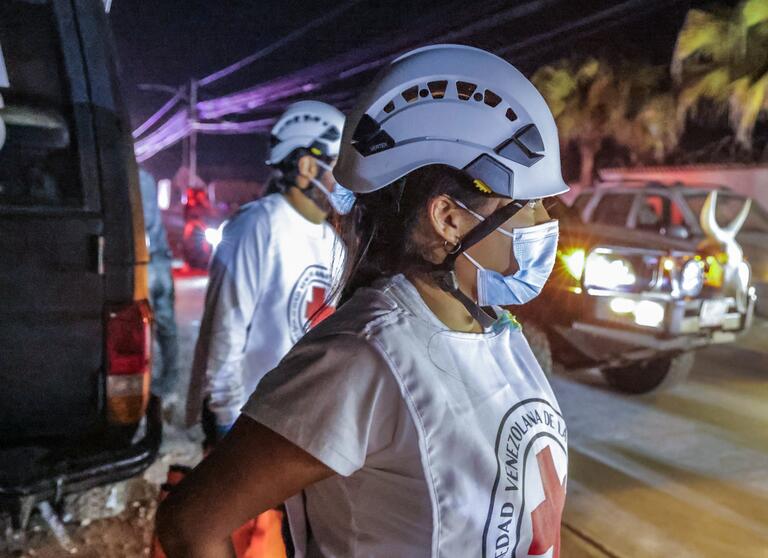
Among them were Venezuelan Red Cross volunteers, residents of La Guaira and Caracas who rushed to search for their loved ones as soon as the dust settled.
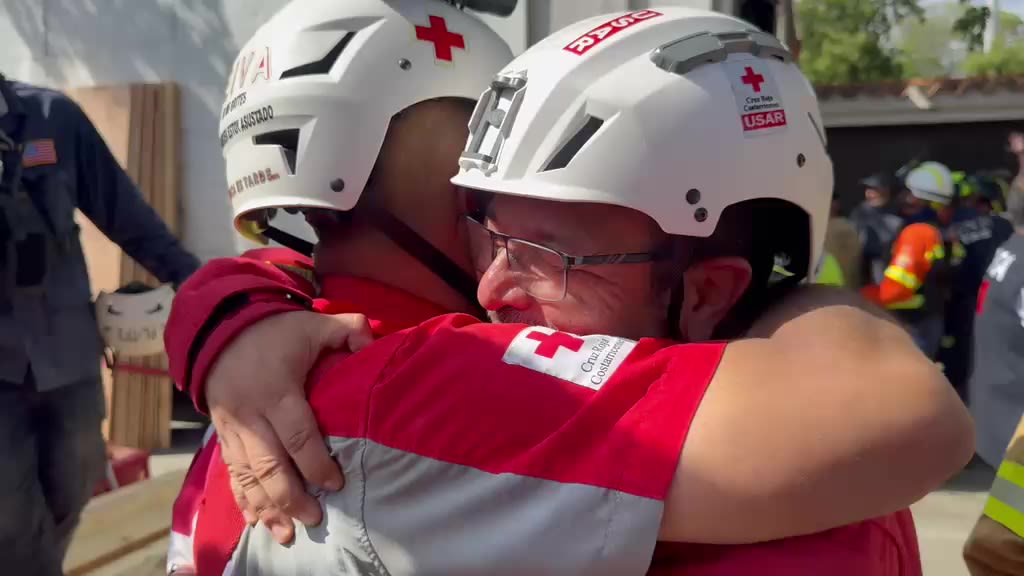
They were soon joined by Red Cross Urban Search and Rescue (USAR) teams deployed from Colombia, Costa Rica, and Mexico.
One rescue in particular touched hearts around the world: Hernán was pulled alive from the rubble of a collapsed building in La Guaira. His story is a poignant reminder of the Red Cross's foundational mandate: humanity always comes first, and saving lives remains at the core of our mission.
At the same time, Red Cross teams undertook the painful yet essential task of recovering those who had died, ensuring families could say their final goodbyes.
Caring for the survivors: A field hospital for first aid and emergency healthcare
In those crucial early days, a primary focus was treating injuries caused by falling debris, caring for residents hurt while trying to rescue loved ones and pets, alongside injured Red Cross volunteers, firefighters, and other first responders.
Conditions were gruelling: unrelenting heat, heavy dust, and endless debris created a hostile environment that triggered widespread dehydration, heatstroke, and respiratory issues.
To provide critical care, the Venezuelan Red Cross established a field hospital in Macuto, La Guaira.
Medical and nursing specialists, paramedics, and psychological first aid teams led the emergency response.
The facility operated with a fully stocked pharmacy, backed by technical support from the Colombian Red Cross and logistical support from Red Cross Aruba to keep supplies flowing.
Supporting physical and mental health
On 5 July, an Emergency Response Unit (ERU) clinic from the Spanish Red Cross arrived in La Guaira. Operating as a field hospital, it was deployed to reinforce the healthcare services established by the Venezuelan Red Cross over a four-month period.
Equipped to serve up to 30,000 people, the clinic provides primary care, maternal and child healthcare, vaccinations, epidemiological and nutritional monitoring, and mental health support, alongside a 20-bed overnight observation ward.
As the weeks progress, managing chronic conditions has become just as urgent as treating acute injuries. Without consistent care, the risk of life-threatening complications surges, placing further strain on an already overburdened healthcare system.
Addressing the community's mental health is equally vital. Beyond trauma and grief, less visible symptoms — such as insomnia, loss of appetite, and severe anxiety — have emerged across all age groups as an entire population grapples with the loss of loved ones, their homes, and their sense of safety.
Among those receiving care is Gabriel Cipriani. Although he managed to rescue his wife and son, Gabriel tragically lost his sister and nieces, along with all his essential medication. He describes the heavy physical and emotional toll, compounded by grief and uncertainty, that hangs over his family and community.
Gabriel Cipriani
Gabriel Cipriani
At the Red Cross emergency clinic, Gabriel has received both medical treatment and psychological support to help him cope with his overwhelming loss:
"When you arrive at the Red Cross hospital, you are immediately reassured: ‘How are you feeling? Stay calm, we’re here to talk to you, and we’re taking care of you.’ There might be 30 emergency cases waiting, and all 30 are being cared for.
"I arrived while having a seizure and was given immediate medication. Dr. Daphne made me feel completely at ease. She told me, ‘Stay calm. You’re not alone. We’re here for you.’ She gives you a real sense of security and trust."
Our goal is to expand and complement the public response system, not replace it. To this end, we will soon be adding mobile clinics to reach the most isolated communities.
Essential items for dignity: Distributions for families who have lost their homes
The humanitarian aid we have sent to Venezuela enables families to wash themselves and clean the spaces where they are staying. It also allows them to filter the water they drink and get a little more rest.
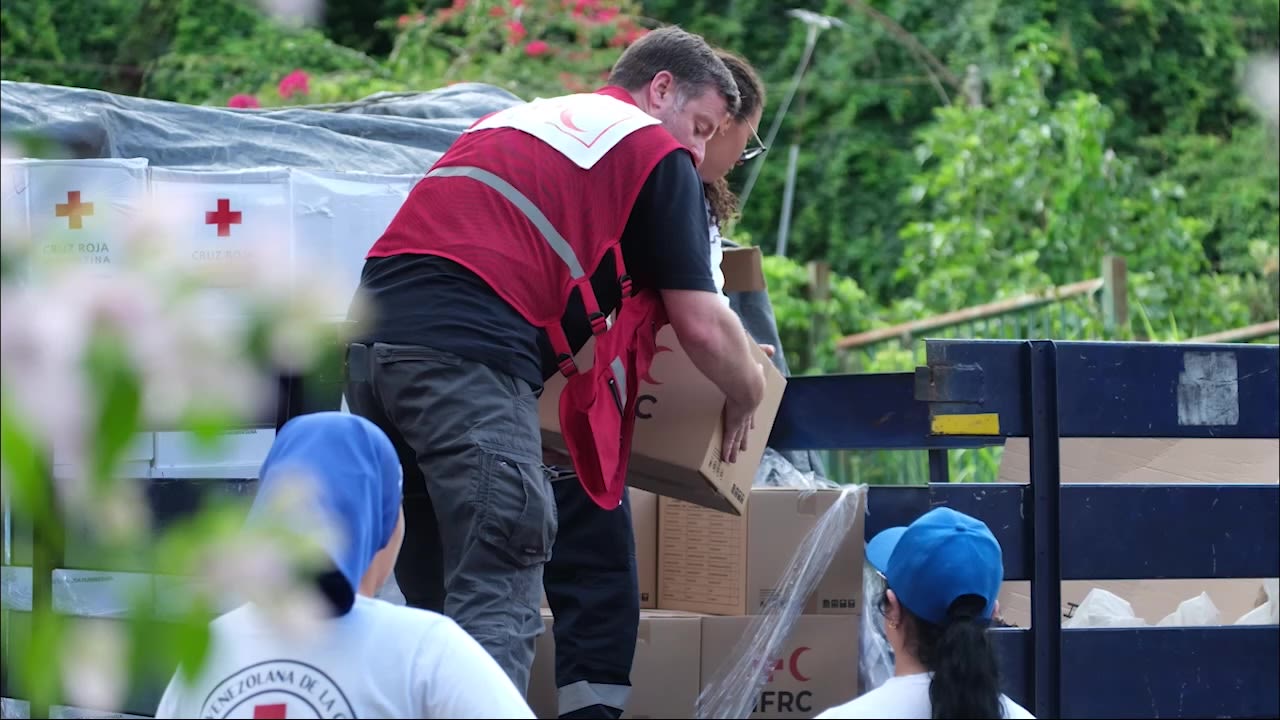
A total of 150 metric tons of aid has arrived by sea and air from Panama, Argentina, Guadeloupe, Colombia and other countries. These supplies are stored and organised in warehouses belonging to the Venezuelan Red Cross and the IFRC. From there, they are distributed directly to families in shelters.
The shipments include tarpaulins, mosquito nets, cooking kits, water containers, hygiene and cleaning kits, buckets, blankets, water filters, tents, thermal sleeping kits, folding beds and first aid kits, as well as one vehicle and two ambulances. Distributions have already begun and will continue over the coming weeks.
We started by delivering to schools serving as temporary shelters for families like Aimé Cordero’s. She is awaiting the results of assessments that will determine whether her home is safe or will be declared uninhabitable. She does not know how long this process will take, but in the meantime, she needs essential items for daily life, such as toothbrushes, soap, toilet paper and sanitary products. Cleaning supplies are also needed in these types of shelters to keep the classrooms, which are being used as dormitories, in good condition.
"Today, they gave us a kitchen kit, a personal supplies kit, some blankets and some containers for storing water safely. I hope that, with God’s help, everything will be resolved — at least with regard to my house — and that they will tell me for certain whether I can live there, whether I will be able to repair it or if it is going to be demolished, because right now we are, as they say, in limbo. The most important message I want to convey is that we must remain united as Venezuelans because we give everything from the heart."
Protecting people from outbreaks: epidemiological surveillance
One month on, the primary public health threats are no longer buried under rubble; they stem from the challenging living conditions facing displaced families, who lack guaranteed access to safe drinking water and live in overcrowded shelters with limited sanitation.
Joint teams from the Spanish Red Cross and the Venezuelan Red Cross are carrying out assessments in these areas to anticipate health hazards and detect respiratory and gastrointestinal illnesses early. Many of these health issues are directly linked to unsanitary conditions and clean water shortages.
This continuous surveillance, coordinated closely with local authorities and partner organisations, is critical to preventing a secondary health crisis.
Bringing families together
When the earthquakes struck, countless families were left agonizingly unaware of their loved ones' fates. As buildings collapsed, communication lines went down, amplifying the tragedy with the harrowing uncertainty of missing children, parents, or siblings.
In response, National Red Cross Societies across eleven countries (Argentina, Bolivia, Colombia, Costa Rica, Ecuador, Guatemala, Honduras, Mexico, Panama, Paraguay, and Uruguay) activated their Restoring Family Links (RFL) services.
Today, the Venezuelan Red Cross is handling thousands of tracing requests from individuals seeking relatives both within the country and abroad.
Crucial support isn’t always visible
In the immediate aftermath, the Colombian Red Cross, supported by the German Red Cross, reinforced operational telecommunications by installing radio equipment and repeaters to improve network coverage and coordination across high-priority search and rescue zones.
The newly established antenna covers much of Caracas and La Guaira, linking to additional repeaters extending to Maracay. This infrastructure enables seamless communication among response units deployed across La Guaira, Caracas, and surrounding regions.
Because in an emergency, reliable communication saves lives.
Beyond communications, Red Cross teams continue conducting damage and needs assessments, operating water treatment plants to supply humanitarian agencies, and distributing sanitation kits alongside thousands of litres of clean drinking water to affected families.
A response led by women
Women are at the forefront of this response.
Female volunteers, technical specialists, and leaders across the Venezuelan Red Cross and the IFRC network are heading family reunification efforts, directing healthcare services, managing relief camps in La Guaira, and overseeing complex logistics.
This focus on female leadership is deliberate: for years, the IFRC has actively championed women’s leadership in humanitarian action, knowing that equal and inclusive operations deliver more effective relief.
Equally vital is the often-unseen caregiving and operational support provided by women at home, in Red Cross offices, and across community facilities in La Guaira. Their dedication makes field operations possible. Though seldom captured in photos or reports, their contribution is foundational.
The IFRC extends its deepest gratitude to these women. Without their dedication, everything accomplished in this first month would not have been possible.
A global humanitarian effort in support of Venezuela
From the outset, the global Red Cross and Red Crescent network mobilized to assist. The IFRC launched an Emergency Appeal for 50 million Swiss francs after initially releasing 2 million Swiss francs from its Disaster Response Emergency Fund (IFRC-DREF).
The appeal aims to support the Venezuelan Red Cross in delivering long-term assistance to 300,000 people over the next two years.
To date, twelve National Societies have deployed field teams, while sixteen others have launched national fundraising campaigns. Yet international support remains urgent and critical.
Catastrophes of this scale shatter local economies and social fabrics, and full recovery demands time, presence, and unwavering perseverance. The IFRC and the Venezuelan Red Cross are committed to remaining on the ground for at least two years. Fulfilling this commitment requires sustained, flexible, and unearmarked funding that can adapt to evolving humanitarian needs.
The IFRC Emergency Appeal remains significantly underfunded, leaving a stark gap between available resources and urgent community needs.
Photo and video credit: Venezuelan Red Cross, Susana Arroyo/IFRC, Johannes Chinchilla/IFRC, Oscar G Pinzón & Manu Alameda/Spanish Red Cross
 Built with Shorthand