
Sounds like home
In Parami Ward, in the Sagaing Region of northern Myanmar, the sound of construction has slowly replaced the silence that followed the devastating March 2025 earthquake.
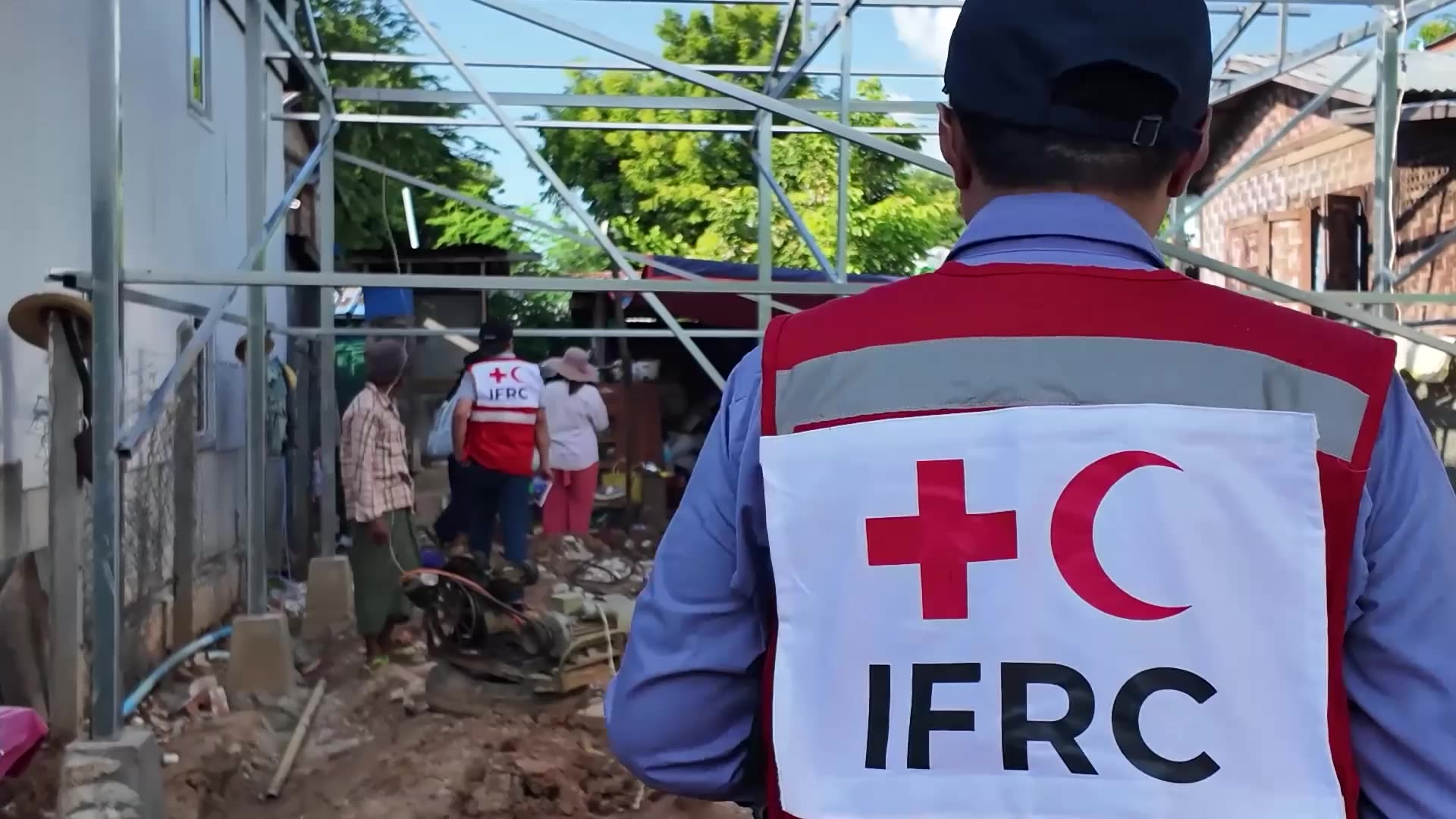

The sound of disaster
When the earthquake struck one year ago this week, some said it felt like the shaking would never stop.
Numerous aftershocks only heightened the fear that the trembling, the noise and the chaos would never end.
In the days that followed, life as people had long known it came to a halt. Livelihoods shattered. Homes destroyed. Many killed and thousands injured.
People mourned and just tried to survive day to day as the normal sounds of life — traffic, markets, businesses — no longer functioned like before.
Sounds of recovery
Now, one year later, things are starting to sound and feel more secure, hopeful and familiar.
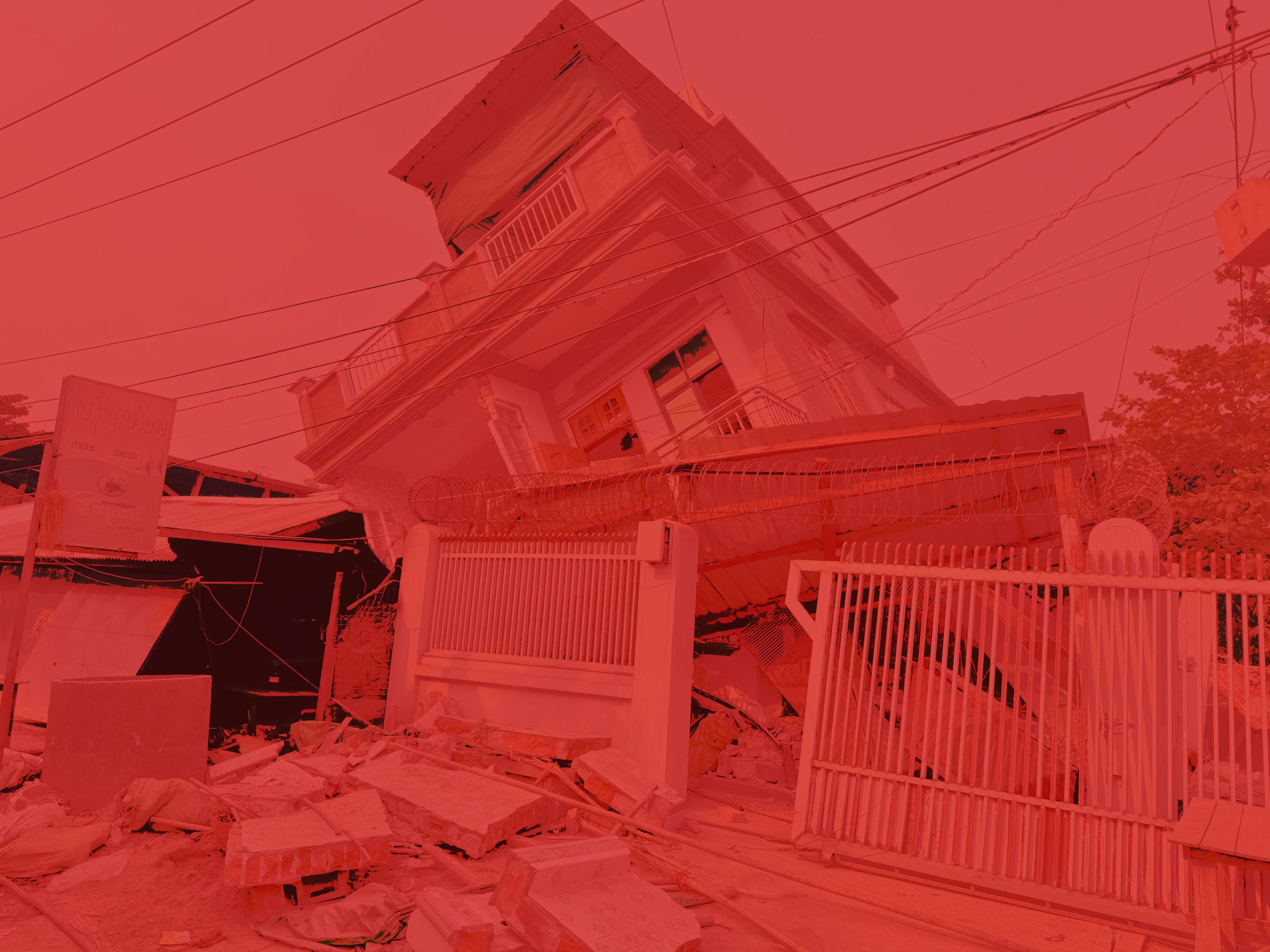
One year of intensive efforts from the Myanmar Red Cross Society (MRCS) — with the assistance of the International Federation of Red Cross and Red Crescent Societies (IFRC) and its network — has made a significant impact. That support has included: emergency and long-term shelter, cash grants, water and sanitation improvements, health care, food distributions and much more.
For people like U Win Maw and his family, this support has meant that the sounds of the earthquake's destruction could be transformed: the banging of hammers, the whir of saw blades and the mixing of cement mean the building of a new home and a new life for his family.
Now he hears the sounds of a calm, safe and secure household — a child laughing, a meal being prepared in the kitchen, the sweeping of an outdoor patio.
But the story of this family's recovery — and the Myanmar's earthquake response — is also about much more. This is the story of U Win Maw's new home and the impact of one year of recovery efforts from local, community based volunteers. #LocalEverywhere.


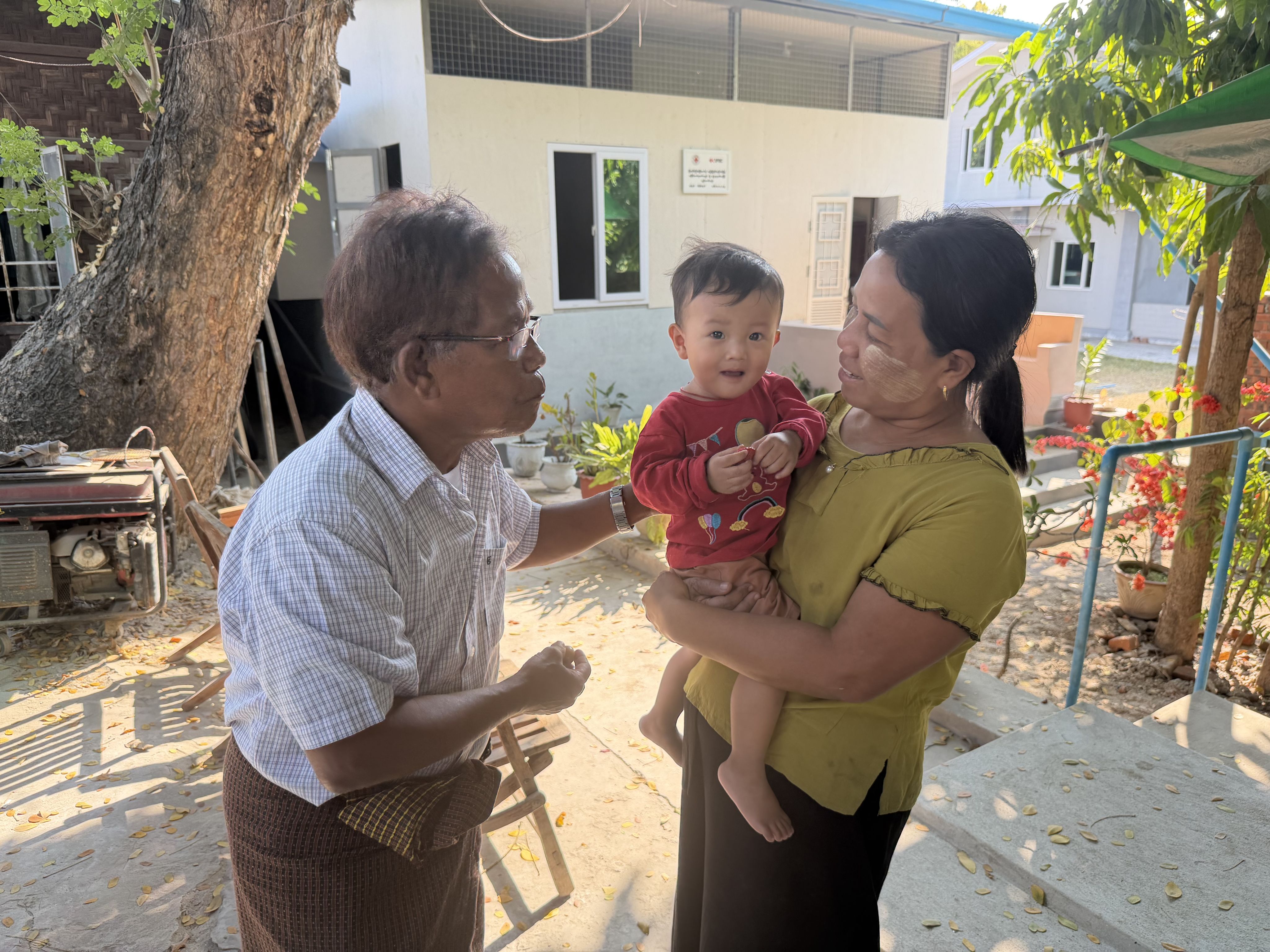

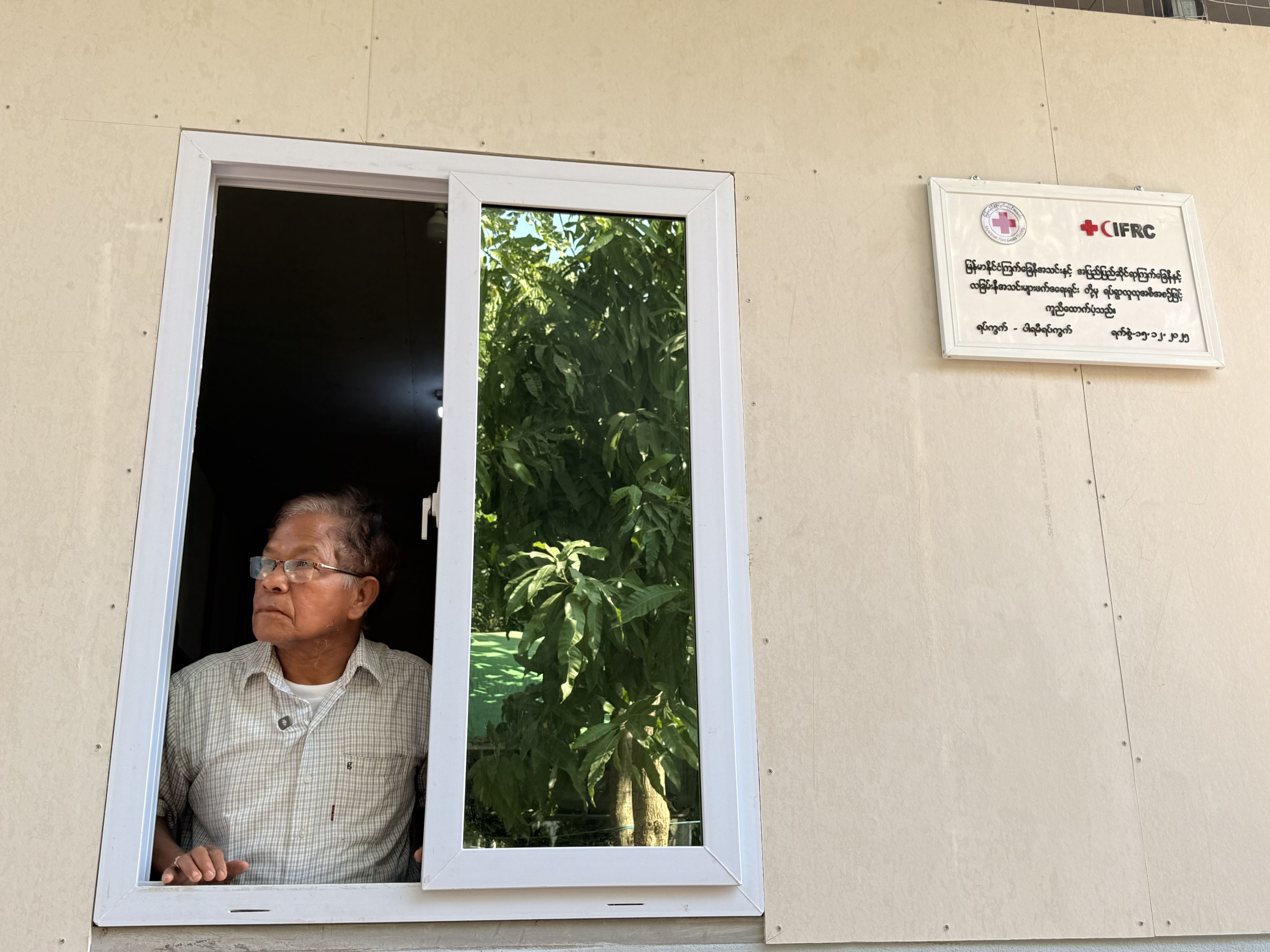

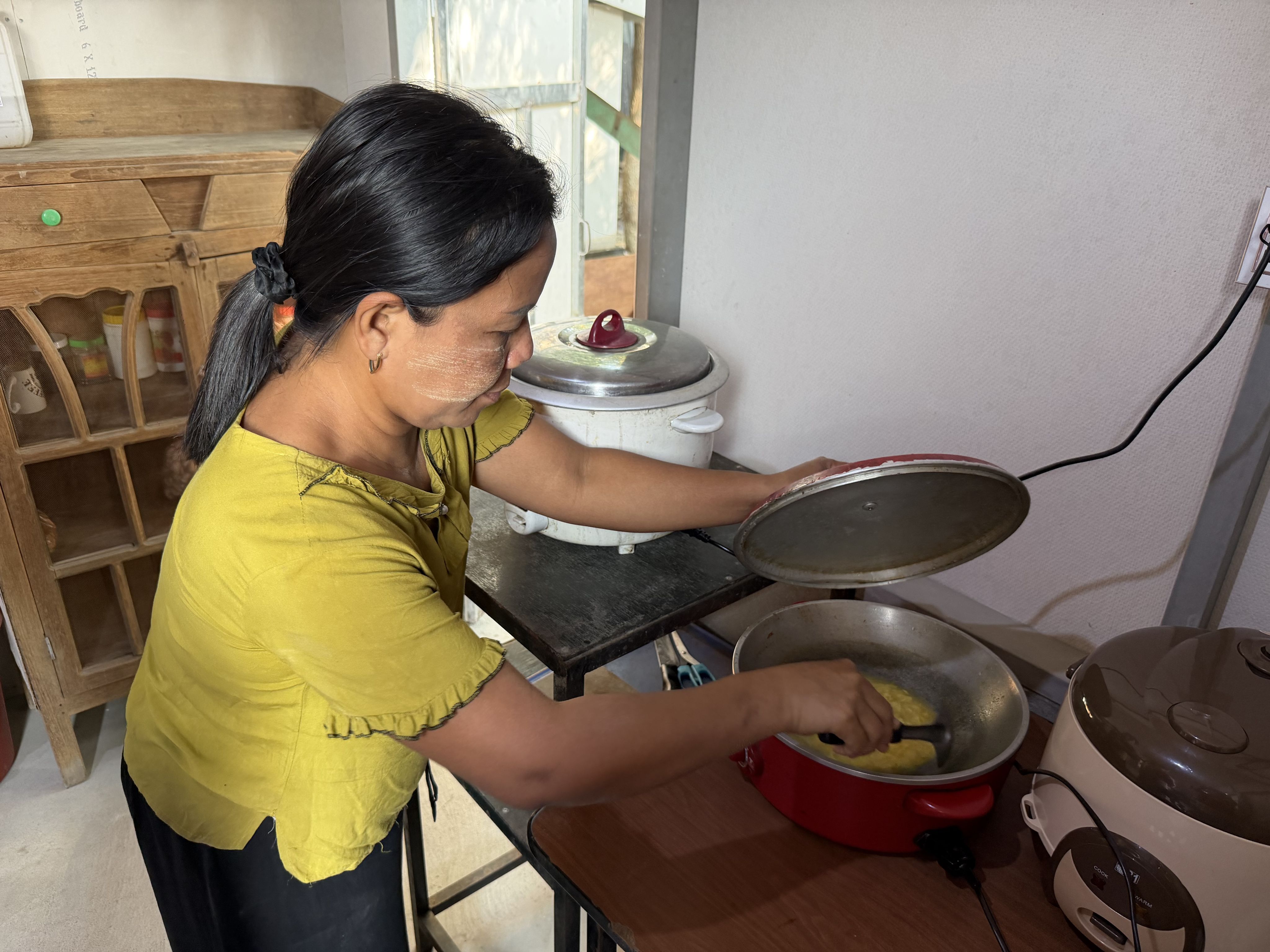

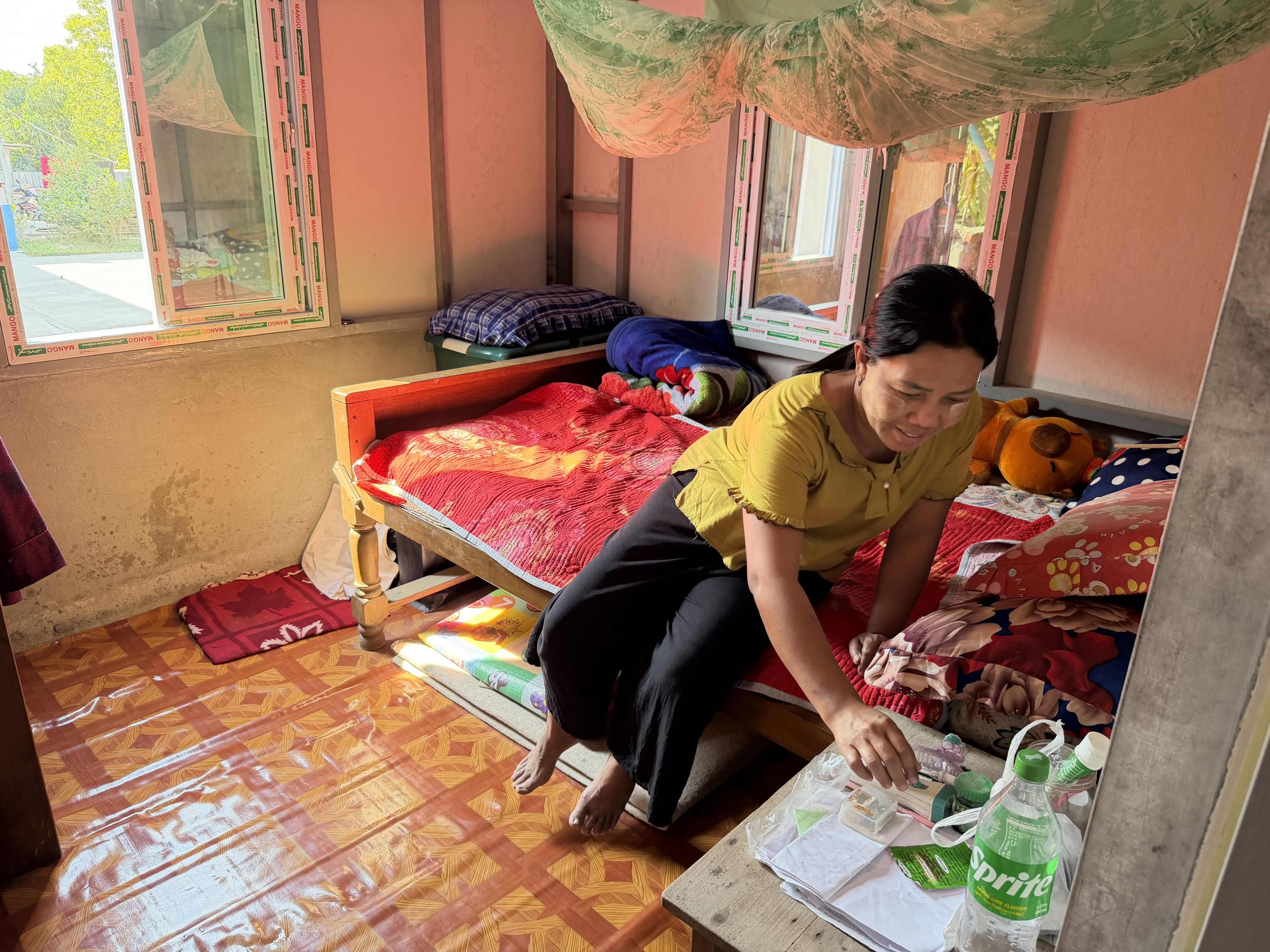
For U Win Maw, a retired township judge from Sagaing Region, recovery is not just about rebuilding a house. It is about restoring a sense of safety for his family.
“My family and I had lived in our home since 1992,” he says. “After the earthquake, everything changed.”
On the day of the disaster, several members of his extended family were injured. His wife suffered spinal fractures and a head injury. His daughter sustained broken ribs and a fractured arm.
Even his four-month-old grandchild was injured. Amid hospital visits and mounting medical costs, the family faced another reality — their beloved home was gone.
“At that time, we were worried not only about health, but also about where we would live,” he recalls.
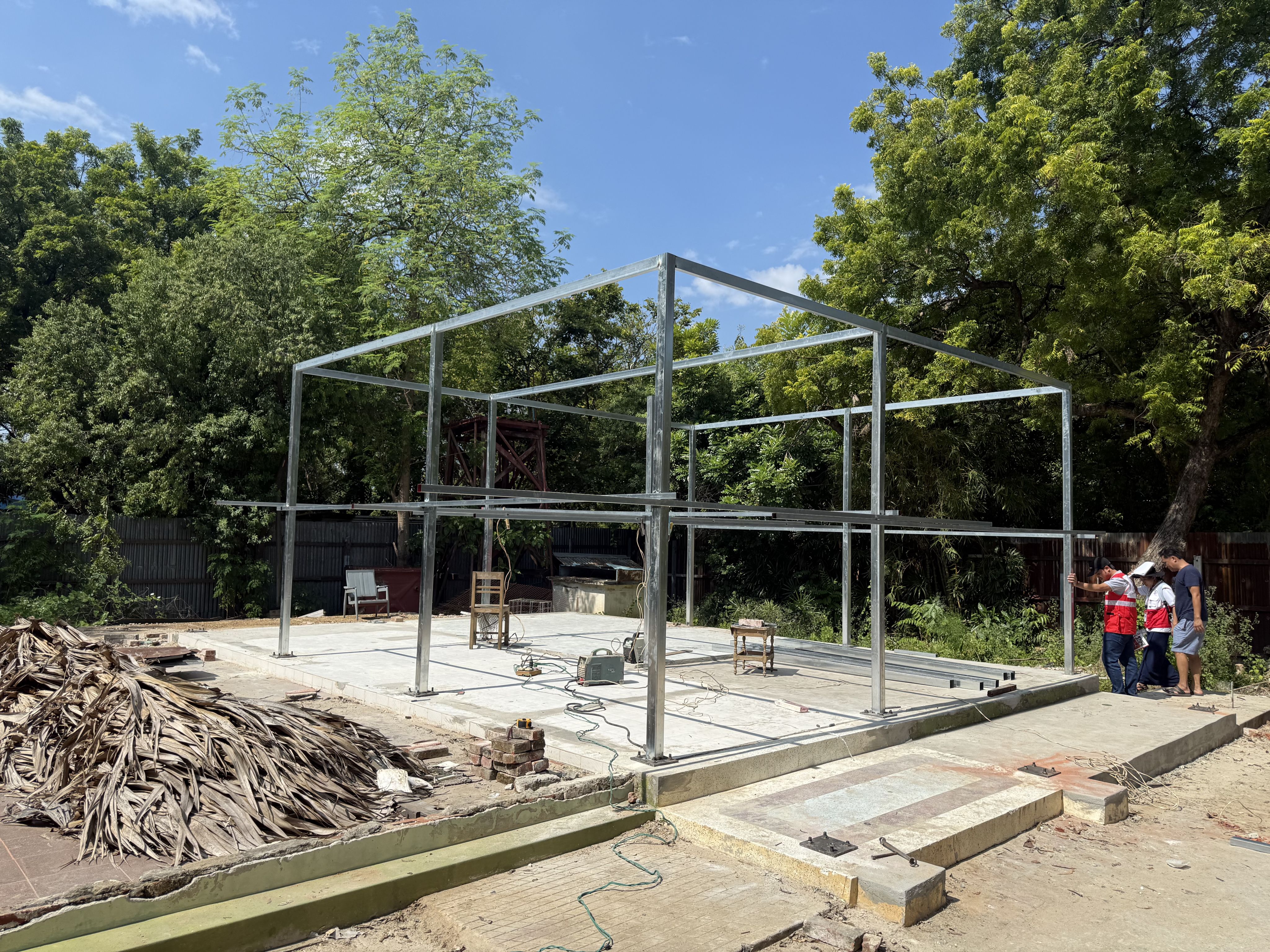
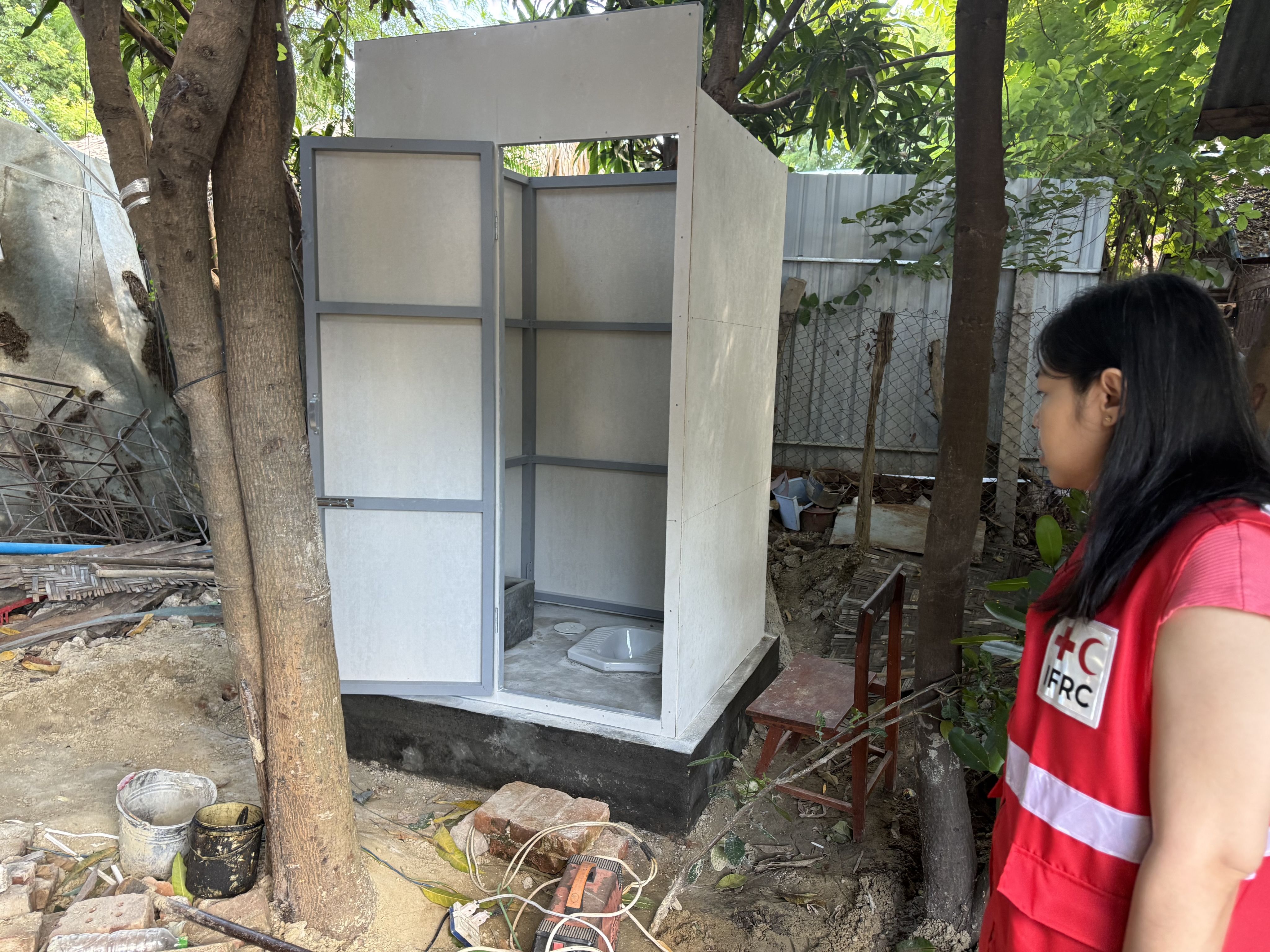
His new home is modest yet thoughtfully designed. Built with support valued at around 13 million Myanmar Kyats (about 6,000 USD), it includes a safe shelter, a latrine, and a solar power system.
“The solar power system alone is worth about 1.5 million Kyats [750 USD] on the market," he notes. "We could never have afforded something like that."
Because his family is large with 12 members across multiple generations, they worked with the Myanmar Red Cross to adjust the design.
Bedrooms were expanded, the corridor widened, and the ceiling raised to improve ventilation.
How it all happened: A year of upheaval
One year ago, the March 2025 earthquake tore through communities across central Myanmar, leaving homes reduced to rubble and families struggling to cope with loss, injury, and uncertainty.

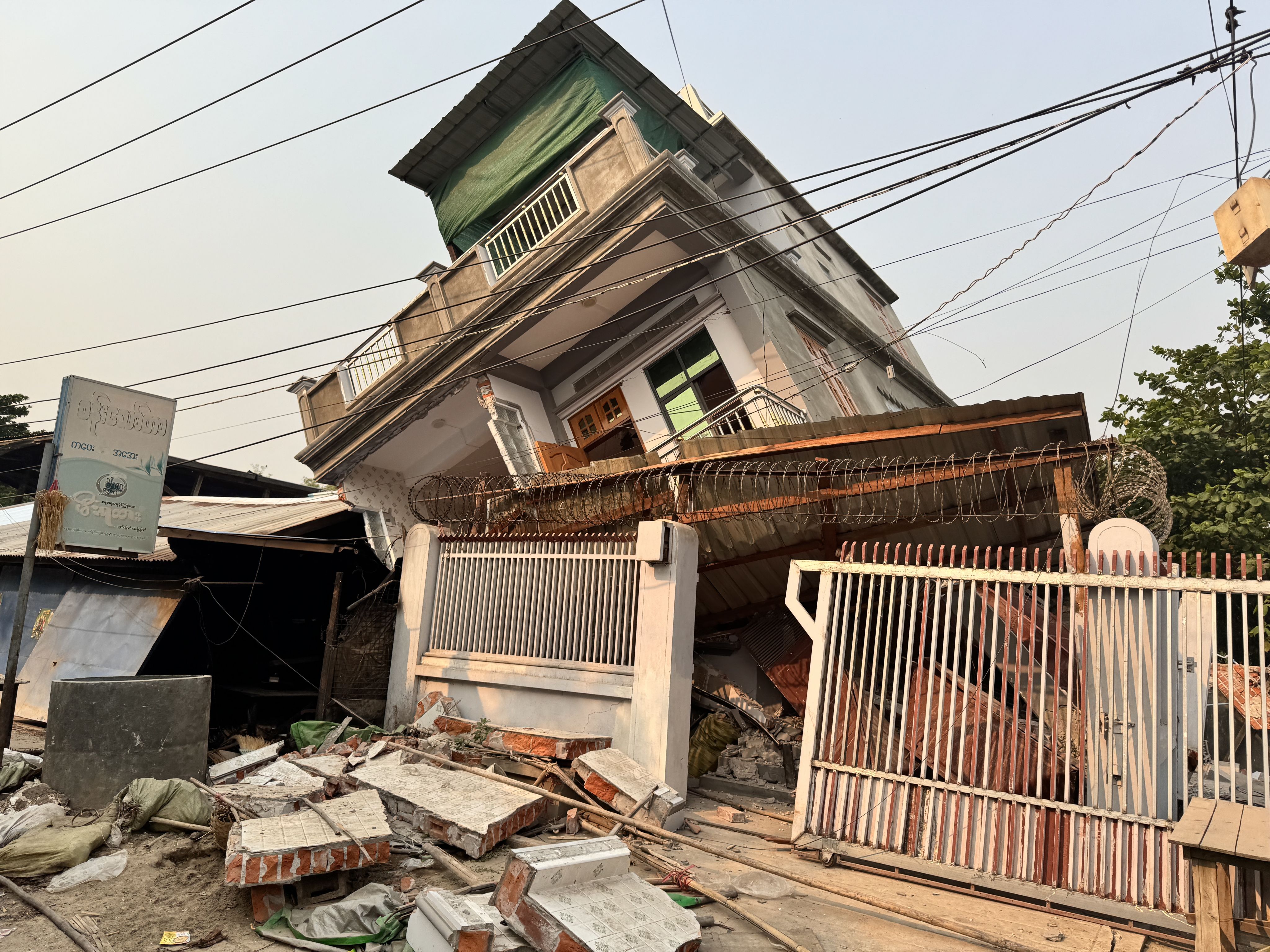
Over 1.35 million people were affected across five states and regions (Mandalay, Sagaing, Naypyitaw, Southern Shan and Bago).

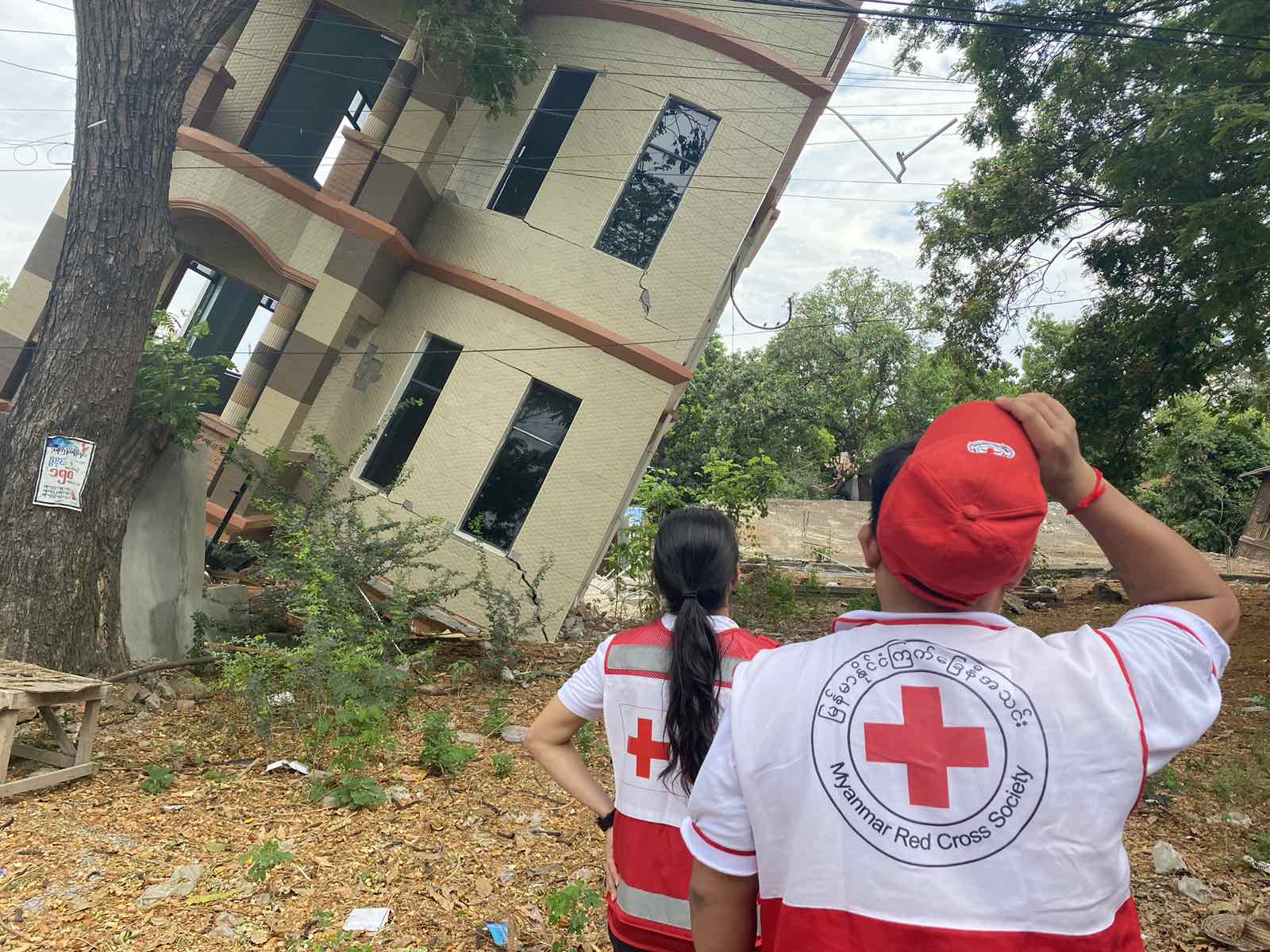
The Myanmar Red Cross — backed by the IFRC and member National Societies from around the world — responded immediately, providing critical search-and-rescue, emergency first-aid and shelter support, as well as food distribution and help with water, sanitation and hygiene services.

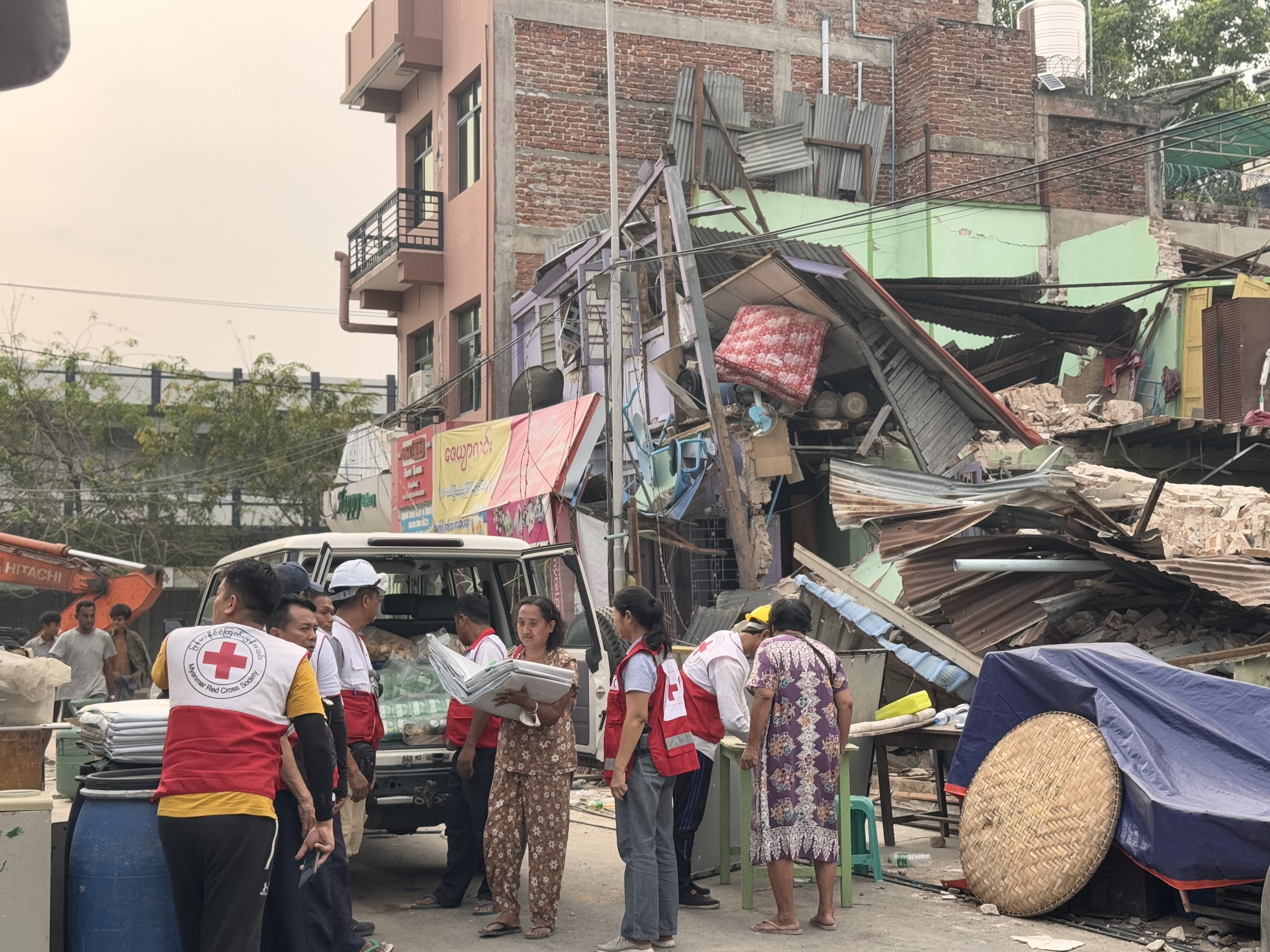

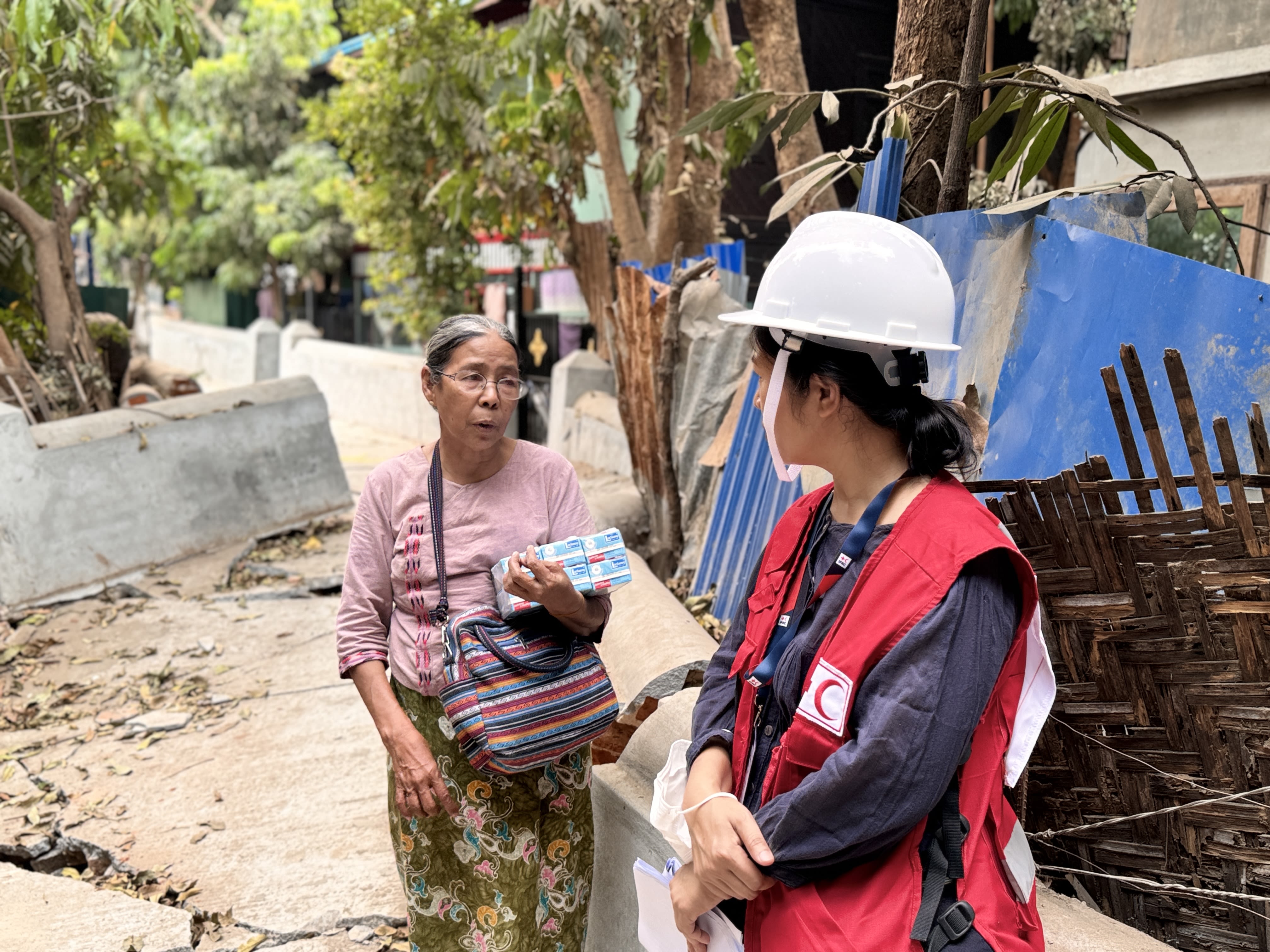

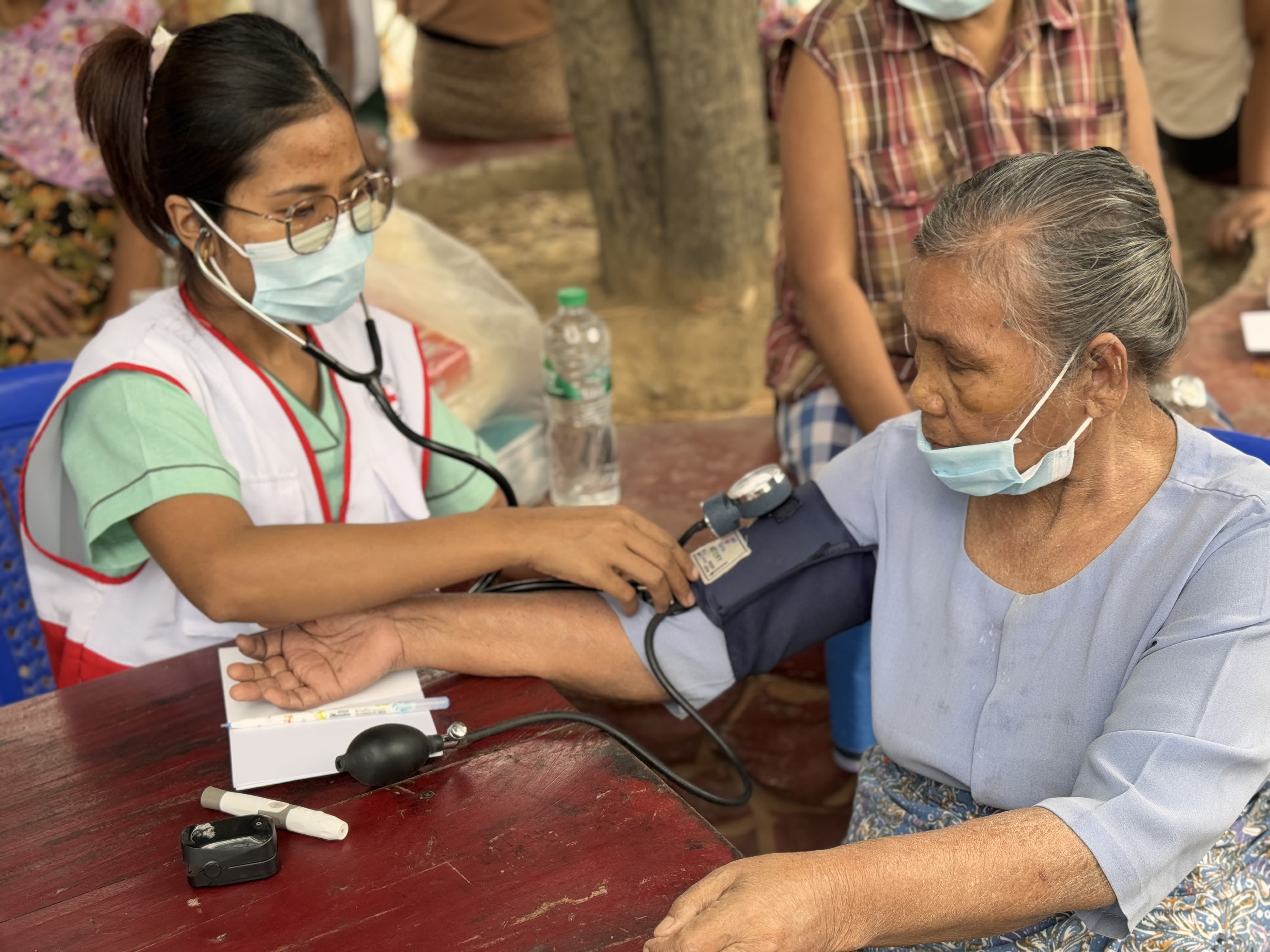

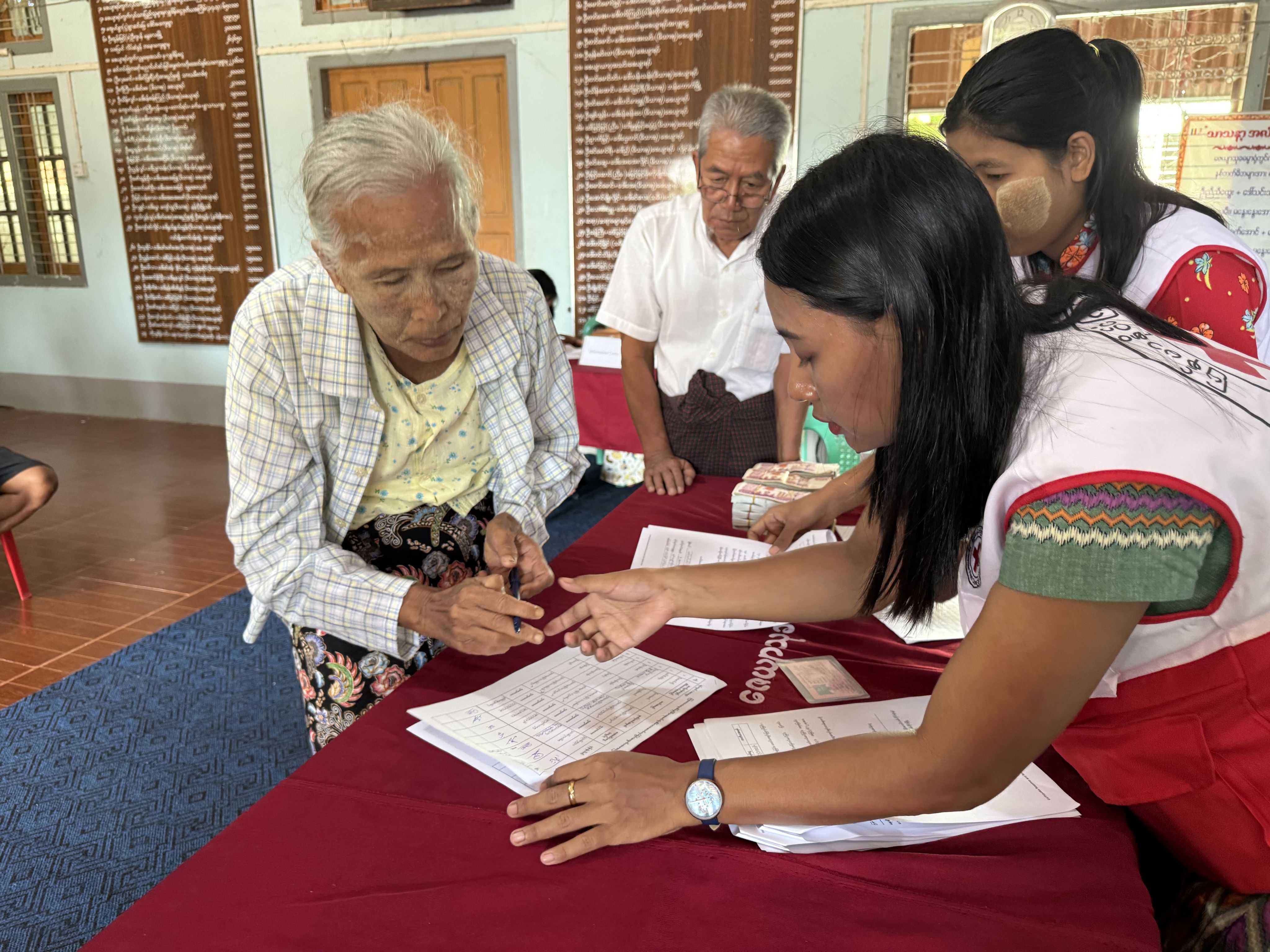

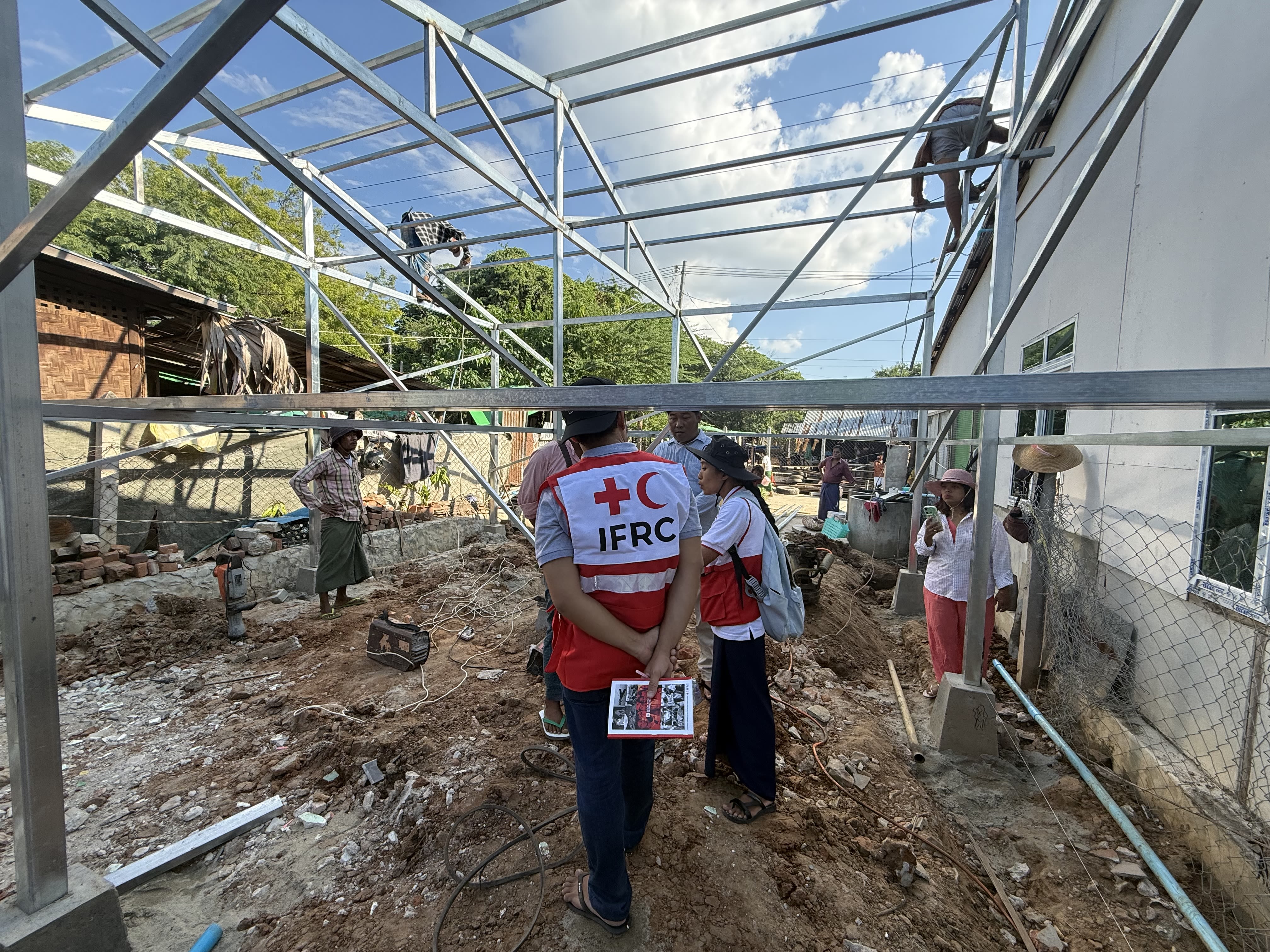
In the weeks that followed, volunteers from the Myanmar Red Cross Society (MRCS) never left the impacted communities.
They continued to visit affected households, carry out assessments, speak with families about their needs, and deliver assistance.
Since then, the MRCS has continued to provide integrated support throughout the recovery phase.
This has included livelihood assistance, additional transitional and temporary housing, and disaster risk reduction (DRR) initiatives for earthquake-affected communities across Myanmar.
Across Myanmar, more than 213,000 people in 31 townships have received assistance since the earthquake, including emergency shelter, health support, and cash grants.
It also included an ambitious, community-led shelter programme.
Carried out with technical guidance and contributions from the IFRC and member National Societies, the approach was simple but powerful: assist families to rebuild homes that are safe, dignified, and suited to their needs.
In Parami Ward alone, 24 homes were rebuilt, including one for U Win Maw’s family. In Sagaing Township, Sagaing Region, 125 households received grants for shelters, and 254 households received grants for latrines – and more are on the way.
For U Win Maw, the retired township judge from Sagaing Region, recovery is not just about rebuilding a house.
It is about restoring a sense of safety and dignity for his family.
“Being able to live in this house again has brought us peace of mind,” he says. “That feeling of security is very important.”
Homecoming
A virtual tour of U Win Maw's family home, rebuilt with assistance from IFRC's Myanmar Earthquake emergency appeal, as well as from member National Societies.
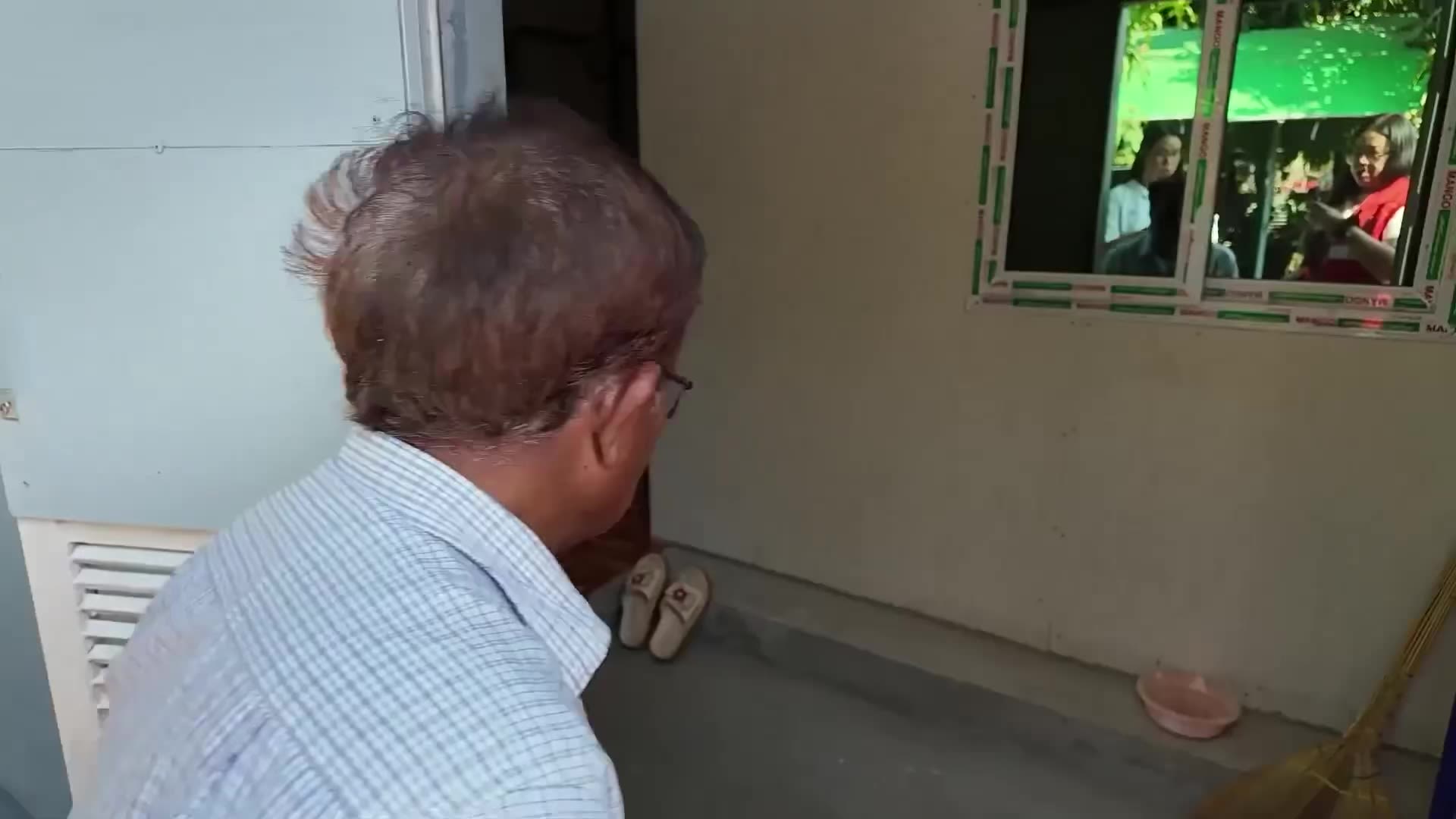

A strong foundation
All the shelters built as part of the programme incorporate “Build Back Safer” techniques, designed to withstand future hazards such as earthquakes, cyclones, and floods.
It was also done hand-in-hand with people in the impacted communities, ensuring their needs, values and way of life were respected.

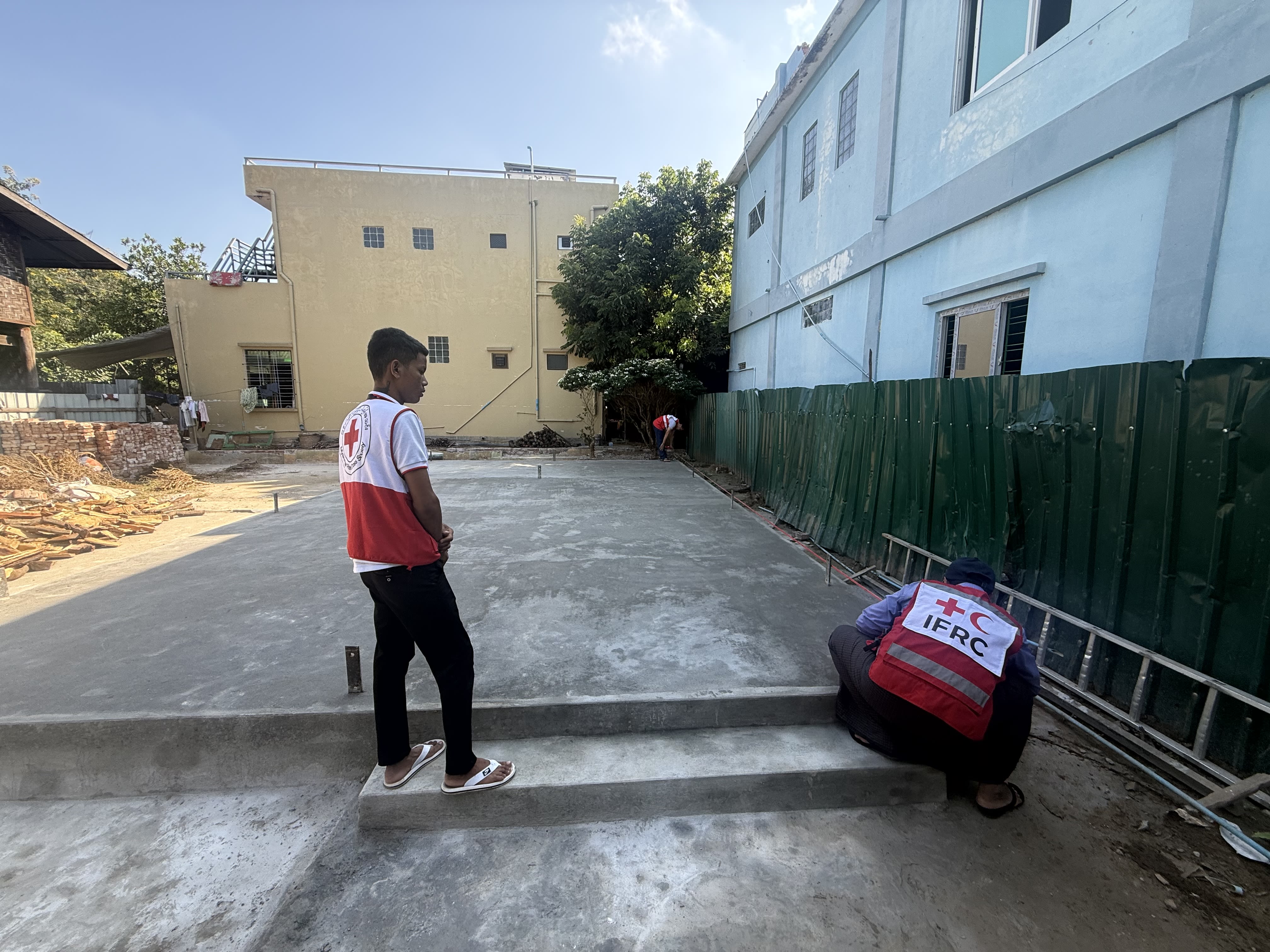



Foundations first
For Thuzar Win, a WASH officer with MRCS who worked on the integrated shelter programme, finding a balance between technical standards and community practices was essential.
“In some communities, there is a belief that the roof should be installed before the floor,” she explains. “But for safety, the foundation needs to be completed first.”
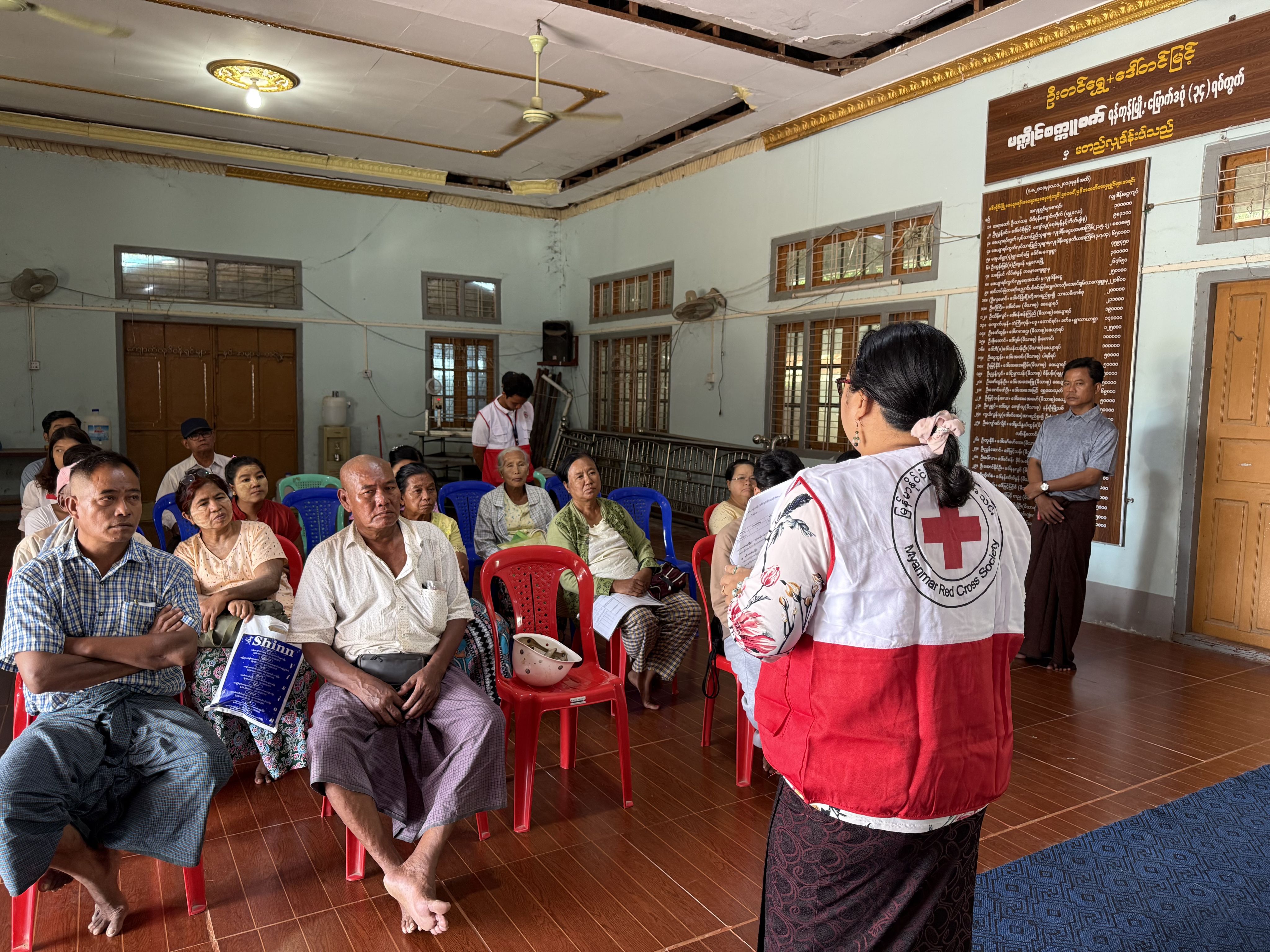
Rather than dismiss these concerns, MRCS teams engaged in dialogue with community members.
“We spent time discussing and finding solutions together,” she says. “We respected local customs while also explaining the importance of safe construction.”
Strength through flexibility
Families are not passive recipients of support. Instead, they participate in decision-making, ensuring that homes reflect local preferences while meeting safety standards.
This flexibility in terms of listening and adapting the approach with community direction, continues to be a key part of the shelter programme.
Collaboration
These conversations were not always easy. Some families initially felt that inspection processes and technical guidelines were complicated or time-consuming.
“We had lived in open, hall-type houses our whole lives, so when the Myanmar Red Cross team suggested a design with separate rooms, we didn't understand the benefit at first,” Win Maw said.
But as construction progressed, attitudes began to shift.
“Once the shelters were completed, many families were very happy,” Thuzar Win says.
“Now we see how much more comfortable and healthier it is. We love it, and so do our neighbors! Some of my friends are even copying the design for their own homes,” U Win Maw says.
Locally sourced, locally built
Beyond construction, the recovery effort is deeply rooted in community participation.
Local masons, contractors, and volunteers work side by side with families, sharing skills and knowledge. This not only speeds up rebuilding and enables livelihoods for local businesses but also strengthens local capacity for future emergencies.
The sounds of livelihood
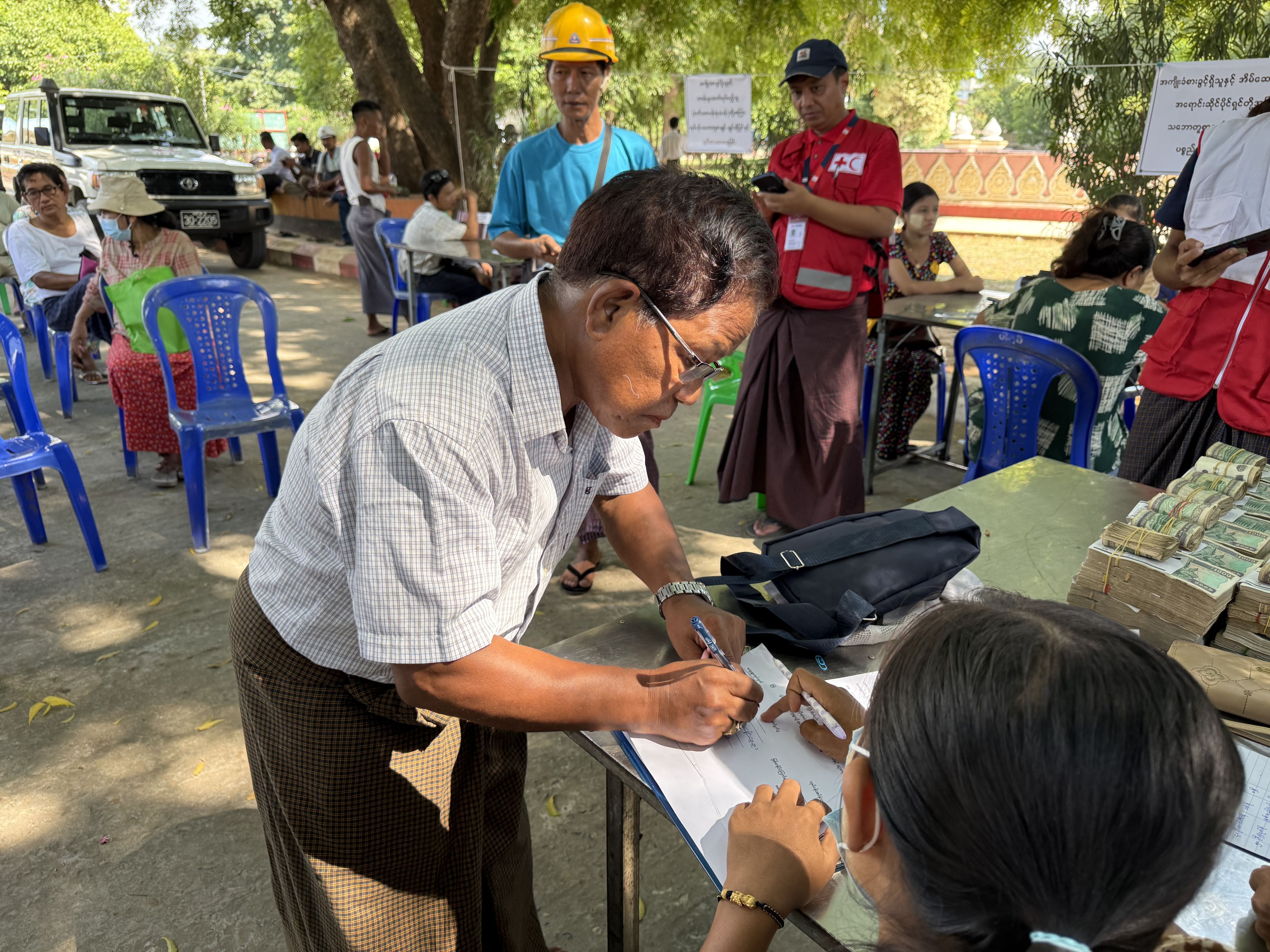
Cash grants have also played a critical role in helping families and small businesses get back on their feet.
Through flexible grants, families have been able to prioritize their own needs, whether repairing homes, purchasing materials, or covering medical expenses.
This approach has proven both efficient and empowering. Around 85 per cent of funds are transferred directly to people, allowing them to make decisions that best suit their situation.
For U Win Maw’s family, however, challenges remain.
Before the earthquake, the family ran a small business producing traditional medicinal tamarind products, earning up to 1.2 million MMK per month (roughly 450 USD). The disaster destroyed their equipment, bringing the business to a halt.
Now, rebuilding livelihoods is the next step. But it requires repairing the equipment and additional investment estimated between 9 and 10 million MMK (4,500-4,800 USD).
At the same time, medical expenses continue. His wife still struggles with spinal pain, and regular hospital visits add to the financial burden.
The earthquake response in numbers
Recovery from the earthquake and its aftershocks will take far longer than one year. But much has been accomplished, proving that further support can indeed go a long way. Here are the numbers behind the Myanmar Red Cross response so far, supported through a Federation-wide Emergency Appeal, as well as other contributions, that have mobilised over CHF 29.5 million Swiss francs.

213,000+
Number of people reached by the Myanmar Red Cross across 31 townships with support from Red Cross and Red Crescent Movement partners and external partners.

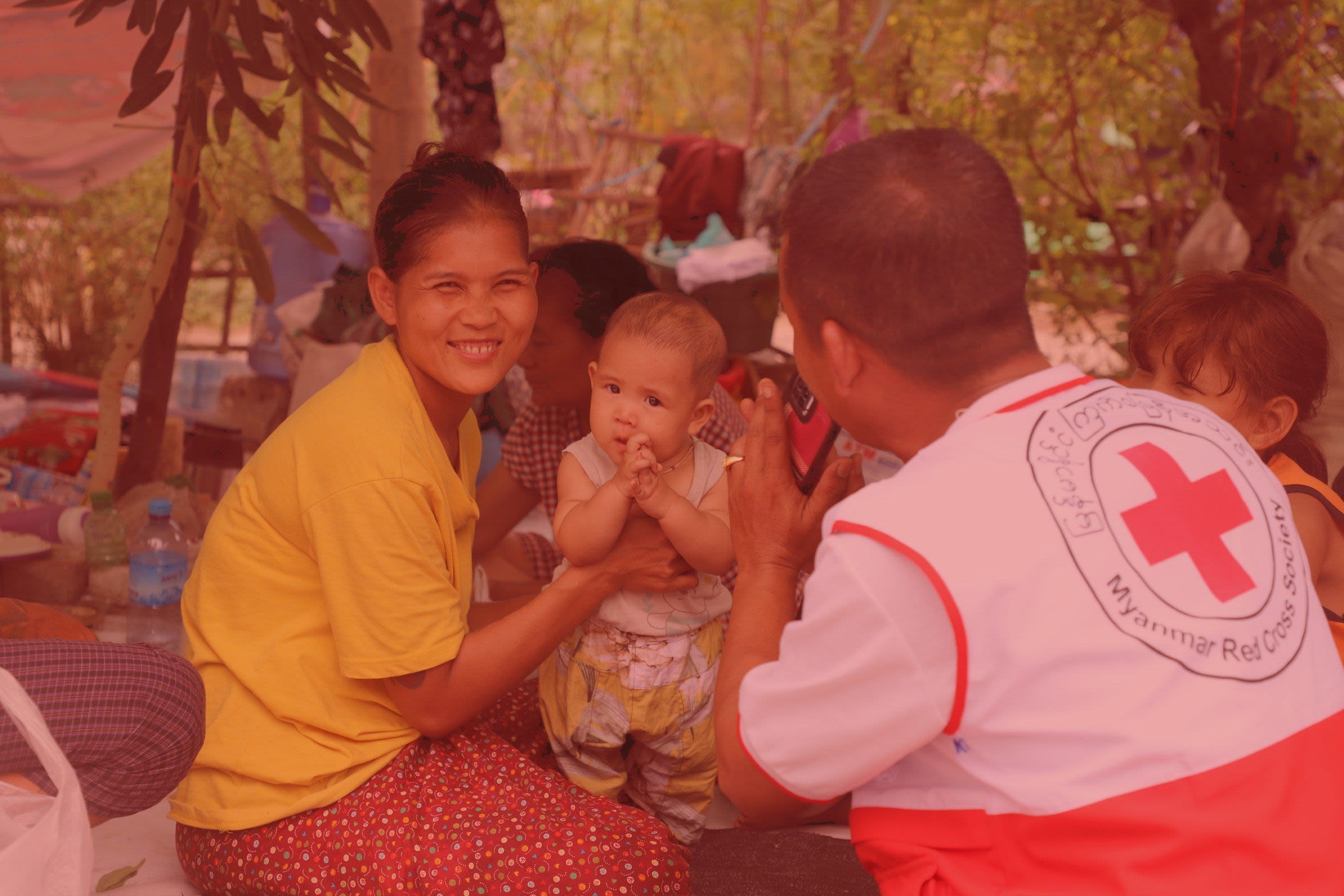
110,000+
Number of people reached through funding from the IFRC Myanmar Earthquake Emergency Appeal.

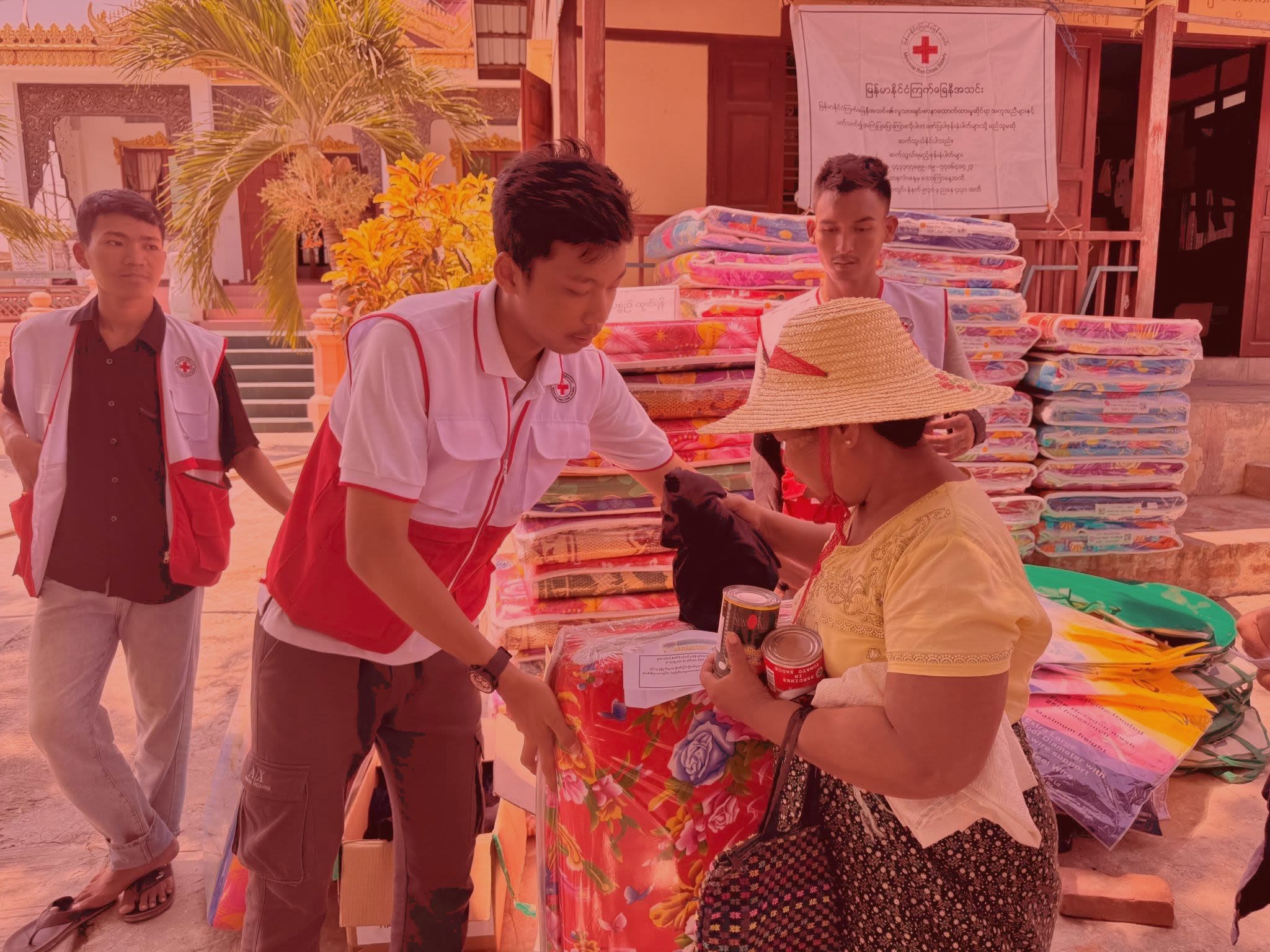
126,000+
Number of people who have received food and livelihood assistance, mainly mobilized locally from individuals and non-Movement partners of MRCS.
230,000+
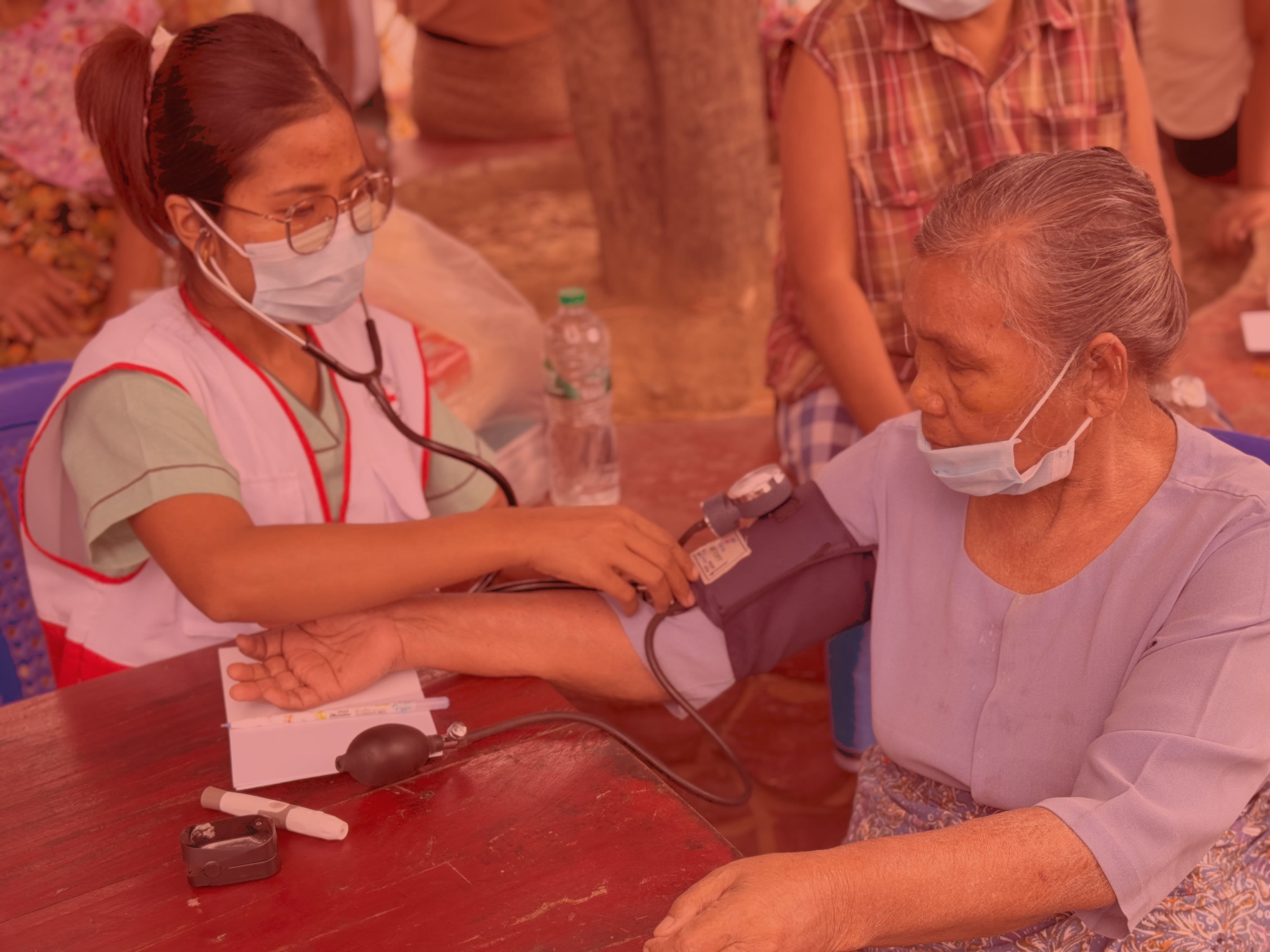
Number of people who have received health care from MRCS volunteers and health workers.

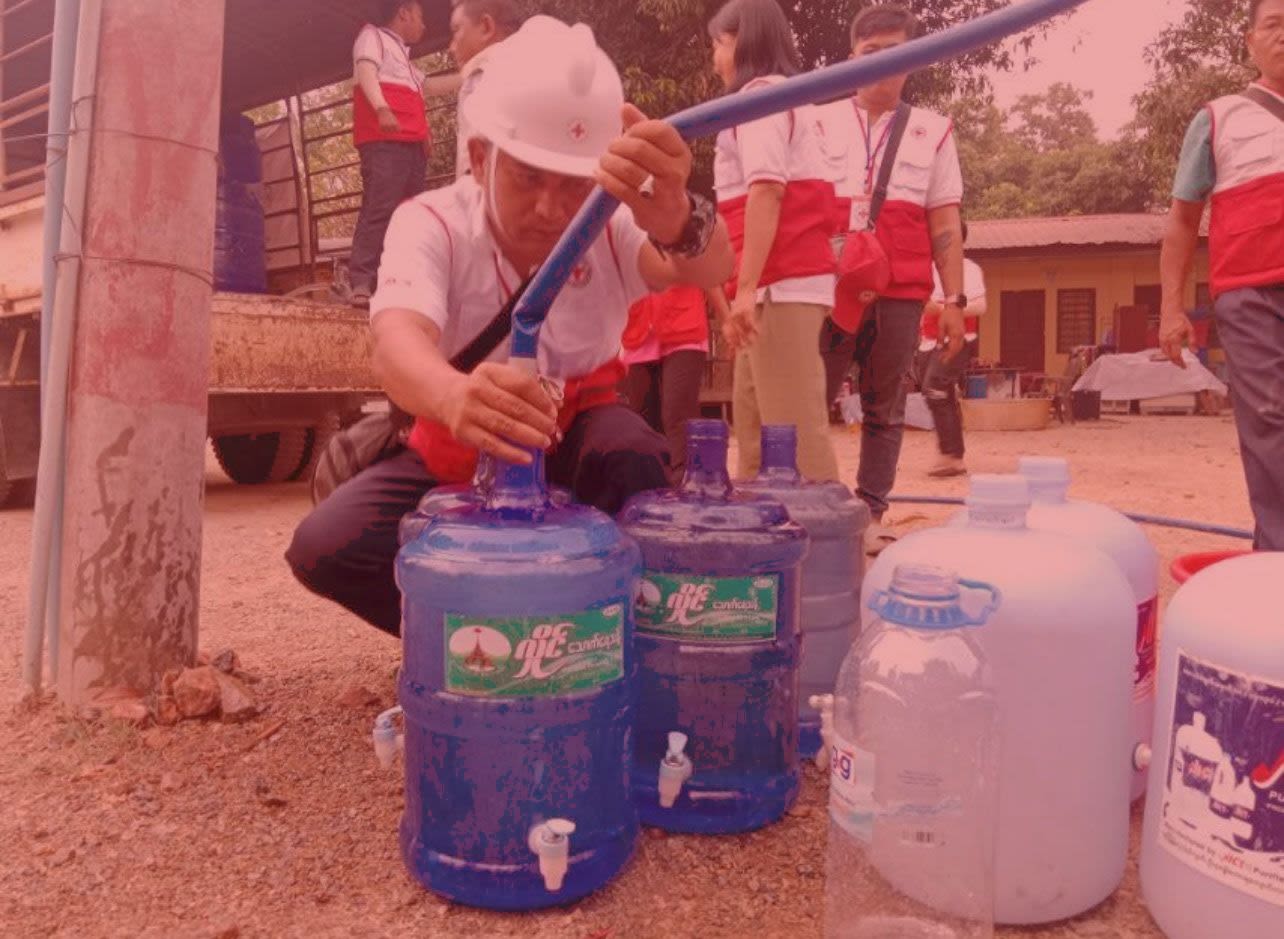
1.3 million
Number of liters of safe drinking water distributed to people impacted by the earthquake.

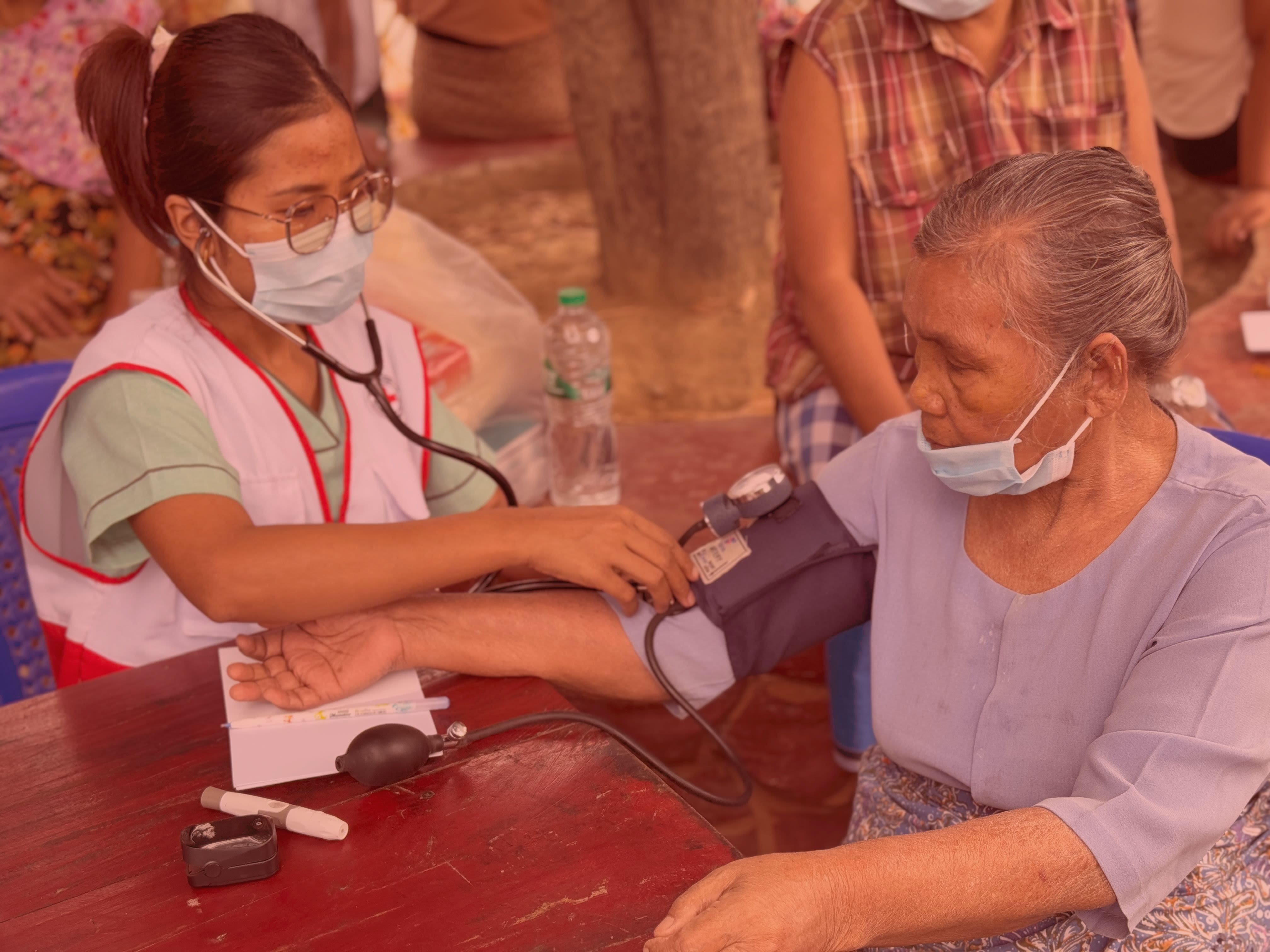
221,000
Number of people reached with sanitation and hygiene services. Thisincludes provision of clean water, construction of latrines, distribution of water tanks and water filters, distribution of hygiene kits and cleaning materials, and hygiene awareness sessions.

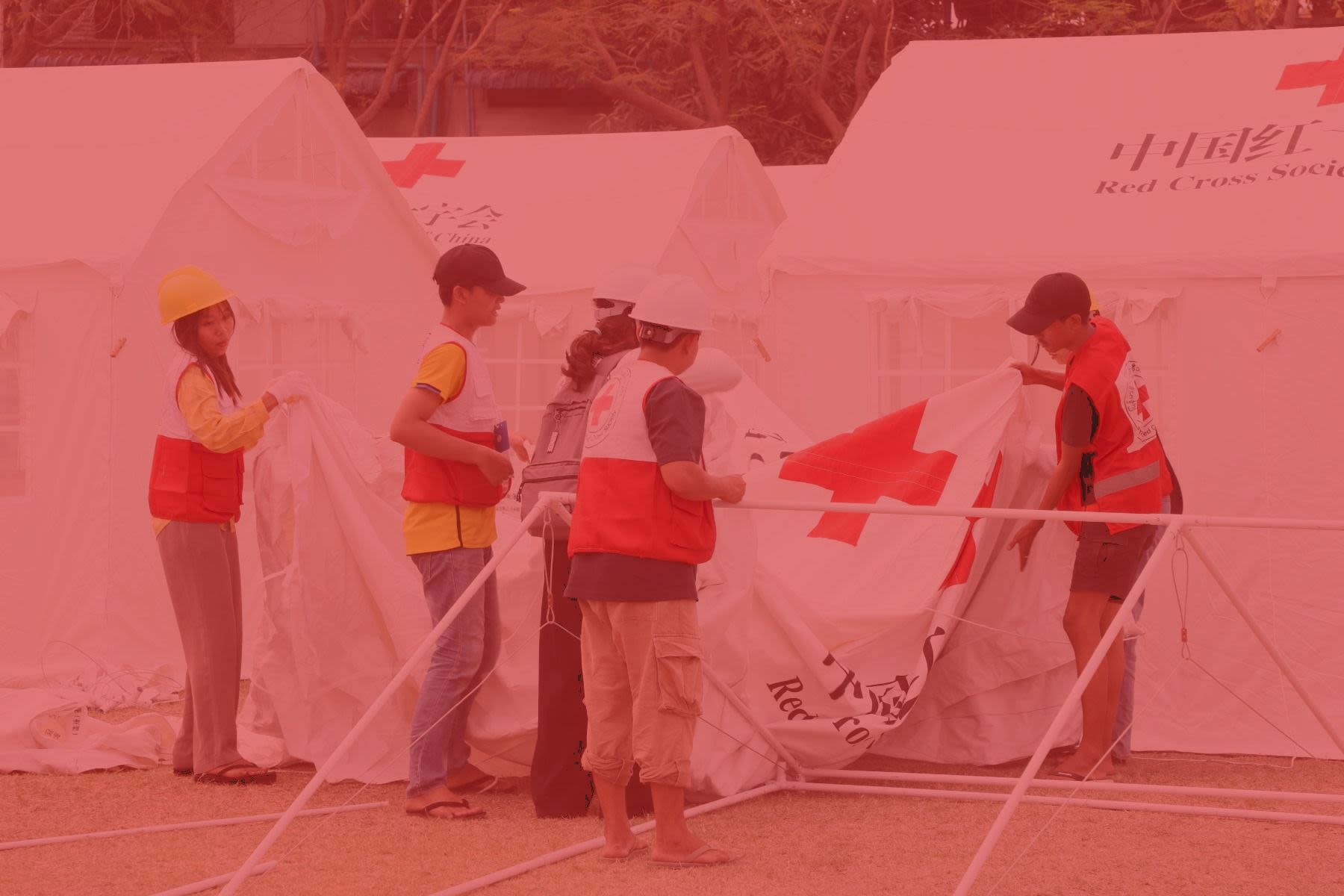
93,000+
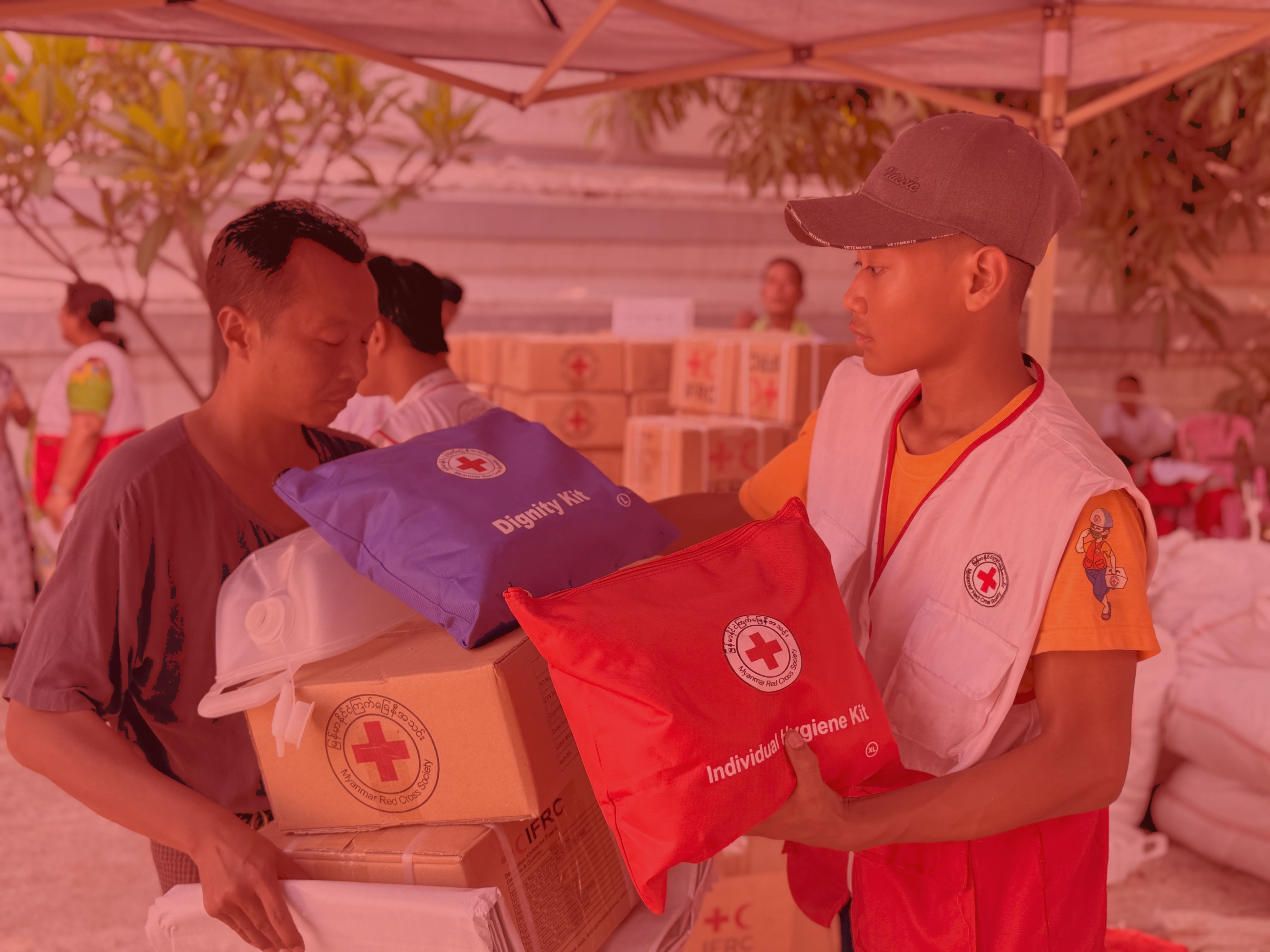
Number of people who have received shelter and shelter-related assistance such as tents, and household items including shelter kits, mosquito nets, and kitchen sets.

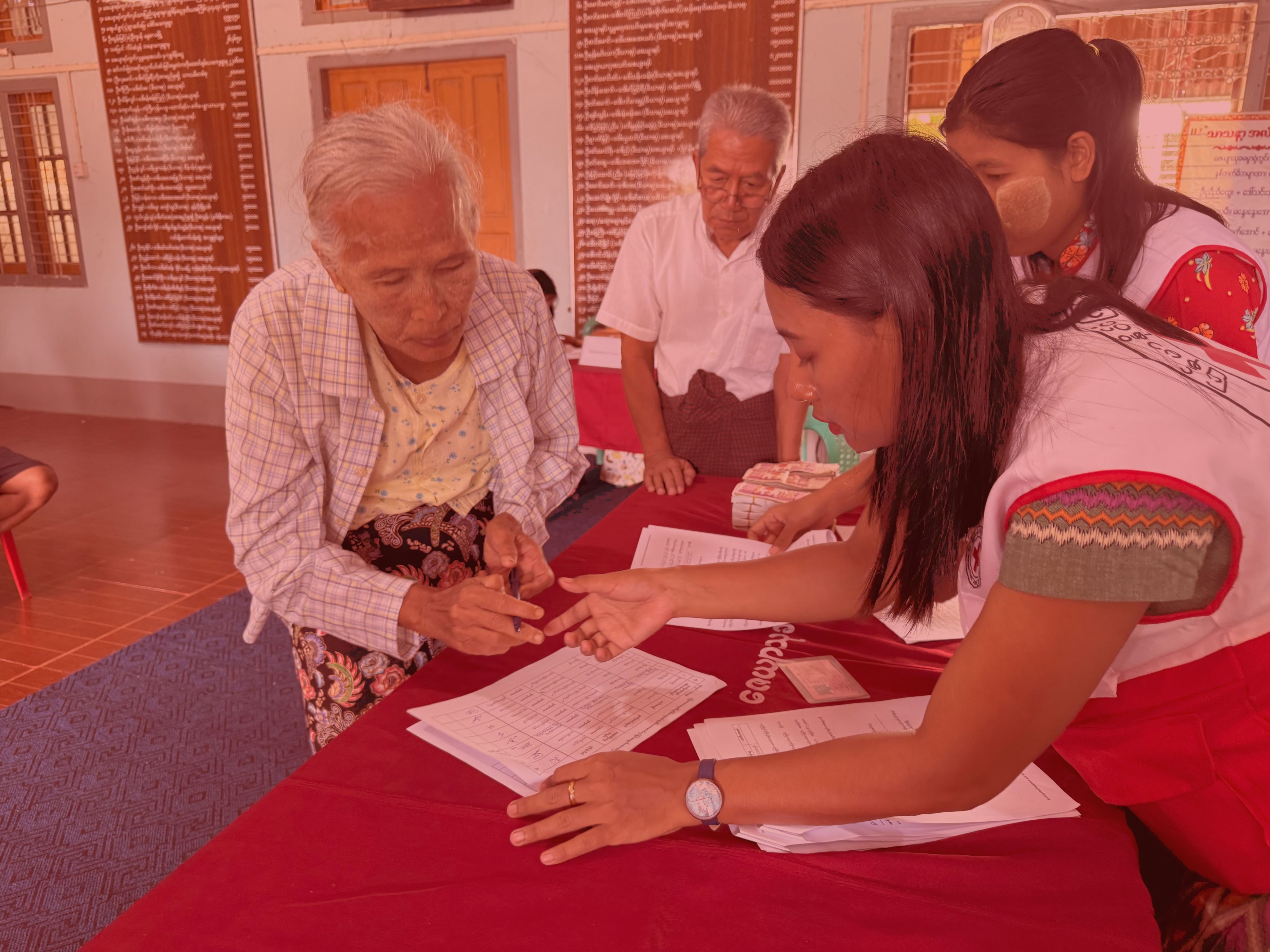
21,000+
Number of households that have received multipurpose assistance through 3 rounds of distributions. This is in addition to 23,424 households reached through complementary cash assistance during emergency relief distributions. In addition, 125 households received grants for shelters, and 254 households received grants for latrines.
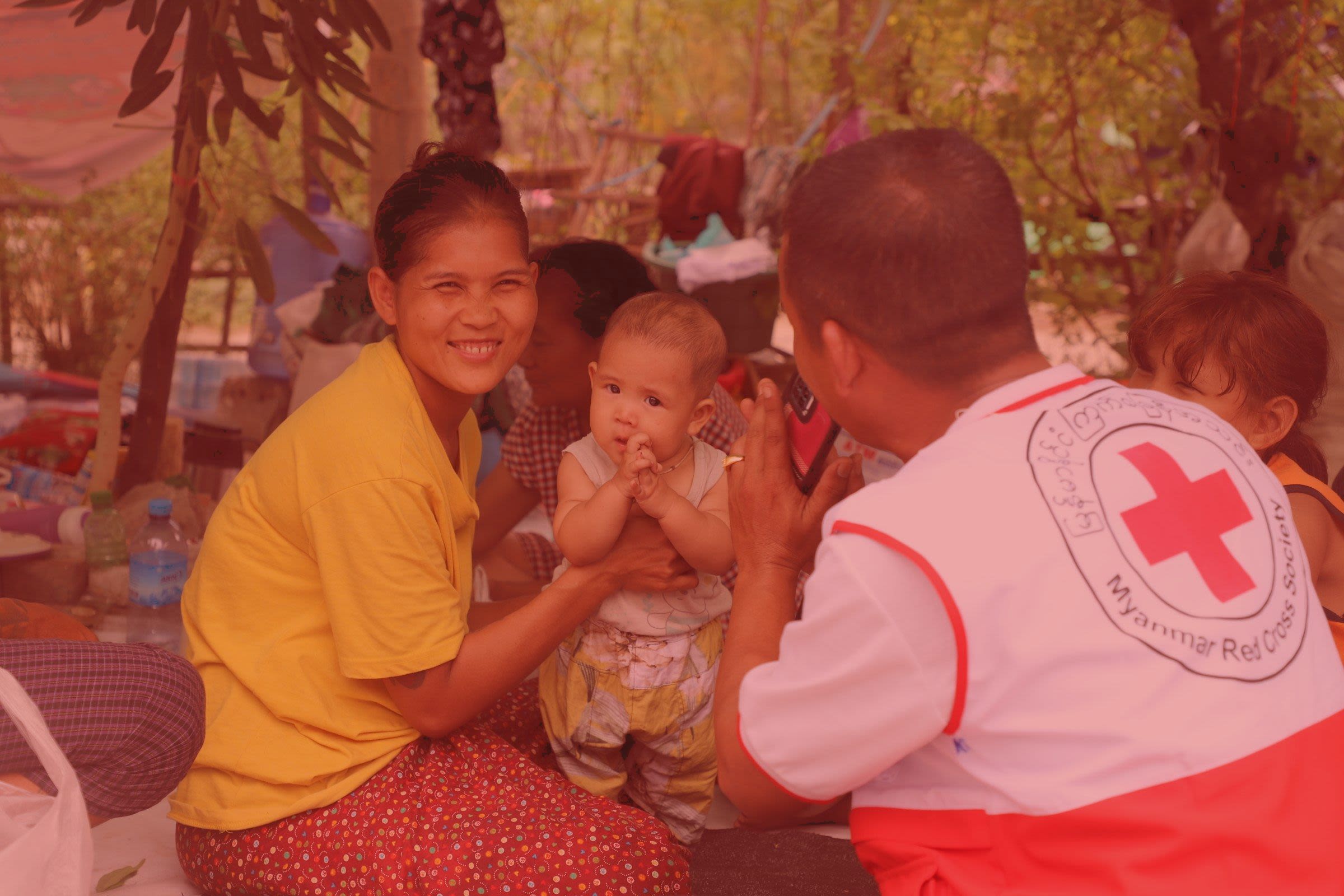
9,000+
Number of people reached with gender and age have been reached with gender and age specific items such as dignity kits, infant kits, and delivery kits.

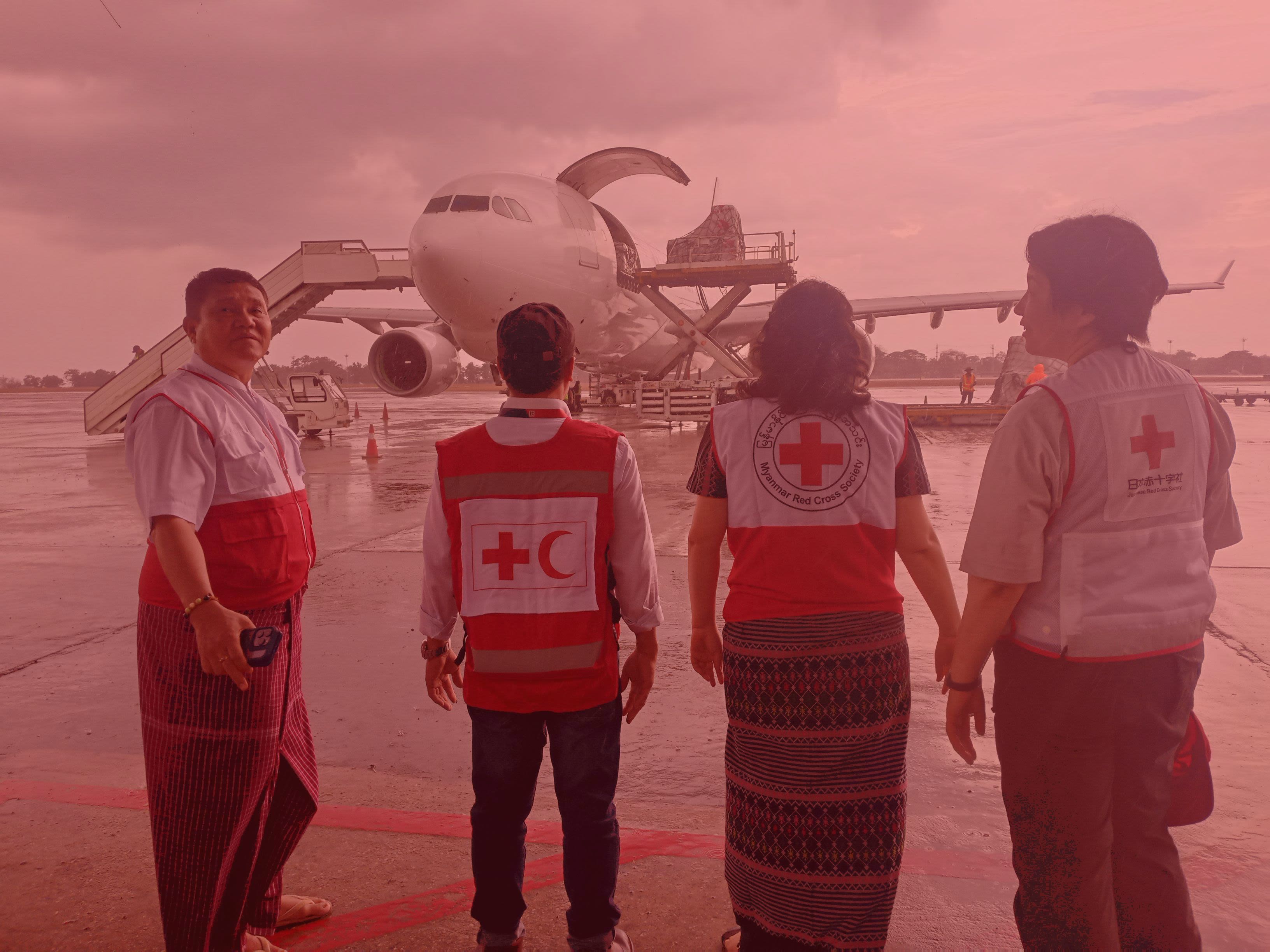
300
Number of metric tonnes of relief and goods received for use by Myanmar Red Cross from the IFRC Network, other partners, and donor governments.

698
Number of volunteers from its network of trained and experienced volunteers countrywide.

32
National Societies globally have, to date, supported MRCS in this operation (financially, with in-kind donations, or with technical support).
'Comfort and hope'
One year on, many families across Myanmar are still navigating the long path to recovery. While progress has been made, needs remain high. Homes have been rebuilt, but livelihoods are fragile. Infrastructure is improving, but access to services is uneven.
“As humanitarian needs in Myanmar persist, communities here must not be forgotten,” says Nadia Khoury, Head of Delegation, IFRC Myanmar.
Continued support is essential to help families rebuild their lives with dignity and resilience, she says.
" I have just travelled to activity sites in 16 different villages and wards in several of the earthquake-affected areas and I have been impressed to see first-hand how the Myanmar Red Cross has worked with community committees, with village leaders, and through its volunteers to really address the biggest needs of the communities in an inclusive, participatory, and dignified manner."
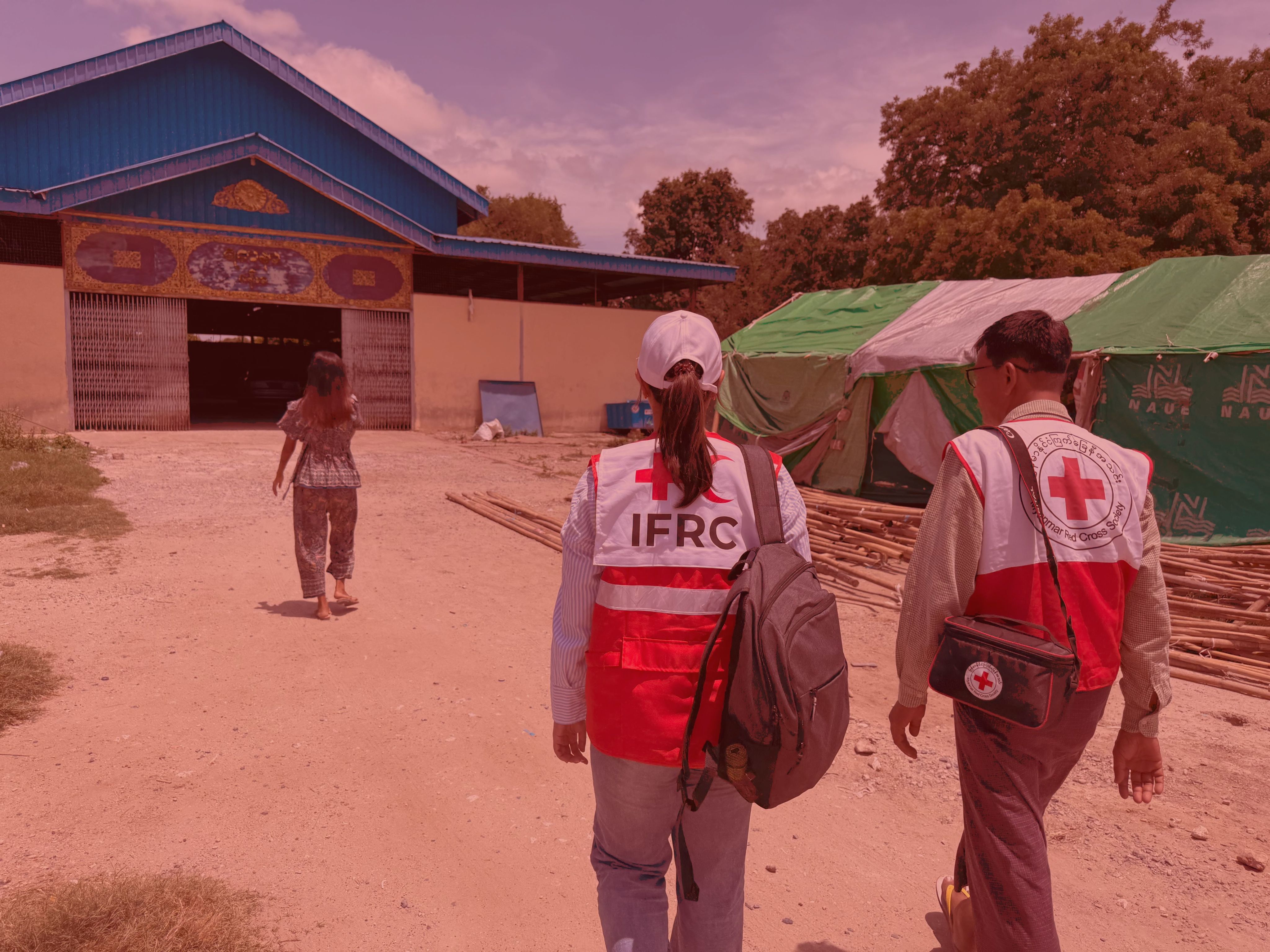
Meanwhile, MRCS volunteers continue to work every day, visiting communities, listening to feedback, and ensuring that assistance reaches those most in need. Their presence, rooted in local trust and knowledge, is a cornerstone of the response.
'We will never forget'
For families like U Win Maw’s, recovery is not a single moment but an ongoing journey. Still, there are signs of hope.
Children have returned to school. Neighbors are rebuilding together. And in Parami Ward, new homes stand where ruins once lay.
“In our family, it is rare to be able to receive large amounts of money,” U Win Maw reflects. “That is why this support means so much to us.”
He pauses, looking around the house that now shelters his family.
“It has brought us comfort and hope,” he says. “And that is something we will never forget. Thank you Myanmar Red Cross and donors.”

Read more about the earthquake response:
Powerful earthquake rocks central Myanmar: Red Cross responds
Myanmar relief operations intensify as IFRC coordinates complex supply chains
In the wake of Myanmar earthquake, a mother finds strength in helping others
Courage in crisis: How one volunteer saved dozens of lives after Myanmar’s March 2025 earthquake
 Built with Shorthand

