
In a changing world, one thing remains constant: we will always need the toilet. As climate change intensifies, water and sanitation related disasters are becoming more frequent and severe.
Floods destroy sanitation infrastructure, droughts make hygiene nearly impossible, and when toilet systems fail, untreated waste can spread diseases like diarrhoea and cholera.
These are some of the reasons the IFRC and its network of National Societies around the world work alongside communities to enhance their access to safe, clean water, while also helping them to improve sanitation and hygiene. Here is the story of one, ongoing project unfolding in remote, hillside communities in Nepal.
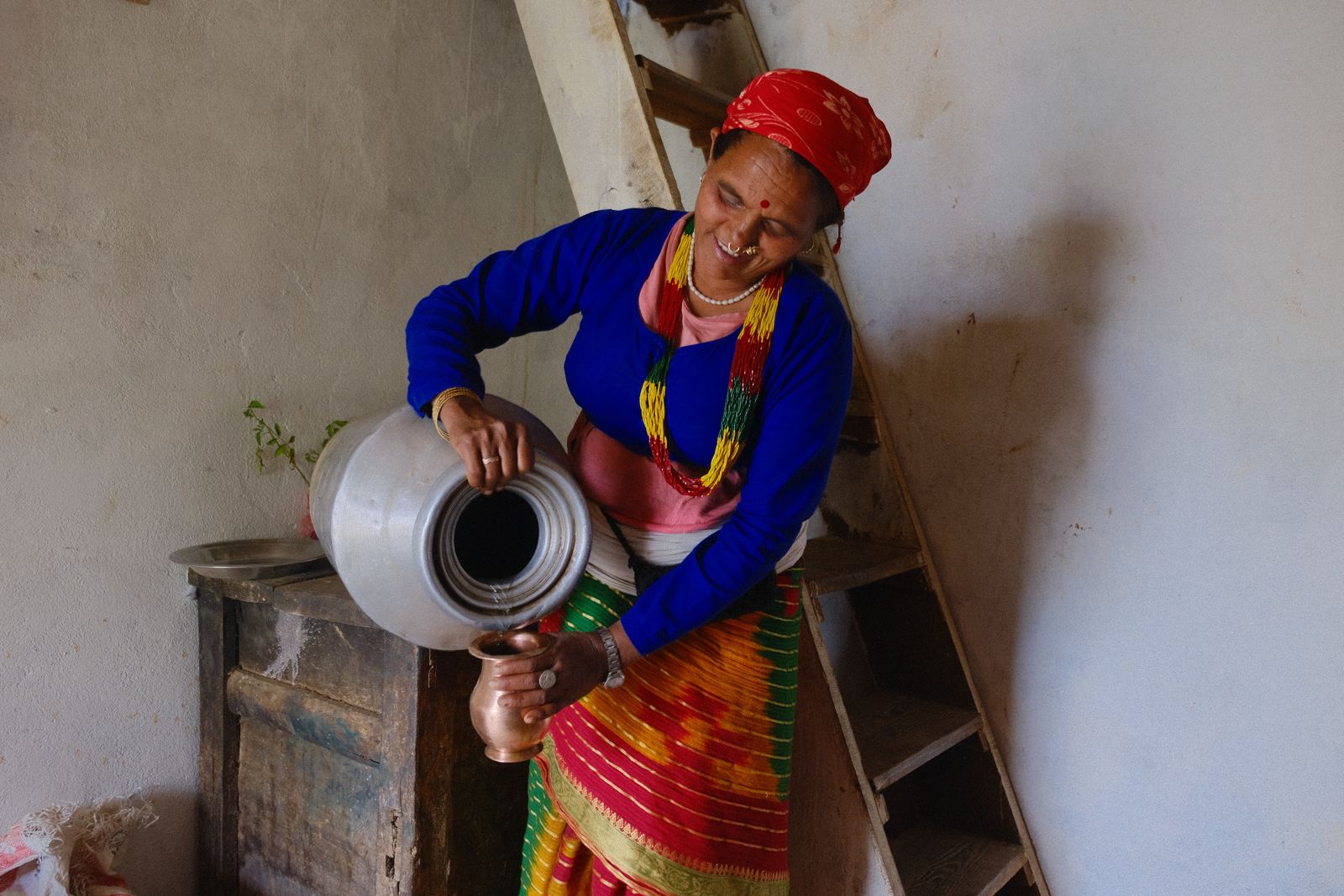
Building confidence, one household at a time
Puri Lal Devkota, a 75-year-old farmer, lives with his wife Kalashi in a hillside house in Kalikot, Nepal. Previously they didn't have their own toilet and relied on their son's—a challenge, especially with age.
That changed when a community health volunteer began visiting them regularly as part of the Enabling Action for Community Health (EACH) Project, implemented by the Nepal Red Cross Society in collaboration with the Swiss Red Cross and the British Red Cross.
For about a year, the volunteer—a woman from the same community—came monthly to talk about how to store and use drinking water safely, and the importance of using a toilet that is clean, private and away from water sources so it does not harm people’s health or the environment. Through her respectful and consistent engagement, she built strong trust with the couple.
Encouraged by these visits, Puri Lal and Kalashi felt confident to take action. Without financial or material support, they arranged the materials, hired workers, and had a toilet constructed near their home within seven days.
"I was convinced in a single day," Puri Lal says with a smile.
"At this age, the toilet should be close," he explains. They also began boiling their drinking water and using clean containers. These changes have brought a sense of security and well-being to their daily lives.
"She always came with respect and trust," Puri Lal says of the volunteer. The couple is now eager to pass their knowledge on to others in the community.
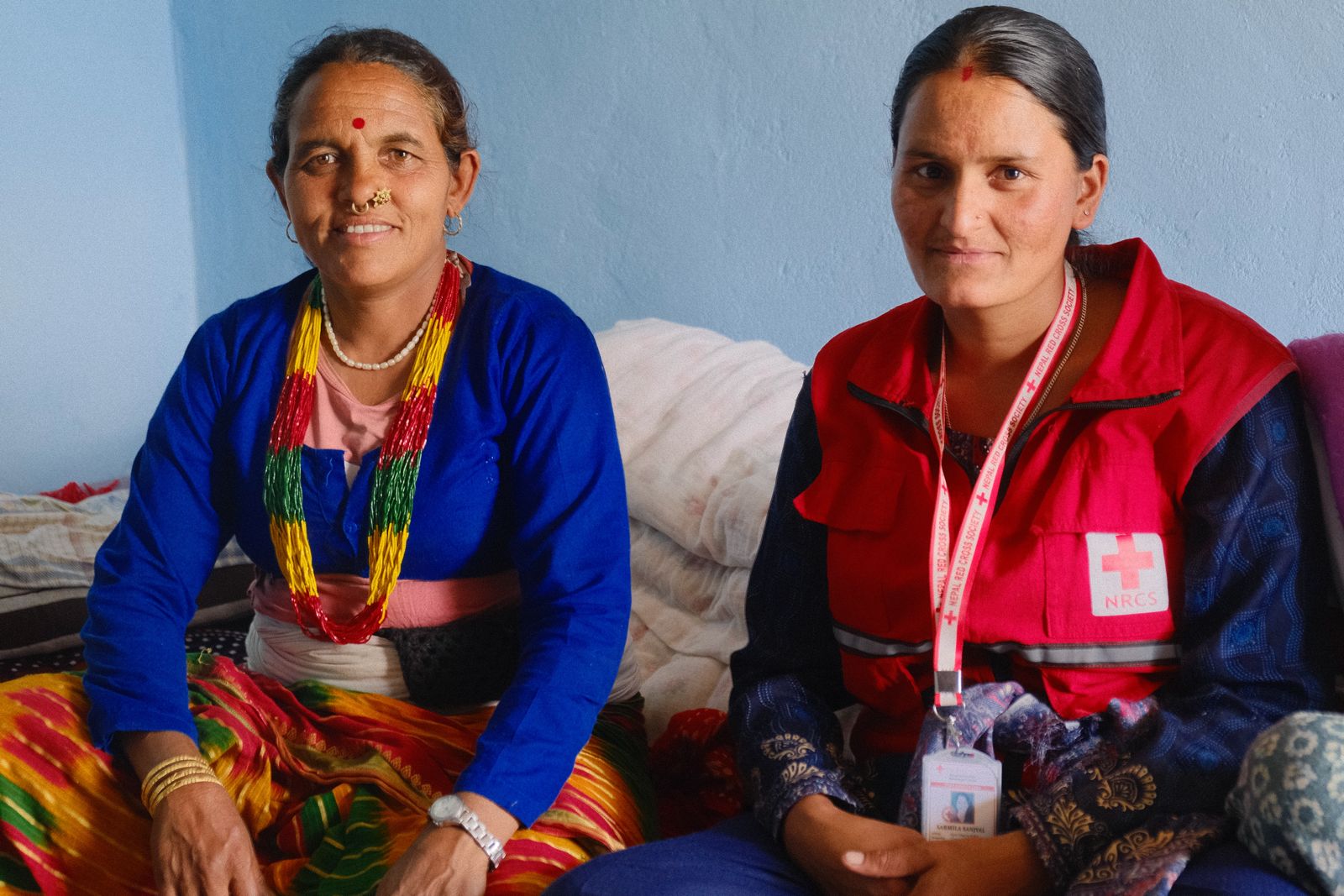
Supari sits beside Karmila, a Nepal Red Cross volunteer who is involved in the water, sanitation and hygiene project.
Photo: Kristina Wirth/Swiss Red Cross
Supari becomes a champion for change: 'We need models'
Supari Luhar lives alone in her hillside home in the same community. For years, she faced the discomfort and shame of using the jungle or a dilapidated shelter for a toilet. Without running water, basic hygiene was a daily struggle.
Eight months ago, after regular visits from the same behaviour change programme, Supari mobilized local workers to build her own toilet. With the new water tap provided by the project, she now filters and boils her drinking water and keeps her toilet clean—changes she calls "a pleasure."
But Supari didn't stop there. She now visits neighbouring households, sharing what worked for her. Through her guidance, around ten households have improved their sanitation practices.
"We need models," Supari says—and she has become one, actively shaping change in her community.
Working with communities to achieve sanitation systems that last
What was once daily hardship is now a story of empowerment and resilience. These stories highlight how the IFRC and National Societies build resilient sanitation systems that last: working through trusted volunteers who are from the communities, empowering people to take action themselves which creates genuine ownership and using community champions to multiply impact. Supari's transformation shows how change spreads organically, and how motivation can spread and lead to wider impact.
Future-ready sanitation for all
Today, 3.5 billion people still live without safely managed sanitation—nearly half of humanity. Stories like Supari's and Puri Lal's show that future-ready sanitation requires more than infrastructure—it requires investing in people, building community ownership, and creating systems that adapt to our changing climate.
On 19 November, we renew our commitment to leaving no one behind in sanitation. We call on everyone to become a sanitation champion in their community! Because everyone, everywhere deserves access to a toilet they can use safely and with dignity—no matter what challenges our changing world brings.
Stories shared by Nepal Red Cross Society and Swiss Red Cross.
Want to learn more about the IFRC’s work in water, sanitation and hygiene? Visit the IFRC's Water Security/Water, Sanitattion and hygiene portal.
Connect with National Society and IFRC colleagues working in community health and WASH on IFRC Communities