Kinshasa/Nairobi/Geneva, 21 May 2026 — The International Federation of Red Cross and Red Crescent Societies (IFRC) is scaling up Ebola response efforts in Democratic Republic of the Congo, Uganda and neighbouring countries, and has launched a CHF 29 million regional emergency appeal.
The Democratic Republic of the Congo Red Cross Society, supported by the IFRC, has deployed 200 volunteers in Bunia and Rwampara health zones to support community engagement and frontline public health activities.
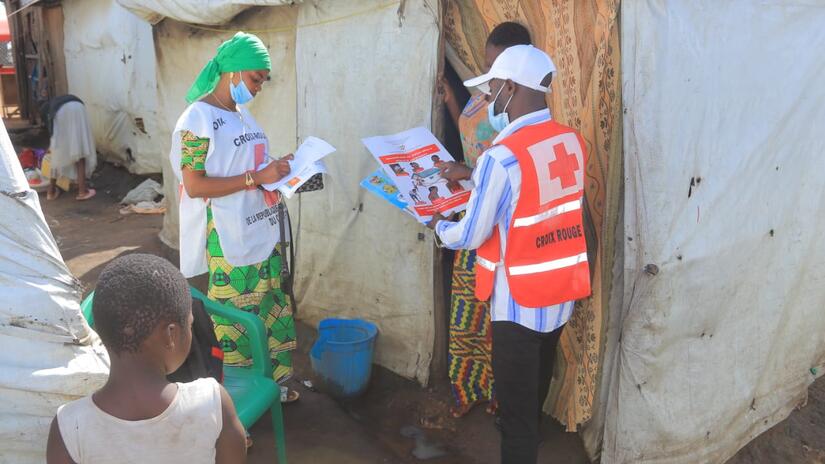
Red Cross volunteers are already going door-to-door in affected communities, helping families understand how Ebola spreads, countering misinformation, and encouraging early care-seeking when symptoms appear. A Red Cross radio programme is reinforcing these messages at a broader scale.
Families are also being advised not to touch or wash the bodies of suspected Ebola victims, as this remains one of the most common routes of transmission during outbreaks. On the first day of activities, Red Cross volunteers reached 645 families.
Ariel Kestens, IFRC Head of Delegation in Kinshasa, said: “The Bundibugyo strain is particularly concerning, as there is limited evidence on the effectiveness of treatments and vaccines developed for the Zaire strain. The outbreak is spreading rapidly in areas where health systems are already fragile and where population movement across borders is frequent. The priority now is to act quickly and work closely with communities, as the coming days are critical. We call on the international community to demonstrate solidarity and support the Red Cross Red Crescent’s lifesaving response.”
Gregoire Mateso, National President of the DRC RC Secretary General in Kinshasa, said: “People are afraid, but when Red Cross volunteers provide clear information and offer practical support, communities are more likely to seek treatment promptly and follow preventive measures. This clearly demonstrates that our volunteers have earned the trust of the communities they serve, and this trust is essential to stopping the spread of the Bundibugyo Ebola virus disease.”
The outbreak is spreading through areas already affected by insecurity, weak healthcare systems and constant population movement, complicating efforts to contain the virus.
Fears of wider regional spread are also growing. Uganda has already confirmed Bundibugyo Ebola cases linked to the ongoing outbreak, while neighbouring countries, including Burundi, Rwanda and South Sudan, are stepping up readiness efforts in high-risk border areas.
Robert Kwesiga, Secretary General, Uganda Red Cross Society in Kampala, said: “We have placed our teams and volunteers on high alert and are retraining and preparing them for rapid deployment to support the national Ebola response. As Uganda Red Cross, our role is not only to support emergency health interventions, but also to stand with communities, strengthen public awareness, build trust, and help prevent further spread of the disease. We are working closely with the Ministry of Health and partners to ensure communities in high-risk areas receive timely support, accurate information, and lifesaving humanitarian assistance.”
Previous Ebola outbreaks have shown that the chain of transmission can be broken faster when communities trust the response, seek care early and have access to reliable information and support.
Urgent funding is needed to expand surveillance, deploy additional burial teams, deliver protective equipment and scale up frontline response efforts in affected communities and high-risk border areas.
For more information or to request an interview, please contact: [email protected]
In Kinshasa:
Jean-Michel Ntalemwa, +243 808 804 037
In Nairobi:
Susan Mbalu, +254 733 827 654
In Geneva:
Tommaso Della Longa +41 79 708 4367
Paolo Cravero +41 79 894 8396