Across Asia Pacific, disasters and the impacts of climate change continue to force millions from their homes. According to the Internal Displacement Monitoring Center, in 2024 alone, there were 24 million disaster displacements across the region – more than half of the global total.
From floods to supercharged storms, the Asia Pacific region is one of the most significantly impacted by disaster displacement. However, a new report from the International Federation of Red Cross and Red Crescent Societies (IFRC) reveals not only how the scale of the crisis affects communities in the region, but also the power of local action in supporting people to adapt, prepare and become more resilient.
“For millions of people across Asia Pacific this is not a distant possibility, it is a daily reality,” says Alexander Matheou, IFRC Regional Director for Asia Pacific. “Whether on a tiny island or in a sprawling city, the stories are the same: disasters, driven and amplified by climate change, are uprooting lives and erasing the familiar.”
The report, Forced to Flee in a Changing Climate, collates 39 stories from 21 National Societies that are supporting communities through every stage of displacement – from preparedness, early warning and evacuation, to recovery and rebuilding.
While the impacts are devastating, there is hope.
“Hope is found in the strength of communities and in the tireless work of those who stand with them,” said Matheou. “This report is a call to see what is at stake – and to recognise the possibilities for change.”
Quick facts
- In 2024, Asia Pacific experienced more displacement linked to disasters than any other region in the world.
- Hazards like storms, floods, heatwaves, and droughts are becoming more intense and frequent and people are experiencing repeat displacement.
- People are displaced for longer periods, as disasters overlap with conflict, poverty and food, water and resource insecurity.
- Marginalised groups – including women, children, older people and those experiencing poverty – are disproportionately affected.
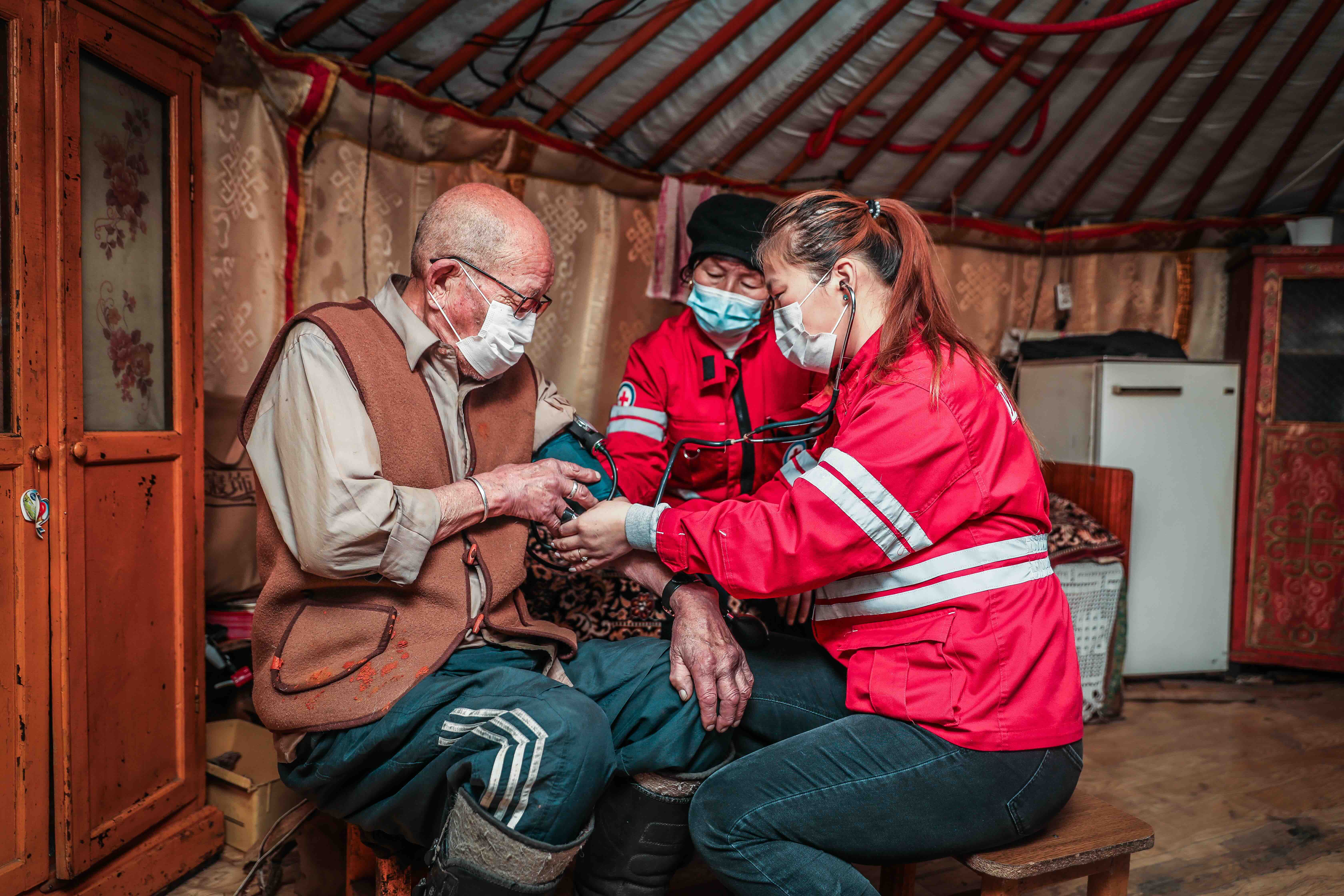
The Mongolian Red Cross provides a wellness check up to an elderly livestock herder impacted by severe cold spells. Cold snaps have devasted livestock herds and forced many people to leave their homes in rural areas to find work in urban centres or in other locations.
Photo: IFRC
How are we addressing these challenges?
National Red Cross and Red Crescent Societies are not just responding after disasters – they’re working with communities before risks worsen and disasters strike, supporting people to adapt, prepare and stay in their homes or move in safety and with dignity when and if they decide to do so.
"The impacts of displacement do not end with the decision to move,” said Matheou. “Risks and uncertainties follow people into new, and often precarious places, testing their ability to rebuild and find stability.”
This is why the ways people and communities respond takes many forms. In many cases, people who have themselves experienced displacement are taking the lead in preparedness and response, often with support of National Red Cross and Red Crescent Societies.
Better forecasting, anticipatory action and community-driven early warning systems are also playing a critical role, among other things.
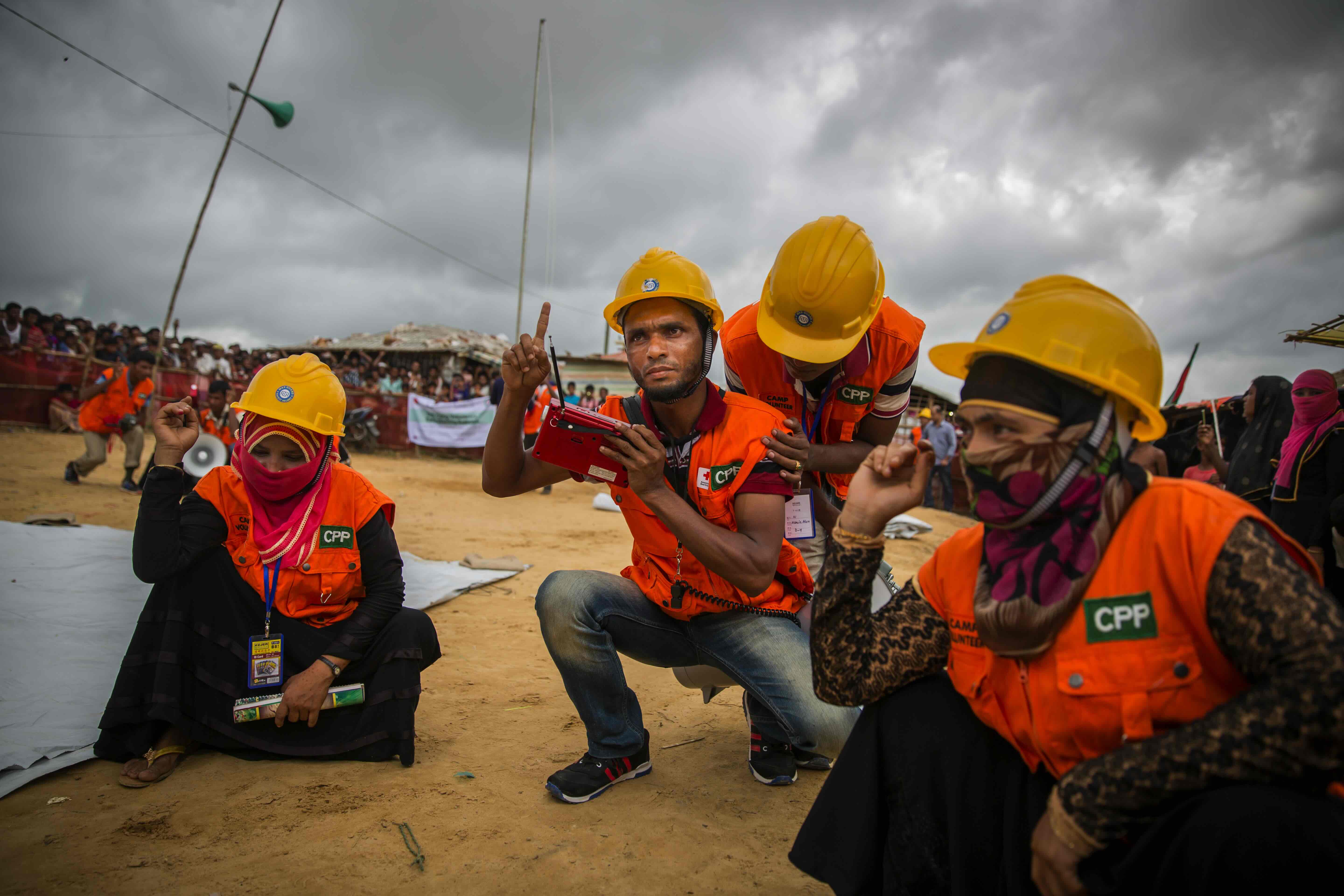
In the sprawling refugee camps in Cox’s Bazar in Bangladesh, volunteers like these from the camp community take the lead in preparing and alerting people to coming storms and other potential emergencies.
Photo: Photo by Brad Zerivitz/American Red Cross
Here are just three of the many examples cited in the report.
- Cyclone preparedness powered by refugees - Bangladesh
In Cox’s Bazar, home to the world’s largest refugee camp, the Bangladesh Red Crescent Society has trained more than 3,300 camp volunteers to deliver early warnings and help their communities evacuate before disasters strike. The national Cyclone Preparedness Programme helps to ensure that early action saves lives – even in the most fragile settings.
- Forecast-based support for fisherfolk and farmers to reduce losses – Fiji
Through the Pacific’s first Anticipatory Action Framework, the Fiji Red Cross Society is providing early warning messages, kits for securing boats, and crop storage materials before cyclones hit. By activating assistance based on forecasts, they’re helping remote communities safeguard their livelihoods in advance and reduce risks of displacement.
- Psychosocial support for herder communities– Mongolia
Mongolia is facing harsh winters, with dzud – a combination of summer drought and extreme winter temperatures – impacting herder families.
To strengthen resilience and support traditional livelihoods, movements, and ways of life, the Mongolian Red Cross Society provides cash assistance and livestock nutrition kits, constructs animal shelters, and promotes alternative livelihoods.
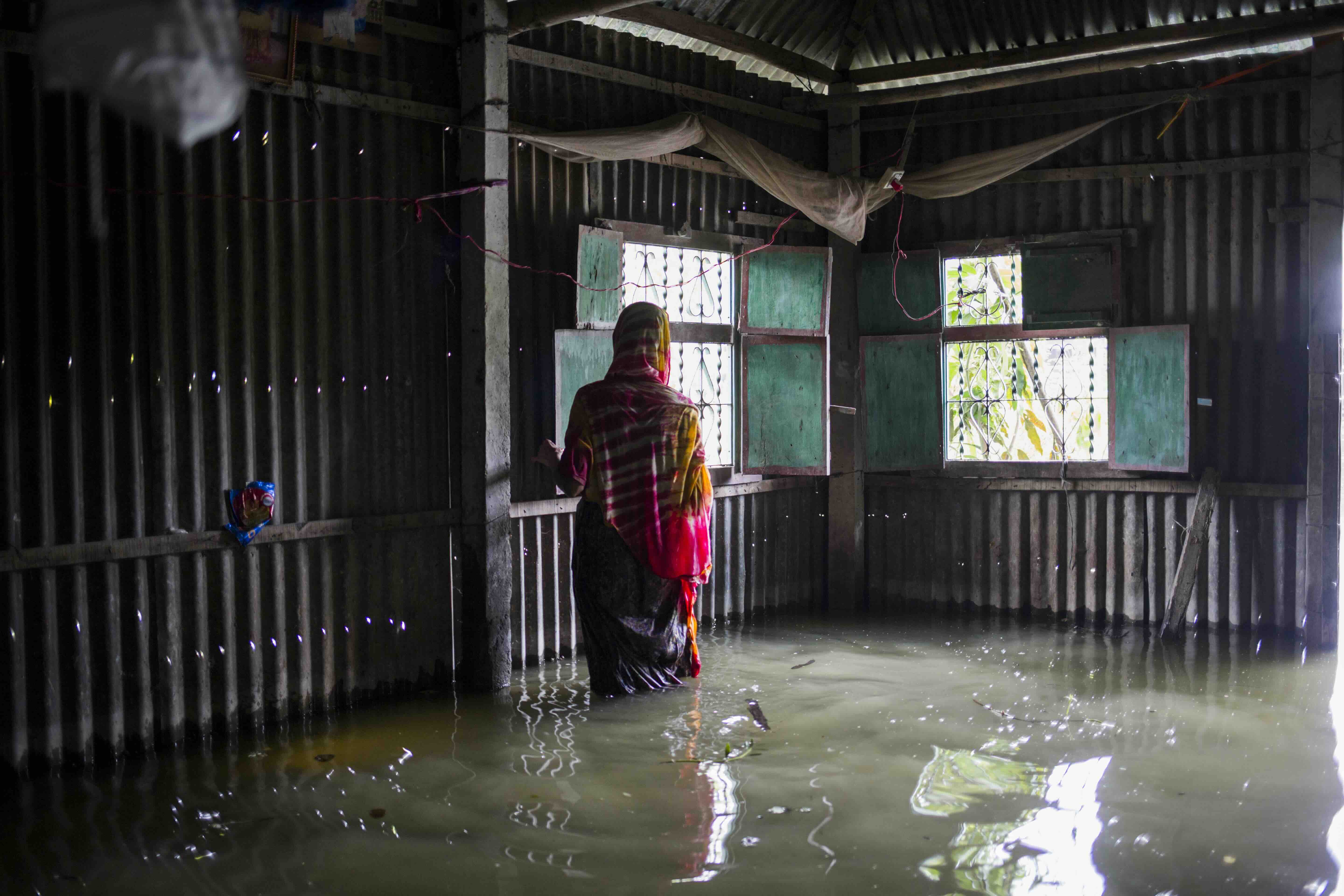
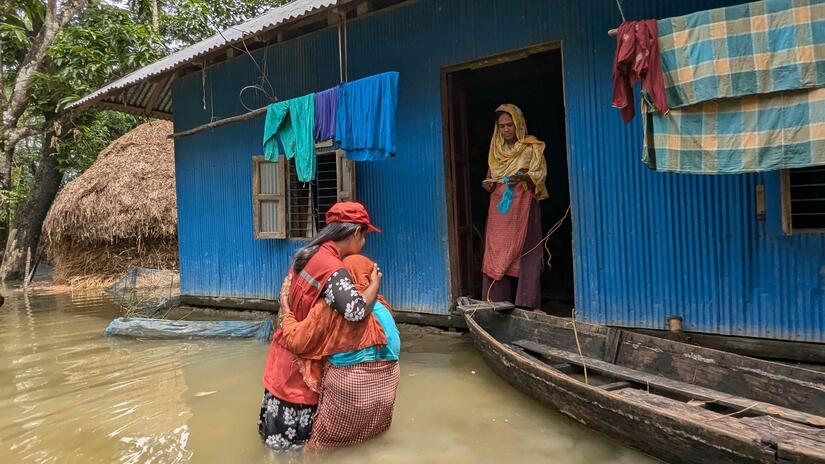
Jorina Begum, 60, checks her flood-damaged home in Sirajganj, Bangladesh, after severe 2020 floods forced her family to shelter by the roadside for two months.
Photo: AJ Ghani
The message at the heart of the report is clear: as displacement linked to disasters and climate change affects millions of people, communities across Asia Pacific are not standing still. With support from National Red Cross and Red Crescent teams, they are preparing, adapting, and leading the way toward a safer, more resilient future.
Explore the full report: Forced to Flee in a Changing Climate – Displacement in Asia Pacific