
The 16 Days of Activism Against Gender-Based Violence campaign, held each year, reminds us that the protection and well-being of women and children must be prioritised in all settings. This includes the right to access affordable, safe, quality healthcare during pregnancy, childbirth and the neonatal period.
In Paraguay, the pioneering work of the Red Cross's Reina Sofía Hospital is a prime example of how investing in maternal and neonatal health can help to prevent gender-based violence.
The Reina Sofía Hospital is a historic pillar of maternal and child health in Paraguay. It was the country's first premature care centre and the first to have neonatal intensive care. It receives pregnant women from all over the country and delivers around 2,200 babies each year, 8–10 per cent of whom are born prematurely.
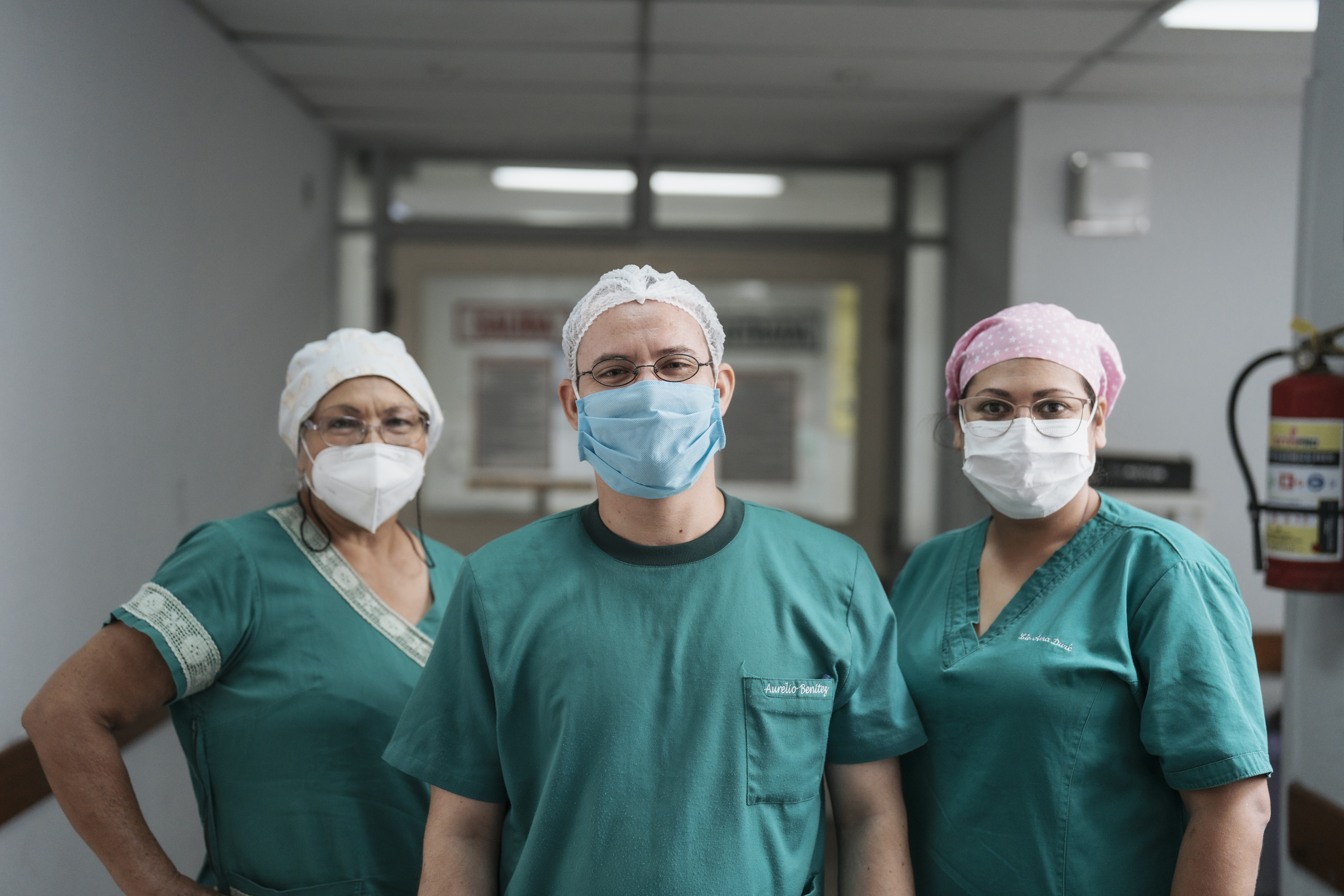
Three members of the Reina Sofía Hospital healthcare staff pose in a hallway, smiling through their medical masks and uniforms.
Photo: Paraguayan Red Cross Society
However, the neonatal unit had been working with minimal equipment and obsolete devices.
Therefore, to improve infrastructure and technology, the Paraguayan Red Cross accessed the IFRC Capacity Building Fund, which enabled the complete remodelling of the inpatient rooms and the acquisition of two new ultrasound machines for the diagnostic area.
These improvements will enhance the care provided to pregnant women, newborns and premature babies, minimising risks and ensuring safer, more protective environments.
Yenny Benítez, president of the Paraguayan Red Cross, summarises the impact:
“The Paraguayan Red Cross is proud to say that we are raising the standards of our hospital to provide better and better care for mothers and their children.”
To prevent gender-based violence, mothers must also be protected
Access to safe and respectful obstetric care is an essential component of preventing gender-based violence, especially obstetric violence.
Thanks to an agreement signed with Paraguay's Ministry of Public Health and Social Welfare, the neonatal therapy rooms have also been equipped with new ventilators, light therapy devices, and incubators. These improvements enable an adequate response to neonatal emergencies and protecting the lives of mothers and newborns, especially in cases of premature birth or respiratory complications.
With almost 30 years of service at the institution, Head of Neonatology Dr. Marta Bareiro recalls the hospital's history:
“This is a hospital with a long history of maternal and neonatal care. It used to be a premature baby ward, the first premature baby center in Paraguay. Later, it was also the first place to offer neonatal intensive care, and we were also the first hospital certified as mother- and child-friendly.”
The center has intensive and intermediate care units, shared accommodation to strengthen the mother-infant bond, a clinic for healthy children, and specialized follow-up care for premature babies. It also promotes community first aid knowledge through trained volunteers from the Paraguayan Red Cross.
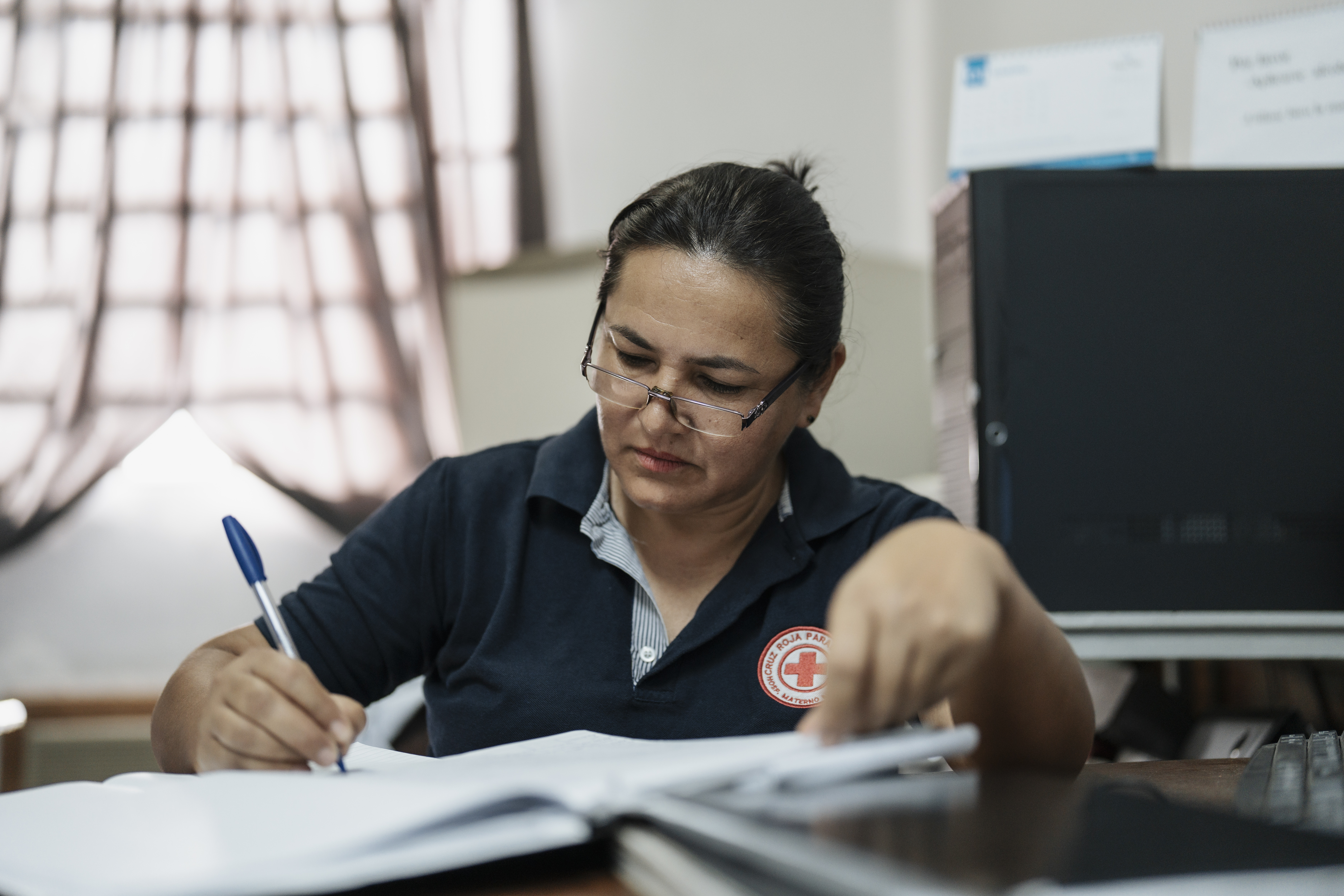
A woman from the Paraguayan Red Cross filling out documents in an office at Reina Sofía Hospital.
Photo: Paraguayan Red Cross Society
Testimonials of protection
The experiences of women treated at Reina Sofia Hospital demonstrate the importance of a safe environment and quality care in ensuring the emotional and physical well-being of mothers and newborns.
Mirtha Alfonso, who gave birth in 1986, fondly recalls how her son was born:
“He was born on 16 August 1986 here at the Red Cross. I was going to have a normal delivery, but it didn't work out, so I had a caesarean section. Then he went to intensive care. It wasn't so simple because the wards were full. Thankfully, though, one of the children was moved to intermediate care, so a crib became available.”
Mirtha even donated breast milk to babies whose mothers were unable to breastfeed.
"When my baby was transferred to intermediate care, I was finally able to hold him and breastfeed him," Mirtha recalls, becoming emotional again. "I remember it so clearly, and it still makes me emotional. It was the first time I held my baby, and I cried with joy."
Liz Marlene Ayala, a mother of two who was pregnant as a teenager, says she chose the Paraguayan Red Cross because she received understanding and dignified treatment there.
“I was very young, and one of the things that made me continue my treatment here was the way I was treated. I was 16 in 2000 and came here for my consultation because of how they treated teenagers.”
Having returned more than 15 years later, she recognises the improvements in infrastructure and technology, as well as the respect and warmth of the healthcare team, which has remained unchanged over the years.
Hospital and Paraguayan Red Cross staff also work with the Ministry of Health on campaigns promoting sexual and reproductive health, preventing cancer in women, tackling addiction and epidemics, and encouraging voluntary blood donation.
Providing care with empathy, active listening, support, and ensuring adequate technology are all ways of protecting women, girls, and newborns.
In Paraguay and around the world, the IFRC network will continue to promote safe, violence-free healthcare environments, so that every mother and baby receives the care they deserve from day one.
Such investments therefore play a critical role in preventing what is often referred to as “obstetric violence”, in which women are subjected to inadequate care, neglect or mistreatment in facilities involved in reproductive healthcare.