
From enhancing female representation at all levels to implementing family-friendly workplace policies, National Red Cross Societies in East Asia are taking concrete action to fulfil the long-term vision of advancing gender equality and women’s leadership.
To date, these efforts have yielded tangible progress across multiple areas.
Increasing women's representation in leadership
The East Asia National Societies are tracking data on women in leadership, working toward the goal of 50 per cent representation in governance and senior management positions. As of 2025, for example, women held more than 50 per cent of the seats on the governing board of the Mongolian Red Cross Society (MRCS). The Macau Red Cross (branch of the Red Cross Society of China (RCSC)) has achieved 50 per cent women in management positions.
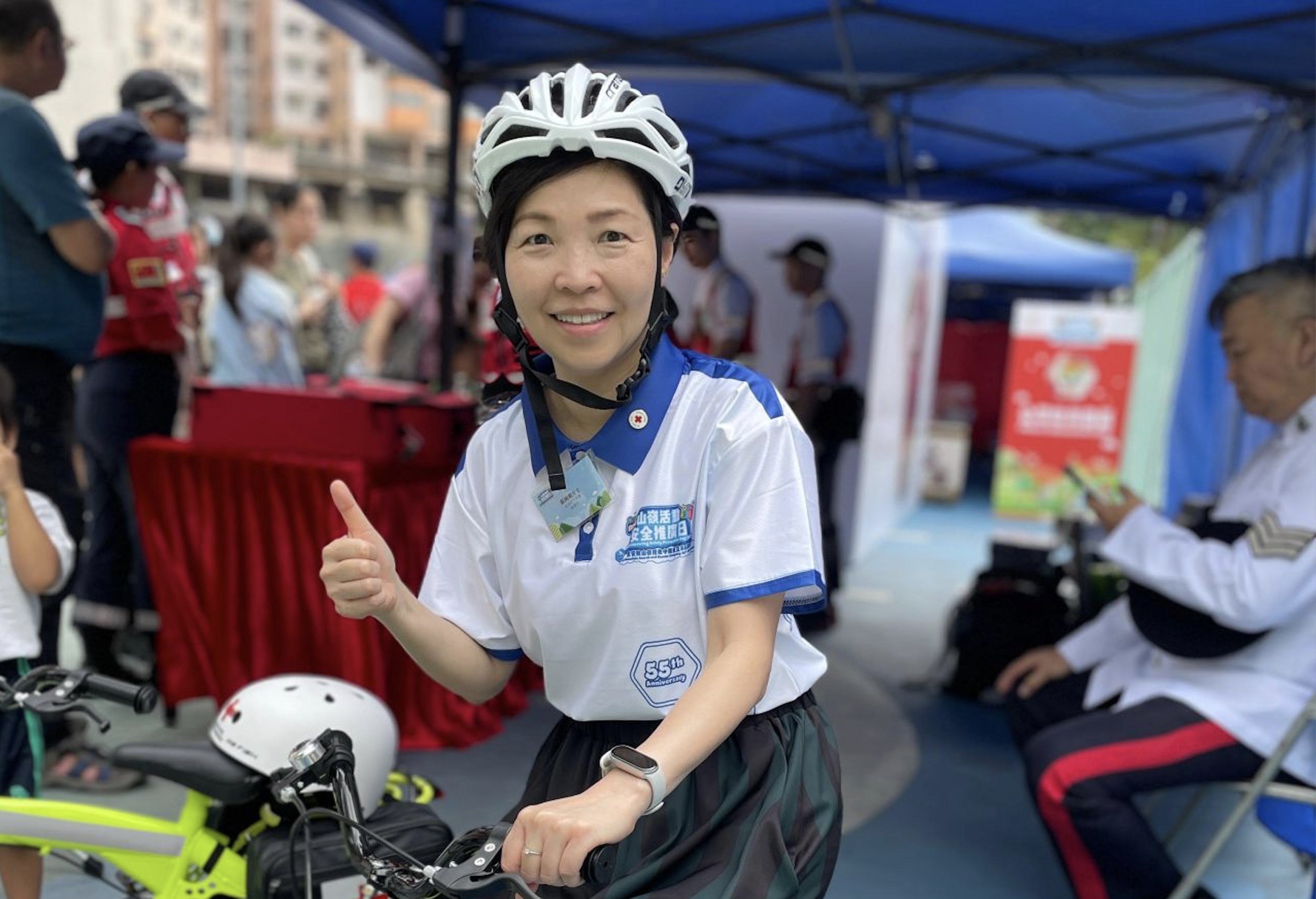
Bonnie So, Secretary General of Hong Kong Red Cross branch on #MountainSafetyPromotionDay to promote first aid and training on Automated External Defibrillators, which help people respond to life-threatening emergencies like cardiac arrest.
Photo: Hong Kong Red Cross, Branch of the Red Cross Society of China
Implementing family-friendly practices
Several National Societies have introduced practices to support family responsibilities. For example, the Hong Kong Branch of the RCSC has implemented a work-from-home policy and flexible working arrangements. In 2025, the Republic of Korea National Red Cross (KNRC) received government certification for supporting work-life balance and gender equality. These practices are applied to all employees, male and female, helping to transform traditional gender norms.
Empowering women in the communities
Beyond promoting gender equality in the workplace, engaging and empowering women in the community is another emphasis.
The RCSC, jointly with Alibaba, initiated the “Model Mama” project, to provide skills training for disadvantaged women and support them in starting their own business or getting employed. By the end of 2024, the project had trained more than 26,000 people in 12 provinces across China.
In 2025, the Hong Kong Branch of the RCSC launched the EmpowerHer Network, mobilizing women leaders from diverse backgrounds to join and contribute to the humanitarian cause.
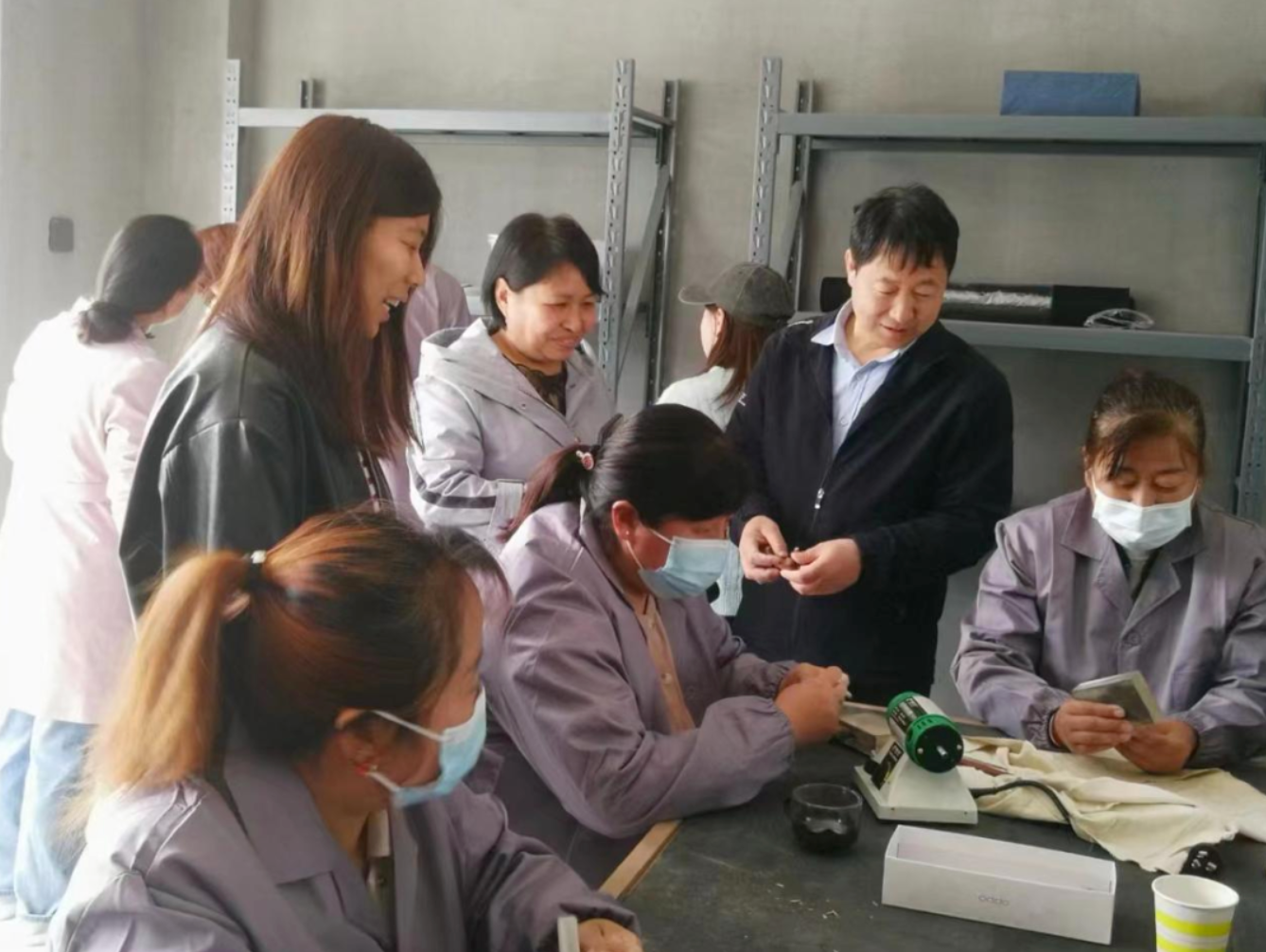
At the Pingshun Wood Carving Community Factory, local women focus on mastering polishing and sanding techniques.
Photo: Provided by Chinese Red Cross Foundation
Fostering public advocacy
Public advocacy represents another focus.
Two major events supported by the Japanese Red Cross Society (JRCS) in 2025 contributed to the efforts: a panel discussion hosted by GLOW Red (the global network for women leaders in the International Red Cross Red Crescent Movement) at the 2025 World Expo Women’s Pavilion in Osaka, and the GLOW Red Annual Meeting in Tokyo.
Both events served as powerful platforms to strengthen networks, share insights, and advance collective action toward gender equality.
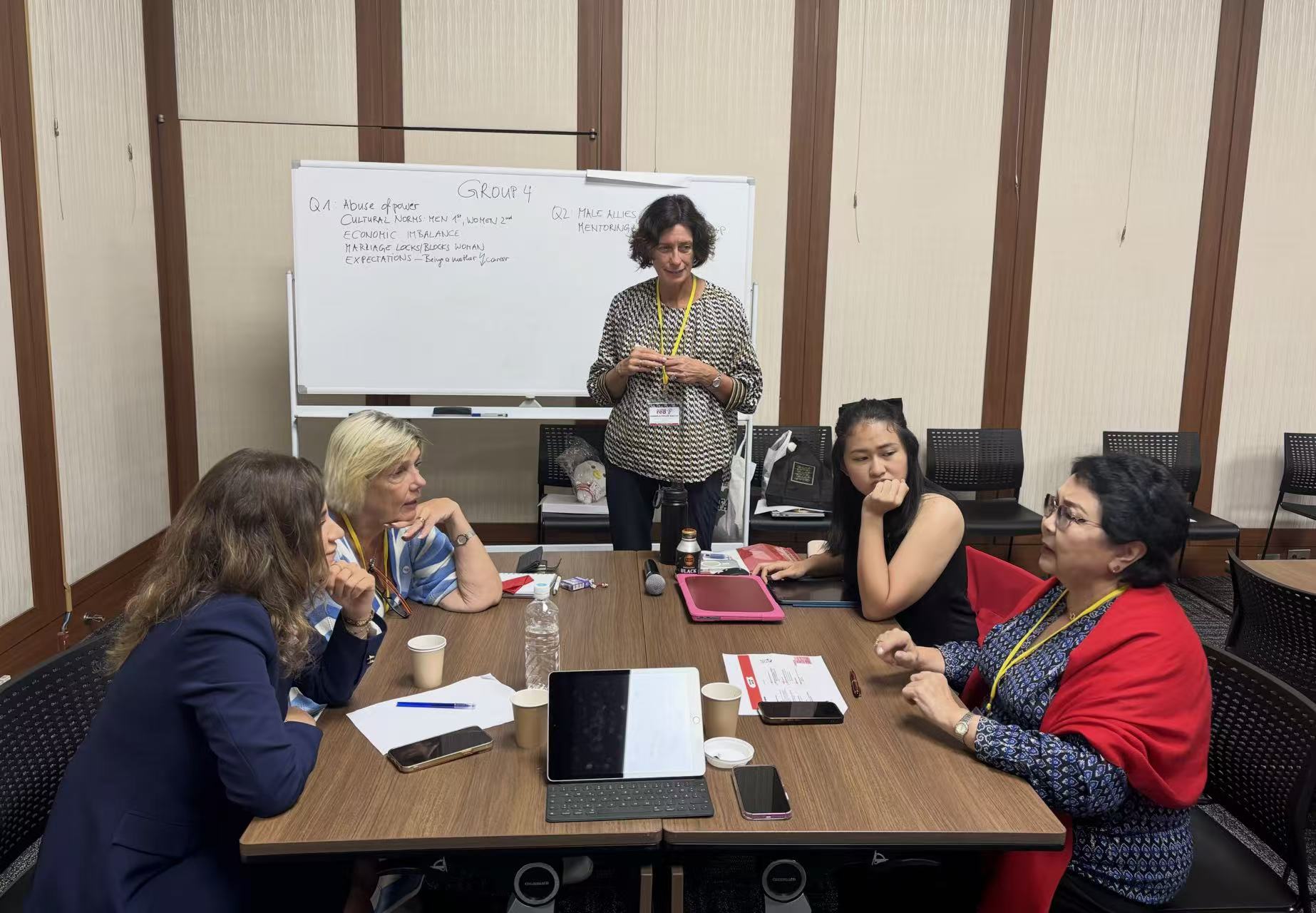
From building diverse organizations to the vital role of women leaders in emergencies, the GLOW Red panel discussions were a powerful reminder that inclusive leadership is essential for effective humanitarian action.
Photo: Japanese Red Cross Society
Reviewing the progress, Olga Dzhumaeva, Head of the IFRC East Asia Delegation, commented that, “Leadership support plays a crucial role in dismantling barriers and forging pathways for gender diversity and equality across every level of their organisations”.
Since 2022, a dedicated session on gender diversity and women’s leadership has been included in the annual East Asia Five Plus Leaders Forum, a primary platform for East Asia National Society leaders to discuss regional humanitarian priorities. Further strengthening the coordinating mechanism, the National Societies designated gender focal points in June 2025.
“We will strengthen cooperation with other global efforts and contribute to further promoting women’s leadership in the humanitarian sector,” said Bonnie So, Secretary General of the Hong Kong Branch of the RCSC and Chair of the East Asia Red Cross gender focal point group.
Driven by the IFRC network’s Protection, Gender and Inclusion Policy as the core framework, these advancements in East Asia are supported and built on a robust global and regional roadmap.
Dedicated targets for women's leadership were established through the Hanoi Call for Action, a set of commitments endorsed at the IFRC’s 11th Asia-Pacific Regional Conference in 2023.
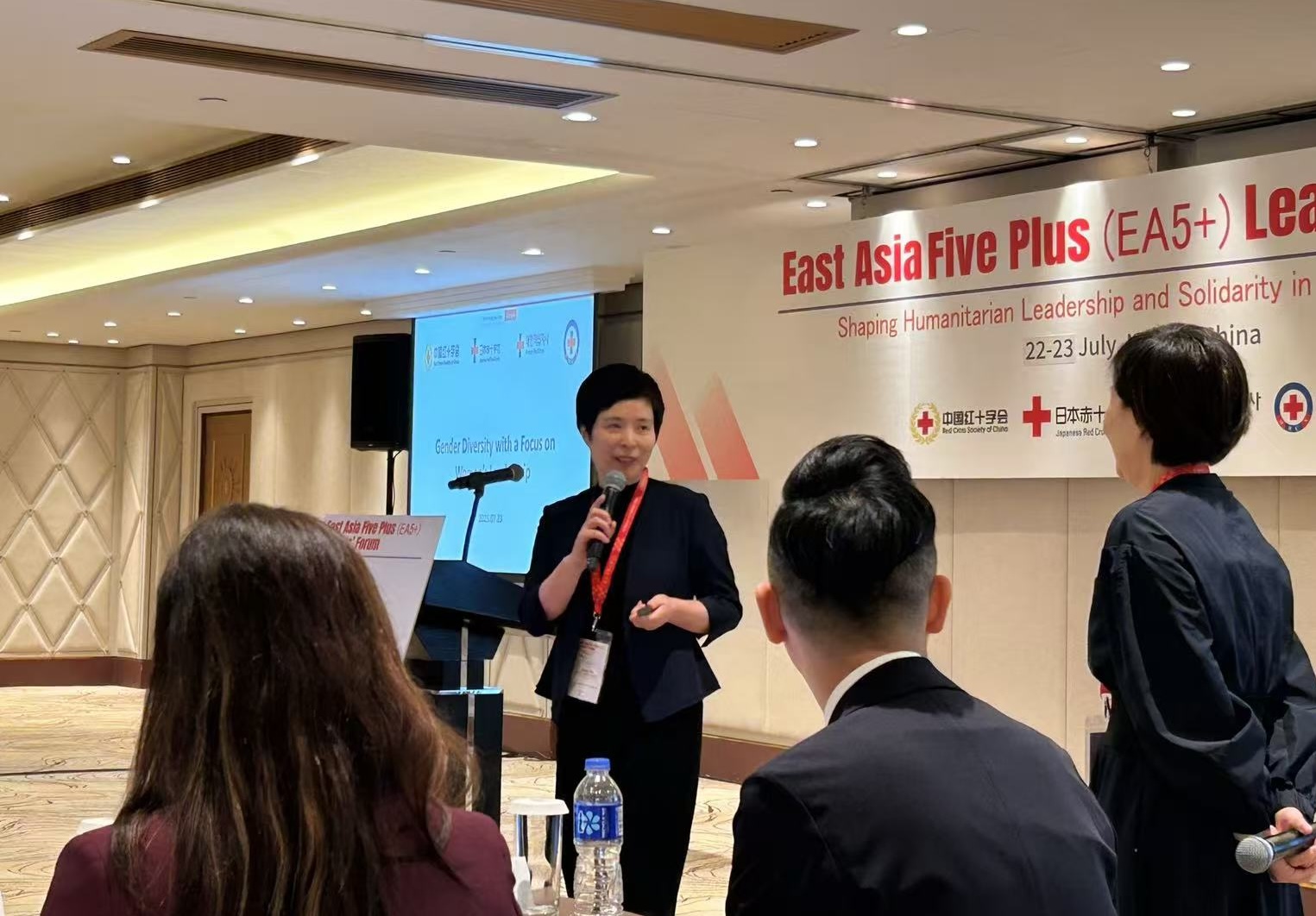
Lively exchanges at the session on Gender Diversity and Women’s Leadership, East Asia Five Plus Leaders Forum
Photo: IFRC
According to the IFRC Everyone Counts Report 2024, progress toward gender balance in governance remains slow and uneven across regions, but the Asia-Pacific region as a whole has shown incremental improvement. As of 2025, women held 37 percent of governance and leadership positions, up from 34 percent in 2024.
For Alexander Matheou, IFRC Asia Pacific Regional Director, an important part of the solution lies in male allyship and institutions taking responsibility for change.
“Talented female leaders have not always felt comfortable positioning themselves for promotion in very male-dominated organisations and men themselves haven’t always created the pathways for them to occupy the top positions,” he said . “Male leaders have a responsibility to create opportunities and ensure that female leaders can show their full potential.”