
“The money I get from selling cattle is usually used for daily needs, school fees for my children, and other expenses. Without livestock, there’s nothing else, including my house which would be neglected if the cattle couldn’t be sold.”
Meet Najamuddin, a farmer from a small hamlet in South Sulawesi, Indonesia called Tallasa Baru. It’s perched high in the mountains, accessible only by a steep and rocky track from the nearest town of Maros, with lush vegetation and farmland stretching out as far as the eye can see.
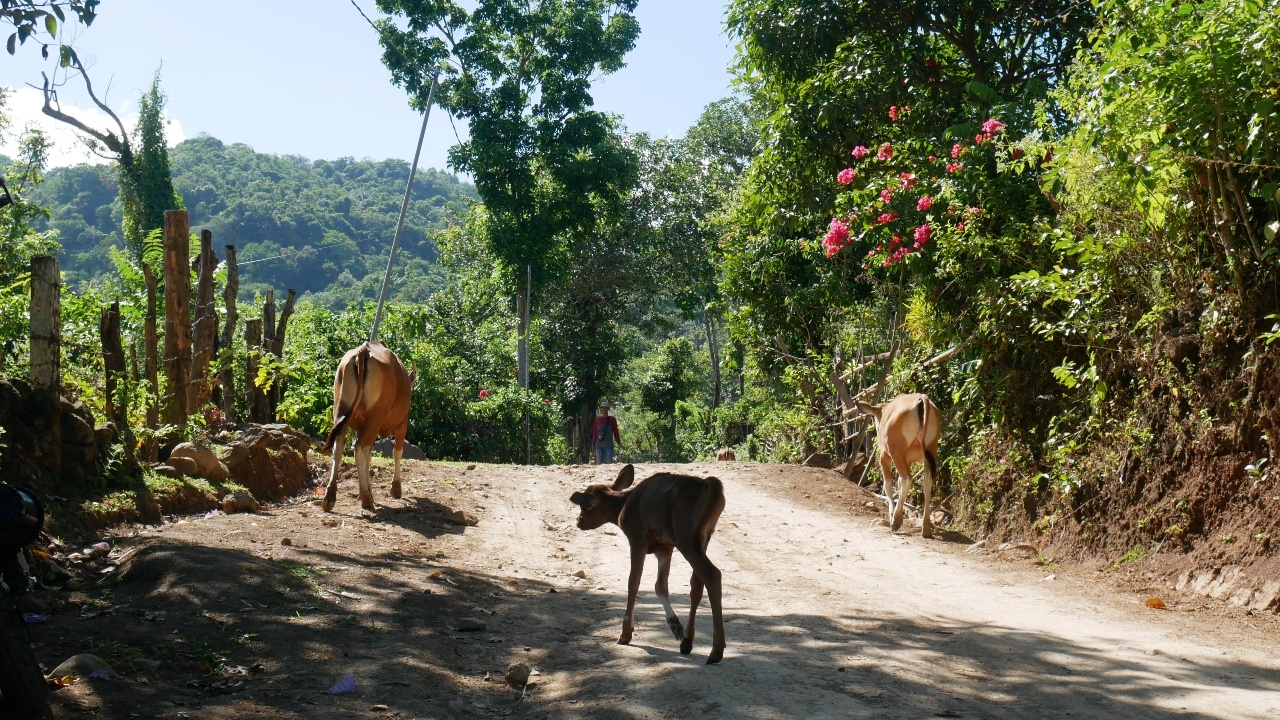
Cows roaming freely in the secluded and rural hamlet of Tallasa Baru in South Sulawesi, Indonesia.
Photo: Rebecca Cole/IFRC
Najamuddin and his fellow villagers live a peaceful, secluded life in Tallasa Baru, relying largely on agriculture and cattle to make a living. Cows are seen as prized possessions here. Locals buy calves at the market, rear and breed them, then hope to sell them off for a higher price. A large cow can fetch as much as 8 million rupiah (around USD $500) – a life-changing sum of money.
So, in late October 2022 when Najamuddin noticed worrying health symptoms in two of his cows, he feared the worst.
“My livestock once contracted foot and mouth disease, which I didn’t know about at the time. Saliva was dripping, the cattle were trembling, and their eyes were tearing up. I was worried and so shocked until I reported it to the sub-village head, Irwan. I didn’t know what was happening or whether I needed to call a vet,” he explains.
Thankfully, Head of Tallasa Baru, Irwan—who is also an Indonesian Red Cross (PMI) volunteer—was on hand to help. Having recently been trained in the detection and reporting of various human and animal health diseases through the Community Epidemic and Pandemic Preparedness Programme (CP3), he knew exactly what to do.
What is foot and mouth disease?
Foot and mouth disease (FMD) is a highly contagious viral disease that affects cloven-hoofed animals, such as cattle, sheep and pigs. Symptoms include fever, drooling, sores around the mouth and hooves, and lameness. If infected animals aren’t taken care of quickly, they can develop long-term health problems or die—resulting in huge economic losses for their owners.
Trained community-based volunteers spring into action
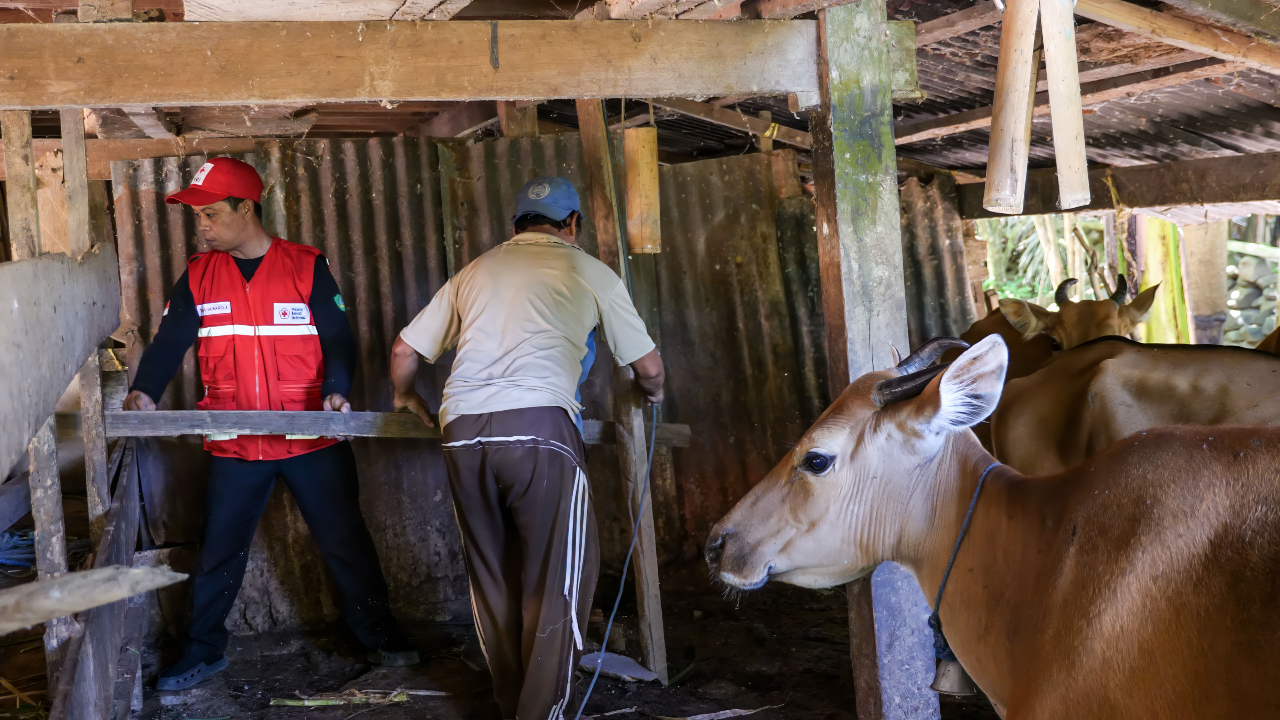
CP3 Supervisor, Syarif, helps a villager in Tallasa Baru to construct a small pen to put cows in ahead of a planned FMD vaccination event run by local veterinary authorities.
Photo: Paul Wu/IFRC
Thanks to their training in epidemic control and community-based surveillance, PMI volunteer and Village Head, Irwan, and CP3 Supervisor, Syarif, understood the gravity of the situation. Upon quickly coming to check Najamuddin’s cows’ symptoms for themselves, they alerted the local Animal Health Centre in Maros to a likely outbreak of FMD, triggering a rapid response.
“The next day we immediately responded. This is a disease that spreads very quickly so the response must be faster to reduce the incidence of disease. We provided vitamins and mineral supplements, and we continued to respond and make observations to check that the animals there were healthy. Then, several weeks later, vaccination was carried out,” explains Dr Ujistina, Head of Maros Animal Health Centre.
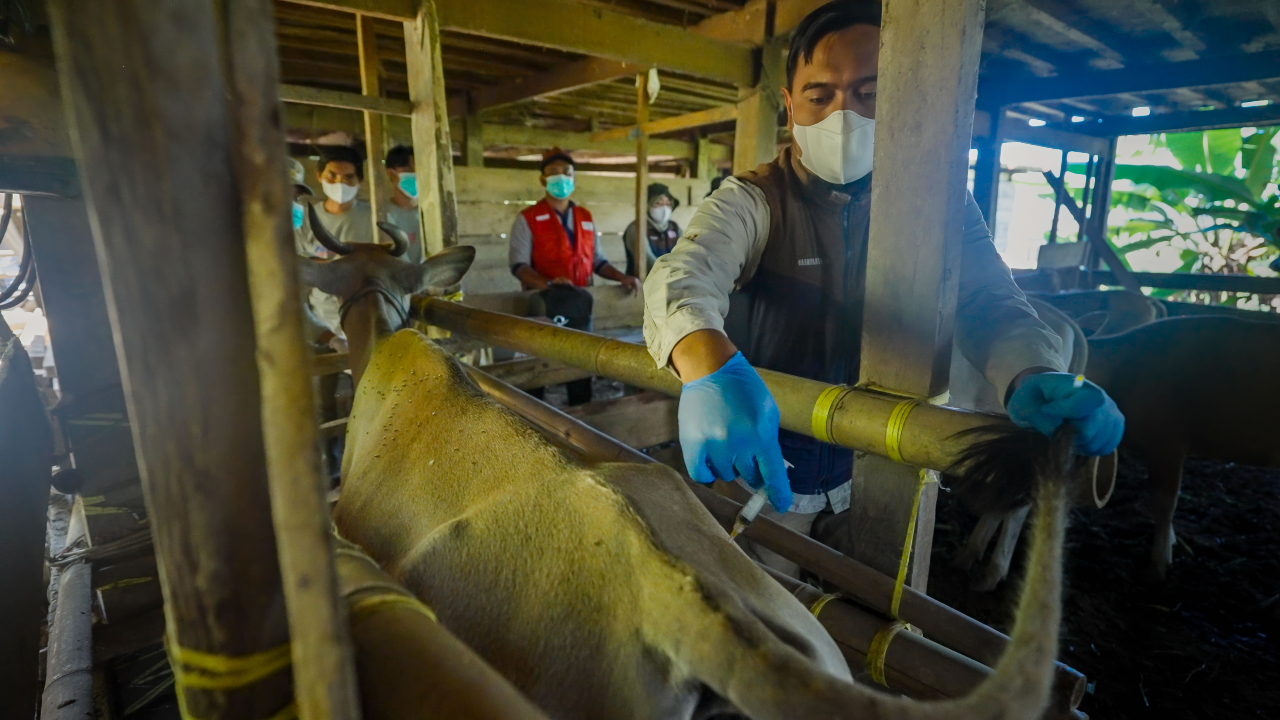
CP3 volunteer Irwan looks on as Najamuddin’s cattle receive vitamins and mineral supplements to help them regain full health.
Photo: Paul Wu/IFRC
PMI volunteers were critical to this FMD outbreak response. They quickly raised awareness throughout Tallasa Baru about the risks of FMD, encouraging people to check for symptoms and isolate their cattle until the situation was under control.
Volunteers showed villagers how to build small holding pens to contain their cows for their injections and conducted disinfection activities around the hamlet to prevent further spread of disease. And when the cattle vaccination campaign was arranged, PMI volunteers transported veterinary teams and supplies up the long and bumpy road to the hamlet to make sure everyone arrived safely.
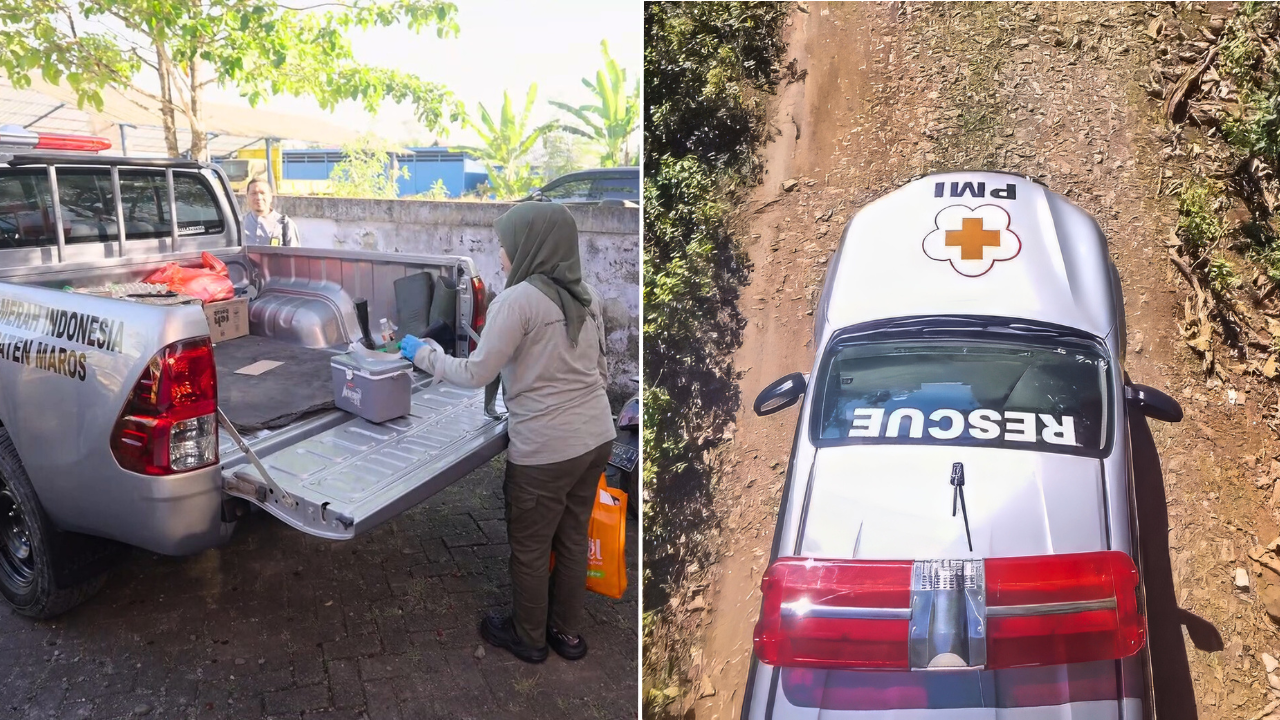
Maros Animal Health Centre staff load FMD vaccines into a PMI truck for transportation up the long, bumpy road to Tallasa Baru.
Photo: Paul Wu/IFRC
Thanks to PMI volunteers’ quick action and support to animal health authorities, the FMD outbreak was swiftly contained in Tallasa Baru. Najamuddin’s cattle were saved and made a full recovery—protecting his income so he can continue to support himself and his family.
“I feel proud, and thankful because CP3 has explained this disease, and now I understand it better. Thank God, since CP3 came, since my cattle were vaccinated and injected, they’ve all remained healthy. There haven’t been any more disease outbreaks,” he explains.
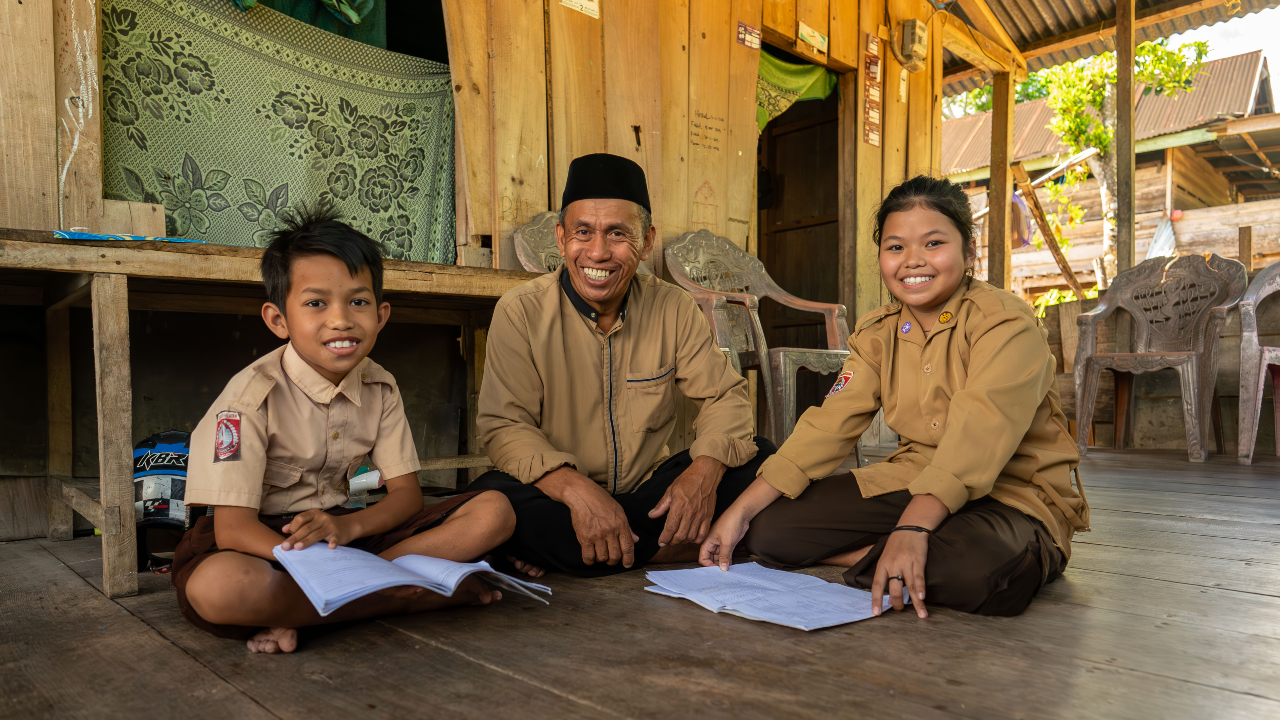
Najamuddin sits with his niece and nephew, who he cares for. Having healthy cattle means he can continue to provide for their daily needs and education.
Photo: Paul Wu/IFRC
Helping the community adopt healthier behaviours
Teaching the community in Tallasa Baru about FMD and other disease threats, and encouraging them to take steps to reduce their risks, requires patient and sustained engagement from local and trusted PMI volunteers like Irwan.
“Through CP3 I’m able to educate the people who perhaps lack understanding about diseases that can infect people and animals. When we started, a lot of the people didn’t care. We had to explain repeatedly about diseases and what would happen if they weren’t addressed, then they started to accept,” he explains.
“I have lost cattle before. Nobody should ever have to go through what I’ve been through. Because these cows, they are our hope,” he adds.
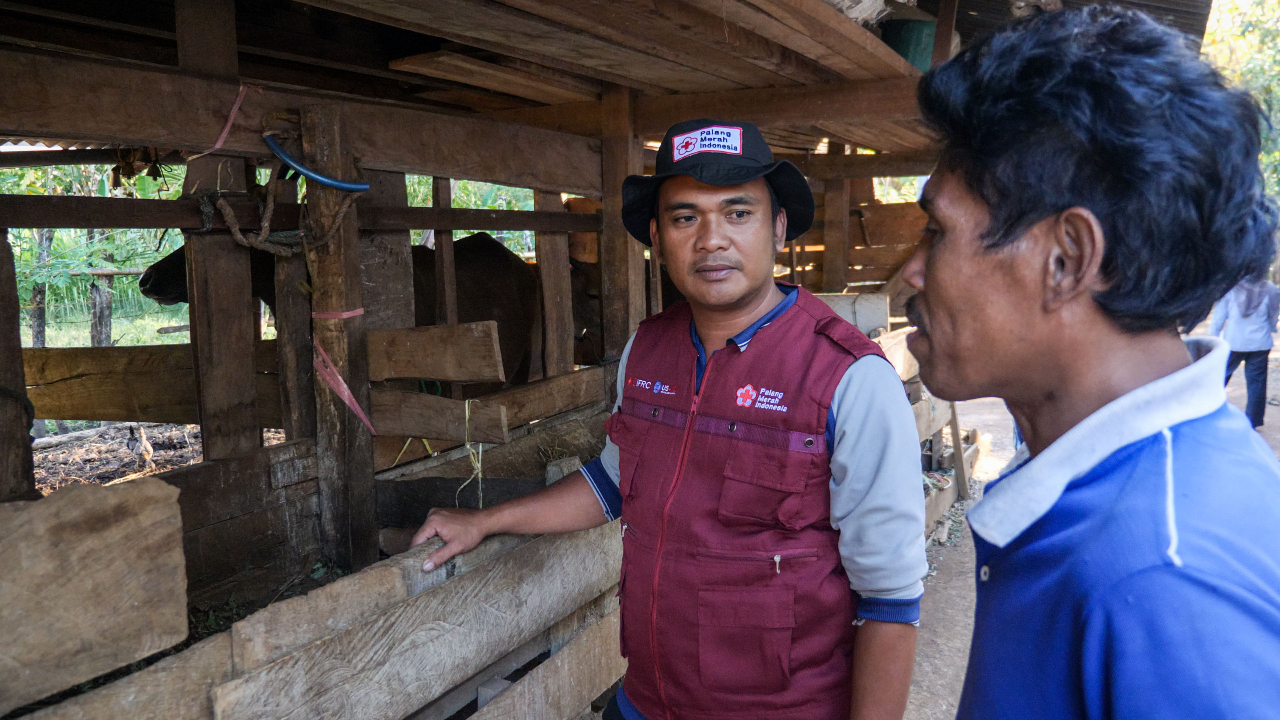
CP3 volunteer and Tallasa Baru village head, Irwan, speaks to a community member about how to identify different animal health risks and how he can protect his cattle and other animals from getting sick.
Photo: Paul Wu/IFRC
There is proof that this dedicated engagement is paying off. One Tallasa Baru resident, Mansyur, used to be a vocal critic of vaccines, and would go around the village telling people they would make people’s animals sick. But support from PMI volunteers has made him change his tune.
“Previously, we always refused. Don’t vaccinate my cows, we don't want to risk it if it's a poison. Because we didn’t understand that vaccination is good. After CP3 came then we understood that the vaccine is good because without vaccination many cattle would have died by now. Now, we want to give vaccines to our cattle,” says Mansyur.
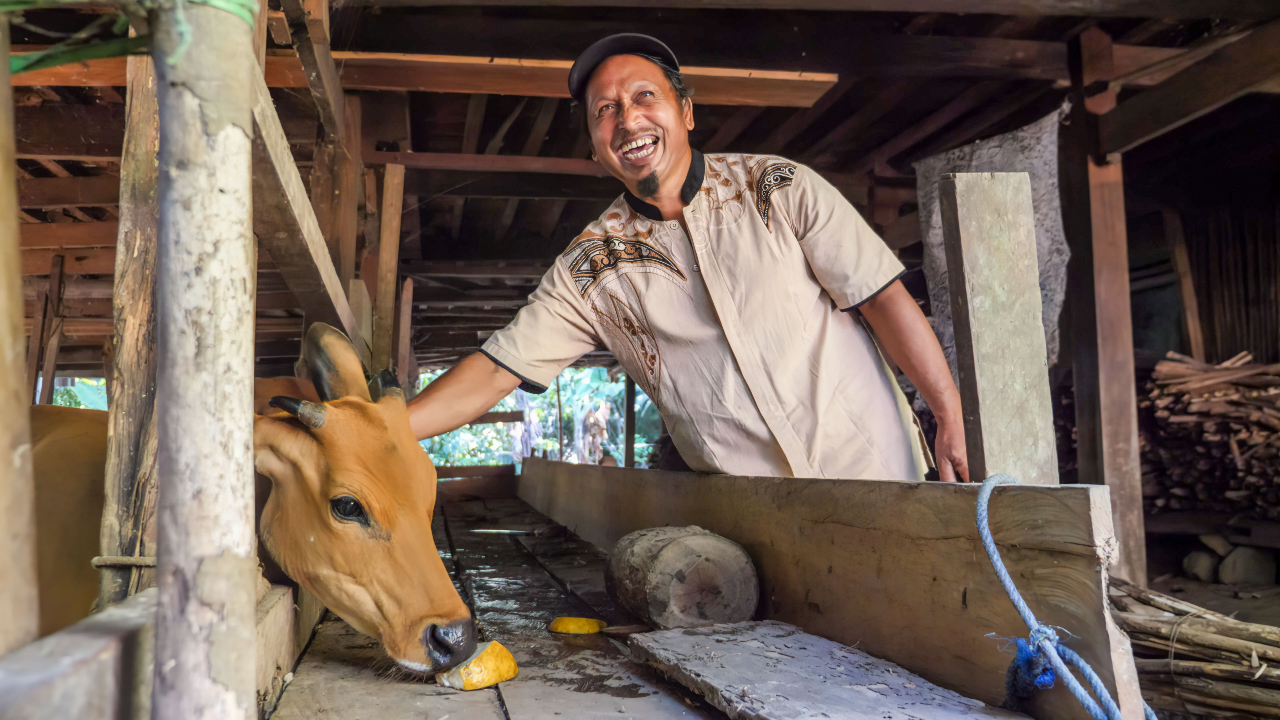
Mansyur from Tallasa Baru used to resist vaccinating his cattle and actively dissuaded fellow villagers from doing so, until he was convinced of the benefits to his cows’ health by PMI volunteers. Now he’s a champion of animal vaccination within his community.
Photo: Paul Wu/IFRC
Despite its remote location and access challenges, Tallasa Baru is now safer and healthier thanks to the ongoing presence of trained PMI volunteers. Their constant vigilance makes sure no disease outbreak goes undetected. And by equipping their community with the knowledge to recognize and report diseases—they’re making sure their health is protected, both now and long into the future.
--
The activities featured in this article were part of the multi-country Community Epidemic and Pandemic Preparedness Programme (CP3).
Funded by the U.S. Agency for International Development (USAID), CP3 supported communities, Red Cross and Red Crescent Societies, and other partners to prepare for, prevent, detect and respond to disease threats.
If you enjoyed this story and would like to learn more, sign up to the IFRC’s Epidemic and Pandemic Preparedness Newsletter.