
“It was early 2011. Something strange started happening to our neighbours—they said they were ill and wounds started appearing on their skin.”
A nurse from Karangmojo village in Boyolali, Indonesia, Siti Imroatus begins the story that would change her life, and the lives of many in her community. It happened nearly 15 years ago, when a mysterious series of events began to befall her small community rural community.
“We knew it was something to do with their cows, which they’d recently slaughtered to eat and sell”.
It was this experience, the effect it had on her own family, and the process of solving this mystery that Siti (known to friends and family as “Bu Im”) to join the Indonesian Red Cross (Palang Merah Indonesia). It was also the beginning of a determined, long-time commitment from Bu Im to keep working to ensure this kind of outbreak wouldn’t happen again.
On World Humanitarian Day 2025 (19 August), we unite with humanitarians around the world under the banner #ActforHumanity to honour the courage of people like Siti, who take the initiative to protect others and save lives — even while they themselves are affected by the same challenges.
This is Siti’s story in her own words.
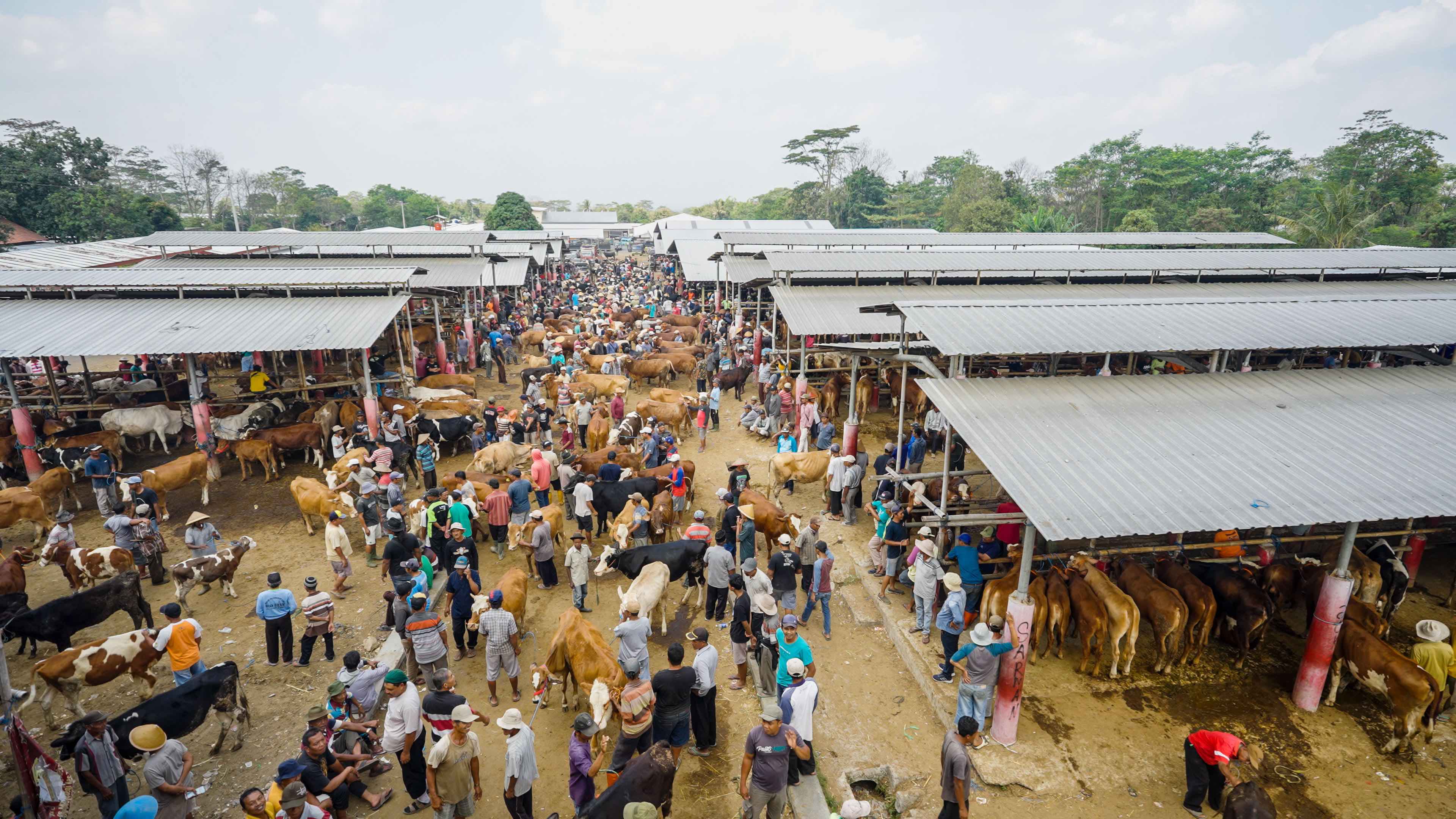
Cows are incredibly important to people in Boyolali, the area where volunteer Bu Im is from. Many people rely on cattle farming and milk production to earn a living. The potential for outbreaks like anthrax to spread is high due to the constant movement of animals.
Photo: Paul Wu/IFRC
“Local health authorities came to investigate and it turned out to be anthrax, an infectious disease spread through animals which is caused by the bacteria Bacillus anthracis.
“My mother fell sick, too, because she had handled a piece of meat that was apparently infected. She then had wounds on her hands and I immediately took her to the nearest hospital so she could be treated.
“I knew I had to act quickly and because when she was treated quickly, she healed faster. I was living elsewhere at the time, but I stayed with my mother and took care of her until she got completely better.
“I thought, if I can help my mother, I can help my community too. I wanted to motivate people and give them advice on how to stay healthy so we can avoid another outbreak—of anthrax or of any other disease. So that’s why I became a Red Cross volunteer.
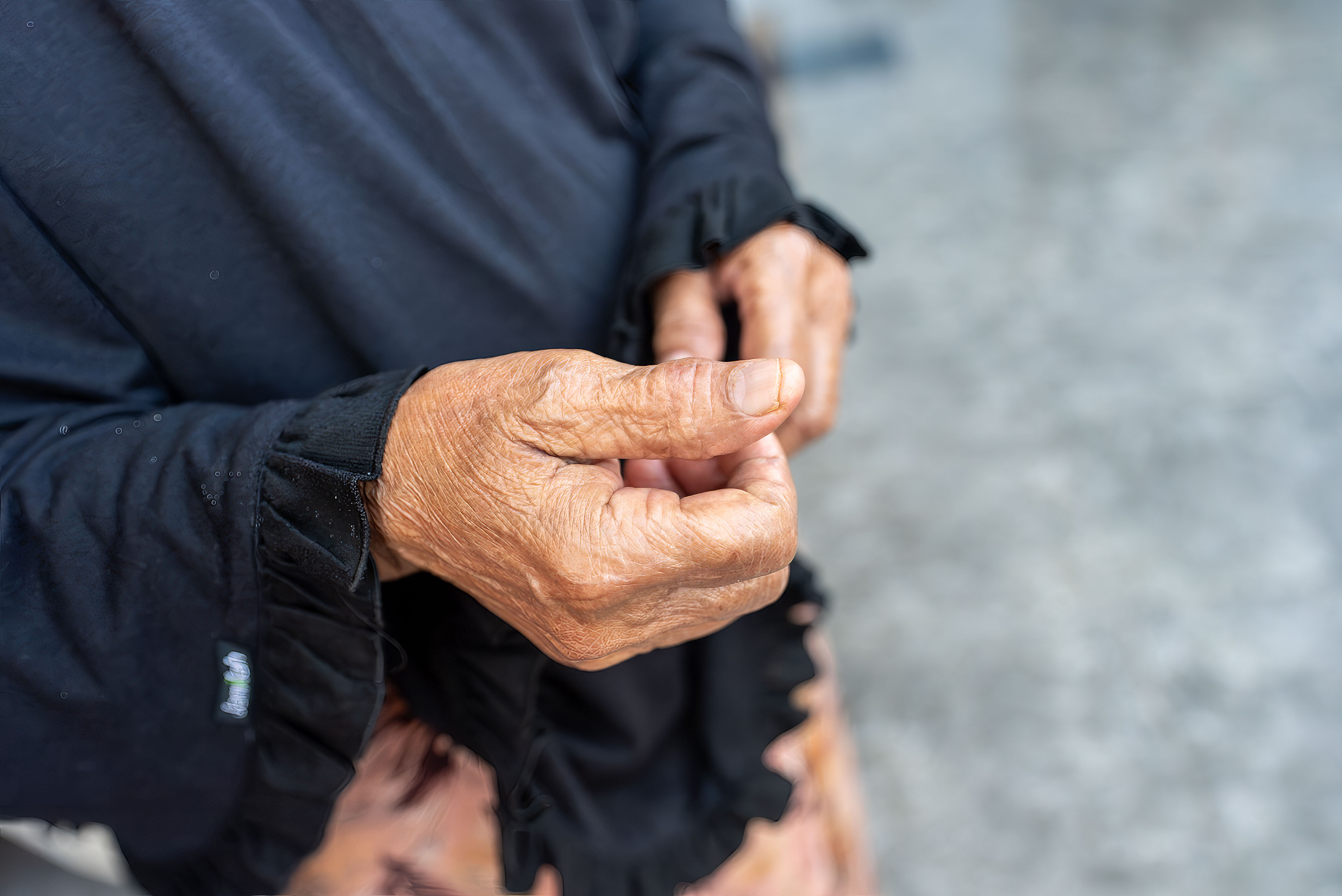
Bu Im’s mother, Suharti, still has scarring on her hand from having contracted anthrax back in 2011.
Photo: Paul Wu/IFRC
“In 2018 I joined the Community Epidemic and Pandemic Preparedness Programme, which we call ‘CP3’. It’s a programme that helps communities like mine in Indonesia to be prepared for and to prevent disease outbreaks, epidemics and pandemics.
“When I joined, I was trained in epidemic control and community-based surveillance so I could advise my community on different infectious diseases and report anything unusual.
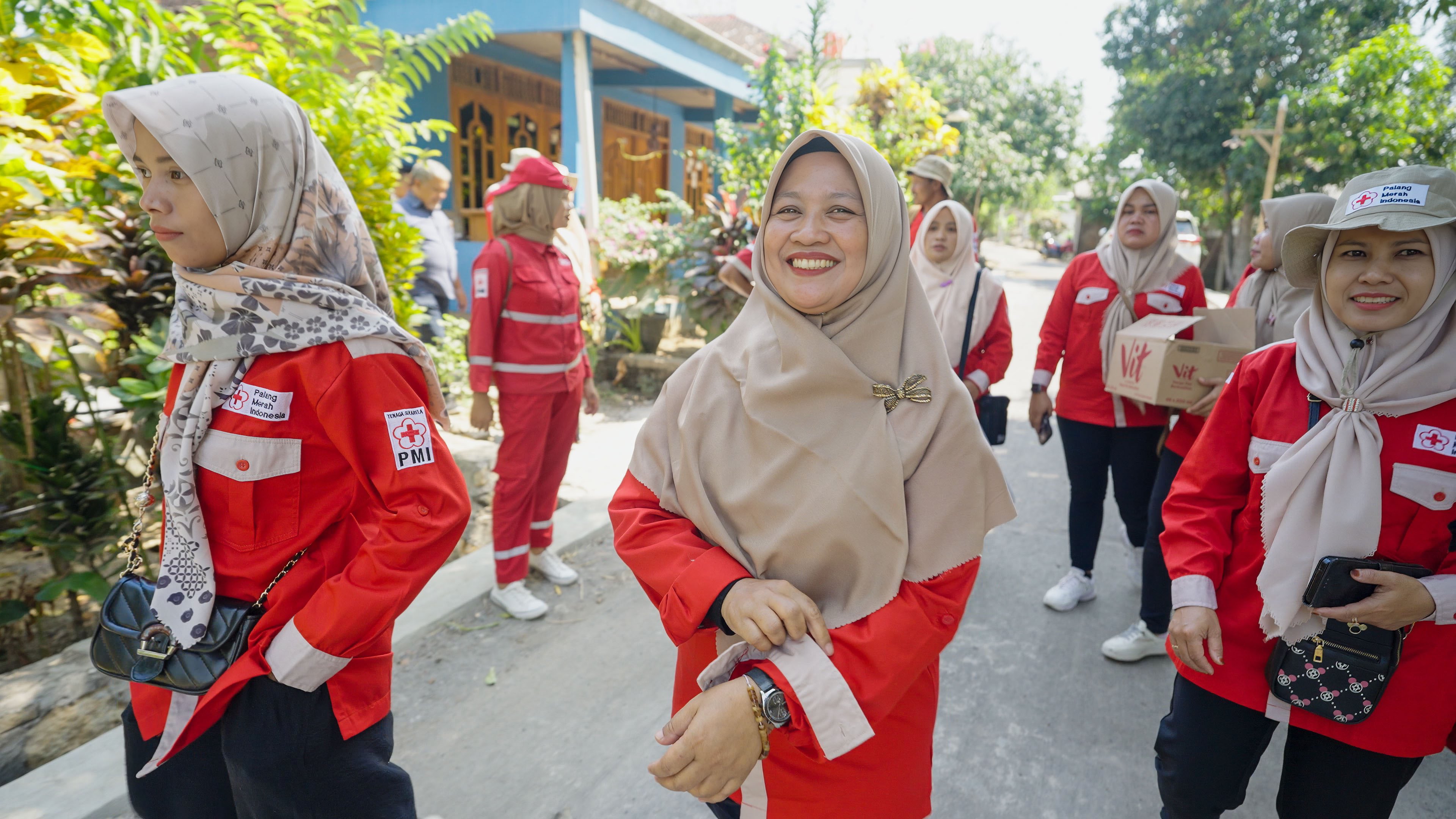
Bu Im heads out into her community after a meeting with fellow Indonesian Red Cross volunteers to update each other on disease risks in their villages.__
Photo: Paul Wu/IFRC
“Communities may not be very well-informed about anthrax. But it is a serious disease which can infect animals and humans, and old people in my community are especially vulnerable.
“The other year there was an anthrax outbreak in Yogyakarta and several people died. So I keep educating my village with my fellow volunteers because I want my family to be healthy and I want my community to be healthy.
“The best thing about being a volunteer is being useful to my family and the community. I know that if I can detect and report diseases quickly, we will all be safer.”
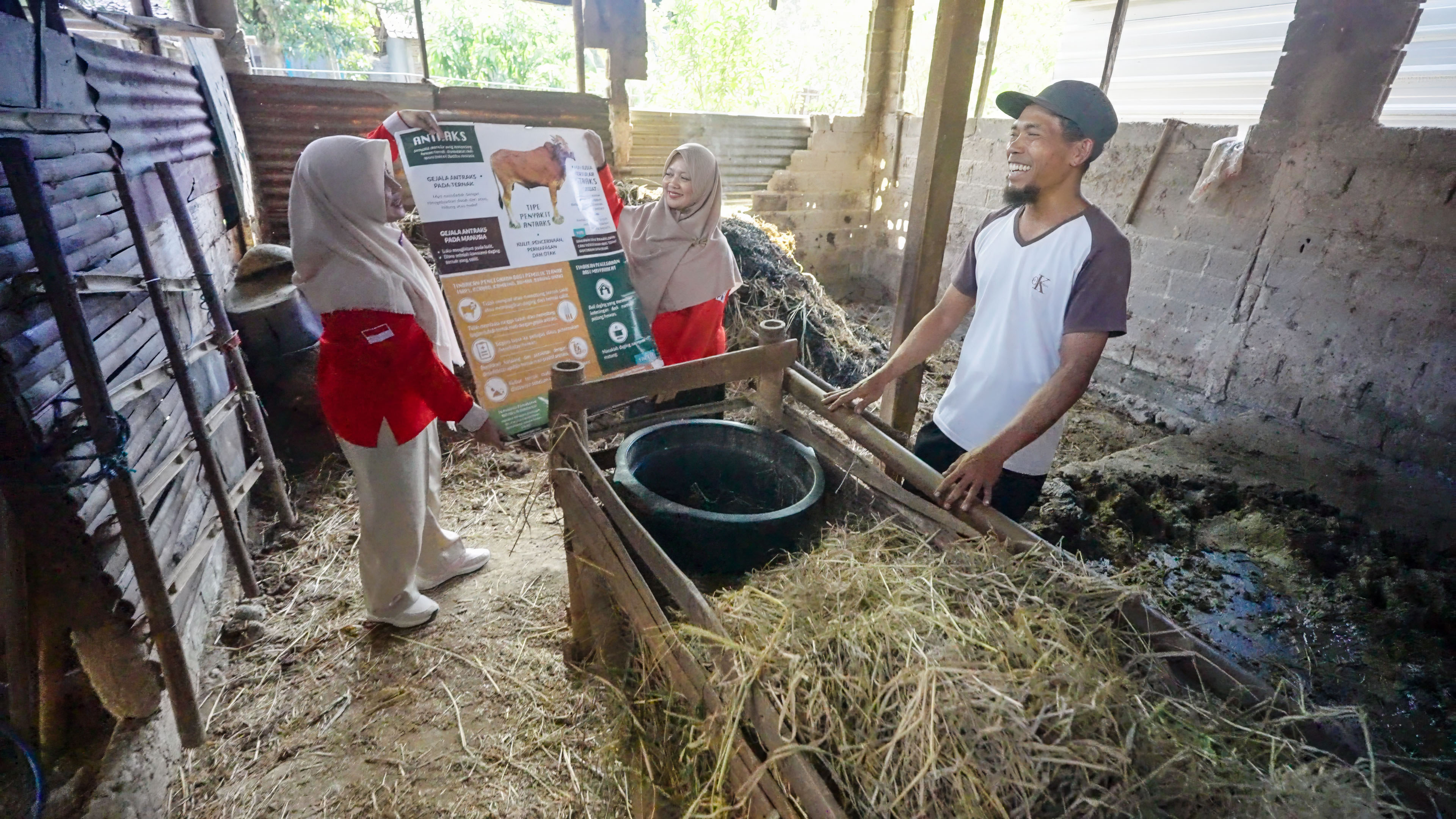
Bu Im and a fellow volunteer visit a farmer in his home to remind him of anthrax signs to look out for in his animals and how he can report anything unusual so authorities can respond quickly in case of an outbreak.__
Photo: Paul Wu/IFRC
---
The activities featured in this article were delivered as part of the multi-country Community Epidemic and Pandemic Preparedness Programme (CP3) which ran from 2018-2025.
Funded by the U.S. Agency for International Development (USAID), CP3 supported communities, Red Cross and Red Crescent Societies, and other partners to prepare for, prevent, detect and respond to disease threats.
To learn more about anthrax and other infectious diseases, visit the IFRC’s Epidemic Control Toolkit.
If you enjoyed this story and would like to learn more, sign up to the IFRC’s Epidemic and Pandemic Preparedness Newsletter.
For World Humanitarian Day 2025, learn how you can support those who #ActforHumanity.
World Humanitarian Day 2025: An urgent call to honor, respect and protect those who #ActforHumanity
Stand with us to protect humanity