
At a time when the challenges humanity faces seem increasingly complex, and the only consistent feature of modern life is rapid societal and technology change, the creativity and energy of young people is more critical than ever.
Young people have a unique ability to adapt, propose innovative solutions, and redefine humanitarian leadership for the future—yet they often face an uncertain path, unsure of how to make a meaningful impact.
That’s why National Red Cross and Red Crescent Societies organize youth camps that give them opportunities to learn, grow, and build lasting connections, trusting that they will become the next generation of humanitarian leaders.
Latin America is one of the regions where this tradition is especially strong: every year, hundreds of young people come together to share cultures, celebrate local identities, and connect with others from the youth movement, both within their countries and around the world.
2025 is no exception. As we mark International Youth Day, we share the story of this long-standing regional tradition, which is more relevant than ever.
"In the 1980s, several thematic volunteer networks were created, including the first aid and paramedic networks. This began to be used more in Central America, then spread throughout the continent. In fact, there were Central American first aid camps, as well as camps focusing on other topics. From there, youth networks and camps also emerged.”
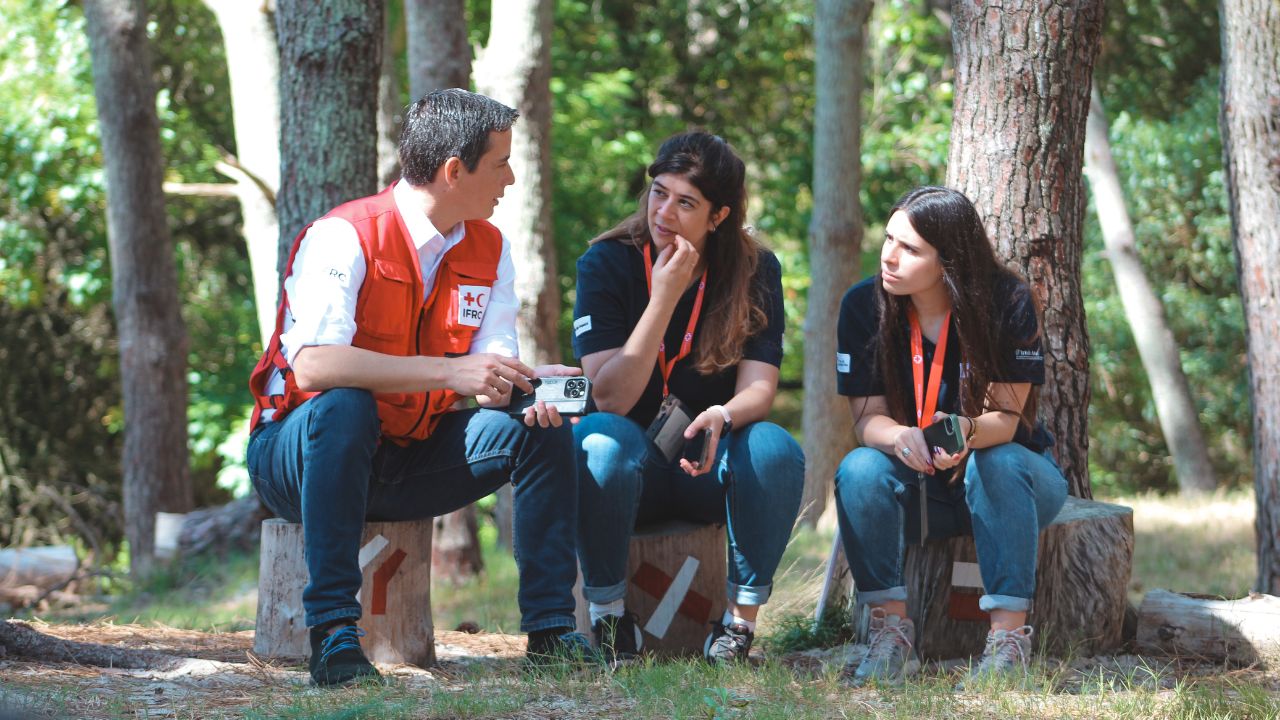
Andrés Morales talks with two young people during the Uruguayan Red Cross camp in Kiyú, San José, in March 2025. The three sit on wooden logs outdoors.
Photo: Uruguayan Red Cross
Currently, there are three youth networks in the Americas: Central America, South America and the Caribbean. Not all countries hold the camps, and the frequency varies according to local capacity. However, in countries such as Mexico and Costa Rica, the camps have been held consistently over time and are held every year.
This year, Costa Rican Red Cross welcomed seven delegations of young people from the Red Cross in Italy, Mexico, Panama, the United Kingdom, the United States, Suriname and Venezuela. From Costa Rica, there were more than 500 young people from all over the country.
“The Red Cross youth programme in Costa Rica has been around for over 100 years. We have been running camps for over 50 years.”
“We really enjoyed the recreational and cultural activities and spending time with fellow members from other National Societies.”
Uruguay, Panama and Chile are examples of countries that also held camps in the first months of this year to strengthen the technical and leadership skills of young volunteers.
In Mexico, the Mexican Red Cross national youth camp is taking place at the time of this publication, from August 6 to 9.
“We are gathering in Morelos, in Tepoztlán, with more than 1,500 young people from all states of the Republic. We will be spending four days sharing knowledge, emotions, and, among all of us, family ties.”
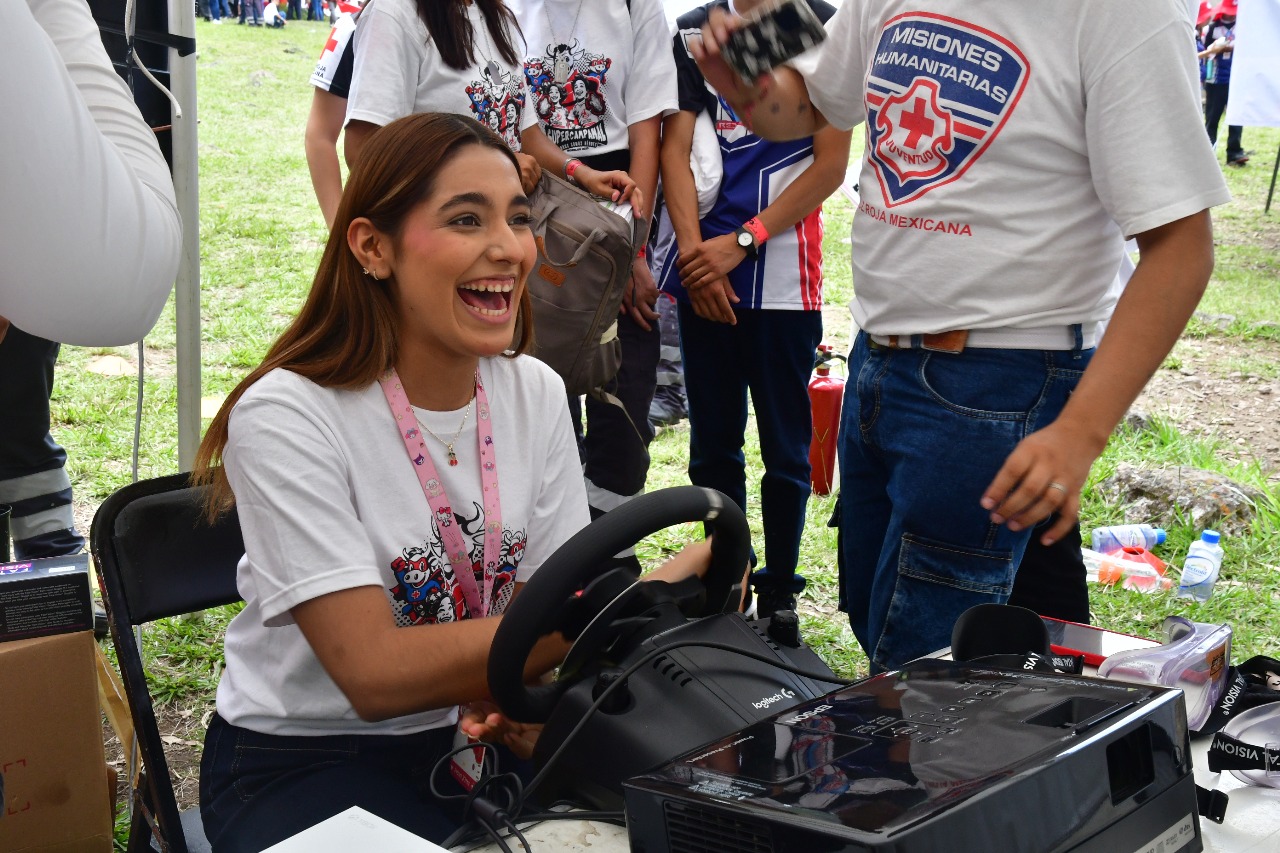
A young volunteer smiles as she takes part in a driving simulator activity, surrounded by other young people at the Mexican Red Cross national youth camp in August 2025.
Photo: Mexican Red Cross
What are the youth camps like?
Every camp is unique, whether it lasts one day or three, or whether it involves dozens or hundreds of participants. The important thing is to create a space where people can meet and share.
“It's a place where young people can develop, learn, grow a lot as individuals, and have fun while doing something good for others. For me, being a Red Cross volunteer is an opportunity to grow as a person and develop skills that can be useful in my personal life and in my future professional life.”
From Andrés' perspective, beyond the tents and cooking stoves, a Red Cross youth camp is a place where four major dimensions come together:
1. Celebration of young people and their communities
The camps recognize and celebrate the diversity of young identities within the Red Cross Movement, as well as the power of young people in humanitarian action.
Meals, customs, dances and music from different regions of each country are shared at the camps, enriching the experience and promoting enjoyment and healthy interactions.
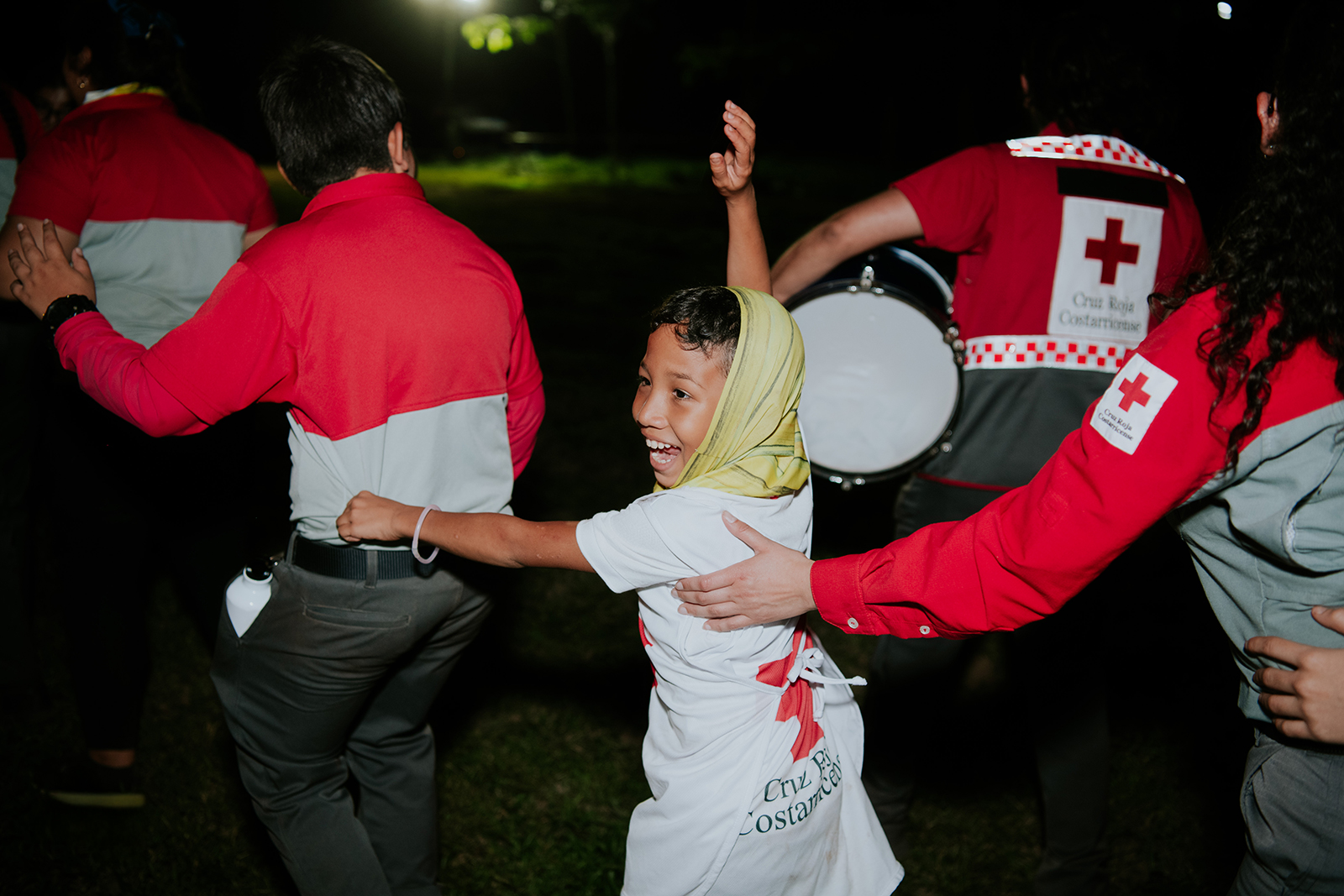
A young Costa Rican Red Cross volunteer smiles as he rides in a 'human train' through the campsite at the National Youth Camp in January 2025.
Photo: María José Arburola/Costa Rican Red Cross
2. Sharing achievements and experiences
From environmental and migration initiatives to mental health and road safety campaigns, camps provide the perfect opportunity to showcase the successes of youth programmes and share experiences and insights with people from different places.
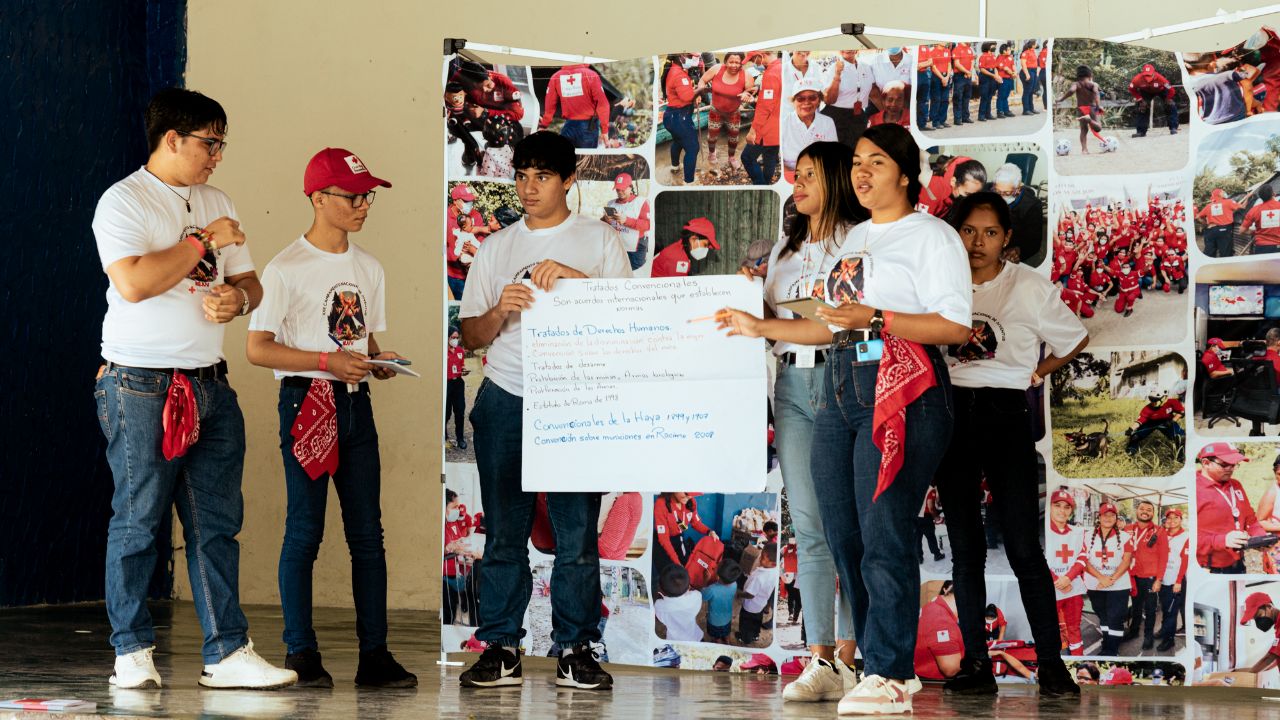
A group of young people from the Panamanian Red Cross give a presentation on international humanitarian law at the youth camp held in February 2025.
Photo: María Victoria Langman/IFRC
3. Learning and growth
From first aid to reproductive health education, young people gain the tools they need to make a positive impact in their communities.
At the camps, young people facilitate practical workshops, disaster simulations, sports competitions, rallies involving physical and mental challenges, and cultural presentations. These activities strengthen personal growth and leadership skills.
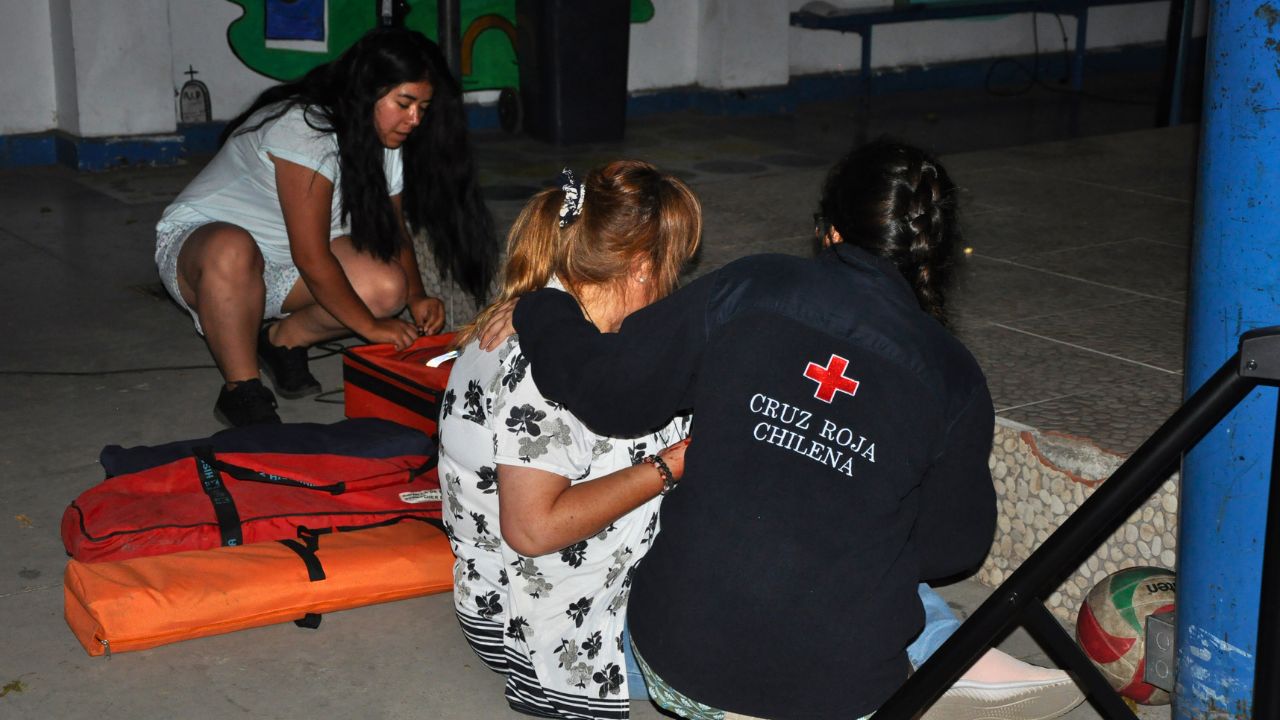
Late one night, 180 volunteers took part in an earthquake simulation at the Chilean Red Cross national youth camp. As part of the exercise, ambulances were deployed, a telecommunications system was set up, a prison was built, a mock morgue was created, and areas for crisis management and care for the injured were established.
Photo: Chilean Red Cross
4. Connecting with other people
The most compelling reason to organise a camp is to meet people from different places and backgrounds who share the same Red Cross values.
Connecting with young people from different places, including other countries and continents, broadens your worldview and inspires you to work towards your dreams and goals.
“The Red Cross is a place where I feel safe to share my ideas, to share what I think, and to share what I have to contribute to society, knowing that these ideas will be heard and taken into consideration."
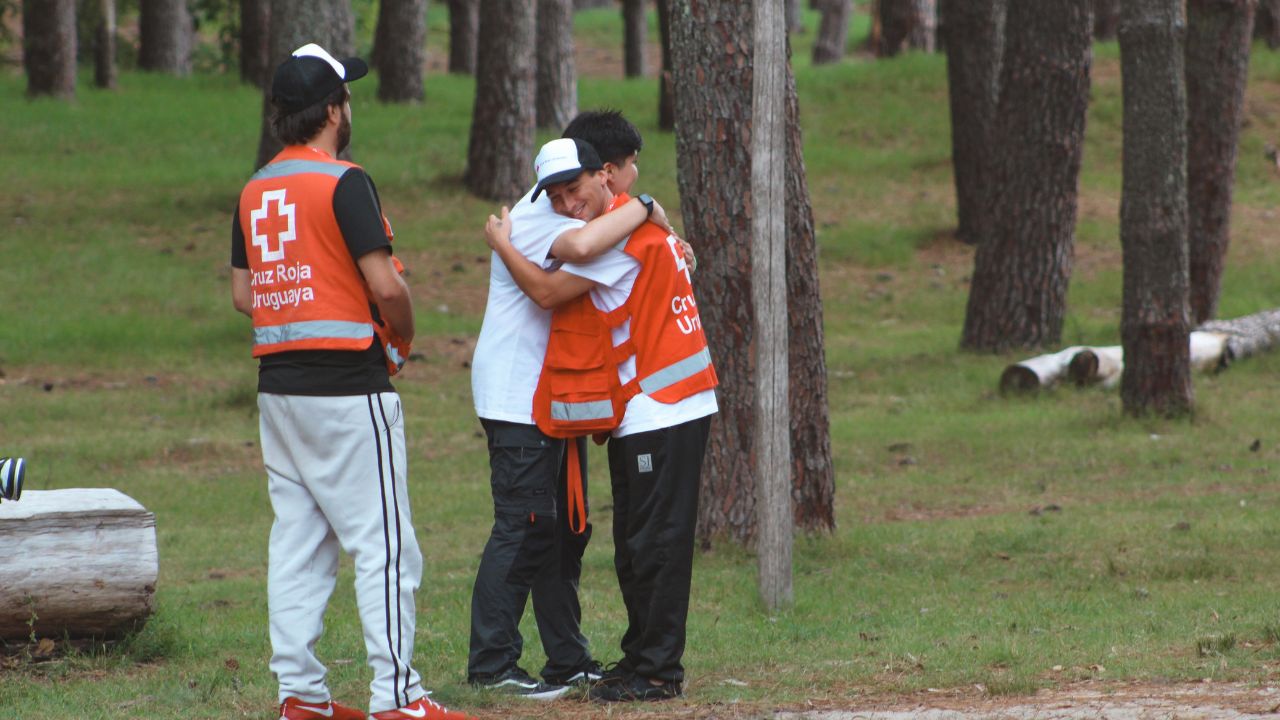
Two young volunteers from the Uruguayan Red Cross smile and hug each other at the youth camp held in Kiyú, San José, in March 2025.
Photo: Uruguayan Red Cross
Why are these camps important?
For Andrés, these spaces serve as a reminder that, even in times of crisis and disaster, there is a network of young people willing to support their communities and help those in need.
Additionally, camps and youth programmes frequently provide opportunities for nurturing new leadership within the Red Cross. Many current board members began their journey in a youth programme. This shows, yet again, that investing in young people is investing in the future of humanitarian action.
“What I have learned at the Red Cross is that it doesn't matter what color your skin is, how much money you have, or anything else, because we will always help those in need.”
If you are a young volunteer interested in organizing a camp or similar activity, contact your nearest Red Cross branch. Sometimes all it takes is a little encouragement to make our dreams come true.